HJT电池生产线

Search documents
10年造月球城市,马斯克“太空狂想”又引爆A股!
Ge Long Hui· 2026-02-09 08:46
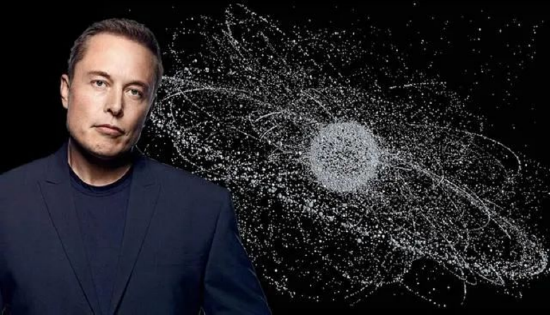
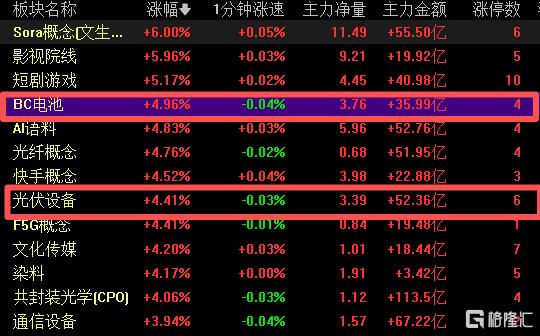
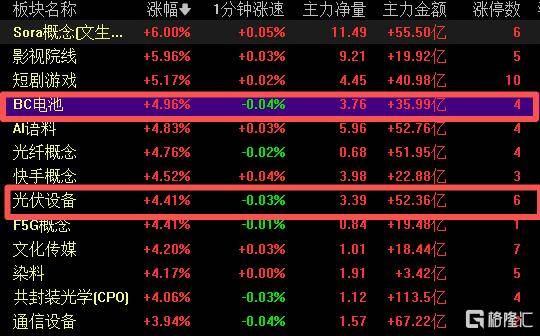
Group 1: SpaceX Developments - SpaceX is shifting its focus towards building a self-sustaining city on the Moon, with a timeline of less than 10 years for completion, while Mars colonization is projected to take over 20 years [3] - The company aims to conduct lunar missions every 10 days, significantly faster than the 26-month window for Mars missions [3] - SpaceX has informed investors of its priority on lunar missions, targeting an unmanned lunar landing by March 2027 [6] Group 2: Tesla Solar Manufacturing - Tesla is accelerating its solar manufacturing efforts to achieve an annual production target of 100 gigawatts of solar cells [9] - The company is considering expanding its Buffalo, New York facility to 10 gigawatts and potentially building additional factories in New York, Arizona, or Idaho [9] - Musk highlighted the underestimated potential of solar energy, emphasizing that space could become the most cost-effective location for AI deployment within the next three years due to the efficiency of solar panels in space [9] Group 3: Market Reactions and Opportunities - The commercial space, solar power, and battery sectors experienced significant stock price increases following these announcements, with companies like Juhua Materials and GCL-Poly Energy hitting their daily price limits [1] - Analysts predict exponential growth in space solar power demand, with major Chinese solar equipment manufacturers likely to benefit from partnerships with Tesla and SpaceX [11] - The market for space solar power is projected to reach substantial values, with estimates suggesting a potential market space of 29,179 billion yuan by 2030 under optimistic scenarios [12]


10年造月球城市、100吉瓦光伏,马斯克又引爆A股!
Sou Hu Cai Jing· 2026-02-09 06:47
Core Viewpoint - Recent developments in commercial space, AI computing power, and space photovoltaics have garnered positive attention, particularly with Elon Musk's announcement regarding SpaceX's focus on building cities on the Moon and Mars, prioritizing lunar development [1][3][6]. Group 1: SpaceX Developments - SpaceX is shifting its focus to constructing a self-sustaining city on the Moon, with a timeline of less than 10 years for completion, while Mars city construction is projected to take over 20 years [2][3]. - The frequency of lunar missions can be as short as every 10 days, compared to Mars missions which occur every 26 months, indicating a faster development pace for lunar infrastructure [3]. - SpaceX is actively recruiting engineers in Austin and Seattle to develop AI satellites and space data centers, signaling a significant investment in AI capabilities [4]. Group 2: Tesla's Solar Manufacturing Expansion - Tesla is accelerating its solar manufacturing efforts to achieve a target of producing 100 gigawatts of solar cells annually, with plans to expand production capacity at its Buffalo, New York facility to 10 gigawatts [9][10]. - Musk emphasized the underestimation of solar energy opportunities and highlighted the advantages of deploying AI in space, predicting that within three years, space will become the most cost-effective location for AI deployment due to its consistent solar energy availability [9][10]. Group 3: Market Reactions and Future Projections - The commercial space, solar photovoltaics, and battery sectors experienced significant stock price increases following these announcements, with companies like 聚合材料, 协鑫集成, and TCL中环 reaching their daily price limits [1]. - Analysts predict exponential growth in space photovoltaics demand, with potential market space for space solar power reaching 29,179 billion yuan by 2030 under optimistic scenarios [11][12].
今日财经要闻TOP10|2026年2月4日
Xin Lang Cai Jing· 2026-02-04 12:27
Group 1: Iran and US Negotiations - Iran has requested to change the location and format of the upcoming nuclear negotiations with the US, proposing to move from Istanbul to Oman and to hold bilateral talks only with the US, excluding other Arab and Muslim countries as observers [3][12] - If these new demands disrupt the negotiation process, it could lead to a shift in US strategy from diplomatic to military actions, especially given the military buildup in the Gulf region [2][10] Group 2: Military Tensions - The US military reportedly shot down an Iranian drone approaching the USS Abraham Lincoln aircraft carrier in the Arabian Sea, highlighting ongoing military tensions in the region [2][11] - The USS Abraham Lincoln is part of a larger naval presence in the Middle East, with at least 10 ships deployed to exert pressure on Iran [2][11] Group 3: Solar Industry Developments - Elon Musk's team has been visiting multiple solar companies in China to explore projects related to equipment, silicon wafers, and battery components, focusing on heterojunction and perovskite technology [4][11] - There are indications that Musk's team may be considering the procurement of HJT battery production lines due to their high automation levels, which are suitable for production in the US [4][11] Group 4: Gold Industry Planning - The China Gold Association held a seminar on the draft of the "15th Five-Year Plan" for the gold industry, emphasizing the importance of resource security for stable industry development [6][13] - The plan aims to enhance resource self-sufficiency and comprehensive utilization, focusing on overcoming key technological bottlenecks and advancing research in high-end gold materials [5][13]
马斯克团队密访中国光伏企业!多家龙头被点名,光伏股集体跟涨
Sou Hu Cai Jing· 2026-02-04 12:03
Core Viewpoint - The A-share photovoltaic sector experienced a significant surge, driven by the recent visit of Elon Musk's team to multiple photovoltaic companies in China, focusing on advanced technologies in the industry [1] Group 1: Market Reaction - Major companies such as Zhonglai Co., JinkoSolar, and TCL Zhonghuan saw their stock prices hit the daily limit, while others like Jinglong Technology and Jin Jing Technology also experienced substantial gains [1] - The Tai Kong Photovoltaic Index rose by 2.73%, reflecting the overall positive sentiment in the market [1] Group 2: Musk's Team Visit - Musk's team, primarily from SpaceX, conducted a low-profile investigation into the photovoltaic industry, covering the entire supply chain from silicon wafers to battery components and equipment [1] - The focus of the investigation was on two cutting-edge technologies: Heterojunction (HJT) and perovskite [1] Group 3: Company Responses - JinkoSolar confirmed contact with Musk's team, stating that the team inquired about the company's technological reserves and production equipment, but details on cooperation intentions were not disclosed [2] - TCL Zhonghuan and Jinglong Technology were also mentioned in the investigation list, but they did not confirm the authenticity of the news [2] Group 4: Strategic Intent - There are speculations that Musk's team is considering procuring HJT battery production lines due to their high automation and low labor requirements, aligning with production needs in the U.S. [3] - Musk aims to achieve an annual solar manufacturing capacity of 100GW over the next three years, with some capacity directed towards SpaceX's space photovoltaic projects [3] - SpaceX has applied to the FCC to deploy up to 1 million satellites in low Earth orbit, with solar energy being the primary power source for these satellites [3]





马斯克团队密访中国多家光伏企业,谁在和SpaceX合作?
新浪财经· 2026-02-04 11:23
Core Viewpoint - Elon Musk's acquisition of xAI by SpaceX is a significant step towards vertical integration in the "space + AI" sector, which has heightened interest in the photovoltaic (PV) market in China due to Musk's plans for a solar AI data center and a 200GW photovoltaic capacity [3][4]. Group 1: SpaceX's Interest in Chinese PV Companies - Musk's team has secretly visited several Chinese PV companies, including TCL Zhonghuan, JinkoSolar, and Jinglong, focusing on equipment, silicon wafers, and battery components, particularly those with heterojunction (HJT) and perovskite technologies [3][4]. - A source from a PV company confirmed contact with Musk's team, indicating that they were primarily interested in understanding the current state of the industry rather than sourcing PV components from China [6]. - There are rumors that Musk's team is considering purchasing HJT battery production lines due to their high automation and low labor requirements, making them suitable for production in the U.S. [6]. Group 2: Technical Insights and Market Dynamics - The main difference between space PV and terrestrial PV is that space PV prioritizes reliability over cost control. The recognized technical paths for space PV include gallium arsenide, HJT, and perovskite batteries [8]. - Gallium arsenide offers superior performance but is expensive, costing between 200,000 to 300,000 yuan per square meter, leading to increased interest in HJT and perovskite technologies [8]. - Experts believe that while perovskite batteries theoretically perform better under cosmic radiation, they currently lack mature technology for space applications [8]. Group 3: Market Reactions and Speculations - Since December 2022, the "space photovoltaic" concept has gained significant market attention, with companies like Maiwei becoming market leaders [12]. - There are claims of a $500 million order for HJT equipment from SpaceX to Maiwei, corresponding to an annual production capacity of approximately 7GW, which led to a 20% stock surge for Maiwei [12]. - Despite the excitement, analysts caution that the current stock price increases may be speculative and disconnected from the fundamental realities of the space PV market, emphasizing that terrestrial PV components are unsuitable for space applications [12].
传马斯克团队密访中国多家光伏企业,谁在和SpaceX合作?
Xin Lang Cai Jing· 2026-02-04 04:23
Core Viewpoint - Elon Musk's SpaceX has completed the acquisition of AI startup xAI, marking a significant step in the integration of aerospace and artificial intelligence, while also increasing interest in solar energy projects in the context of space applications [1][11]. Group 1: Acquisition and Strategic Moves - The acquisition of xAI is seen as part of Musk's strategy to enhance capabilities in the "aerospace + AI" sector [1][11]. - Musk's plans for a solar AI data center and a 200GW photovoltaic capacity have sparked heightened attention in the domestic solar market [1][11]. Group 2: Engagement with Chinese Solar Companies - Musk's team has reportedly visited several Chinese solar companies to assess technologies related to equipment, silicon wafers, and battery components, focusing on heterojunction (HJT) and perovskite technologies [1][4][11]. - A representative from a solar company confirmed contact with Musk's team, although details of the discussions remain confidential [2][12]. Group 3: Technology Insights and Market Dynamics - The primary focus of space photovoltaics differs from terrestrial photovoltaics, emphasizing reliability over cost efficiency, with three main technology pathways identified: gallium arsenide, HJT, and perovskite [6][16]. - Gallium arsenide offers superior performance but is costly, priced between 200,000 to 300,000 yuan per square meter, leading to increased interest in HJT and perovskite technologies [7][17]. Group 4: Market Speculation and Company Responses - There are rumors of a potential procurement of HJT production lines by Musk's team, as these lines are highly automated and require less labor, making them suitable for production in the U.S. [4][14]. - Various solar companies have responded to inquiries about their involvement with SpaceX, with some denying any direct engagement while others indicated ongoing research and development [19][20]. Group 5: Investment Trends and Market Reactions - The "space photovoltaic" concept has gained significant traction in the market, with companies like Maiwei leading the surge in stock prices, despite uncertainties regarding actual contracts with SpaceX [10][20]. - Analysts caution that the current market enthusiasm may be speculative, as terrestrial solar components are not applicable in space, highlighting a disconnect between stock performance and fundamental realities [10][20].