
星际AI

Search documents
SpaceX将在10年内建月球城市
Bei Jing Shang Bao· 2026-02-09 17:07
Core Viewpoint - SpaceX is shifting its focus to building a self-sustaining city on the Moon within the next 10 years, while Mars colonization is projected to take over 20 years [1][3]. Group 1: Moon City Development - Elon Musk announced that SpaceX aims to construct a self-expanding city on the Moon, with a potential timeline of 10 years for initial development [1]. - The frequency of lunar missions can be every 10 days, compared to Mars missions which are limited to every 26 months [1]. - The concept of a self-developing lunar city involves self-sufficiency and continuous expansion through automation, akin to cellular growth [4]. Group 2: Mars City Plans - Despite the focus on lunar development, SpaceX plans to initiate work on Mars city projects within 5 to 7 years [2]. - The company has postponed its Mars mission originally planned for this year to concentrate on NASA's lunar missions [3]. Group 3: NASA Collaboration - SpaceX is committed to NASA's Artemis program, which aims to establish a long-term human presence on the Moon and prepare for future Mars missions [3]. - The Artemis 3 mission, which aims to land astronauts on the Moon, has been delayed to 2027, while Artemis 2 is postponed to April 2026 [4]. - SpaceX won a $4 billion contract to develop a lunar lander for NASA, which is crucial for the Artemis 3 mission [3]. Group 4: Technical Challenges - NASA's recent rehearsal for the Artemis 2 mission faced issues, including a hydrogen leak, leading to a postponement of the launch window from February to March [5]. - The rehearsal aimed to identify and resolve potential issues to ensure a successful launch [5].
马斯克:将在月球和火星上建城市
第一财经· 2026-02-09 09:13
Group 1 - The core viewpoint of the article is that SpaceX is shifting its focus towards building self-sustaining cities on the Moon and Mars, with a potential timeline of achieving this goal within 10 years for the Moon and over 20 years for Mars [3][4]. - Elon Musk announced that SpaceX plans to initiate work on the Mars city within 5 to 7 years [4]. - SpaceX has acquired xAI, an artificial intelligence company also founded by Musk, to integrate AI with rocket technology, space internet, and communication systems, which is seen as a strategic move towards developing "interstellar AI" [4].


10年造月球城市,马斯克“太空狂想”又引爆A股!
Ge Long Hui· 2026-02-09 08:46
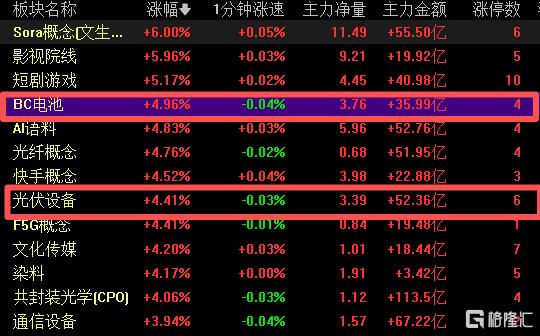
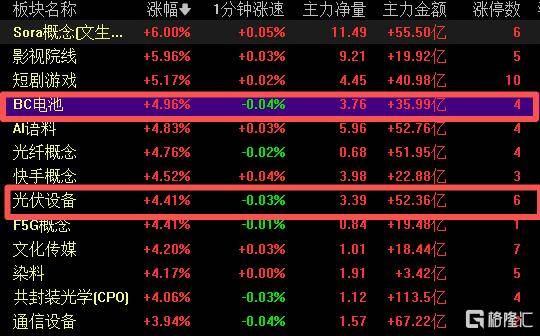
Group 1: SpaceX Developments - SpaceX is shifting its focus towards building a self-sustaining city on the Moon, with a timeline of less than 10 years for completion, while Mars colonization is projected to take over 20 years [3] - The company aims to conduct lunar missions every 10 days, significantly faster than the 26-month window for Mars missions [3] - SpaceX has informed investors of its priority on lunar missions, targeting an unmanned lunar landing by March 2027 [6] Group 2: Tesla Solar Manufacturing - Tesla is accelerating its solar manufacturing efforts to achieve an annual production target of 100 gigawatts of solar cells [9] - The company is considering expanding its Buffalo, New York facility to 10 gigawatts and potentially building additional factories in New York, Arizona, or Idaho [9] - Musk highlighted the underestimated potential of solar energy, emphasizing that space could become the most cost-effective location for AI deployment within the next three years due to the efficiency of solar panels in space [9] Group 3: Market Reactions and Opportunities - The commercial space, solar power, and battery sectors experienced significant stock price increases following these announcements, with companies like Juhua Materials and GCL-Poly Energy hitting their daily price limits [1] - Analysts predict exponential growth in space solar power demand, with major Chinese solar equipment manufacturers likely to benefit from partnerships with Tesla and SpaceX [11] - The market for space solar power is projected to reach substantial values, with estimates suggesting a potential market space of 29,179 billion yuan by 2030 under optimistic scenarios [12]

马斯克:将在月球和火星上建城市
Guo Ji Jin Rong Bao· 2026-02-09 08:44
Core Viewpoint - SpaceX aims to establish self-sustaining cities on the Moon and Mars, with a potential timeline of under 10 years for the Moon and over 20 years for Mars [1] Group 1: Moon and Mars City Plans - SpaceX has shifted its focus to building a self-sustaining city on the Moon, with a goal to achieve this in less than 10 years [1] - The company plans to initiate work on establishing a city on Mars within 5 to 7 years [1] Group 2: Acquisition of xAI - SpaceX has acquired xAI, an artificial intelligence company also founded by Elon Musk, to integrate AI with its space technologies [1] - The acquisition aims to create a comprehensive innovation engine that combines AI, rocket technology, space internet, and communication systems [1] - Analysts view this merger as a significant step towards developing "interstellar AI" [1]
10年造月球城市、100吉瓦光伏,马斯克又引爆A股!
Sou Hu Cai Jing· 2026-02-09 06:47
Core Viewpoint - Recent developments in commercial space, AI computing power, and space photovoltaics have garnered positive attention, particularly with Elon Musk's announcement regarding SpaceX's focus on building cities on the Moon and Mars, prioritizing lunar development [1][3][6]. Group 1: SpaceX Developments - SpaceX is shifting its focus to constructing a self-sustaining city on the Moon, with a timeline of less than 10 years for completion, while Mars city construction is projected to take over 20 years [2][3]. - The frequency of lunar missions can be as short as every 10 days, compared to Mars missions which occur every 26 months, indicating a faster development pace for lunar infrastructure [3]. - SpaceX is actively recruiting engineers in Austin and Seattle to develop AI satellites and space data centers, signaling a significant investment in AI capabilities [4]. Group 2: Tesla's Solar Manufacturing Expansion - Tesla is accelerating its solar manufacturing efforts to achieve a target of producing 100 gigawatts of solar cells annually, with plans to expand production capacity at its Buffalo, New York facility to 10 gigawatts [9][10]. - Musk emphasized the underestimation of solar energy opportunities and highlighted the advantages of deploying AI in space, predicting that within three years, space will become the most cost-effective location for AI deployment due to its consistent solar energy availability [9][10]. Group 3: Market Reactions and Future Projections - The commercial space, solar photovoltaics, and battery sectors experienced significant stock price increases following these announcements, with companies like 聚合材料, 协鑫集成, and TCL中环 reaching their daily price limits [1]. - Analysts predict exponential growth in space photovoltaics demand, with potential market space for space solar power reaching 29,179 billion yuan by 2030 under optimistic scenarios [11][12].
关于SpaceX在月球和火星上建城市,马斯克给出时间表
Huan Qiu Wang· 2026-02-09 01:58
Core Viewpoint - SpaceX aims to establish self-sustaining cities on the Moon and Mars, with a focus on achieving the Moon city within a decade and the Mars city in over 20 years [1][3]. Group 1 - SpaceX has shifted its focus to building a self-sustaining city on the Moon, with the potential to achieve this goal in less than 10 years [3]. - The company plans to initiate work on the Mars city in approximately 5 to 7 years, despite the longer timeline for completion [3]. - Elon Musk's recent acquisition of the AI startup xAI is seen as a strategic move to integrate advanced technologies for the development of interstellar AI [3].
新闻分析丨火箭+AI,马斯克要在太空做什么?
Xin Hua She· 2026-02-03 13:07
Core Viewpoint - Elon Musk's acquisition of xAI by SpaceX represents a strategic move to integrate AI with space technology, aiming to create a robust "interstellar AI" framework for future space exploration [1][2]. Group 1: Acquisition Details - SpaceX has acquired xAI, with SpaceX valued at $1 trillion and xAI at $250 billion, making this merger the most valuable private company globally [3]. - The merger is expected to create a synergistic ecosystem, enhancing Musk's extensive business empire, which includes Tesla and Neuralink [3][4]. - The estimated share price post-merger is projected to be around $527 [3]. Group 2: Strategic Implications - The integration aims to develop a "perceptive sun" to understand the universe and extend consciousness into interstellar space [3]. - Musk emphasizes that deploying AI in space is the most cost-effective solution for meeting AI's energy demands [1]. - SpaceX has recently applied to the FCC to deploy a satellite system of up to 1 million satellites to support high-performance computing needs for AI [1]. Group 3: Challenges and Considerations - The deployment of AI data centers in space faces challenges such as launch costs, satellite operation and maintenance, orbital congestion, space debris risks, and regulatory scrutiny [2][4]. - Regulatory bodies may scrutinize the merger due to potential conflicts of interest and overlapping roles within Musk's various companies [4].