Hailuo

Search documents
腾讯研究院AI速递 20260324
腾讯研究院· 2026-03-23 16:08
Group 1 - OpenClaw 3.22 version introduces a modular plugin SDK, replacing the old extension API, with ClawHub as the official distribution channel and compatibility with Claude, Codex, and Cursor plugins [1] - The update addresses over ten security vulnerabilities, including Windows SMB credential leakage and Webhook pre-authentication resource exhaustion, requiring public deployment users to update [1] - The default model is upgraded to GPT-5.4, with mini/nano forward compatibility, and Anthropic Vertex now supports direct GCP connection to Claude [1] Group 2 - Meta is developing a personal "CEO Agent" to streamline information retrieval, reducing reliance on multiple employee layers, with AI tools like My Claw and Second Brain already in use [2] - The company plans to lay off over 16,000 employees, approximately 20% of its workforce, continuing its efficiency strategy initiated in 2023 [2] - The rationale behind these layoffs is the significant increase in AI infrastructure investment, with projected AI capital expenditures reaching $115 to $135 billion by 2026 [2] Group 3 - MiniMax has launched the Token Plan, upgrading the previous Coding Plan to allow access to multiple models with a single API key, including programming, video, speech, music, and image models [3] - A resource package for professional developers and enterprises is introduced, offering savings of up to 20% compared to individual model calls [3] - Due to a surge in users after the M2.7 launch, dynamic throttling and weekly quota adjustments are implemented to ensure user experience [3] Group 4 - StepClaw has adapted the ClawBot plugin for WeChat, allowing users to access the AI assistant directly from their friend list with a simple three-step configuration [4] - Kimi has also integrated the ClawBot plugin for WeChat, offering both cloud and local installation options for users [5] - Youdao's LobsterAI has completed the WeChat ClawBot plugin adaptation, enabling seamless integration and shared memory across platforms [6] Group 5 - AutoClaw has integrated with WeChat ClawBot, allowing users to execute tasks via simple commands [7] - MaxClaw has connected to WeChat and other major IM platforms, promoting the OpenClaw community and open-source ecosystem [8] Group 6 - Google and scholars published in Science, suggesting that the AI singularity will lead to a trillion-agent society, evolving in complexity rather than a singular super-intelligence [9] - The research indicates that models like DeepSeek-R1 can enhance accuracy through multi-agent debate structures, improving performance significantly [9] - The article advocates for a "institutional alignment" approach over traditional reinforcement learning methods for managing AI ecosystems [9] Group 7 - a16z released its sixth edition of the Top 100 Gen AI Consumer Apps report, highlighting rapid growth in the Agent sector [10] - ChatGPT's web scale is 2.7 times that of Gemini and nearly 30 times that of Claude, indicating an intensifying consumer competition [10] - OpenClaw would rank 30th if included in the report, and the report also notes the global AI adoption rates, with Singapore leading and the US at 20th [10]

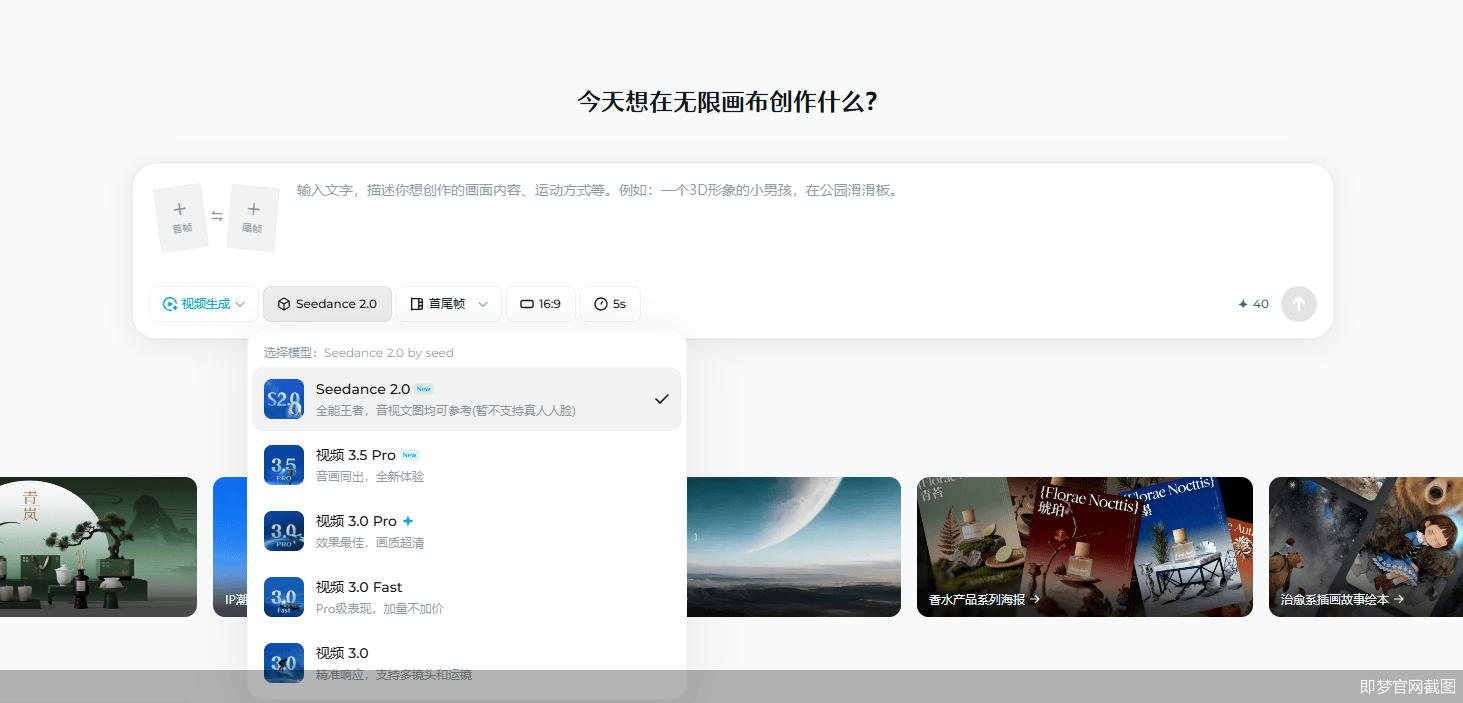
Seedance2.0产业冲击波
Bei Jing Shang Bao· 2026-02-10 16:54
Core Insights - ByteDance's AI video model Seedance 2.0 has gained global attention for its ability to generate "text-to-multicam movie-level videos," being referred to as "director-level AI" [1] - The launch of Seedance 2.0 has led to significant stock price increases for companies in the media sector, with Chinese Online's stock rising by 20% and other companies like Reading Group and iReader also seeing notable gains [1][6] Group 1: Seedance 2.0 Features - Seedance 2.0 supports multi-modal references and efficient creation capabilities, allowing users to upload up to 12 reference files (images, videos, audio) for AI to learn and replicate [3] - The model excels in complex narratives, fight scenes, and short drama generation, automatically generating suitable background music and sound effects [3][4] - It offers impressive transition and character consistency, addressing previous issues in video generation models [4] Group 2: Market Impact - The media sector saw a significant rise, with the cultural media sector increasing by 4.79% on February 9, driven by the excitement around Seedance 2.0 [6] - Individual creators are rapidly adopting Seedance 2.0 for film production, indicating a shift in the creative landscape [6][7] - The competitive landscape includes other models like OpenAI's Sora and xAI's Grok, with various companies vying for dominance in the AI video generation space [7][8] Group 3: Industry Concerns - The ability of Seedance 2.0 to generate realistic voices and scenes from a single photo raises concerns about data compliance and copyright issues [7] - ByteDance is responding to user feedback by temporarily restricting the input of real human images or videos as reference material [7] - The ongoing competition in the AI video generation sector is characterized by rapid advancements and varying capabilities among domestic and international models [8][9]



“导演级AI”出道:一场Seedance 2.0引发的产业冲击波
Sou Hu Cai Jing· 2026-02-10 13:59
Core Insights - The recent surge in stock prices for companies like Zhongwen Online and Yuedu is linked to the excitement surrounding ByteDance's AI video model Seedance 2.0, which has been described as a "director-level AI" capable of generating multi-shot, movie-quality videos from text inputs [3][5][8] Group 1: Seedance 2.0 Overview - Seedance 2.0 is a new AI video generation model launched by ByteDance, currently in limited testing since February 7, 2026, focusing on multi-modal references and efficient creation capabilities [5] - The model can replicate camera movements, action details, and musical ambiance, allowing users to modify unsatisfactory parts directly, marking a significant advancement in AI-generated content [5][6] - It supports the upload of up to 12 reference files (images, videos, audio) simultaneously, enabling the AI to learn and replicate visual composition, character traits, and action styles without complex prompts [5][6] Group 2: Market Reaction and Trends - Following the announcement of Seedance 2.0, the A-share media sector saw a notable increase, with the cultural media sector rising by 4.79% on February 9, 2026, leading all industry sectors [7][8] - Individual stocks such as Rongxin Culture and Zhongwen Online experienced significant gains, with Zhongwen Online's stock price reaching 42.34 yuan, a 20% increase from the previous day [3][9] Group 3: Competitive Landscape - The AI video generation space is becoming increasingly competitive, with other models like OpenAI's Sora and Runway's Gen-3 also making strides in the market [3][12] - Companies like Shengshu Technology and Kuaishou are actively developing their own models, with Kuaishou's Keling series and Shengshu's Vidu gaining recognition for their capabilities [12][13] - The rapid development of these models indicates a growing demand for AI-generated video content, with significant commercial potential as evidenced by Kuaishou's reported annual revenue run rate of $240 million [12] Group 4: Challenges and Considerations - Concerns regarding data compliance and copyright issues have emerged, particularly as Seedance 2.0 can generate realistic audio and visual content from minimal input, raising questions about the ethical use of such technology [10][11] - Experts emphasize the need for a balance between technological innovation and data compliance, highlighting the complexities of using personal and scene-specific data in AI training [11]
中国互联网:两家 AI 实验室的一小步…… 关于战略、竞争与盈利路径的思考-China Internet One small step for two AI labs... thoughts on strategy, competition, and the path to profits
2026-01-29 02:42
Summary of China Internet AI Labs Conference Call Industry Overview - The conference call focused on the AI lab sector within the China Internet industry, specifically discussing the recent IPOs of Z.ai (also known as Zhipu, Knowledge Atlas) and Minimax, which have significantly influenced AI sentiment in China since January 2026 [1][11]. Key Companies - **Z.ai**: Focuses on enterprise and developer markets, primarily offering on-premise solutions. Reported significant revenue growth and has been recognized for its model development progress [2][17]. - **Minimax**: Initially focused on consumer applications, now pivoting towards enterprise solutions. It has reported substantial revenue growth and aims for international expansion [3][14]. Core Insights and Arguments - **Market Sentiment**: The IPOs of Z.ai and Minimax have led to a surge in AI-related investments, with Z.ai and Minimax shares increasing by 101% and 196% respectively since their listings [11]. - **Model Development**: Both companies are positioned as "model as a product" entities, with their latest models ranking highly on global benchmarks. Z.ai's GLM-4.7 and Minimax's M2.1 models are noted for their competitive performance [12][28]. - **Revenue Growth**: Z.ai reported a 325% year-on-year revenue growth for H1 2025, while Minimax reported a 175% increase for 9M 2025, indicating strong market demand despite low initial revenue bases [12][64]. - **Economic Viability**: The companies are expected to maintain solid gross margins (60-70%) and are focusing on leveraging model training costs to enhance profitability. The anticipated increase in training spend at over 30% CAGR is seen as a positive indicator for growth [4][53]. Strategic Directions - **Minimax's Shift**: The company is transitioning from consumer-focused applications to enterprise solutions, with 73% of its revenue coming from overseas markets in 9M 2025. This pivot is driven by the need to compete against larger domestic players [3][14][49]. - **Z.ai's Focus**: Z.ai continues to prioritize enterprise clients, with 85% of its revenue from on-premise deployments. The company has a strong customer base, with 8,000 enterprise clients as of H1 2025 [19][66]. Financial Metrics - **Valuation Comparisons**: The conference highlighted the valuation metrics of various companies within the China Internet sector, with Tencent and Alibaba being top picks. Z.ai and Minimax's financials suggest a path to breakeven at revenue scales between $500 million to $1 billion [8][54]. - **Cost Structures**: Both companies face significant costs related to cloud hosting and compute, with Minimax's cloud costs representing 85.1% of revenue in 2024. R&D expenses are also substantial, with Minimax and Z.ai spending $180 million and RMB 1.6 billion respectively on R&D through their recent reporting periods [67][68]. Additional Insights - **Investor Sentiment**: There is a strong market appetite for AI investments, although some investors express concerns about high valuations based on price-to-ARR multiples. The ongoing competition from established players like Tencent and Alibaba poses challenges for new entrants [5][56]. - **Future Outlook**: The ability of both companies to deliver competitive next-generation models will be crucial for their success. The anticipated launch of new models in Q1 2026 is expected to drive further growth [52][53]. Conclusion - The conference call provided valuable insights into the evolving landscape of AI labs in China, highlighting the competitive dynamics, growth strategies, and financial health of Z.ai and Minimax. The overall sentiment remains bullish, with expectations for continued innovation and market expansion in the AI sector [7][11].
大模型第一股即将上市,从MiniMax和智谱招股说明书能看出什么
新财富· 2026-01-06 08:04
Core Viewpoint - The article discusses the recent surge in the AI industry in China, particularly focusing on the IPOs of domestic AI companies like Zhiyuan and MiniMax, highlighting their financial challenges and market positioning [2][3][4]. Group 1: Financial Pressure of Large Models - Zhiyuan and MiniMax are facing significant financial pressures, with high operational costs and low revenue generation, leading to substantial losses [6][7]. - Zhiyuan reported a revenue of 1.9 billion RMB with a loss of 23.51 billion RMB in the first half of 2025, resulting in a loss rate of 1232% [6]. - MiniMax generated approximately 53.4 million USD in revenue with a loss of 512 million USD in the first nine months of 2025, reflecting a loss rate of 958.2% [6]. Group 2: Business Models of Large Models - Zhiyuan primarily targets the B2B market, focusing on providing model-as-a-service (MaaS) solutions, while MiniMax emphasizes a B2C approach with a significant portion of its revenue coming from consumer subscriptions [10][11]. - MiniMax's revenue from consumer products accounts for 71.1%, with subscription services making up 42.1% and advertising around 29.2% [10]. - The two companies have different customer concerns, with Zhiyuan worried about losing large clients and MiniMax focused on user retention and international copyright issues [11]. Group 3: Market Positioning - Zhiyuan is seen as a domestic leader with strong ties to government funding and support, while MiniMax adopts a global strategy from its inception, focusing on international markets [12][13]. - MiniMax's approach to product development is driven by user experience, emphasizing direct customer service and internationalization [15]. - The article notes that the valuation of Chinese AI companies is significantly lower than their international counterparts, indicating a disparity in market perception [21][22]. Group 4: Technological Approaches - Zhiyuan's technology is centered around a general language model (GLM), which serves as the core for its various applications, while MiniMax focuses on a multi-modal approach that integrates text, voice, music, and video generation [16][19]. - Zhiyuan's strategy involves enhancing its GLM capabilities to meet the specific needs of enterprise clients, while MiniMax prioritizes rapid product iteration and user engagement [20]. - The article highlights that both companies represent different technological paths within the AI landscape, with Zhiyuan focusing on enterprise solutions and MiniMax on consumer engagement [20].
MiniMax作价461亿港元募资46亿,1月9日敲钟代码00100
量子位· 2025-12-31 05:28
Core Viewpoint - MiniMax, a Chinese AI company, is set to go public with an IPO aiming to raise over $600 million, valuing the company at over HKD 46.1 billion, and is expected to list on January 9, 2026 [2][7]. Group 1: Company Overview - MiniMax is positioned as a global artificial general intelligence (AGI) technology company, with services covering over 200 countries and regions, and 70% of its revenue coming from international operations [12]. - The company has a strong backing from 14 cornerstone investors, including Alibaba and the Abu Dhabi Investment Authority, with total subscriptions amounting to approximately HKD 27.23 billion [7][8]. Group 2: Market Context - December 2025 marks a significant period for IPOs in Hong Kong, with 25 companies having completed listings, making it the busiest month since 2019 [9]. - MiniMax and another company, Zhiyuan, are both entering the market around the same time, creating a competitive atmosphere that splits investor attention [10]. Group 3: Financial Performance - MiniMax's revenue has shown remarkable growth, reaching $3.46 million in 2023 and projected to soar to $30.52 million in 2024, representing a year-on-year increase of 782.2% [35]. - For the first nine months of 2025, revenue surged by 175% to $53.44 million, significantly surpassing the previous year's total [36]. - The company has improved its gross margin from -24.7% in 2023 to 23.3% in the first nine months of 2025, indicating a positive trend in profitability [38]. Group 4: Product Development - MiniMax has released several models, including the M1 and M2 text models, with M2 achieving top rankings in performance metrics [20][21]. - The company has also developed a voice model, Speech 01, and its upgraded version, Speech 02, which supports over 40 languages and has generated over 2.2 million hours of speech [24]. - MiniMax's video model, Hailuo, has been recognized for its capabilities in generating videos and has helped create over 590 million videos globally [28]. Group 5: Investment and Support - MiniMax has raised over $1.5 billion in funding from various strategic investors, including major tech companies and venture capital firms, positioning it as a leading player in the AGI space [50]. - The company has a cash reserve of $1.102 billion as of September 30, 2025, which is sufficient to sustain operations for over 53 months without additional funding [46].

火线解析MiniMax招股书!全球领先大模型成本只有OpenAI 1%,果然拳怕少壮
量子位· 2025-12-21 15:10
Core Viewpoint - MiniMax, a leading AI model unicorn, has successfully passed the Hong Kong Stock Exchange hearing, signaling its IPO ambitions amidst discussions about the bubble in large AI models like OpenAI [1][3]. Group 1: Company Overview - MiniMax has raised over $1.5 billion in funding within four years, attracting investments from notable firms such as MiHoYo, Alibaba, Tencent, and others [3][62]. - The company has a global presence, serving over 200 countries, with 70% of its revenue coming from international markets [6][42]. - MiniMax aims to achieve Artificial General Intelligence (AGI) and views scalability as a core driver towards this goal [8][7]. Group 2: Technological Advancements - MiniMax is one of the few companies that invested in multimodal model development from its inception [10]. - The company has released several models, including the M1 and M2 text models, with M2 achieving top rankings in performance and cost efficiency [16][17]. - MiniMax has also developed leading models in voice, music, and video, with its video model Hailuo ranking in the top tier of international tests [20][25][26]. Group 3: Financial Performance - MiniMax's revenue surged from $346,000 in 2023 to $30.52 million in 2024, marking a 782.2% increase [39]. - By the first nine months of 2025, revenue reached $53.44 million, significantly surpassing the previous year's total [40]. - The company has achieved a gross margin improvement from -24.7% in 2023 to 23.3% in the first nine months of 2025 [45][46]. Group 4: Operational Efficiency - MiniMax's R&D expenses have increased significantly, but the efficiency of these investments has improved, with training-related cloud computing costs as a percentage of revenue decreasing from over 1365% in 2023 to 266.5% in 2025 [52][54]. - The company has a cash reserve of $1.102 billion, sufficient to sustain operations for over 53 months without additional fundraising [58][59]. - MiniMax's team is young, with an average age of 29, and a high proportion of R&D personnel, which contributes to its innovative and efficient operational model [70][71].