
IVISTA中国智能汽车指数

Search documents
【回望2025】树立智能标尺,牵引产业前行:IVISTA中国智能汽车指数的“创新”赋能
Zhong Guo Qi Che Bao Wang· 2026-01-26 07:19
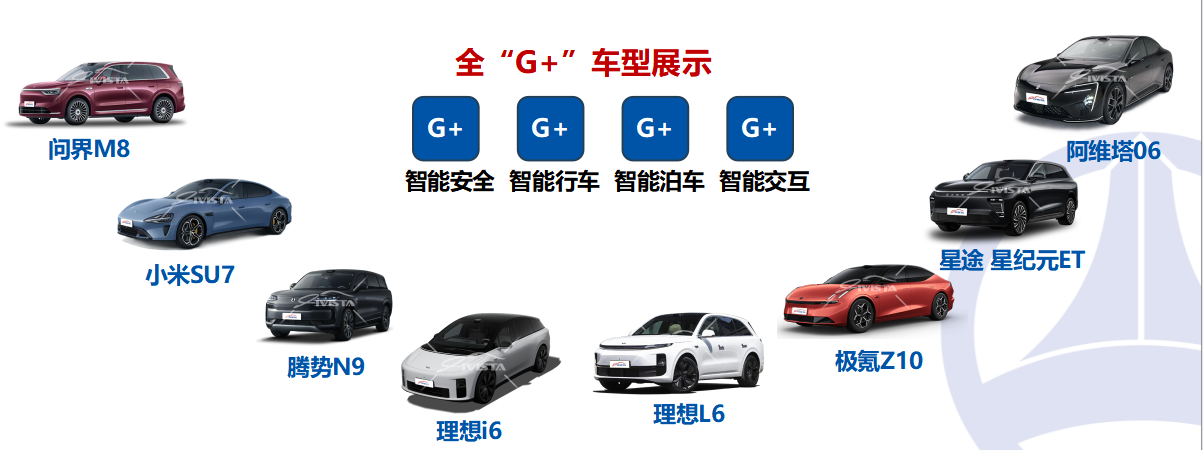
Core Insights - The article emphasizes the importance of innovation in driving high-quality development in China's automotive industry, particularly as it transitions from electrification to intelligentization [1] - The IVISTA China Intelligent Vehicle Index aims to establish a scientific and fair evaluation system for intelligent vehicles, which is crucial for the industry's high-quality development [1] Group 1: Evaluation Framework and Results - The IVISTA Intelligent Index, based on the 2023 revised guidelines, evaluates vehicles across four sub-indices: intelligent safety, intelligent driving, intelligent parking, and intelligent interaction [2] - By the end of 2025, the IVISTA Intelligent Index had evaluated 118 vehicle models, with 10 models receiving a "G+" rating under the 2020 guidelines, representing 22%, while 8 out of 17 models under the 2023 guidelines achieved a full "G+" rating, indicating a significant improvement in intelligent vehicle performance [2] Group 2: Performance Insights - Intelligent driving shows overall good performance, but there are areas for improvement, such as recognizing stationary targets on highways and handling complex road conditions [4] - Intelligent parking has seen a notable increase in performance, with domestic brands achieving a 100% excellence rate, and memory parking features being equipped in 84.6% of models, significantly outperforming joint venture and foreign brands [4] - The score for intelligent interaction has improved, with 100% of market models under the 2023 guidelines achieving excellence, particularly in occupant status monitoring, although there is still room for enhancement in AI dialogue and new cockpit technologies [4] Group 3: Future Developments - The IVISTA Intelligent Index will officially release the 2026 guidelines in April 2026, marking a new phase characterized by "full scene coverage and full-link verification" [17] - The new evaluation framework will include innovative testing methods for intelligent safety, intelligent driving, intelligent parking, and intelligent cockpit, focusing on real-world scenarios and user pain points [6][11][13][15] - The index aims to provide a forward-looking guide for industry technology development and consumer vehicle purchases, reinforcing its role as a professional benchmark and trend indicator [18]

起底汽车检测商业链条:75%毛利背后的隐秘规则
Di Yi Cai Jing· 2025-08-04 08:35
Core Viewpoint - The incident involving the Ideal i8 vehicle colliding with a truck has raised significant public concern regarding the integrity and scientific validity of automotive testing conducted by third-party institutions like China Automotive Research (CARS) [1][8] Group 1: Incident and Response - The collision test video showing the Ideal i8 causing a truck to "fly" has sparked widespread debate about the realism and physics of such outcomes [1] - Both CARS and Ideal Automotive issued statements clarifying that the test was designed based on common traffic accident scenarios [1] Group 2: Testing Procedures - The collision tests are typically customized projects where the manufacturer specifies the testing requirements, leading to a lack of standardized procedures [2][4] - Preparations for these tests involve multiple steps, including site selection and equipment setup, requiring collaboration between the manufacturer and the testing agency [2][3] Group 3: Market Dynamics - CARS has developed commercial testing projects like SUPER CRASH, which are utilized by various automotive manufacturers to validate safety features [5][6] - The pricing for these tests varies significantly based on complexity, with costs ranging from hundreds of thousands to millions of yuan [6] Group 4: Credibility Challenges - The intertwining of commercial interests and testing integrity poses challenges to the credibility of third-party testing agencies, as they must balance business sustainability with impartiality [7][8] - The recent Ideal i8 incident has highlighted the potential for misleading results that could distort public perception of vehicle safety [8] Group 5: Industry Trends - The automotive testing industry is expanding, particularly in the realm of intelligent driving assessments, driven by regulatory changes and market demand [9][10] - There is a growing need for a comprehensive and scientifically valid evaluation system for intelligent driving technologies, as current methods may not adequately reflect real-world performance [10]

中国中检李永吉:以新质生产力为引擎 推动汽车产业高质量发展
Zhong Guo Jin Rong Xin Xi Wang· 2025-07-31 10:23
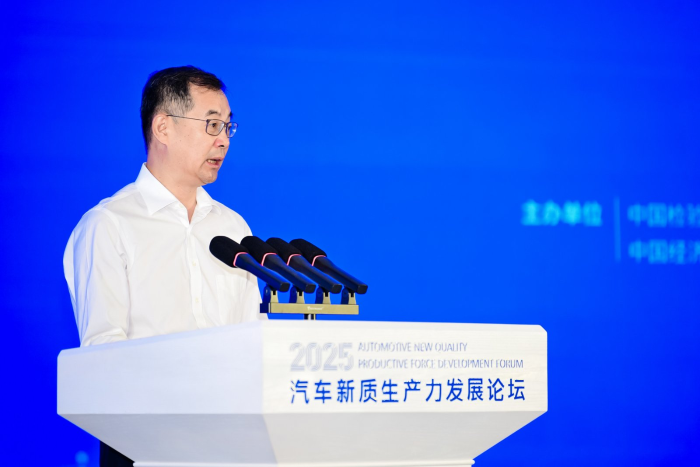
Core Viewpoint - The 2025 Automotive New Quality Productivity Development Forum highlighted the importance of new quality productivity as a key driver for economic development, particularly in the automotive industry, which is undergoing significant transformation and facing intense competition [3][4]. Group 1: Technological Innovation - Technological innovation is identified as the core driving force of new quality productivity, with AI, big data, and cloud computing significantly altering production and lifestyle [3]. - The automotive industry is positioned as a primary battleground for the development of new quality productivity, necessitating advancements in fundamental research and key technologies [3]. Group 2: Achievements of China Inspection and Certification Group - China Inspection and Certification Group (China CQC) has made notable breakthroughs in applying AI to safety testing for intelligent vehicles, establishing the "IVISTA China Intelligent Vehicle Index" to fill industry gaps [3]. - The company has achieved self-sufficiency in core testing equipment, successfully replacing foreign technology with domestically developed systems for key index testing [3]. Group 3: Standards and International Certification - China CQC has led the release of 1 international standard and 6 national standards, integrating Chinese technical solutions into the global regulatory framework [4]. - The organization completed the world's first NG-eCall vehicle export certification to the EU, aiding Chinese automotive companies in overcoming regulatory barriers and gaining early access to the intelligent connected vehicle market [4]. Group 4: Future Outlook - The automotive industry is undergoing profound changes, with increasing internal competition and multiple challenges [4]. - China CQC aims to continue collaborating with industry peers, leveraging technological innovation and new quality productivity to contribute to the high-quality and sustainable development of the automotive sector [4].
中国汽研周玉林:测试显示我国车内乘员安全水平5年提升50%
Bei Ke Cai Jing· 2025-07-12 07:32
Core Insights - The China Automotive Engineering Research Institute has completed in-depth evaluations of nearly 500 vehicle models across over 60 platforms, indicating significant advancements in automotive technology in China [1] - The safety index testing shows a remarkable increase in occupant safety ratings from 41% in 2019 to 91% in the past five years, reflecting improvements in vehicle safety standards [1] - The testing results for intelligent features reveal that domestic brands have a 90% adoption rate for navigation assistance and 88.8% for memory parking, significantly outperforming non-domestic brands [1] - The health index testing indicates a 25% reduction in formaldehyde concentration limits within vehicles and nearly a 10% decrease in temperature-related range degradation, showcasing advancements in vehicle health standards [1] Industry Developments - The upgrade and deepening of automotive indices are driven by the urgent need to align with national strategies, emphasizing the automotive industry's transition towards intelligence and sustainability [2] - Rapid technological iterations in the automotive sector present unprecedented challenges for evaluation techniques, necessitating continuous innovation in testing methods and expansion of evaluation dimensions to enhance precision [2] - Strengthening consumer rights is a priority, aimed at boosting consumer confidence in the automotive market [2]
中国汽研汽车指数走进电子科技大学 开启2025高校行首站
Zhong Guo Qi Che Bao Wang· 2025-04-10 06:43
Group 1 - The event "2025 China Automotive Index University Tour" was launched at the University of Electronic Science and Technology of China, supported by the China Automotive Engineering Research Institute [1] - AI technology continues to empower intelligent driving and smart cockpit, leading to increasingly diverse functions in smart automotive products [1] - Dr. Shi Jia from the China Automotive Engineering Research Institute presented a report on "Innovative Thoughts on Evaluation Technology in the Era of Intelligent Driving," highlighting the latest trends in the intelligent automotive industry [1] Group 2 - The "2025 'Technology for Good' Public Welfare Plan" was launched during the April event, focusing on intelligent safety and green health, demonstrating social responsibility [3] - The China Automotive Index has achieved significant results in automotive safety, intelligence, and health, creating a bridge between automotive supply and demand [5] - The university tour provides students with opportunities to engage with cutting-edge automotive technologies, fostering interest in the automotive field and cultivating talent for the industry [5]

强化汽车测评国际交流 中国汽研交出中国答卷
Zhong Guo Qi Che Bao Wang· 2025-03-28 05:39
Core Insights - The conference focused on automotive safety, intelligence, and health, emphasizing the importance of these areas in the industry's transformation and consumer concerns [1][3]. Group 1: Conference Overview - The 2025 China Automotive Index International Exchange Conference and Euro NCAP Technical Seminar was held in Chongqing, co-hosted by China Automotive Engineering Research Institute (China Automotive Research) and Euro NCAP [1]. - The theme of the conference was "Global Vision, Building Safety Together," attracting representatives from global NCAP organizations, automotive industry associations, experts, and company executives [1]. Group 2: China Automotive Research Contributions - China Automotive Research has been a leader in automotive testing, focusing on "intelligent safety" and "green health" since initiating automotive index research in 2014 [3]. - The organization has released over 200 industry standards and patent achievements to support national standard formulation and lead technological advancements in the industry [3]. Group 3: Testing Standards and Innovations - China Automotive Research has upgraded testing regulations every three years, with the current 2023 version in effect and the 2026 version under development [4]. - The organization has introduced specialized testing protocols, such as the "Intelligent Connected New Energy Vehicle Complex Cold Environment Testing Regulations," addressing challenges in extreme weather conditions [4][6]. Group 4: Technical Innovations - China Automotive Research has developed a database of over 15,000 future traffic accident scenarios and collected 3 million kilometers of natural driving data to support localized testing [7]. - The organization has pioneered several safety testing standards, including low-speed AEB testing scenarios and comprehensive assessments of in-vehicle environmental pollution [7][8]. Group 5: International Collaboration - China Automotive Research actively promotes international cooperation, establishing partnerships with global organizations like Euro NCAP to enhance the internationalization of automotive testing systems [11]. - The organization has helped numerous domestic models achieve Euro NCAP five-star ratings, facilitating the entry of Chinese automotive brands into international markets [13][14]. Group 6: Future Initiatives - The "China Automotive Index 2025 Technology for Good Public Welfare Plan" was announced, focusing on intelligent safety and green health initiatives [10]. - China Automotive Research aims to create a one-stop solution for automotive testing and certification, enhancing the global competitiveness of Chinese automotive brands [14].
