
MI440X芯片

Search documents
苏姿丰:未来几年,全世界算力需增加100倍!
新华网财经· 2026-01-06 14:57
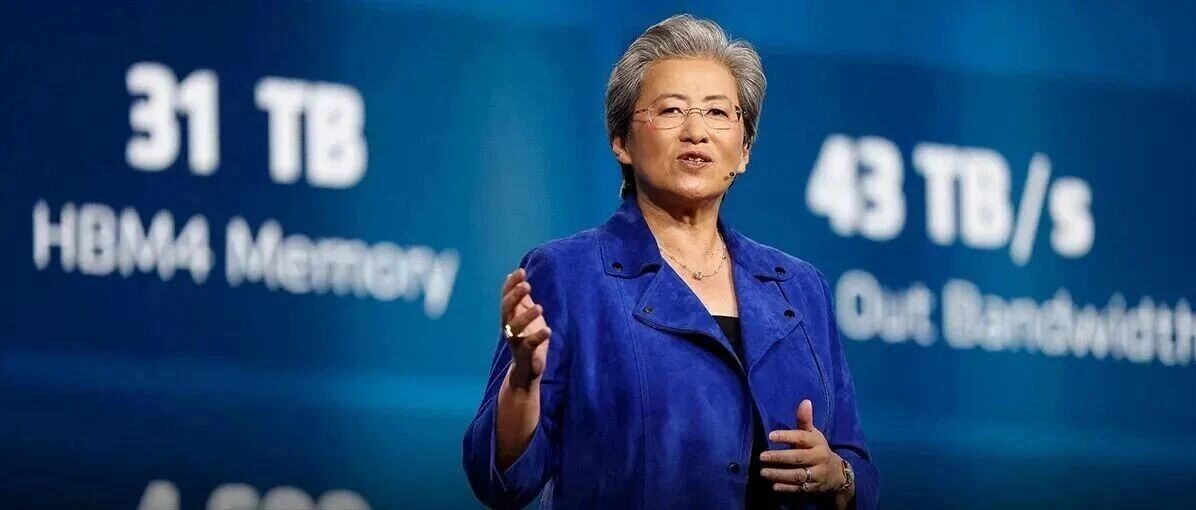
Core Viewpoint - AMD is positioning itself for the Yotta Flops era of AI computing, aiming to significantly enhance AI performance and capabilities through new product launches and technological advancements [2][4]. Group 1: New Product Launches - AMD unveiled several new products at CES 2026, including the MI455X GPU, Ryzen AI 400 series processors, and the Ryzen AI Max+ series [2]. - The MI455X is AMD's most advanced processor to date, featuring 320 billion transistors, a 70% increase from the previous MI355, and equipped with 432GB of HBM4 memory [5]. - The Ryzen AI 400 series processors utilize Zen 5 CPU architecture and RDNA 3.5 GPU, integrating up to 60 TOPS of NPU computing power, with the first Ryzen AI 400 PCs set to launch later this month [6]. Group 2: Future Plans and Innovations - AMD plans to release the MI500 series chips in 2027, which will utilize 2nm technology and HBM4e memory, potentially increasing AI performance by 1000 times over the next four years [5]. - The Helios platform, designed for the Yotta-level AI era, features a dual-width design and can accommodate up to 72 GPUs, emphasizing AMD's commitment to high-performance computing [4]. Group 3: AI Integration and Market Strategy - AMD views AI as a fundamental capability of PCs rather than an additional feature, indicating a shift towards integrating AI across various computing platforms [5][6]. - The company is targeting enterprise markets with the MI440X chip, designed for smaller data centers, allowing for local hardware deployment and data privacy [5].


英伟达(NVDA.US)、AMD(AMD.US)新品引爆CES!获华尔街普遍看好:“40年一遇”AI浪潮再升级
Zhi Tong Cai Jing· 2026-01-06 13:35
Core Insights - Nvidia and AMD made significant announcements at CES 2026, with Nvidia launching the Alpamayo model family for autonomous driving and announcing the full-scale production of its next-generation computing platform, Vera Rubin [1] - Analysts from Wedbush Securities expressed strong optimism about Nvidia's market potential, predicting its market capitalization could exceed $5 trillion in the short term and potentially reach $6 trillion [1] - The new foundational model for autonomous vehicles is seen as a marginal benefit for Tesla, which aims to accelerate its autonomous driving technology over the next decade [1] Group 1 - The AI capital expenditure wave is expected to benefit global enterprises by $3 to $4 trillion over the next three years, marking a significant paradigm shift in technology spending [2] - The CES event is viewed as a pivotal moment in the tech industry, with key IT decision-makers recognizing the ongoing transformation in technology spending [2] - Nvidia and AMD highlighted the explosive growth in inference tokens as a core driver of computing demand, with many customers urgently requiring more capacity [2] Group 2 - Morgan Stanley analysts noted that while there were no major surprises at the conference, confidence in Vera Rubin remains positive amid rising competition from Google's TPU [3] - The analysts emphasized that AMD's success is largely driven by the overall strong demand for computing power rather than a long-term competitive advantage in total cost of ownership [3] - Despite AMD's relative strength in the CPU market, concerns about memory price increases lead to a cautious outlook on its short-term growth prospects [3]

美股盘前要点 | 2026“科技春晚”CES重磅来袭!传美国政府将与油企高管会面
Ge Long Hui· 2026-01-06 12:37
Group 1 - NVIDIA's CEO Jensen Huang announced the full production of the Vera Rubin platform, which enhances AI inference performance by 5 times and reduces costs to one-tenth [1] - NVIDIA released the world's first open-source VLA autonomous driving inference model, Alpamayo, and the first Mercedes-Benz CLA model equipped with NVIDIA's full-stack DRIVE system is set to hit the roads in the U.S. in the first quarter of this year [1] Group 2 - AMD launched a new chip, MI440X, aimed at enterprise data centers and showcased the Helios system based on MI455X, targeting NVIDIA's dominance in the AI hardware market [1] - U.S. stock index futures showed mixed results, with Nasdaq futures up by 0.09% while S&P 500 and Dow futures were down by 0.03% and 0.14% respectively [2] - European stock indices displayed mixed performance, with Germany's DAX up by 0.35% and the UK's FTSE 100 up by 0.69%, while France's CAC and the Euro Stoxx 50 were down by 0.41% and 0.14% respectively [2] - U.S. Energy Secretary is reported to meet with oil industry executives to discuss the "revival" of Venezuela's energy sector [2] - Qualcomm is expanding its PC chip lineup with the new X2 Plus processor targeting mid-range laptops [2] - Tesla China is offering a 5-year 0% interest plan for the purchase of Model 3 and Model Y vehicles [2] - Microchip Technology raised its third-quarter net sales forecast to approximately $1.19 billion, exceeding market expectations [2] - U.S. power supplier Vistra plans to invest $4 billion to acquire multiple power plants across the U.S. [2] - Lucid, Nuro, and Uber announced the production of mass-market autonomous taxis, expected to be launched within the year [2] - NIO celebrated the production of its one millionth vehicle, with CEO Li Bin stating a target of 40% to 50% annual sales growth in the future [2] - Hesai plans to double its annual production capacity to 4 million units by 2026 and has been selected by NVIDIA as a lidar partner [2] - WeRide's Robotaxi GXR became the world's first Robotaxi equipped with the NVIDIA DRIVE Thor X chip [2]