MaaS(模型即服务)

Search documents
字节CEO梁汝波:行业高峰不常有 短期是豆包/Dola助手应用
Feng Huang Wang· 2026-01-30 08:50
Core Insights - ByteDance's CEO Liang Rubo emphasized the importance of reaching new industry peaks, identifying AI as a significant opportunity comparable to previous technological revolutions like PC, Web, and Mobile [1][2] - The emergence of new peaks occurs approximately every 15-20 years, with companies that have previously succeeded in earlier peaks having a better chance of capitalizing on new opportunities [2] Group 1: Industry Peaks - The IT industry's major peaks over the past 50 years include PC, Web, and Mobile, with notable companies like Microsoft, Google, Amazon, Apple, and Meta emerging during these times [2] - Companies that previously thrived in earlier peaks, such as Apple and Google, are well-positioned to take advantage of the current AI peak, particularly Google [2] - The duration of competitive opportunities during these peaks is decreasing, as evidenced by the rapid establishment of dominance in the Mobile era shortly after the iPhone's release [2] Group 2: AI and Assistant Applications - In the short term, the focus is on the Dola assistant application, which is seen as a significant direction for AI beyond traditional search functionalities [3] - The industry consensus is that assistant applications have evolved to include capabilities beyond simple Q&A, such as image generation and programming [3] - There are substantial opportunities in the B2B sector, particularly with Model as a Service (MaaS), which is rapidly growing within ByteDance's Volcano Engine [3] - The integration of assistant capabilities with existing products and services is crucial for enhancing overall business performance [3]
字节跳动CEO梁汝波:AI时代存在重要机会,2026年要“勇攀高峰”
Sou Hu Cai Jing· 2026-01-30 02:54
Core Insights - The core message of the article emphasizes ByteDance's strategic focus on leveraging AI opportunities, particularly through the development of assistant applications and the integration of existing services to achieve higher operational efficiency and talent density [2][3][4][5][6][7] Group 1: Strategic Focus - ByteDance's CEO, Liang Rubo, set the 2026 keyword as "climbing to new heights," highlighting the importance of pursuing significant opportunities in the AI era [2] - The company recognizes that the AI peak is comparable to the major technological peaks of the past 50 years, such as PC and Web, with the current focus on assistant applications [2] - There is a consensus in the industry that assistant applications will evolve beyond simple search functionalities to include creative and programming capabilities [2] Group 2: Business Integration and Efficiency - The company aims to focus its business strategy on achieving higher integration and collaboration among departments to avoid internal competition and inefficiencies [3] - Liang emphasized the need for continuous investment in business efficiency, particularly in areas like computing costs, resource utilization, and system architecture [3] - The company is committed to enhancing talent density and employee compensation to drive innovation and maintain a competitive edge in the AI landscape [3][7] Group 3: Public Trust and Cultural Values - Building global public trust is essential for supporting foundational services, which includes actively engaging with regulators and prioritizing user data security [4] - The company aims to foster a culture of humility and responsiveness to public feedback while exploring external collaborations [4][5] - Liang highlighted the importance of maintaining an entrepreneurial mindset to navigate industry changes effectively [5][6] Group 4: Talent Investment - ByteDance views investment in talent as a strategic priority rather than a cost, planning to enhance compensation and incentive structures to attract top talent globally [7] - Specific measures include increasing performance bonuses by 35% and significantly raising salary adjustments compared to previous cycles [7] - The company encourages potential talent to join and seize opportunities in the evolving landscape [7]

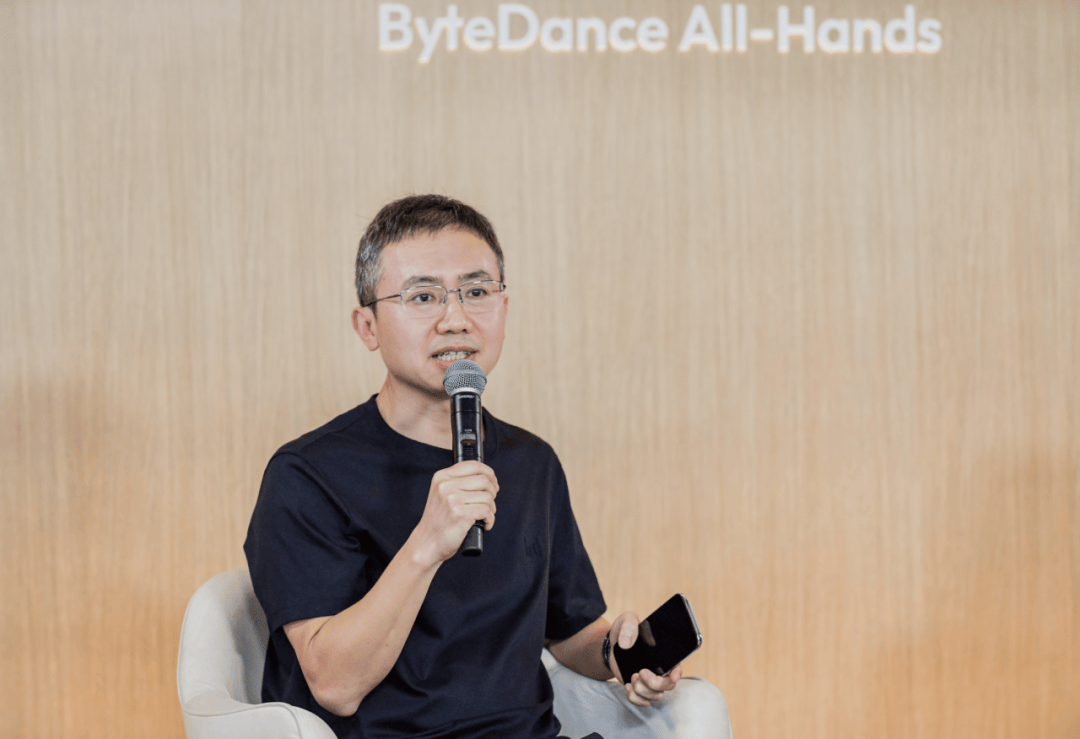
字节跳动发布2026年度关键词:“勇攀高峰”
新华网财经· 2026-01-30 01:04
Core Viewpoint - The core theme of the article is ByteDance's ambition to "climb to new heights" in the AI era, focusing on the development of its Dola assistant application as a key priority for 2026 [1][3]. Group 1: AI Opportunities - CEO Liang Rubo emphasized the significant opportunities presented by the AI era, stating that ByteDance aims to pursue the most important ones, particularly through the Dola assistant application [3]. - Liang highlighted that ByteDance's foundational AI models are among the top tier in China, with image and video generation capabilities ranking internationally [3]. - The company recognizes that while Dola's user base and experience are improving, there is still a gap compared to leading global competitors [3]. Group 2: Historical Context and Future Challenges - Liang reflected on the tech industry's evolution over the past 50 years, noting that major peaks of opportunity arise approximately every 15 to 20 years, citing Microsoft, Google, and Apple as examples of companies that capitalized on these peaks [5]. - He pointed out that the challenges of reaching new peaks are increasing, with the current AI peak expected to be at least as significant as the previous PC and internet peaks [5][6]. - The duration of peak opportunities is shortening, with the competition in the PC era lasting over a decade, while the mobile era was clearly defined within four years of the iPhone's launch [6]. Group 3: Talent and Incentives - To achieve its goals, ByteDance plans to enhance talent density and increase incentives to attract and retain top talent [10]. - The company has reported that its promotion rates and speed are higher than those of other leading firms, particularly benefiting early-career employees [10]. - ByteDance is committed to increasing its talent investment, with plans to raise bonuses and salary adjustments significantly, aiming for competitive compensation across global markets [11]. Group 4: Strategic Focus and Collaboration - Liang stated that achieving the "climb to new heights" goal requires strategic focus, business integration, and continuous improvement in operational efficiency [12]. - The company aims to build a global reputation for public trust, emphasizing the importance of user data and privacy protection while fostering healthy industry relationships [11][12].

字节跳动CEO梁汝波:短期是做好豆包和Dola,AI模型能力要做到行业前列
Sou Hu Cai Jing· 2026-01-29 15:04
Core Insights - The CEO of ByteDance, Liang Rubo, emphasized the importance of seizing opportunities in the AI era, identifying the short-term peak for the company as the Doubao and its overseas version, Dola [3] - Liang highlighted that ByteDance's foundational AI model capabilities rank among the top tier in China, with image and video generation models being internationally competitive [3] - He noted that the duration of peak opportunities is decreasing, with the AI peak being at least on par with the PC and internet eras [4] Business Development - In 2025, ByteDance's Doubao experienced rapid user growth and improved product experience, although it still lags behind leading global competitors [3] - Liang pointed out that the emergence of new peak opportunities occurs approximately every 15 to 20 years, citing examples of Microsoft, Google, and Apple successfully capitalizing on past technological peaks [3][4] - The company aims to enhance its AI model capabilities and integrate existing product services to achieve new heights [4] Talent and Incentives - To climb these peaks, ByteDance plans to increase talent density and incentives to attract and retain employees [5] - The company reported a higher promotion rate and speed for employees compared to other leading firms, with early-career employees experiencing faster development [5] - ByteDance announced plans to enhance compensation competitiveness, including a 35% increase in performance evaluation cycles and a 1.5 times increase in salary adjustments [5][6] Corporate Responsibility - Liang emphasized the importance of addressing public and regulatory concerns, aiming to maximize social benefits and protect user data and privacy [6] - The company seeks to foster healthy relationships within the industry through humility and collaboration [6]
字节跳动梁汝波:确保员工薪酬竞争力“领先于头部水平”
Shang Hai Zheng Quan Bao· 2026-01-29 14:50
Core Insights - The core theme of ByteDance's 2026 strategy is "Dare to Climb High Peaks," emphasizing the pursuit of significant opportunities in the AI era [1][3]. Group 1: AI Opportunities - CEO Liang Rubo highlighted the importance of seizing opportunities in the AI era, with a focus on the Dola assistant application as a short-term peak for the company [3][7]. - ByteDance's foundational AI models are ranked among the top tier in China, with image and video generation capabilities recognized internationally [3][6]. - The company aims to enhance its AI model capabilities to industry-leading levels and integrate existing product services through the Dola assistant [7][10]. Group 2: Talent Investment and Incentives - To achieve its goals, ByteDance plans to increase talent density and enhance incentives, ensuring competitive compensation across global markets [9][10]. - The company has reported a higher promotion rate and speed for employees compared to other leading firms, particularly benefiting those who join early in their careers [9][10]. - ByteDance's new incentive policies include a 35% increase in performance evaluation bonuses and a 1.5 times increase in salary adjustments compared to previous cycles [10]. Group 3: Strategic Focus and Public Trust - The company emphasizes the need for strategic focus, operational efficiency, and cultural entrepreneurship to achieve its "Dare to Climb High Peaks" goal [10]. - Building global public trust is essential for supporting foundational services, with a commitment to user data and privacy protection [10].
梁汝波:对于字节跳动来说,“高峰”短期内就是豆包/Dola助手应用
Cai Jing Wang· 2026-01-29 14:08
Core Insights - The core theme of the meeting is "Striving for New Heights," emphasizing the importance of seizing opportunities in the AI era and focusing on the Dola assistant application as a short-term goal for the company [1][2] Group 1: AI Strategy and Business Focus - The company aims to leverage AI technology to enhance user experience and creativity, aligning with its mission to "inspire creativity and enrich life" [2] - The Dola assistant application is identified as a key focus area, with the potential for expansion into various AI functionalities, including image generation and programming [2][3] - The company recognizes significant opportunities in the B2B sector through Model as a Service (MaaS), which has seen rapid growth in the past year [3] Group 2: Talent Investment and Compensation - The company plans to increase talent investment and enhance compensation competitiveness globally, including a 35% increase in performance evaluation cycles and a 1.5 times increase in salary adjustments compared to the previous period [3] - The goal of the new incentive policies is to ensure that employee compensation and incentives are leading in global markets, reflecting the company's commitment to human capital as a key investment [3] Group 3: Strategic Focus and Organizational Culture - The company emphasizes the need for strategic focus in business operations, promoting integration and collaboration while enhancing operational efficiency [4] - A culture of entrepreneurship is encouraged, with a focus on leadership principles and accountability to support the company's ambitious goals [4]
字节要勇攀高峰?CEO梁汝波:短期内高峰就是做好豆包应用
Bei Ke Cai Jing· 2026-01-29 13:53
Core Insights - ByteDance's CEO Liang Rubo announced the company's 2026 theme as "Courage to Scale New Heights" during the first all-hands meeting of the year [1] - Liang emphasized that peak opportunities in the tech industry occur every 15 to 20 years, citing the successes of Microsoft, Google, and Apple in seizing peak moments in the PC, Web, and Mobile eras [2] - The company aims to excel in AI applications, particularly through its Dola assistant, which has expanded its use cases since the emergence of ChatGPT in late 2022 [2][4] Group 1: Strategic Focus - The company identifies the short-term peak as enhancing the Dola assistant application, which has shown practical value despite some immature features [2] - Liang highlighted the importance of AI model capabilities, stating that each business unit must achieve breakthroughs, with a focus on integrating existing products and services [3] - The company sees significant opportunities in the B2B sector through Model as a Service (MaaS), which has been the fastest-growing segment for its Volcano Engine [3] Group 2: Talent and Competitive Position - To achieve its peak ambitions, the company plans to increase talent density and enhance incentives, ensuring that compensation remains competitive globally [4] - Liang noted that ByteDance's foundational AI model capabilities rank among the top tier in China, with image and video generation models positioned at the international forefront [4] - The user base and growth of the Dola assistant are progressing rapidly, although there remains a gap compared to leading global competitors [4]
字节跳动CEO 梁汝波:公司2026年关键词是“勇攀高峰”,将持续提高人才密度、加大激励
Xin Lang Cai Jing· 2026-01-29 12:40
Core Viewpoint - ByteDance's CEO Liang Rubo announced that the keyword for 2026 is "Striving for New Heights," emphasizing the importance of seizing opportunities in the AI era and focusing on the Dola assistant application as a short-term goal [1][4]. Group 1: Talent and Incentives - The company aims to increase talent density and enhance incentives to attract and retain employees, ensuring that compensation and rewards are competitive globally [2][5]. - ByteDance's performance and incentive head revealed that the promotion rate and speed for employees are higher and faster compared to other leading companies [5]. - Liang highlighted that employees who join ByteDance earlier in their careers tend to develop faster, attributing this to the company's ability to provide opportunities for individuals to showcase their skills [2][5]. Group 2: AI Business Development - ByteDance's AI capabilities are positioned in the top tier in China, with image and video generation models ranking among the best internationally [1][4]. - The Dola assistant application is experiencing rapid user growth and improved product experience, although there is still a gap compared to top global competitors [1][4]. - In the B2B sector, the company sees significant opportunities in Model as a Service (MaaS), which has been the fastest-growing business for Volcano Engine over the past year [5]. Group 3: Compensation Strategy - The company plans to increase talent investment by enhancing salary competitiveness and stock option incentives to address global talent competition [2][5]. - Specific measures include a 35% increase in the performance evaluation cycle for 2025 compared to the previous cycle, a 1.5 times increase in salary adjustment investment, and raising the salary package limits for all levels [5][6]. - Liang emphasized that ensuring competitive compensation and incentive returns across global markets is a fundamental goal for the company [6].
陈琦:港股AI上市潮,滚烫的不止是资本
Sou Hu Cai Jing· 2026-01-14 12:15
Group 1 - The core viewpoint of the article highlights the surge of AI companies listing on the Hong Kong Stock Exchange, driven by the current AI boom and the favorable regulatory environment, marking a significant milestone in the capitalisation of China's AI industry [2][3] - A total of six AI companies have gone public within a month, creating a cluster with a market value exceeding 100 billion, indicating an unprecedented concentration of AI in the Hong Kong market [2] - AI companies are facing severe funding challenges, with all listed firms currently operating at a loss, making IPOs a crucial avenue for survival as private funding channels tighten [2] Group 2 - The introduction and optimization of Chapter 18C of the Hong Kong Stock Exchange listing rules provide a green light for unprofitable yet high-growth potential tech companies, aligning well with the characteristics of AI firms [3] - Unlike the early internet boom's focus on mere traffic, the current AI listing trend in Hong Kong emphasizes tangible business validation over speculative narratives, with a preference for companies demonstrating revenue growth and user engagement [5] - The capital market is increasingly concentrating on key segments of the AI industry, with upstream companies focused on computing power and downstream AI applications receiving significant attention due to their ability to generate cash flow [5] Group 3 - The valuation models for AI companies on the Hong Kong Stock Exchange have evolved beyond traditional PE frameworks, now incorporating a three-dimensional assessment based on technological barriers, commercialization progress, and ecosystem synergy [6] - The global competitive landscape is diverging, with Chinese AI companies opting for public fundraising to enhance independent R&D, contrasting with international giants pursuing acquisitions to strengthen competitive barriers [8] - Despite the emergence of several billion-dollar companies, long-term challenges persist in the AI industry, including reliance on foreign advanced chip manufacturing processes and unclear commercialization paths for many firms [8][9] Group 4 - The current wave of AI listings in Hong Kong mirrors the biotech boom of 2018, which produced both successful companies and numerous "zombie stocks," raising questions about the sustainability of AI firms once market valuations normalize [8] - Investors face both opportunities and challenges, as they can share in the benefits of China's AI wave while needing to discern which companies possess genuine competitive advantages capable of enduring market fluctuations [9]

“全球大模型第一股”智谱启动招股,预计募资规模43亿港元
财联社· 2025-12-30 10:36
Core Viewpoint - The competition for the title of "the first global large model stock" will conclude by the end of 2025, with Zhiyuan Huazhang officially launching its Hong Kong IPO on December 30, 2025, aiming to raise approximately HKD 4.3 billion and achieve a market valuation exceeding HKD 51.1 billion [1]. Financial Performance - Zhiyuan Huazhang's revenue has grown from HKD 57.4 million in 2022 to HKD 312 million in 2024, reflecting a compound annual growth rate (CAGR) of 130% [2]. - In the first half of 2025, the company reported revenue of HKD 191 million, a year-on-year increase of 325.39% [3]. - The gross margin has remained robust, with figures of 54.6%, 64.6%, and 56.3% from 2022 to 2024, and 50.0% in the first half of 2025, indicating strong technical pricing power and product competitiveness [3]. Business Model - The core of Zhiyuan Huazhang's revenue growth is its successful MaaS (Model as a Service) business model, which allows developers and enterprise clients to easily access its large model capabilities through open API interfaces [3]. - The company has shifted its revenue structure significantly, with localized deployment revenue decreasing from 97.6% in 2022 to 69.4% in the first half of 2025, while cloud deployment (MaaS) revenue increased from 2.4% to 30.6% in the same period [5]. Technological Foundation - Founded in 2019, Zhiyuan Huazhang has a strong technical foundation rooted in Tsinghua University, with a research team of 657 members, many holding PhDs from top universities [5]. - The company's R&D expenditures have escalated from HKD 84.4 million in 2022 to HKD 2.195 billion in 2024, with further increases to HKD 1.594 billion in the first half of 2025, primarily directed towards computing service costs [5]. Market Position - As of 2024, Zhiyuan Huazhang holds the leading position among independent general large model developers in China, with a market share of 6.6% [5]. - The company has over 12,000 institutional clients and its large model technology supports more than 80 million terminal devices, reflecting significant market penetration [6]. Investment and Funding - Prior to its IPO, Zhiyuan Huazhang completed eight rounds of financing, raising over HKD 8.3 billion, with participation from major industry players and top investment institutions [10]. - The IPO will see 11 cornerstone investors, who have committed to a total of HKD 2.98 billion, accounting for nearly 70% of the offering [11]. Future Outlook - The Chinese large language model market is projected to grow from HKD 5.3 billion in 2024 to HKD 101.1 billion by 2030, indicating a significant opportunity for Zhiyuan Huazhang [12]. - The company's IPO is viewed as a landmark event, marking a shift in the AI industry from merely telling technological stories to realizing commercial value [12].