MaaS(模型即服务)

Search documents
大模型第一股首份成绩单出炉
第一财经· 2026-03-31 15:55
Core Viewpoint - The article discusses the annual performance announcement of Zhipu (2513.HK), referred to as the "first stock of large models," highlighting significant revenue growth but also increasing losses, reflecting the challenges in the large model industry [3]. Financial Summary - Zhipu reported total revenue of RMB 724.33 million for 2025, a year-on-year increase of 131.9% [4] - Gross profit reached RMB 296.66 million, up 68.7% year-on-year, but the gross margin decreased from 56.3% to 41.0% due to the increased share of cloud services [4] - Research and development expenses rose by 44.9% to RMB 3.18 billion, while the net loss for the year was RMB 4.72 billion, a 59.5% increase compared to the previous year [4] Business Segmentation - Zhipu's revenue breakdown shows the enterprise-level general model generated RMB 365.7 million, the open platform and API brought in RMB 190.4 million, the enterprise-level intelligent agents contributed RMB 165.7 million, and technical services and others accounted for RMB 25.4 million [5] - The cloud and enterprise-level intelligent agent revenues saw substantial increases of 292.6% and 248.8%, respectively, with cloud gross margins improving from 3.3% to 18.9%, surpassing industry averages [5] Future Outlook - Zhipu's CEO, Zhang Peng, indicated that the annual recurring revenue (ARR) for the open platform and API business grew 60 times, asserting the company's pricing power in the industry [5] - The company aims to continue its development along the path of becoming "China's Anthropic," focusing on a simplified and economical business model for API services [5] - Concerns about the sustainability of the token economic model were addressed, with the chairman, Liu Debing, suggesting a tiered approach to tokens, where lower-tier tokens may adopt a low-cost or free advertising model, while higher-tier tokens maintain pricing power based on ROI [6]


超预期!大模型第一股智谱交出首份“中国Anthropic”式财报
财联社· 2026-03-31 13:54
Core Viewpoint - The article highlights the successful financial performance of Zhipu, which has demonstrated its commercial viability in the Chinese market for the MaaS (Model as a Service) model, achieving significant growth in its API business and profitability amidst a competitive landscape [1][4]. Group 1: Financial Performance - Zhipu's API business achieved an Annual Recurring Revenue (ARR) of 1.7 billion yuan, marking a 60-fold increase over the past year [1]. - The gross profit of Zhipu rose from 1.759 billion yuan in 2024 to 2.967 billion yuan in 2025, representing a growth rate of 68.7% [4]. - The company's gross margin for its MaaS API platform improved nearly fivefold to 18.9% year-on-year, indicating a significant enhancement in profitability [1]. Group 2: Market Position and Strategy - Zhipu's API platform has over 4 million registered enterprises and users, serving more than 218 countries and regions globally [1]. - Nine out of the top ten internet companies in China are utilizing Zhipu's GLM model, indicating strong market penetration and demand [2]. - The GLM-5 model was integrated by major platforms like ByteDance and Alibaba within 24 hours of its release, showcasing its differentiated advantages in real-world applications [2]. Group 3: Pricing Power and Market Dynamics - Zhipu raised its API prices by 83% in the first quarter of 2026, a move that defied market trends but was supported by the model's technological advantages [3]. - The increase in API prices did not lead to a decrease in usage; instead, there was a surge in demand, highlighting that customers are willing to pay for effective solutions [3]. - Analysts noted that the pricing power of Zhipu reflects the monetization of its intelligent capabilities, with improved gross margins attributed to enhanced model efficiency and a higher proportion of high-value clients [3]. Group 4: Business Model Transformation - The revenue structure of Zhipu has shifted from service-driven to standardized API service-driven, indicating a significant transformation in its business model [7]. - The concept of Token Architect Capability (TAC) was introduced, defined as the product of the quantity of intelligent calls, the quality of intelligence, and the efficiency of converting that into economic value [7][8]. - This new framework positions Zhipu not just as a model company but as a foundational infrastructure provider in the intelligent economy, with its value measured by the economic outcomes generated through its platform [8].

云知声上市后首份年报超预期:大模型业务收入增超10倍,已接近盈亏平衡点
IPO早知道· 2026-03-26 12:58
Core Viewpoint - The article highlights the significant growth and operational improvements of CloudWalk (云知声) in 2025, showcasing its strong revenue increase and strategic advancements in AI technology and applications [3][5][10]. Financial Performance - In 2025, CloudWalk achieved total revenue of 1.21 billion RMB, representing a year-on-year growth of 29% [5] - Revenue in the second half of 2025 grew by 33% to 810 million RMB [5] - The large model business generated 610 million RMB, with a year-on-year increase exceeding 10 times, particularly strong in the second half with approximately 500 million RMB in revenue [5] Operational Efficiency - The net loss in the second half of 2025 narrowed by 84% year-on-year, with adjusted losses decreasing by 92%, nearing breakeven [5] - Adjusted operating expense ratio decreased significantly by 10 percentage points compared to 2024, with sales expenses dropping to 5.4% of revenue [7] - The per capita output for CloudWalk employees was 2.52 million RMB, a 25% increase from 2.02 million RMB in 2024, indicating strong operational efficiency [7] Business Strategy - CloudWalk adheres to a "strong foundational model + deep application" strategy, enhancing its full-modal technology base and expanding the global influence of its self-developed large model matrix in sectors like healthcare and voice recognition [7][10] - The company has effectively implemented a dual-driven strategy in smart healthcare and smart living, with smart living revenue reaching 968 million RMB, a 30.8% increase [8] - The smart transportation segment saw nearly 40% growth, with applications based on the mountain-sea large model deployed in over 10 cities [8] Technological Advancements - Cumulative shipments of AI chips surpassed 110 million units, validating CloudWalk's scalability in terminal AI products [9] - The smart healthcare business generated 244 million RMB, a 22.2% increase, with a 53.2% rise in average transaction value [9] - CloudWalk invested over 380 million RMB in R&D, accounting for 75% of adjusted operating expenses, with 69% of personnel dedicated to R&D [9] Future Outlook - CloudWalk plans to deepen its "strong foundational model + deep application" strategy, focusing on strategic investments in foundational large models and expanding its business in smart living and healthcare [10] - The company is set to launch a native intelligent model for programming and office applications in the second quarter to third quarter of 2026, aiming for significant improvements in smart density and token production efficiency [10]

BABA(BABA) - 2026 Q3 - Earnings Call Transcript
2026-03-19 12:32
Financial Data and Key Metrics Changes - Total revenue for the quarter was RMB 284.8 billion, with a like-for-like growth of 9% excluding revenue from Sun Art and Intime [12][13] - GAAP net income decreased by 66% to RMB 15.6 billion, while total adjusted EBITDA fell by 57% due to strategic investments [13] - Operating cash flow was an inflow of RMB 36 billion, and free cash flow decreased by RMB 27.7 billion year-over-year to RMB 11.3 billion [13] Business Line Data and Key Metrics Changes - Revenue from the China E-commerce group increased by 6% to RMB 159.3 billion, while customer management revenue rose by 1% [14] - Quick Commerce revenue surged by 56% to RMB 20.8 billion, reflecting strong growth and improved unit economics [14][15] - Cloud Intelligence Group's revenue from external customers grew by 35%, with AI-related product revenue achieving triple-digit growth for the 10th consecutive quarter [16] Market Data and Key Metrics Changes - Cloud Intelligence Group's market share increased to 36%, marking three consecutive quarters of growth [7] - The cumulative external revenue for Alibaba Cloud surpassed RMB 100 billion as of February 2026 [7] - The overall revenue from the All Other segment decreased by 25% to RMB 67.3 billion, primarily due to the disposal of Sun Art and Intime businesses [16] Company Strategy and Development Direction - The company is focused on two strategic priorities: AI + Cloud and AI + Consumption, with significant investments in AI infrastructure and applications [4][12] - The goal is to surpass $100 billion in combined cloud and AI external revenue over the next five years, driven by the growth of AI models and applications [7][60] - The establishment of the Alibaba Token Hub business group aims to enhance integration between AI models and applications, facilitating better collaboration across business units [25][28] Management's Comments on Operating Environment and Future Outlook - Management noted that the macroeconomic environment has posed challenges, but there are signs of improving consumer sentiment heading into the March quarter [33] - The company expects to see a recovery in physical goods GMV and CMR trends, with EBITDA anticipated to improve accordingly [33] - The AI market is expected to grow exponentially, with Alibaba positioned to capitalize on this trend through its full stack AI capabilities [6][60] Other Important Information - T-Head's cumulative shipment of AI chips reached 470,000, with over 60% serving external customers across various industries [8][47] - The Qwen consumer-facing application surpassed 300 million monthly active users, enhancing user engagement and monetization potential [9][17] - The company is committed to investing heavily in Quick Commerce, targeting over RMB 1 trillion in GMV by FY 2028 [40][41] Q&A Session Summary Question: How will Token Hub change the collaboration between cloud and AI businesses? - Management emphasized the need for tight integration between models and applications in the agent-driven AI era, which is crucial for achieving strategic goals [23][24] Question: What is the outlook for CMR trends given macro pressures? - Management acknowledged the slowdown in CMR growth but noted improvements in consumer sentiment and expected recovery in the March quarter [33] Question: What are the priorities for Quick Commerce moving forward? - Management stated that while growing market share, they are also focused on improving unit economics and reducing losses, with Quick Commerce driving sales across various categories [39][41] Question: Can you provide updates on the T-Head chip business and potential spin-off? - Management confirmed T-Head's importance in the AI strategy and mentioned that while an IPO is a possibility, there is no definitive timeline yet [49][53] Question: What are the growth drivers for the AI strategy over the next five years? - Management highlighted that breakthroughs in large AI models and the MaaS business will be key growth drivers, with a focus on transforming traditional cloud computing to support agent-based applications [60][63]

朱啸虎,盯上“养龙虾”
第一财经· 2026-03-09 15:39
Core Viewpoint - The article discusses the emergence of OpenClaw as a significant player in the AI ecosystem, likening it to an operating system for the AI era, and highlights the potential investment opportunities and challenges for startups in this evolving landscape [5][7][11]. Group 1: OpenClaw and Its Impact - OpenClaw is described as a "lobster" that has gained immense popularity, attracting over 5,000 AI entrepreneurs and developers in less than half a month since the establishment of the "Lobster Paradise" community [5]. - The strength of the open-source ecosystem is emphasized, with OpenClaw enabling rapid development of numerous skills, showcasing a shift from individual company capabilities to ecosystem advantages [6]. - OpenClaw is seen as a potential new entry point in the AI market, with competition for traffic entry points expected to intensify as technology evolves [7]. Group 2: Investment Landscape and Startup Challenges - Investors are advised to focus on smaller niches to avoid competition with large companies, as the current landscape is dominated by major players like ByteDance [8]. - Traditional industries such as manufacturing and energy are identified as having significant opportunities for AI integration, contrasting with the saturated internet sectors [8]. - The emergence of "one-person companies" is noted as a new investment paradigm, where small teams can leverage AI to amplify their impact significantly [9]. Group 3: Future Trends and Considerations - The article suggests that the cost of tokens and computing power will decrease, creating new opportunities in security and edge computing [9]. - Investors are cautioned against overemphasizing the end goals of AGI, as many opportunities exist in the interim, and the focus should be on the process rather than the final outcome [10]. - The article concludes with a positive outlook on AI's integration into various industries, indicating that the focus should be on capturing value from technological changes rather than fixating on the timeline for AGI [11].

中美AI应用的分岔路,出现在这个春节
雷峰网· 2026-02-07 07:34
Core Viewpoint - The article discusses the intensifying competition in the AI sector, particularly focusing on Alibaba's AI initiative "Qianwen" and its unique approach to integrating AI into everyday decision-making and service delivery [2][3][6]. Group 1: AI Competition Landscape - The AI battle has heated up ahead of the Spring Festival, with Alibaba's "Qianwen" launching a promotional event offering significant discounts to engage users [2][3]. - Major players like ByteDance, Tencent, and Baidu are competing for user attention, continuing the trend from the mobile internet era by enhancing content quality and user interaction [7][8]. - Unlike its competitors, Qianwen aims to shift the focus from user engagement time to whether users are willing to delegate real-life decisions to AI [8][9]. Group 2: Qianwen's Unique Strategy - Qianwen's approach involves using "free orders" instead of traditional cash red envelopes, embedding itself into real consumer decision-making processes [8][9]. - The promotional event is not just a marketing tactic but a test of AI's service delivery capabilities, requiring users to articulate their needs and for the system to execute orders effectively [9][10]. - The success of this initiative hinges on the AI's ability to integrate with complex business systems, demonstrating a deep understanding of user intent and operational rules [10][12]. Group 3: Technical and Operational Challenges - The integration of AI into real-world applications requires robust backend systems capable of handling high concurrency and complex transactions [12][14]. - The event's success is measured by the AI's ability to process millions of orders, indicating its readiness to operate in real-world scenarios [14][18]. - The article emphasizes that the true challenge lies in the seamless collaboration between AI models and existing business infrastructures, which is a significant barrier for many companies [21]. Group 4: Comparative Analysis of AI Approaches - The article contrasts the U.S. and Chinese approaches to AI, noting that U.S. firms focus on enhancing productivity in office settings, while Chinese firms prioritize integrating AI into daily life [22][24]. - The Chinese market benefits from a large user base and a mature mobile payment system, providing a fertile ground for AI applications [24][26]. - Qianwen's strategy reflects a pragmatic approach, focusing on high-frequency scenarios to validate AI capabilities and drive technology evolution [26][27].

字节跳动发布2026年度关键词:“勇攀高峰”
Sou Hu Cai Jing· 2026-01-30 09:05
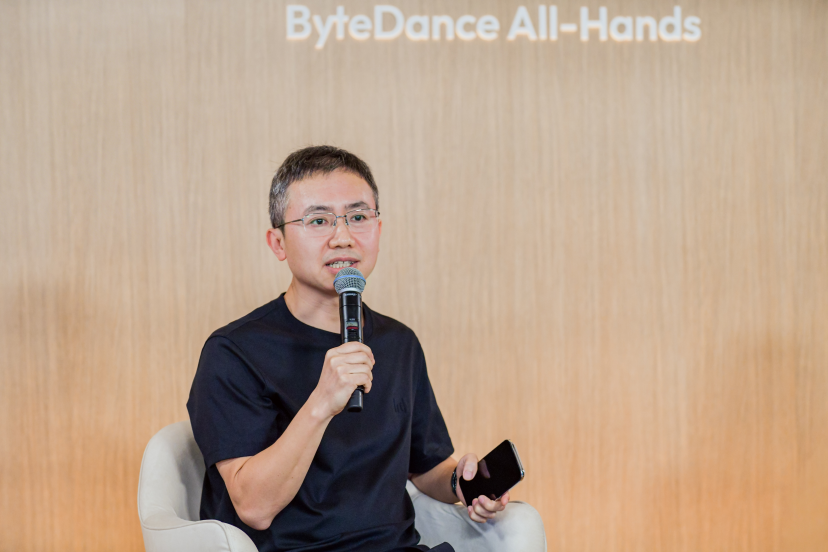
Core Insights - The core theme of ByteDance's 2026 strategy is "Dare to Climb High Peaks," emphasizing the pursuit of significant opportunities in the AI era [1][2]. Group 1: AI Opportunities - The CEO highlighted that the immediate "peak" for ByteDance is the Dola assistant application, which is experiencing rapid user growth and improved product experience, although it still lags behind top global competitors [2][7]. - The company aims to enhance its AI model capabilities to be among the industry leaders and integrate existing product services through the assistant [8]. Group 2: Talent and Incentives - To achieve its goals, ByteDance plans to increase talent density and enhance incentives, ensuring that compensation and rewards are competitive globally [9][10]. - The company has reported a higher promotion rate and speed for employees compared to other leading firms, indicating a strong growth trajectory for early-career employees [9]. Group 3: Strategic Focus and Collaboration - The company emphasizes the need for strategic focus, operational efficiency, and building public trust to support its foundational services [11]. - ByteDance aims to respect user and client interests, particularly regarding data and privacy security, while fostering healthy industry relationships through external collaboration [11].
梁汝波喊话全员:全力攻坚“豆包/Dola”AI助手应用
2 1 Shi Ji Jing Ji Bao Dao· 2026-01-29 15:07
Core Insights - The company has established "Dare to Climb High" as its annual keyword, focusing on the development of the "Dola" AI assistant application as a short-term core objective [1] - The CEO views the AI era as a historic opportunity comparable to the "PC + Internet" era, emphasizing the need for the company to clearly define its "peak" in this context [2] - The company aims to enhance talent density and incentives globally to support its strategic goals, with significant increases in performance bonuses and salary adjustments planned for 2025 [3] Group 1 - The company will focus on the "Dola" AI assistant application to leverage the current AI wave and drive overall growth [1][2] - The CEO highlighted the urgency of defining the company's peak, which is to excel in AI model capabilities and integrate existing services for improved user experience [2] - The company is committed to ensuring competitive employee compensation and incentives, aiming to lead in all global markets [3] Group 2 - The company has announced a substantial increase in performance bonuses by 35% and a 1.5 times increase in salary adjustments for 2025 [3] - The CEO emphasized that investing in talent is crucial for business success and employee growth, aiming to attract and retain top talent globally [3] - The company reported that its foundational model capabilities are among the top tier in China, with image and video generation models ranking internationally [4]

字节要勇攀高峰?CEO梁汝波:短期内高峰就是做好豆包应用
Bei Ke Cai Jing· 2026-01-29 13:53
Core Insights - ByteDance's CEO Liang Rubo announced the company's 2026 theme as "Courage to Scale New Heights" during the first all-hands meeting of the year [1] - Liang emphasized that peak opportunities in the tech industry occur every 15 to 20 years, citing the successes of Microsoft, Google, and Apple in seizing peak moments in the PC, Web, and Mobile eras [2] - The company aims to excel in AI applications, particularly through its Dola assistant, which has expanded its use cases since the emergence of ChatGPT in late 2022 [2][4] Group 1: Strategic Focus - The company identifies the short-term peak as enhancing the Dola assistant application, which has shown practical value despite some immature features [2] - Liang highlighted the importance of AI model capabilities, stating that each business unit must achieve breakthroughs, with a focus on integrating existing products and services [3] - The company sees significant opportunities in the B2B sector through Model as a Service (MaaS), which has been the fastest-growing segment for its Volcano Engine [3] Group 2: Talent and Competitive Position - To achieve its peak ambitions, the company plans to increase talent density and enhance incentives, ensuring that compensation remains competitive globally [4] - Liang noted that ByteDance's foundational AI model capabilities rank among the top tier in China, with image and video generation models positioned at the international forefront [4] - The user base and growth of the Dola assistant are progressing rapidly, although there remains a gap compared to leading global competitors [4]
字节跳动发布 2026 年度关键词:“勇攀高峰”
Jin Rong Jie Zi Xun· 2026-01-29 13:53
Core Insights - The core theme of ByteDance's 2026 strategy is "Dare to Climb High Peaks," emphasizing the pursuit of significant opportunities in the AI era [1][2]. Group 1: AI Strategy and Business Development - ByteDance's CEO Liang Rubo highlighted that the immediate focus for the company is the Dola assistant application, which is seen as a key area for growth in the AI sector [2][6]. - Liang noted that ByteDance's foundational AI models are among the top tier in China, with image and video generation capabilities ranking internationally [2][3]. - The company aims to enhance its AI model capabilities to be industry-leading and integrate existing product services effectively [7]. Group 2: Talent Acquisition and Incentives - To achieve its ambitious goals, ByteDance plans to increase talent density and enhance incentives to attract and retain top talent [8][9]. - The company has reported a higher promotion rate and speed for employees compared to other leading firms, indicating a strong growth environment for early-career employees [8]. - ByteDance has committed to improving compensation packages, including a 35% increase in performance evaluation cycles and a 1.5 times increase in salary adjustments compared to previous periods [9]. Group 3: Corporate Responsibility and Strategic Focus - Liang emphasized the importance of building public trust and addressing regulatory concerns to support foundational services [9]. - The company aims to maintain strategic focus, enhance business efficiency, and foster a culture of entrepreneurship to achieve its "Dare to Climb High Peaks" goal [9].