N1脑机接口

Search documents
马斯克旗下脑机接口公司,最新进展!6月初刚获6.5亿美元融资
Zheng Quan Shi Bao Wang· 2025-08-13 05:51
Core Insights - Neuralink has demonstrated significant advancements in brain-machine interface (BMI) technology, with 7 patients currently implanted with their N1 device, enabling them to control computers using their thoughts [1][2] - The global market for brain-machine interfaces is projected to grow from $1.98 billion in 2023 to over $6 billion by 2028, with a compound annual growth rate (CAGR) of 25.22% [2] - The Chinese market for brain-machine interfaces is expected to exceed 120 billion yuan by 2040, with an average annual growth rate of approximately 26% [2] Company Developments - Neuralink has completed a $650 million Series E funding round, with major investors including Ark Invest, DFJ Growth, Founders Fund, Lightspeed Venture Partners, Sequoia Capital, and Xingsheng Capital [1] - The company has initiated clinical trials in top neurosurgical institutions across the U.S., Canada, and the UAE, significantly increasing investment to expand the number of neurons and brain regions that devices can connect to [2] Industry Trends - The brain-machine interface technology is categorized into invasive, semi-invasive, and non-invasive types, with non-invasive interfaces currently dominating the market, holding an 86% share [3] - Recent supportive policies in China are expected to accelerate the development of the brain-machine interface industry, including the establishment of national standards for non-invasive medical devices [4][5] - The Shanghai and Beijing action plans aim to cultivate leading technology enterprises and promote the commercialization of brain-machine interface products across various sectors by 2030 [5][6]
英大证券晨会纪要-20250702
British Securities· 2025-07-02 06:16
Market Overview - The report indicates that the A-share market is expected to maintain a relatively strong trend in the short term, with a high likelihood of a fluctuating upward pattern for the index [2][9][10] - Recent trading volume has been around 1.5 trillion, reflecting active market participation and potential for individual stock profitability to expand [4][10] Investment Opportunities - Three main investment lines are highlighted: 1. Focus on companies with better-than-expected mid-year performance as the reporting window opens in July, suggesting a strategy of buying low [3][10] 2. Emphasis on technology sectors such as military industry, robotics, AI, semiconductors, and digital economy, with a caution to avoid overvalued stocks and speculative plays [3][10] 3. Look for rebound opportunities in sectors like new energy and brokerage firms during market pullbacks [3][10] Sector Analysis - The pharmaceutical sector saw a collective rise, driven by new measures from the National Healthcare Security Administration and the National Health Commission to support high-quality development of innovative drugs [6][10] - Bank stocks rebounded after a period of decline, supported by their low valuation and high dividend yield, although there are concerns about the impact of economic slowdown on credit demand and interest income [7][10] - The report notes a significant rise in brain-computer interface stocks, particularly following advancements from Neuralink, although it cautions that this may still be in the speculative phase [8][10]
全线爆发!这一板块,涨停潮!
Zheng Quan Shi Bao· 2025-06-30 09:46
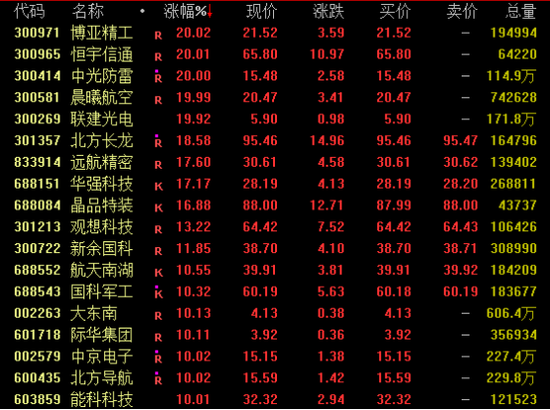
Market Overview - On the last trading day of June, A-shares rose across the board, with the ChiNext Index and the STAR 50 Index both increasing by over 1%. The Shanghai Composite Index rose by 2.9% for the month, while the Shenzhen Component Index and ChiNext Index increased by 4.23% and 8% respectively [1] - The Hang Seng Index fell nearly 1% today, closing down 0.87%, while the Hang Seng Tech Index decreased by 0.72% [2] A-share Performance - Major A-share indices showed strong gains, with the Shanghai Composite Index closing at 3444.43 points (up 0.59%), the Shenzhen Component Index at 10465.12 points (up 0.83%), and the ChiNext Index at 2153.01 points (up 1.35%) [1] - Over 4000 stocks in the market were in the green, with the military industry sector continuing its strong performance [1] Military Industry Sector - The military sector saw significant gains, with stocks like Zhongguang Fang雷 achieving three consecutive daily limits, and Beifang Changlong rising over 18% to set a new historical high [3][5] - Analysts suggest that geopolitical changes are increasing market attention on the military industry, which is expected to enhance overall industry valuations [5][6] Semiconductor and Photolithography Sector - The photolithography concept surged, with stocks like Blue Eagle Equipment hitting a 20% limit up, and Guangxin Materials rising over 15% [7] - The photolithography process is critical in semiconductor manufacturing, accounting for about one-third of manufacturing costs and 40%-50% of the time spent [9] Brain-Computer Interface (BCI) Sector - The brain-computer interface concept gained traction, with stocks like Xiangyu Medical hitting a 20% limit up and Aipeng Medical rising over 10% [10] - The global BCI market is projected to grow significantly, with China expected to accelerate its market development, potentially exceeding 100 billion yuan in scale [12]

全线爆发!这一板块,涨停潮!
证券时报· 2025-06-30 09:34
Market Overview - On the last trading day of June, A-shares rose across the board, with the ChiNext Index and the STAR 50 Index both increasing by over 1% [1] - For the month, the Shanghai Composite Index rose by 2.9%, while the Shenzhen Component Index and the ChiNext Index increased by 4.23% and 8%, respectively [1] - The Hong Kong stock market showed weakness, with the Hang Seng Index dropping nearly 1% [1] A-share Performance - The Shanghai Composite Index closed at 3444.43 points, up 0.59%, while the Shenzhen Component Index closed at 10465.12 points, up 0.83% [1] - The ChiNext Index rose by 1.35% to 2153.01 points, and the STAR 50 Index increased by 1.54% [1] - The total trading volume in the Shanghai and Shenzhen markets was 151.75 billion yuan, a decrease of 58.4 billion yuan from the previous day [1] Sector Highlights Military Industry - The military sector continued to show strength, with stocks like Zhongguang Fang雷 achieving three consecutive trading limits, and Beifang Changlong and Changcheng Military Industry reaching new historical highs [4][6] - The military industry is gaining attention due to geopolitical changes, which are expected to enhance overall valuations and performance in the second quarter [6] - Institutions predict that military trade could become a second growth driver, benefiting from demand amplification effects [6] Lithography Machine Concept - The lithography machine concept saw a strong surge, with stocks like Blue Eagle Equipment and Guangxin Materials hitting their daily limits [8] - The importance of lithography machines in semiconductor manufacturing is highlighted, as they account for about one-third of manufacturing costs and 40%-50% of the time spent [10] - The market for high-end EUV and DUV lithography machines is expanding, with significant potential for domestic breakthroughs [11] Brain-Computer Interface (BCI) - The BCI concept gained traction, with stocks like Xiangyu Medical and Aipeng Medical seeing significant increases [13] - Neuralink's recent advancements in BCI technology have drawn attention, with successful trials on patients allowing them to control computers using their thoughts [15] - The BCI market is expected to grow significantly, with projections indicating a potential increase of around $10 billion globally over the next decade [15]



今日投资参考:AMC积极参股银行 暑期档票房有望大幅增长
Zheng Quan Shi Bao Wang· 2025-06-30 03:25
Market Overview - The Shanghai Composite Index fell by 0.7% to 3424.23 points, while the Shenzhen Component Index rose by 0.34% to 10378.55 points, and the ChiNext Index increased by 0.47% to 2124.34 points, indicating mixed market performance [1] - The total trading volume in the Shanghai, Shenzhen, and Beijing markets was 15,759 billion yuan, a decrease of 476 billion yuan from the previous day [1] Banking Sector Insights - Several listed banks have received investments from Asset Management Companies (AMCs) in 2023, which significantly contributes to current and future profits for AMCs [2] - The banking sector has shown strong performance over the past two years, but recent trends indicate a divergence in market expectations regarding future performance [2] - Citic Securities suggests that despite short-term volatility in bank stocks, the long-term outlook remains positive due to the potential for asset revaluation and the support from long-term funds [2] Craft Beer Industry Trends - The craft beer industry is experiencing significant growth as consumer preferences shift towards higher quality and personalized products, moving away from industrial beer [3] - The demand for craft beer is expanding, with notable business models emerging, such as standardized store expansions and franchise models [3] - Major beer manufacturers are increasingly acquiring quality craft beer brands, indicating a strategic interest in the craft beer market [3] Summer Box Office Projections - As of June 28, 2025 summer box office revenue has surpassed 1.7 billion yuan, with expectations for recovery as students enter their summer break and major films are released in July and August [4] - The low base effect from the previous year's summer box office performance is expected to support growth in 2025 [4] - The upcoming release of significant domestic films is anticipated to drive a surge in box office revenue [4] Regulatory Changes in Stock Market - The Shanghai and Shenzhen Stock Exchanges are proposing to adjust the price fluctuation limit for risk-warning stocks from 5% to 10%, aligning it with other stocks on the main board [5] - This change aims to improve pricing efficiency and maintain market order, particularly benefiting small and medium investors [5][6]
脑机接口概念走高,际华集团两连板,翔宇医疗涨约10%
Zheng Quan Shi Bao Wang· 2025-06-30 02:52
Group 1 - The core viewpoint of the articles highlights the significant advancements in brain-computer interface (BCI) technology, particularly through Neuralink's recent demonstrations, which have led to a surge in related stock prices for companies in the sector [1][2] - Neuralink has successfully implanted its N1 brain-computer interface in 7 patients, including 4 with spinal cord injuries and 3 with amyotrophic lateral sclerosis (ALS), enabling them to control computers using their thoughts [1] - The market for BCI technology is projected to grow significantly, with an estimated additional market space of approximately $10 billion globally over the next decade, and the potential for China's market to exceed 100 billion yuan [2] Group 2 - Non-invasive brain-computer interfaces currently dominate the market, accounting for 86% of the total market share, while invasive interfaces present significant potential due to high barriers to entry [2] - The ongoing clinical trials in the BCI field are expected to validate the feasibility of technology paths and optimize core performance indicators, thereby reducing technical risks and laying a solid foundation for large-scale commercialization [2] - The investment cycle for BCI technology is suggested to be divided into three stages: the implementation of BCI devices in medical scenarios, the expansion into consumer scenarios, and the development of downstream application scenarios [2]





马斯克刚开了个Neuralink发布会:重新定义了人类……
Sou Hu Cai Jing· 2025-06-29 23:46
Core Insights - Neuralink has successfully implanted its N1 brain-machine interface in seven volunteers, allowing them to regain interaction with the physical world and redefine their identities [4][6][9] - The company plans to advance its technology significantly over the next few years, targeting language translation and vision restoration through increased electrode implantation [11][14] - The release of Neuralink's technology is expected to create a new intersection of industries, combining medical, computational, and robotic systems [21][24] Technology and Innovation - The N1 device currently implants about 1,000 electrodes in the motor cortex, enabling control of computers and gaming devices [11] - Future plans include expanding to language areas and visual cortexes, with goals of 3,000 electrodes by 2026 and 10,000 by 2027 [14][15] - The R1 robot showcased at the event can implant electrodes with high precision, indicating a shift towards minimally invasive neuroengineering [23][25] Market Potential - The global invasive brain-computer interface (BCI) market is projected to reach approximately $16 billion by 2024, with a steady growth rate [21] - The technology has potential applications in treating mental health issues, chronic pain, and cognitive decline, particularly in aging populations [21][24] Ethical and Philosophical Considerations - The advent of brain-machine interfaces raises questions about neuro rights and ownership of consciousness, as well as potential inequalities in access to such technologies [31][33] - The implications of shared consciousness and memory retrieval challenge traditional notions of identity and personal responsibility [35][37]
脑机接口,大消息!
证券时报· 2025-06-29 05:05
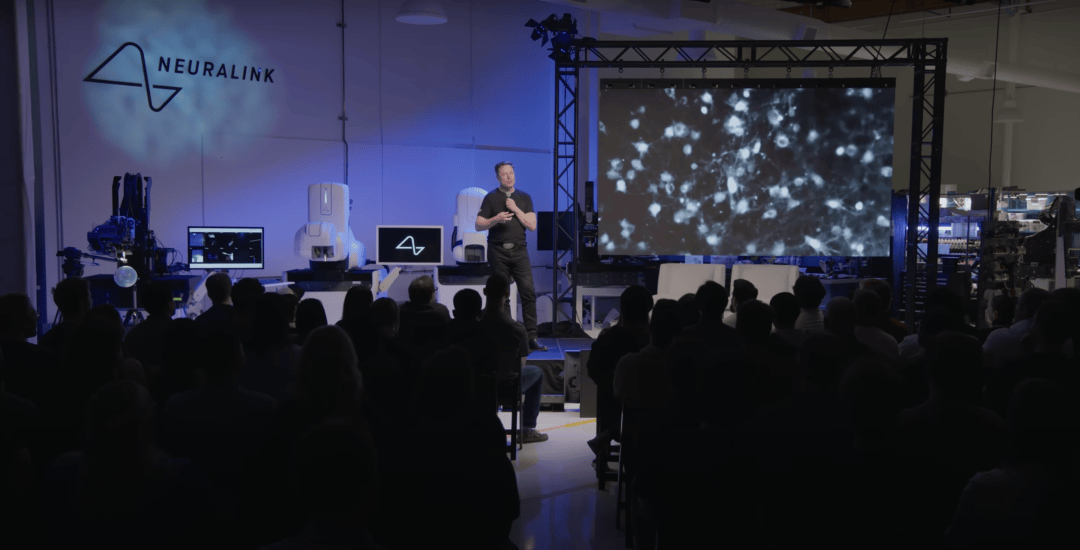
Core Insights - Neuralink, a brain-machine interface company founded by Elon Musk, has showcased its latest research achievements and product development direction [1] Group 1: Clinical Trials and Patient Outcomes - Neuralink has implanted its N1 brain-machine interface in 7 patients, including 4 with spinal cord injuries and 3 with amyotrophic lateral sclerosis (ALS), enabling them to control computers using their thoughts [2] - One patient successfully controlled a cursor and performed tasks such as typing, browsing the web, managing emails, and playing games through the brain-machine interface [2] - Another patient utilized the brain-machine interface for professional work, including using CAD software for design tasks [2] Group 2: Funding and Financial Developments - In June, Neuralink completed a $650 million Series E funding round, with major investors including Ark Invest, DFJ Growth, Founders Fund, Lightspeed Venture Partners, Sequoia Capital, and Xingsheng Capital [2] - The funding aims to accelerate the dissemination of brain-machine interface technology to patients and promote future device innovations [2] Group 3: Market Potential and Growth Projections - The global brain-machine interface market is projected to reach $1.98 billion in 2023 and exceed $6 billion by 2028, with a compound annual growth rate (CAGR) of 25.22% [3] - In China, the brain-machine interface market is currently around 1 billion yuan, accounting for less than 10% of the global market share, but is expected to exceed 120 billion yuan by 2040, with an annual CAGR of approximately 26% [3] - Non-invasive brain-machine interfaces dominate the market, holding an 86% share, while invasive interfaces present significant potential due to high barriers to entry [3] Group 4: Regulatory and Policy Support - Recent policies in China are expected to accelerate the development of the brain-machine interface industry, including the establishment of national standards for non-invasive medical devices using brain-machine interface technology [4] - The National Medical Products Administration has proposed measures to optimize the regulatory process for high-end medical devices, including those based on brain-machine interface technology [5] - Action plans from Beijing and Shanghai aim to cultivate influential tech companies and promote the commercialization of brain-machine interface products across various sectors by 2030 [6]