Office 365 Copilot

Search documents
全球软件:2026 年初步展望及我们关注的软件标的-Global Software_ Initial thoughts for 2026 and our software names
2026-01-26 02:49
Summary of Global Software Conference Call Industry Overview - The software industry is experiencing a significant shift in focus from macroeconomic concerns to the disruptive rise of AI, with investor discussions centered around whether an AI bubble exists and the potential impact of AI on enterprise software [1][11][15]. Key Themes for 2026 - **Valuation Reset**: Software valuations have halved over the past year, creating opportunities to acquire high-quality stocks at discounted prices [14][31]. - **IT Spending Outlook**: Recent CIO surveys indicate one of the strongest IT spending outlooks since 2018, with expectations for a stable macro environment and lower interest rates supporting demand, particularly among small and medium-sized businesses (SMBs) [3][13][23]. - **Generative AI Impact**: While Generative AI is a major topic, its revenue impact on most software companies is still limited. The expectation is that significant revenue generation from AI will not materialize until 2027 or later [6][19][22]. Company-Specific Insights - **Top Picks**: Recommended stocks include Oracle, Microsoft, SAP, and HubSpot, all rated as Outperform. MongoDB is also favored for its long-term potential and near-term momentum [4][7][25][26]. - **Cautionary Stocks**: Salesforce is expected to underperform due to concerns over AI disruption and market saturation. Snowflake is rated as Market-Perform, with long-term growth prospects viewed as uncertain [4][7][29][30]. Financial Metrics - **Valuation Comparisons**: - Adobe (ADBE): Current price $296.12, target $506.00, adjusted P/E 12.0 for 2026E. - Microsoft (MSFT): Current price $459.86, target $645.00, adjusted P/E 27.5 for 2026E. - Oracle (ORCL): Current price $191.09, target $339.00, adjusted P/E 25.9 for 2026E. - Salesforce (CRM): Current price $227.11, target $223.00, adjusted P/E 19.2 for 2026E [5][8]. Investment Implications - **SMB vs. Enterprise**: SMB-focused software companies may see earlier revenue recovery compared to enterprise-focused firms, as SMBs typically rebound faster in improving economic conditions [6][23]. - **AI Revenue Generation**: The expectation is that while AI will contribute to revenue growth, it will be limited in 2026, with only a few companies likely to see a significant positive impact [19][20]. Macro Considerations - **Economic Stability**: The macroeconomic environment is expected to remain stable, with potential benefits from deregulation and tax cuts in the U.S. [3][23]. - **Geopolitical Risks**: Ongoing global conflicts and geopolitical tensions may continue to impact market sentiment and investment strategies [21][23]. Conclusion - The software sector is at a pivotal moment, with significant opportunities arising from valuation resets and a favorable IT spending outlook. However, the impact of Generative AI remains uncertain, and investors are advised to focus on company-specific fundamentals while being cautious of potential disruptions in the market.




全球软件 2026 年初步展望及重点标的-Global Software Initial thoughts for 2026 and our software names
2026-01-21 02:58
Summary of Global Software Conference Call Industry Overview - The software industry is experiencing a significant shift in focus from macroeconomic concerns to the disruptive rise of AI, with investor discussions centered around whether an AI bubble exists and the potential impact of AI on enterprise software [1][11][15]. Key Themes for 2026 - **Valuation Reset**: Software valuations have halved over the past year, creating opportunities for investors to acquire high-quality stocks at discounted prices [14][31]. - **IT Spending Outlook**: Recent CIO surveys indicate one of the strongest IT spending outlooks since 2018, with expectations for a stable macro environment and lower interest rates supporting demand, particularly among small and medium-sized businesses (SMBs) [3][13][23]. - **Generative AI Impact**: While Generative AI is a major topic, its actual revenue impact on software companies is still limited. Most companies are not yet seeing significant revenue from AI, and the focus is shifting towards company-specific opportunities [6][15][19]. Company Recommendations - **Buy Recommendations**: - **Oracle (ORCL)**: Strong core business with significant cloud transition and market share gains in IaaS/PaaS, driven by unique offerings [4][27]. - **Microsoft (MSFT)**: Durable business with multiple growth levers and a reset valuation, positioned well for AI monetization [4][27]. - **SAP (SAP)**: Consistent double-digit revenue growth and margin improvement, despite AI cycle noise [4][27]. - **HubSpot (HUBS)**: Attractive entry point with strong SMB market positioning and potential benefits from AI adoption [4][27]. - **Cautionary Recommendations**: - **Salesforce (CRM)**: Concerns over underperformance and potential reliance on acquisitions to drive growth [4][29]. - **Snowflake (SNOW)**: Long-term growth concerns due to market saturation and competitive pressures [4][30]. - **Workday (WDAY)**: Growth deceleration and investor skepticism regarding AI's impact on its business model [4][28]. Financial Metrics - **Valuation Comparisons**: - Adobe (ADBE): Adjusted P/E ratios have decreased significantly, with a current valuation of 12.0x for 2026E [5][32]. - Microsoft (MSFT): Current P/E at 27.5x for 2026E, reflecting a reset from previous highs [5][32]. - Oracle (ORCL): Trading at a 0.9x PEG ratio, down from 1.4x a year ago, indicating a significant valuation adjustment [32]. Macro Considerations - **Economic Environment**: The macroeconomic landscape is expected to stabilize, with potential benefits from deregulation and tax cuts in the U.S. impacting SMB spending positively [6][23]. - **AI Adoption Timeline**: Enterprise adoption of AI is anticipated to take longer than expected, with significant visibility likely not occurring until 2027 or 2028 [22][23]. Conclusion - The software sector is at a pivotal moment, with significant valuation resets providing investment opportunities. However, the actual impact of AI on revenue generation remains uncertain, necessitating a cautious approach to investment in this space. The focus should be on companies with strong fundamentals and clear growth trajectories amidst the evolving landscape of AI and macroeconomic conditions [1][14][19].


科技向下游去-2026AI应用风潮涌起
2026-01-13 01:10
Summary of Key Points from Conference Call Records Industry and Company Involvement - The discussion primarily revolves around the **technology and media industries**, with a focus on **AI applications** and their impact on various sectors, particularly in **advertising and content creation**. Core Insights and Arguments 1. **N-Shaped Pricing Framework**: The technology stock market is characterized by an N-shaped pricing framework, where initial phases focus on valuation gains, while mature phases yield both valuation and EPS gains. This necessitates strategic adjustments by investors [1][3] 2. **GEO's Role in Media**: GEO (Generative AI Search Engine Optimization) is leading the media sector due to changes in content exposure logic driven by AI assistants. This shift requires advertisers to adopt new methods to ensure information reach, benefiting companies that embrace this new service ecosystem [1][4][5] 3. **Growth Drivers for GEO**: The growth prospects for GEO are robust, driven by the rise of media platforms like Meta and ByteDance, and product iterations from companies like Alibaba. This evolution is expected to alter the demand from upstream advertisers and service providers [1][6] 4. **Advertising Budget Redistribution**: As advertisers reallocate budgets to new platforms, profits tend to shift upstream, leading to increased gross margins for marketing companies. This trend has been observed with platforms like Douyin, which had higher gross margins than the industry average [1][7] 5. **AI Applications in Media**: AI applications are penetrating the media industry, with significant cost reductions in AI-generated content. The market for AI comic dramas is projected to reach approximately 20 billion yuan by 2025, with opportunities also emerging in film and gaming sectors [1][8] 6. **A-Share Market Configuration**: The A-share market currently has a low allocation to the computer and media sectors, suggesting potential for upward movement compared to the crowded AI hardware sector [1][10] 7. **Investment Focus for 2026**: Investors are advised to focus on gaming and AI applications in 2026, with notable companies expected to launch significant new products that could drive revenue growth [1][11] 8. **AI Agent Applications**: AI Agent applications are becoming mainstream due to their higher autonomy and decision-making capabilities compared to traditional Copilot applications, which have limited economic impact [1][14][16] 9. **Investment Opportunities in Computing**: The computing sector presents strong investment opportunities, particularly in AI applications across various industries, including enterprise services and AIGC (AI-generated content) [1][17][19] Other Important but Potentially Overlooked Content 1. **Market Sentiment and Volatility**: The computing sector is characterized by strong thematic investment drivers and slow fundamental changes, leading to significant stock price volatility influenced by market sentiment [1][17] 2. **Differentiation in Business Models**: Companies like Zhizhu and Minimax have different business models, with Zhizhu focusing on project-based solutions for domestic clients, while Minimax emphasizes product sales and has a significant overseas revenue share [1][17] 3. **Future of AI in Various Sectors**: There is potential for AI applications to transform information systems across industries such as healthcare, education, and manufacturing, indicating a broad scope for investment opportunities [1][19][20]



OpenAI牵手亚马逊,微软却在买Anthropic模型.......2025年九大AI巨头,乱成一锅粥
美股IPO· 2025-12-29 23:26
Core Viewpoint - The year 2025 marks a significant integration year for the AI industry, with nine major tech companies expanding their humanoid robot and hardware capabilities while becoming increasingly interdependent, reshaping competitive boundaries in the market [1][3]. Group 1: Major Players and Their Strategies - Google has solidified its leading position in the AI stack, achieving a breakthrough in its TPU chip business with a $20 billion order from Anthropic and seeking agreements with Meta [4]. - OpenAI has shifted its cloud service relationships beyond Microsoft, securing a $38 billion server deal with Amazon and expanding partnerships with Oracle [7]. - Meta has made significant advancements in AI hardware with its Meta glasses but faces challenges in core technology, particularly with its Llama 4 model [8]. Group 2: Market Dynamics and Competition - The competitive landscape is evolving, with companies attempting to control more segments of the supply chain to reduce reliance on key suppliers like NVIDIA, yet new alliances complicate their interdependencies [3][4]. - xAI and Anthropic are rapidly catching up, with xAI improving its language model quality and Anthropic experiencing growth in its product business through partnerships with Microsoft [9]. - The humanoid robot sector is emerging as a new battleground, with major players like Google, Amazon, and OpenAI beginning to develop humanoid robot technologies, despite facing significant challenges [12]. Group 3: Hardware and Infrastructure Developments - Microsoft has made limited progress in server chip development but is adjusting its cloud service strategies, continuing its role as a primary cloud provider for OpenAI while expanding collaboration with Anthropic [13]. - NVIDIA remains a critical player in the AI training market, with its GPUs still central to AI training despite companies' efforts to reduce dependency on it [13].




速递|2025,AI九巨头“合纵连横”之年:从拼模型到拼生态,谁的“朋友圈”更牢固?
Z Potentials· 2025-12-29 04:53
Core Insights - The year 2025 is anticipated to be a pivotal year for robotics, particularly for leading AI companies as they enhance their AI hardware and software product matrices, with nearly all enterprises investing in humanoid robot technology development [1] Group 1: AI Company Developments - Major tech companies are developing comprehensive AI hardware and software ecosystems, indicating a shift towards robotics and AI integration in both industrial and domestic settings [3] - Companies like Google, Microsoft, Amazon, and OpenAI are making significant strides in AI technology stacks, aiming to increase revenue and reduce costs through better control over AI training servers [3][4] - Meta has expanded its lead in AI devices but lags in AI model development, while xAI has made progress in LLM quality and consumer AI applications [6][12] Group 2: Competitive Landscape - The competition among major AI companies is intensifying, with a complex network of alliances forming as companies seek to reduce dependency on key suppliers like Nvidia and Microsoft [4][19] - Google remains a dominant player, significantly enhancing its capabilities in AI server chips, evidenced by a $20 billion deal with Anthropic for tensor processing units [10] - OpenAI is expanding its cloud partnerships beyond Microsoft, with Amazon signing a $38 billion server deal and plans for collaboration on e-commerce projects [21] Group 3: Emerging Technologies - Companies are focusing on humanoid robots and wearable AI devices, with Amazon making substantial investments in augmented reality glasses [7][14] - Tesla is leading in humanoid robotics with its Optimus robot, despite facing challenges with its functionality [15] - The development of AI applications and devices is expected to continue evolving, with OpenAI planning to launch various wearable AI products by 2026 [14]


微软 AI 战略深度分析
傅里叶的猫· 2025-11-14 10:25
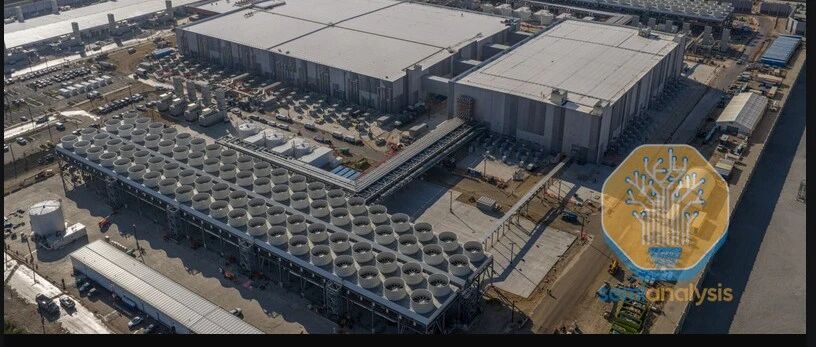
Core Insights - Microsoft, a leader in the AI industry from 2023 to 2024, paused its AI strategy due to concerns over return on investment (ROIC) and execution capabilities, but plans to reinvest in AI by 2025 as demand surges [3][10][19] Group 1: AI Strategy and Market Dynamics - Microsoft significantly increased its investment in OpenAI from $1 billion to $10 billion in early 2023, gaining exclusive access to OpenAI's models [3][11] - The company initiated an aggressive data center expansion plan to support OpenAI's computational needs, including a large-scale project named Fairwater [13][14] - By mid-2024, Microsoft faced a slowdown in data center construction and a shift in its commitment to OpenAI, leading to a strategic pause in its AI investments [5][19] Group 2: Competitive Landscape - In 2025, as global AI applications exploded, Microsoft resumed its AI investments, driven by a surge in demand for accelerated computing [7][19] - OpenAI diversified its partnerships, signing contracts with Oracle, Amazon, and Google, which diminished Microsoft's exclusive supply advantage [9][17] - Microsoft's market share in data center pre-leasing capacity dropped from over 60% to below 25% during the pause, indicating a loss of competitive edge [19] Group 3: Infrastructure and Execution Challenges - Microsoft encountered significant delays in its IaaS (Infrastructure as a Service) layer, particularly in the deployment of bare metal services, which are critical for AI training [20][21] - The company’s inability to meet OpenAI's growing computational demands led to the loss of key contracts, including a $100 billion project originally planned for Wisconsin [23][24] - Microsoft’s reliance on third-party cloud providers increased, with Neocloud's share of Microsoft's new computing capacity rising to nearly 50% [25][26] Group 4: PaaS Layer and Resource Allocation - Microsoft faced challenges in GPU resource allocation, prioritizing high-end GPUs for OpenAI and traditional enterprises, leaving AI startups with insufficient access [29][30] - The Azure platform's performance ratings declined due to stagnation in updates and features compared to competitors like CoreWeave [31][32] - Microsoft’s Azure Foundry aims to capture OpenAI API market share, leveraging its IP rights, but faces challenges in converting token usage into revenue [33][34] Group 5: Model and Application Development - Microsoft’s strategy involves leveraging OpenAI's IP while developing its own MAI models to reduce dependency [41][42] - The MAI series has seen rapid investment growth, with plans to increase annual spending to $16 billion, aiming for model independence [45] - GitHub Copilot, once a market leader, faces competition from new entrants, prompting Microsoft to integrate additional models to retain users [46][49] Group 6: Hardware and Chip Development - Microsoft’s self-developed ASIC chips, particularly the Maia series, have lagged behind competitors, impacting its hardware strategy [56][57] - The Maia 100 chip, released in late 2023, failed to meet industry standards, leading to delays in subsequent models [56][57] - Microsoft's strategic approach of synchronizing chip development with model readiness has resulted in missed opportunities compared to competitors who adopt asynchronous development [57]