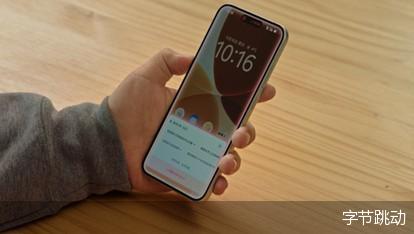
Ola Friend耳机

Search documents
字节「藏锋」
Bei Jing Shang Bao· 2026-01-15 23:28
Core Viewpoint - The article discusses ByteDance's strategic positioning in the AI hardware and smart terminal sectors, highlighting its cautious yet proactive approach to hardware development and market entry [1][4][11]. Group 1: Company Developments - Over the past year, ByteDance has been rumored to be involved in various hardware sectors, including smartphones, AI wearables, chips, and automobiles, positioning itself as a significant player in hardware manufacturing [2][5]. - Despite numerous rumors, ByteDance has consistently denied plans for new hardware products, such as the next-generation Doubao AI headphones and Doubao AI glasses, emphasizing a focus on AI capabilities rather than hardware production [5][7][10]. - The company has launched the Doubao mobile assistant in collaboration with ZTE, which sold out quickly, indicating strong market interest in its AI capabilities [3][12]. Group 2: Market Strategy - ByteDance's approach to hardware development is characterized by a preference for partnerships and collaborations rather than self-manufacturing, allowing for flexibility and reduced risk in a competitive landscape [10][16]. - The company has been strategically managing expectations by clarifying rumors and avoiding premature announcements, which helps mitigate market speculation and potential backlash [10][12]. - ByteDance's AI capabilities have been integrated into various industries, with its Volcano Engine model services covering over 100 sectors and achieving a market share of 49.2% in public cloud model service calls in China [12][18]. Group 3: Future Outlook - Analysts suggest that ByteDance's cautious approach to hardware exploration is a normal part of industry development, allowing the company to validate demand through low-risk initiatives like the Doubao mobile assistant [18][22]. - The company is expected to continue its strategy of low-profile development until it identifies a clear market opportunity, similar to its past approaches in other business areas [20][23].


字节藏锋
Bei Jing Shang Bao· 2026-01-15 16:32
Core Viewpoint - The article discusses ByteDance's cautious approach towards hardware development, emphasizing its focus on AI capabilities and strategic partnerships rather than direct hardware manufacturing [1][4][8]. Group 1: Hardware Development and Market Position - ByteDance has been frequently rumored to be entering various hardware markets, including AI headphones, smart glasses, and automotive ventures, but has consistently denied these claims, stating there are no current plans for such products [3][4]. - The company aims to avoid direct competition with established players like Huawei and Xiaomi by not making premature announcements about hardware projects, thus maintaining strategic flexibility [4][8]. - ByteDance's strategy involves leveraging its AI capabilities through partnerships rather than developing hardware independently, as seen with its collaborations in the mobile and automotive sectors [6][8]. Group 2: AI Integration and Market Strategy - ByteDance's AI model, Doubao, has been integrated into over 100 industries, collaborating with 9 out of the top 10 global smartphone manufacturers and a significant portion of major banks and automotive companies, achieving a market share of 49.2% in public cloud AI model services [6][7]. - The company has successfully launched the Doubao mobile assistant, which focuses on AI functionality rather than hardware production, indicating a preference for software-driven solutions [6][8]. - ByteDance's approach to hardware is characterized by low-risk investments in lightweight products, such as the Ola Friend headphones and PICO XR, which allow for user engagement without significant capital expenditure [6][7]. Group 3: Future Outlook and Strategic Timing - Industry experts suggest that ByteDance's low-profile strategy in hardware development is a normal practice for companies with substantial technical and financial resources, allowing them to explore and validate market needs without overexposing themselves [8][9]. - The company is expected to continue its pattern of gradual market entry, similar to its past strategies in AI and short video sectors, waiting for the right moment to increase investment and capitalize on differentiated opportunities [8][10]. - ByteDance's current focus on lightweight hardware and AI capability output is seen as a preparatory step for future growth, as it seeks to establish a solid foundation before making larger commitments [9][10].

字节“藏锋”
Bei Jing Shang Bao· 2026-01-15 14:53
Core Viewpoint - ByteDance is strategically positioning itself in the AI hardware and smart terminal sectors, despite maintaining a low profile and denying various rumors about hardware development [1][3][4]. Group 1: Hardware Development Rumors - ByteDance has consistently denied rumors regarding the development of new hardware, including AI headphones and smart glasses, emphasizing that there are no current plans for these products [3][4]. - The company has also refuted claims about collaborating with car manufacturers for vehicle production and clarified its stance on not developing self-branded smartphones, focusing instead on AI capabilities [3][4][5]. Group 2: Strategic Positioning - ByteDance's approach to hardware is characterized by a focus on software capabilities, with the company leveraging its AI models and cloud services to enhance hardware in sectors like automotive and mobile [5][6]. - The company has successfully launched the Doubao mobile assistant, which integrates AI capabilities into existing hardware rather than creating its own devices, allowing for strategic partnerships with manufacturers [5][6]. Group 3: Market Strategy and Future Outlook - Analysts suggest that ByteDance's low-profile strategy in hardware development is a calculated move to avoid direct competition with established players like Huawei and Xiaomi, allowing for flexibility in its strategic approach [3][7]. - The company is expected to continue exploring hardware opportunities while managing risks, using partnerships and customized solutions to validate market demand before making significant investments [7][8].

字节否认“豆包AI眼镜即将出货”
Guan Cha Zhe Wang· 2026-01-05 12:33
Core Viewpoint - ByteDance's Doubao AI glasses are reportedly entering the shipping phase, but the company has denied any concrete sales plans, creating a contrast with market expectations and supply chain rumors [1][2] Group 1: Product Development and Features - The Doubao AI glasses are developed in collaboration with ODM manufacturer Longqi Technology, with R&D primarily conducted at Longqi's Huizhou factory and mass production at its Nanchang facility, aiming to mitigate manufacturing challenges [1] - The glasses will feature ByteDance's self-developed spatial algorithm chip, weigh under 50 grams for comfort, and will require the Doubao app for functionality, similar to the Ola Friend headphones [2] - Multiple configuration options are planned, including variations with and without photo and display capabilities [2] Group 2: Release Schedule and Pricing Strategy - ByteDance intends to release the glasses in versions, with a non-display version expected in Q1 2026 and a display version in Q4 2026, with a starting price projected to be under 2000 RMB [2] Group 3: Investment and Market Expectations - ByteDance has invested over 50 million RMB in R&D for this product, with Longqi requiring a minimum order quantity of 1 million units, indicating strong market expectations and production readiness [2] - The Doubao AI glasses align with ByteDance's strategic focus on "AI + hardware," leveraging the Doubao model, which has been integrated into devices from brands like Xiaomi and Tesla, with a significant increase in daily token usage expected to exceed 50 trillion by December 2025 [2] - The company has built hardware experience through acquisitions, including VR brand PICO and audio brand Oladance, which supports its entry into smart glasses [3] - The demand for smart glasses is driven by market anxieties and the need for new growth avenues as mobile internet traffic peaks, positioning smart glasses as a potential next-generation human-computer interaction interface [3]

字节跳动否认“豆包AI眼镜即将出货”
Xin Lang Cai Jing· 2026-01-05 12:32
Core Viewpoint - ByteDance's "Doubao AI glasses" are rumored to be entering the shipping phase, but the company has officially denied any sales plans, creating a contrast with market expectations and supply chain leaks [1][2]. Group 1: Product Features and Development - The "Doubao AI glasses" are developed in collaboration with ODM manufacturer Longqi Technology, with R&D taking place in Huizhou and mass production in Nanchang, which is seen as a prudent choice due to manufacturing complexities [3]. - The glasses will feature ByteDance's self-developed spatial algorithm chip, weigh under 50 grams, and will require the Doubao app for operation, similar to the previously launched Ola Friend headphones [3]. - Multiple configurations will be available, including options for photo and display functionalities, with a no-screen version expected to launch in Q1 2026 and a display version in Q4 2026, starting at a price below 2000 RMB [3]. Group 2: Investment and Market Expectations - ByteDance has invested over 50 million RMB in this field, with Longqi Technology requiring a minimum order of 1 million units, indicating strong market expectations and production readiness [4]. - The development of the "Doubao AI glasses" aligns with ByteDance's strategic focus on "AI + hardware," leveraging its Doubao model, which has been integrated into devices from major brands like Xiaomi and Tesla, and is expected to expand into wearable technology [5]. - The need for new growth avenues in the face of peak mobile internet traffic has led ByteDance to explore smart glasses as a potential next-generation human-computer interaction interface, with significant market potential anticipated [5].
字节“豆包”AI眼镜即将推出?官方回应:传闻不实
Xin Lang Cai Jing· 2026-01-05 11:28
Group 1 - ByteDance's "Doubao" AI glasses are reportedly entering the shipping phase, similar to the upcoming AI smart earphones, Ola Friend, set for release in 2024 [1][1] - The AI glasses will require the Doubao App for functionality and will feature a self-developed spatial algorithm chip, weighing less than 50 grams [1][1] - Multiple configurations are planned for the AI glasses, including options for camera functionality and display features, with a starting price expected to be under 2000 yuan [1][1] Group 2 - A representative from Doubao has denied the rumors, stating that there is currently no clear sales plan for the AI glasses [1][1]
豆包AI眼镜即将出货
财联社· 2026-01-05 07:59
Core Viewpoint - ByteDance's "Doubao" AI glasses are set to enter the shipping phase, developed in collaboration with Longqi Technology, with a focus on integrating the product with the Doubao app [3][4]. Group 1: Product Development - The AI glasses project was initiated less than a year ago, with production taking place at Longqi's factories in Huizhou and Nanchang [3]. - The glasses will feature a self-developed spatial algorithm chip, weigh less than 50 grams, and will offer multiple configurations, including options for camera functionality and display features, with a starting price expected to be under 2000 yuan [3]. - The initial release will be a non-display version in the first quarter of the year, followed by a display version in the fourth quarter [3]. Group 2: R&D Strategy - ByteDance's strategy to launch a single product first is based on the current market's acceptance of this product category [4]. - The joint R&D model is preferred to mitigate risks associated with pure self-research, as it allows for better communication between design and manufacturing teams [4]. - Manufacturing challenges, particularly with small components and limited internal space, necessitate a collaborative approach to ensure feasibility [4]. Group 3: Market Position and Competition - ByteDance has established a long-term partnership with Longqi Technology, which helps in standardizing technology and significantly reducing costs [5]. - The current order requirement for AI glasses from Longqi is set at 1 million units, indicating ByteDance's strong commitment to this market [5]. - Despite the popularity of the AI glasses segment, competition is intensifying, with significant investments from competitors like Alibaba and high return rates in the market [5].


不造手机 却想“接管”你的手机:字节豆包扔出一枚“生态炸弹”
Mei Ri Jing Ji Xin Wen· 2025-12-01 15:03
Core Insights - The launch of Doubao Mobile Assistant represents a significant integration of ByteDance's AI capabilities with mobile hardware, marking a strategic shift towards ecosystem collaboration rather than direct hardware development [1][6][9] - The assistant leverages Doubao's large model technology to enhance user interaction and automate tasks across applications, aiming to redefine the user experience on mobile devices [2][3][4] Group 1: Product Features - Doubao Mobile Assistant enables real-time interaction through voice commands, allowing users to ask questions about screen content and access common functions like voice and video calls [3][4] - The assistant features cross-application automation, enabling users to perform tasks such as ticket booking and price comparison across multiple e-commerce platforms with simple voice commands [3][4] - A memory function allows the assistant to store user preferences and provide personalized recommendations based on previously input data, enhancing user convenience [4] Group 2: Strategic Positioning - ByteDance's decision to collaborate with existing smartphone manufacturers rather than developing its own devices is seen as a cost-effective strategy in a highly competitive mobile market [6][9] - The company aims to embed its AI capabilities into existing hardware ecosystems, thereby expanding its reach and enhancing user engagement with its software solutions [9] - The launch of Doubao Mobile Assistant is positioned as a critical step in establishing ByteDance's presence in the AI-driven mobile landscape, with potential implications for user interaction with technology [9][10]
字节不造手机,但豆包手机助手已搅动风云
Guo Ji Jin Rong Bao· 2025-12-01 14:06
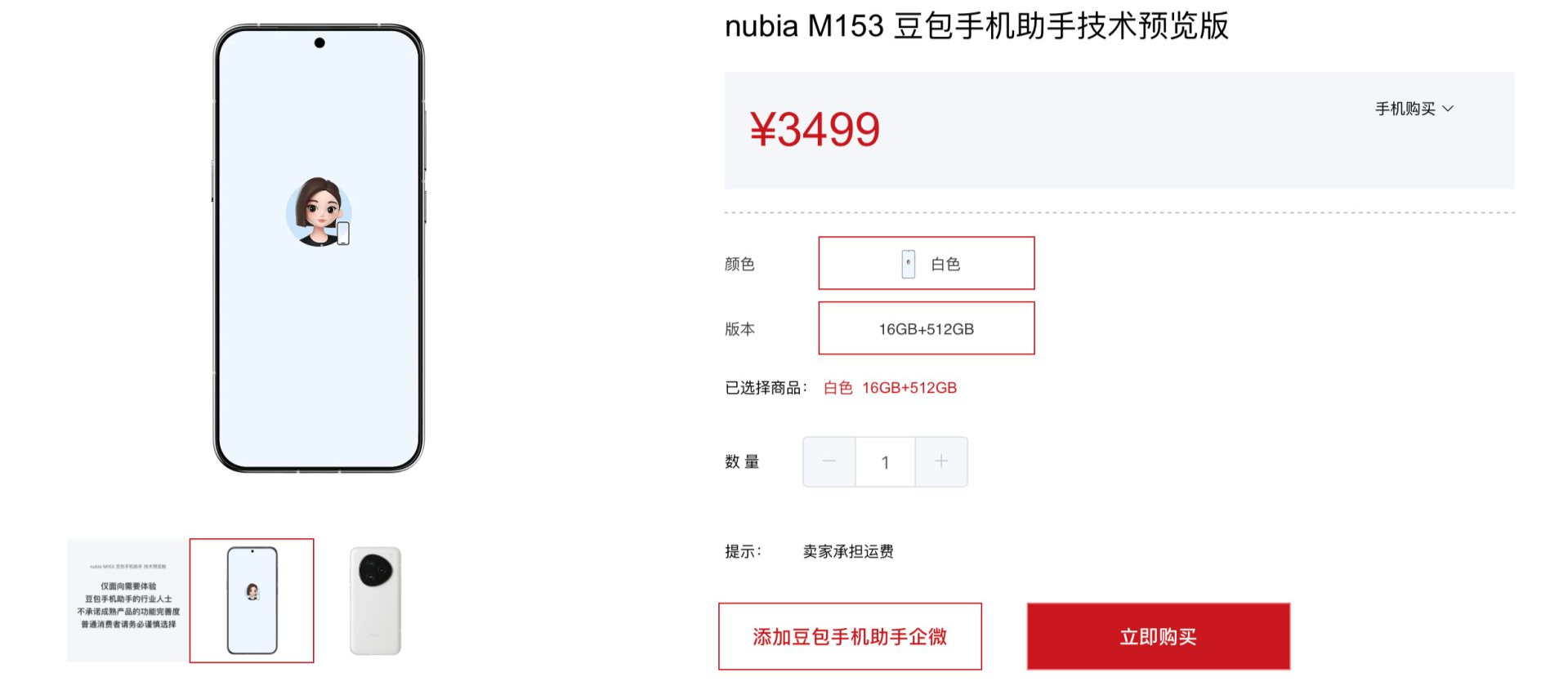
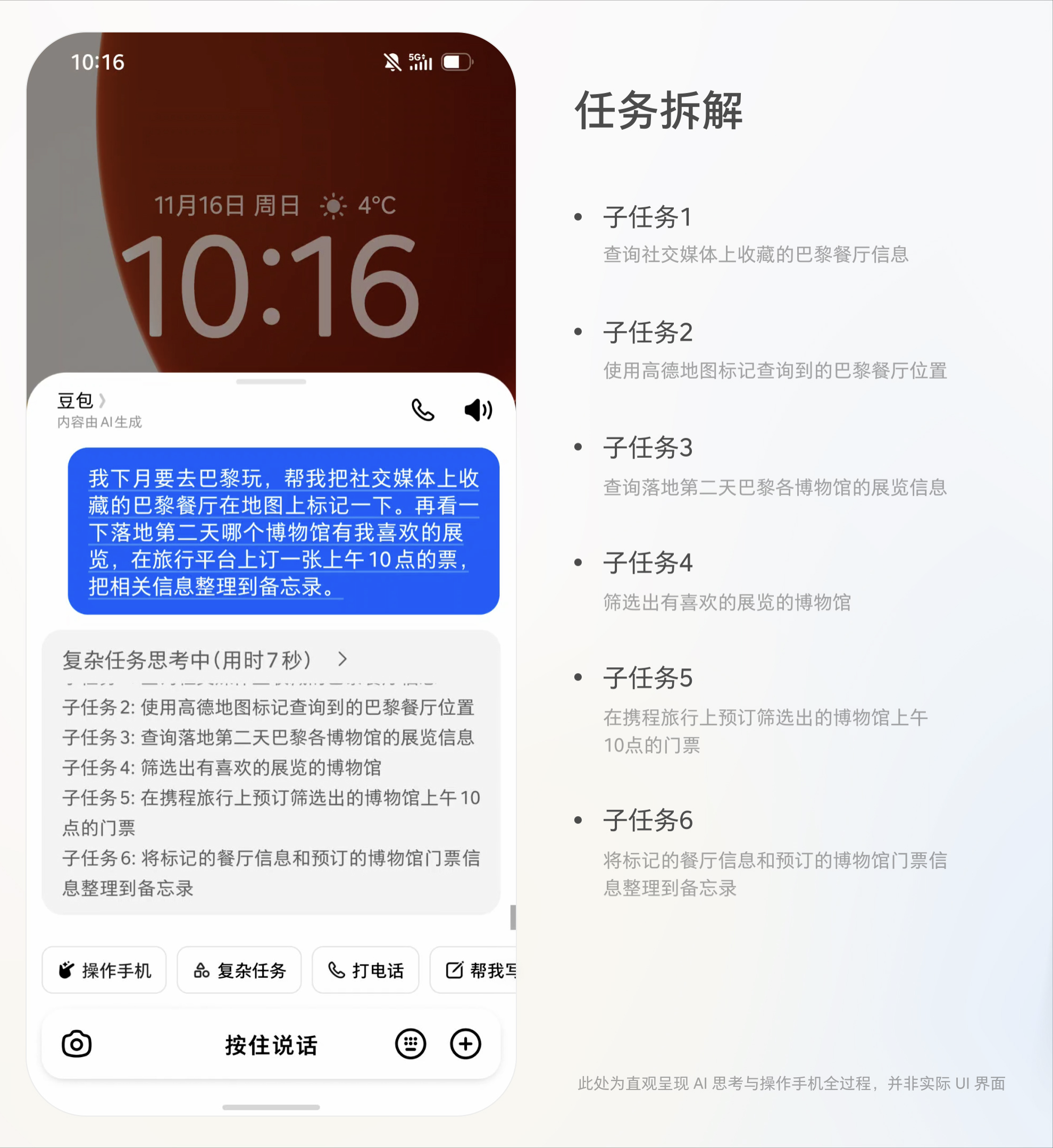
Core Viewpoint - The consumer electronics industry is experiencing a surge, particularly in AI-related products such as AI smartphones, electronic components, and AI glasses, driven by the release of the Doubao mobile assistant by ByteDance's Doubao team [1] Group 1: Doubao Mobile Assistant Launch - The Doubao mobile assistant, based on the Doubao app and developed in collaboration with smartphone manufacturers, aims to enhance user interaction and experience through AI capabilities [1] - The assistant is currently available in a technical preview version for developers and tech enthusiasts, priced at 3499 yuan, and can be experienced on the Nubia M153 prototype [1] - The announcement led to a significant increase in ZTE's stock price, with A-shares hitting the upper limit and Hong Kong shares rising by 13.94% [1] Group 2: Features and Functionality - The Doubao mobile assistant integrates with the system's native photo gallery, allowing users to issue voice commands for photo editing tasks [2] - It can automate tasks across multiple applications based on user commands, such as ticket booking, product ordering, and file downloads [2] - A demonstration showed that users can compare prices across platforms and place orders through voice commands, although sensitive payment actions require manual confirmation to mitigate risks [4] Group 3: Industry Trends and Competitors - The industry is witnessing a trend of deep collaboration between smartphone manufacturers and large model developers, exemplified by Google's Gemini partnership with Samsung [4] - Other tech giants, like Alibaba, are also entering the AI assistant space, with their "Qianwen" app and AI glasses, indicating a competitive landscape for AI-driven consumer electronics [5] - ByteDance has established physical entry points through products like the Ola Friend earphones and is exploring AI glasses, but it has no plans to develop its own smartphones, focusing instead on ecosystem partnerships with various manufacturers [6]

字节手机,旧事重提
Bei Jing Shang Bao· 2025-12-01 13:44
Core Insights - ByteDance has reiterated its stance of not developing its own smartphones while launching the Doubao mobile assistant, which is a system-level AI assistant developed in collaboration with ZTE [1][2] - The Doubao mobile assistant is positioned as an engineering prototype, priced at 3499 yuan, and is currently available only to industry professionals for experience [1] - The launch has positively impacted ZTE's stock prices, with a significant increase observed in both A-share and Hong Kong markets [1] Group 1: Product Launch and Market Impact - The Doubao mobile assistant is based on the Doubao large model and aims to enhance user interaction and experience compared to previous mobile AI applications [1][5] - ZTE's stock reached a limit-up price of 46.3 yuan shortly after the announcement, reflecting strong market interest [1] - ByteDance has clarified that it will not pursue smartphone development but will instead integrate the Doubao assistant into various brands through ecological cooperation [1][2] Group 2: Strategic Positioning - ByteDance's approach to entering the mobile market is through AI technology rather than hardware, similar to Huawei's strategy in the automotive sector [2][4] - The Doubao assistant is designed to address practical usage pain points, emphasizing a collaborative development model with hardware manufacturers [5] - The collaboration between ByteDance and ZTE combines ByteDance's data processing capabilities with ZTE's hardware expertise, highlighting the trend towards integrated AI solutions in mobile devices [5] Group 3: Competitive Landscape - The AI mobile assistant market is becoming increasingly competitive, with major players like Huawei, Xiaomi, and others developing their own AI systems [4][10] - The shift towards AI integration in mobile devices is seen as a necessary evolution, with companies focusing on enhancing user experience through AI capabilities [10][11] - The industry is witnessing a collective move from conceptual discussions to tangible investments in AI technology, indicating a response to consumer demand and market potential [10][11]