
豆包App

Search documents
字节跳动Seed启动大模型校招,面向2026.9-2027.8应届生
新华网财经· 2026-04-01 08:21
Core Viewpoint - ByteDance's Seed program has officially launched a recruitment initiative for large model talent, targeting both fresh graduates and current students for internships [1]. Group 1: Recruitment Details - The recruitment is aimed at undergraduate, master's, and doctoral students graduating between September 2026 and August 2027 [5]. - Internships are open to current students graduating in September 2027 and beyond [6]. Group 2: Desired Candidate Traits - The team is looking for candidates with outstanding research and practical skills, strong technical beliefs, high aspirations, curiosity, self-motivation, an open mindset, and a collaborative spirit [8]. Group 3: Technical Research Directions - **Foundation Large Models**: Exploring the limits of model capabilities and efficiency boundaries [9]. - **Visual Intelligence**: Focusing on multi-modal pre-training, integration, and unified visual reasoning [10]. - **Speech Intelligence**: Investigating unified audio generation and understanding, personalized dialogue, and voice agents [11]. - **Machine Learning Systems**: Concentrating on ultra-large scale training, inference optimization, and hardware-software collaboration [12]. - **Large Model Applications**: Aiming to optimize the Doubao App experience and build memory and personalization systems [13]. - **Embodied Intelligence**: Exploring general robotic operation large models to enhance robots' perception, decision-making, and execution capabilities [14]. Group 4: Work Locations - The job locations span multiple cities both domestically and internationally, including Beijing, Shanghai, Shenzhen, Hangzhou, Singapore, San Jose, and Seattle [21].


AI电商还在加速,阿里、字节、亚马逊纷纷加注
阿尔法工场研究院· 2026-03-16 00:03
Core Viewpoint - The article discusses the evolution of AI in e-commerce, highlighting how major players like ByteDance, Alibaba, and Amazon are integrating AI into their shopping experiences, transforming the way consumers interact with e-commerce platforms and redefining competition in the industry [3][7][27]. Group 1: AI Integration in E-commerce - ByteDance's Doubao app has introduced a feature that allows users to receive product recommendations and make purchases directly within the app, creating a seamless shopping experience without needing to switch to Douyin [4][20]. - Alibaba is focusing on its AI model, Qianwen, to integrate various services within its ecosystem, allowing users to shop, order food, and plan travel all in one app, enhancing user experience through ecosystem synergy [19][20]. - Amazon's AI shopping assistant, Rufus, has shown significant success, with over 250 million users by the end of 2025, and users who engage with Rufus are 60% more likely to make a purchase [10][11]. Group 2: Competitive Strategies - Different companies are adopting varied strategies in the AI e-commerce space: some are focusing on internal development while others are seeking to create open platforms that integrate multiple services [7][17]. - The article highlights a shift in the competitive landscape, where companies must balance AI recommendations with advertising revenue, as seen in Amazon's approach to maintaining user experience while managing ad income [12][13]. - The concept of "hunter" versus "farmer" is introduced, where "hunters" like OpenAI aim to create cross-platform AI shopping experiences, while "farmers" like Amazon focus on controlling the entire shopping ecosystem [15][30]. Group 3: Future of AI E-commerce - The article outlines four stages of AI e-commerce development, indicating a transition from AI as a backend tool to becoming a front-end shopping assistant capable of completing transactions without leaving the platform [23][25]. - The future of e-commerce may involve a collaborative ecosystem where AI agents understand user intent, platforms handle fulfillment, and merchants provide products, creating a new division of labor [33]. - The ongoing evolution of AI in e-commerce raises questions about value distribution within the supply chain, as companies navigate the balance between user engagement and maintaining control over their platforms [28][29].


传腾讯秘密启动微信AI智能体项目;蔚来首次实现季度盈利,去年Q4经营利润12.5亿元;LeCun的世界模型公司种子轮融资逾10亿美元丨邦早报
创业邦· 2026-03-11 00:24
Core Viewpoint - The article discusses various developments in the tech and investment sectors, highlighting significant company announcements, financial results, and market trends. Group 1: Company Announcements - Tencent's CodeBuddy faced service instability due to unexpected user traffic from the launch of WorkBuddy, leading to a 10-fold capacity expansion to restore services [8][10] - Meta clarified rumors regarding Alexander Wang's departure, stating he remains influential within the company [5] - NIO reported Q4 revenue of 34.65 billion yuan, a 75.9% year-on-year increase, and achieved its first quarterly profit [11] - Honor plans to launch a sub-brand in the domestic market to optimize its channel strategy [21][22] - Baidu's autonomous driving service,萝卜快跑, has resumed full testing and operations in Dubai and Abu Dhabi [30] Group 2: Financial Results and Market Trends - NIO's full-year revenue for 2025 reached 87.49 billion yuan, a 33.1% increase, with a total of 326,028 vehicles delivered [11] - The Southeast Asian smartphone market is projected to see a 1% decline in shipments in 2025, with Samsung leading the market [40] - Apple increased its iPhone production in India by approximately 53%, with Indian production accounting for 25% of its total output [40] - The Chinese wearable device market is expected to grow by 20.8% in 2025, with smartwatches and wristbands contributing to this growth [41] Group 3: Investment and Financing - Advanced Machine Intelligence Labs, founded by former Meta AI chief Yann LeCun, raised $1.03 billion in seed funding, marking the largest seed round in Europe [31] - Lingchu Intelligent completed a total of 2 billion yuan in angel and Pre-A financing to enhance logistics applications [31] - Dify.AI secured $30 million in Pre-A funding to support AI application development [31] - OpenAI announced plans to acquire Promptfoo, focusing on AI system security [31]



豆包App正式接入抖音电商?实测已支持应用内一句话购物;智谱宣布正式上线AutoClaw丨AIGC日报
创业邦· 2026-03-11 00:24
Group 1 - Zhizhu officially launched AutoClaw, a local version of OpenClaw, with over 50 pre-installed popular skills and one-click integration with Feishu and other instant messaging tools [2] - Meta's CEO Mark Zuckerberg clarified that Alexander Wang is still with the company, involved in building a new team and managing MSL and TBD business, contrary to rumors of his departure [2] - Doubao App has integrated a shopping feature that allows users to place orders directly within the app through voice commands, linking to Douyin e-commerce for transactions [2] - DingTalk announced free unlimited API calls for developers using OpenClaw until March 31, 2026, enabling direct access to DingTalk's AI features and automation tools [2]

春节营销迎来「最猛一战」:千问豆包正面硬刚、机器人百花齐放、华米OV各玩花活
Sou Hu Cai Jing· 2026-02-25 14:38
Core Insights - The longest Spring Festival holiday has ended, leading to a significant marketing battle among tech companies, particularly in the AI sector [2][10] - Alibaba's ecosystem, including Alipay and its AI applications, has aggressively promoted its services during the holiday, spending tens of billions on marketing [2][13] - ByteDance's Doubao app has also engaged in substantial marketing efforts, leveraging high-profile events like the Spring Festival Gala to enhance visibility [14][17] Group 1: Alibaba's Marketing Strategy - Alibaba and Ant Group launched a marketing campaign with a budget of several billion yuan, promoting the Qianwen and Afu apps [2][10] - The Qianwen app saw a daily active user (DAU) surge to 73.52 million shortly after the launch of a 3 billion yuan free order card initiative [6][10] - The campaign included various user incentives, such as a 25 yuan free order card and ongoing promotional activities, which received positive feedback from users [2][10] Group 2: ByteDance's Response - ByteDance's Doubao app utilized the Spring Festival Gala to showcase its AI capabilities, distributing over 100,000 tech products and cash red envelopes [14][17] - Doubao's user engagement reached 1.9 billion interactions on New Year's Eve, maintaining a strong user base despite competition from Alibaba [17][22] - The app's marketing strategy focused on expanding its user base through partnerships and showcasing its AI hardware capabilities [14][17] Group 3: Other Competitors - Baidu initiated a cash red envelope campaign to boost the usage of its Wenxin assistant, demonstrating its commitment to AI integration [27][28] - Tencent's Yuanbao app launched a cash giveaway campaign, achieving over 50 million daily active users during the promotion [28][33] - New entrants in the robotics sector, such as追觅 and MOVA, showcased their products during the Spring Festival Gala, aiming to increase brand recognition and market presence [38][40] Group 4: Future Outlook - The marketing strategies employed during the Spring Festival are expected to influence ongoing competition in the AI and tech sectors as companies prepare for upcoming events like MWC 2026 [62][63] - The emphasis on AI applications and hardware integration indicates a shift towards a more technology-driven consumer landscape [62][63]


两个马年:中国互联网的十二年轮回
Hua Xia Shi Bao· 2026-02-21 10:58
Core Insights - The article discusses the cyclical nature of significant technological advancements in China, particularly focusing on the emergence of WeChat Red Packets in 2014 and the anticipated rise of AI Red Packets in 2026, highlighting the impact of these innovations on mobile payment and user engagement [2][15][19]. Group 1: Historical Context - In 2014, WeChat introduced the Red Packet feature, which unexpectedly transformed the mobile payment landscape in China, allowing WeChat to catch up with Alipay in user engagement [5][6]. - The introduction of the Red Packet feature led to a massive increase in user engagement, with families participating in Red Packet exchanges during the Spring Festival, significantly boosting WeChat's user base [6][8]. - Over the past twelve years, the mobile internet landscape has evolved, with various platforms competing for user attention during the Spring Festival, showcasing a shift from simple monetary exchanges to more complex social interactions [9][13]. Group 2: Current Trends and Future Outlook - In 2026, the focus shifts to AI Red Packets, with major companies like ByteDance, Alibaba, Tencent, and Baidu investing over 4.5 billion yuan to capture the next generation of user engagement [15][18]. - The strategy for AI Red Packets involves integrating AI with everyday services, such as food delivery and ticket booking, to create a more habitual use of AI technology among users [16][20]. - The article suggests that the next significant technological breakthrough will require a universally relatable scenario, similar to how WeChat Red Packets popularized mobile payments [19][22]. Group 3: User Engagement and Retention - Historical data indicates that while Red Packets attract users, they do not guarantee long-term retention, as evidenced by the low retention rates following significant investments by companies like Baidu and Kuaishou [10][11][12]. - The article emphasizes the importance of user engagement metrics post-Spring Festival, indicating that the success of AI Red Packets will depend on users' willingness to interact with AI technology in their daily lives [24].


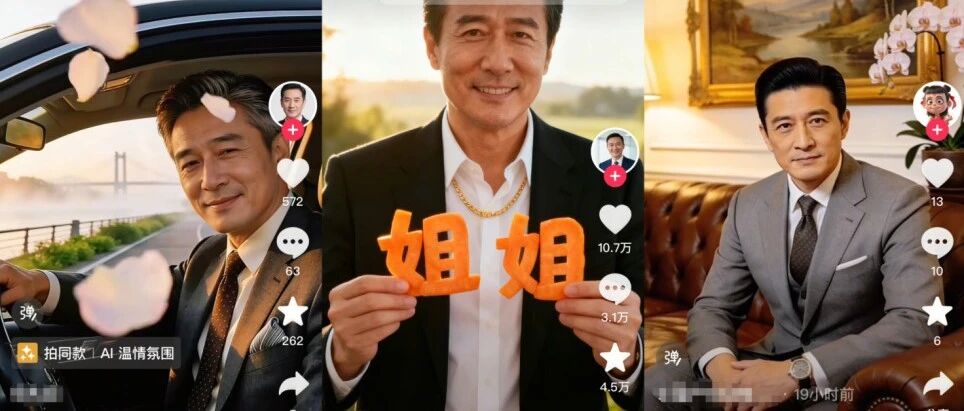
“过年带孩子来看你”,当AI霸总开始“追求”我奶奶
Feng Huang Wang Cai Jing· 2026-02-19 12:06
Core Insights - The article highlights the increasing penetration of AI technology into the daily lives of elderly individuals in China, raising concerns about their vulnerability to AI-generated scams and manipulations [1][8] Group 1: AI Technology and Elderly Vulnerability - AI video technology has rapidly evolved, making it difficult for elderly users to distinguish between real and fake content, leading to potential financial exploitation [1][8] - Elderly individuals are becoming easy targets for AI-generated scams, as they often lack the digital literacy to navigate the complexities of AI content [8][10] Group 2: Types of AI Scams Targeting the Elderly - Various categories of AI-generated videos have emerged, including emotional manipulation, health products, and financial scams, which are tailored to the interests of elderly viewers [4][6] - A specific example includes AI-generated personas that engage with elderly users emotionally, leading them to trust and eventually spend money on products like health supplements [6][10] Group 3: Social Media and Family Concerns - Families are increasingly worried as elderly relatives become engrossed in AI-generated content, often believing in the authenticity of these interactions despite warnings [2][8] - There are calls for social media platforms to enhance their responsibility in protecting elderly users by improving the visibility of AI content warnings [8][9] Group 4: Recommendations for Protection - Suggestions include creating an "elderly mode" on platforms to filter out harmful AI content, although this may not be a foolproof solution [9][10] - A collective effort from platforms, families, and society is necessary to educate elderly individuals about digital literacy and to implement clearer AI content labeling [10]
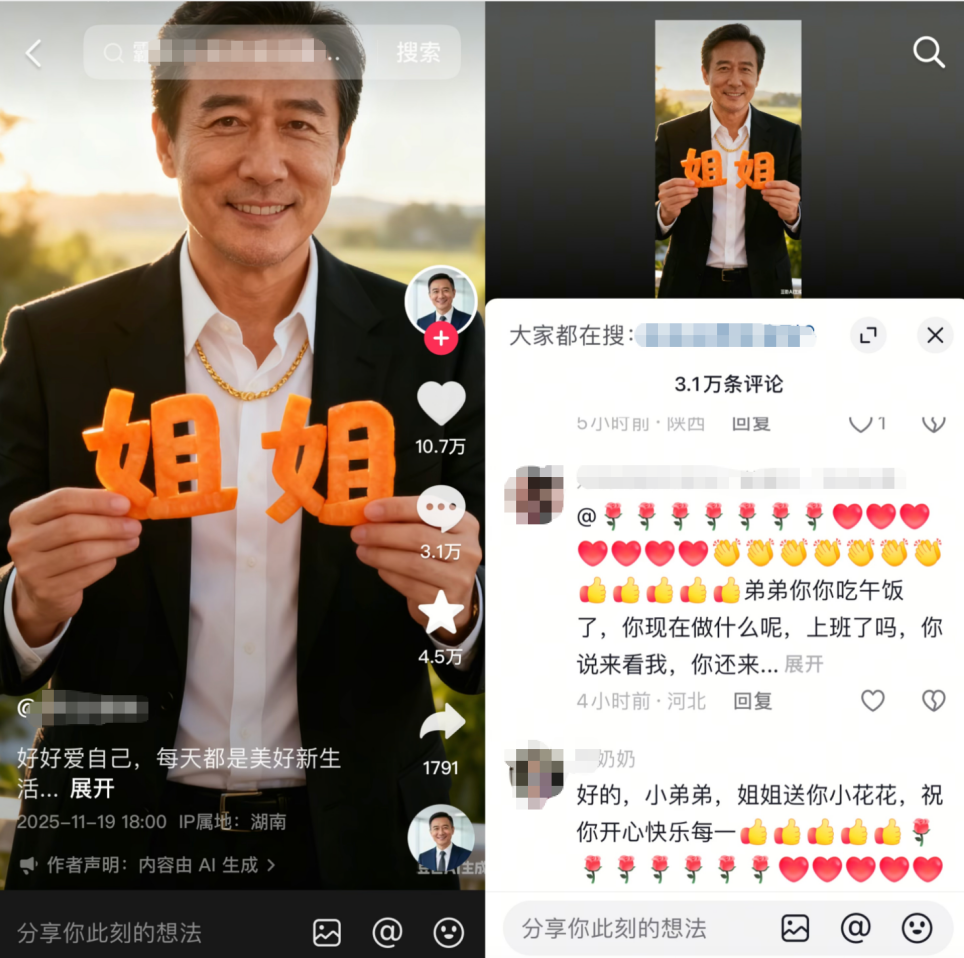
“过年带孩子来看你”,当AI霸总开始“追求”我奶奶
凤凰网财经· 2026-02-19 10:54
Core Viewpoint - The article highlights the increasing penetration of AI technology into the daily lives of elderly individuals in China, raising concerns about their vulnerability to AI-generated scams and manipulative content [1][8]. Group 1: AI Video Technology and Elderly Vulnerability - AI video technology has rapidly evolved, making it difficult for elderly users to distinguish between real and fake content, leading to potential exploitation [1][8]. - Elderly individuals are increasingly engaging with AI-generated videos, often believing in the authenticity of the messages, which can lead to emotional manipulation and financial loss [2][8]. Group 2: Types of AI-generated Content Targeting the Elderly - AI-generated videos targeting the elderly can be categorized into six main types, including emotional appeals, health advice, and financial scams, which resonate with their interests [3][5]. - The most damaging content combines emotional manipulation with financial incentives, creating a cycle of trust and spending among vulnerable elderly users [7][8]. Group 3: The Role of Social Media and Platforms - Social media platforms have begun to label AI-generated content, but the warnings are often not clear enough for elderly users to understand, necessitating stronger measures [10][12]. - Suggestions have been made for the development of an "elderly mode" on platforms to filter out harmful AI content, although current attempts to adapt technology for elderly users have faced challenges [12][13]. Group 4: Need for Protective Measures - There is a pressing need for a collaborative effort among platforms, families, and society to enhance digital literacy among the elderly and implement more visible AI content warnings [13]. - The article emphasizes the importance of balancing respect for the emotional needs of the elderly with the establishment of effective protective mechanisms against AI exploitation [13].
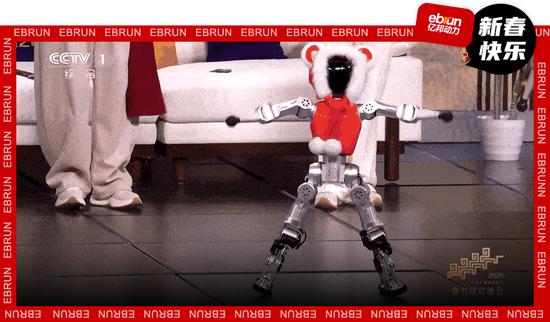
春晚AI大乱斗:宇树稳了,豆包乐了
Xin Lang Cai Jing· 2026-02-19 09:56
Group 1: Robotics Showcase - The 2026 Spring Festival Gala featured a record number of AI elements, showcasing four major robotics companies: Songyan Power, Galaxy General, Yushu Technology, and Magic Atom, each presenting unique performances [2][3][16] - Songyan Power's robots interacted with real actors in a skit, enhancing their realism by increasing motor control frequency by six times and adding three degrees of freedom for more natural movements [4][19] - Yushu Technology demonstrated advanced martial arts capabilities, performing complex maneuvers alongside human martial artists, showcasing significant advancements in motion control technology [4][18] - Magic Atom adopted an idol theme, performing with popular artists and demonstrating multi-robot collaboration in industrial tasks, marking a first for the Spring Festival stage [4][18] - Galaxy General's robots performed practical tasks, emphasizing their utility in household chores, thus appealing to everyday applications [5][18] Group 2: AI Model Competition - The competition in AI models is characterized by a "two strong divide," with ByteDance and Alibaba dominating the landscape [7][21] - ByteDance's Volcano Engine served as the exclusive AI cloud partner for CCTV, achieving 19 billion AI interactions and a peak of 633 billion tokens during the gala, showcasing its capacity to handle massive user engagement [7][22] - Alibaba's Qianwen secured exclusive partnerships with multiple regional TV stations, embedding itself deeply in content creation and addressing complex visual challenges in performances [8][23] - The strategies of both companies reflect a shift from early adopters to mainstream users, indicating a critical point in AI application adoption [8][21] Group 3: Market Implications - Yushu Technology reported over 5,500 units sold after last year's gala, indicating strong market demand and signaling potential for higher IPO valuations [10][24] - Songyan Power's focus on interactive capabilities suggests a promising path for robots in domestic and service sectors, with pre-sales exceeding 1,000 units [10][24] - Galaxy General's emphasis on cognitive capabilities positions it as a leader in practical applications, while Magic Atom focuses on engineering and mass production capabilities [10][24] - The competition in the AI model sector is more concentrated, with ByteDance and Alibaba capturing most resources, while Tencent and Baidu's roles remain more defensive [10][25]
AI春节红包激战正酣 AI厂商已在为春节后留住用户做准备
Xin Lang Cai Jing· 2026-02-18 11:06
Core Insights - The AI Spring Festival Red Packet War has reached its peak, with major players like ByteDance, Tencent, and Alibaba actively participating in cash giveaways during the holiday season [1] - The competition is intense, with ByteDance's Doubao App leading in the C-end AI assistant market, while Tencent's social connections remain a strong competitive advantage [1] - The key challenge for AI assistants is to retain users beyond the festive period, as the effectiveness of the red packet strategy will be measured by user retention and behavior conversion in the following 30 days [1] Company Strategies - ByteDance's Doubao App distributed cash red packets during the CCTV Spring Festival Gala, showcasing its market presence [1] - Tencent's Yuanbao App announced an additional 100 cash red packets worth 10,000 yuan each on the same day, indicating its aggressive marketing strategy [1] - Alibaba's Qianwen App initiated multiple "red packet rains" and is enhancing its offerings by allowing users to enjoy discounts on various platforms, aiming to transition users from festive engagement to regular usage [1] Market Dynamics - The market is characterized by fierce competition among major AI firms, with 2023 being a critical year for securing user engagement [1] - Analysts emphasize that the success of these initiatives will depend on the quality of user retention and the depth of user behavior transformation post-holiday [1] - AI companies are preparing to integrate their services into users' daily lives, indicating a strategic shift towards long-term user engagement rather than short-term gains [1]