
夸克眼镜

Search documents
字节已开启豆包手机助手正式版项目,新机预计2026年Q2中晚期发布
3 6 Ke· 2026-01-29 05:30
Group 1 - ByteDance is set to launch the official version of the Doubao mobile assistant by the end of 2025, with the new device expected to be released in late Q2 2026, showing significant improvements over the first-generation test version [1] - The Doubao mobile assistant will continue its collaboration with ZTE Nubia for hardware, while ByteDance will focus on AI development, indicating a strategic partnership to enhance product capabilities [1][2] - The competition in the AI mobile assistant market is intensifying, with major players like Huawei, Xiaomi, and OPPO developing their own AI assistants, highlighting the importance of proprietary technology in the industry [2] Group 2 - ByteDance's collaboration with ZTE is partly due to ZTE lacking its own AI assistant, similar to Huawei's initial partnerships, which reflects the reluctance of many manufacturers to rely on external AI solutions [2] - The emergence of AI applications in various hardware, such as glasses and in-car screens, suggests a trend towards deeper integration between AI and hardware manufacturers, with companies like Alibaba also venturing into hardware production [4] - The development of AI phones is transitioning from mere technical demonstrations to a competitive "ecosystem battle," where companies will need to establish robust AI agents that can integrate with their ecosystems effectively [4]


国泰海通:多家中国智能眼镜企业参展CES 全球智能眼镜出货量维持高速增长
Zhi Tong Cai Jing· 2026-01-13 06:25
Group 1 - The core viewpoint of the report highlights the significant presence of Chinese companies at CES 2026, with 16 out of 23 exhibitors in the AI glasses category being from China, indicating a strong market focus and innovation in this sector [1][3] - The CES 2026 event showcased approximately 4,300 companies from over 160 countries, with Chinese exhibitors accounting for about 22% of the total, second only to the United States [2] - The report emphasizes the shift in AI development from "digital intelligence" to "physical AI," marking a trend towards deeper integration of AI with hardware [2] Group 2 - Several Chinese smart glasses companies made notable announcements at CES, including Thunderbird's launch of the X3Pro Project eSIM glasses, which support independent functions like calls and real-time AI translation [3] - ByteDance's "Doubao" AI glasses are set to enter the shipping phase, with plans for multiple configurations, including a no-screen version expected to launch in Q1 2026 [3] - Alibaba's Quark glasses sold out of new inventory by December 23, and an OTA upgrade was implemented on December 31, enhancing features like payment and translation [3] Group 3 - The industry trend indicates a focus on lightweight designs, with mainstream products now weighing between 30-50 grams, aiming to return to everyday accessory status [4] - The integration of multimodal technologies is driving AI from passive responses to proactive services, encompassing audio, visual, and tactile experiences [4] - AI glasses are evolving into independent smart terminals capable of functions like calls, internet connectivity, and complex AI computations [4] Group 4 - Global smart glasses shipments are projected to grow by 110% year-on-year in the first half of 2025, maintaining a high growth trajectory [5] - The inclusion of smart glasses in national subsidy programs is expected to provide additional market growth opportunities [5] - A recent policy announcement by the National Development and Reform Commission and the Ministry of Finance includes smart glasses in a new consumer subsidy initiative, which is anticipated to drive further demand [5] Group 5 - Recommended stocks in the sector include Kangnait Optical (02276), Doctor Glasses (300622), and Aishide (002416), with Tianyin Holdings (000829) also mentioned as a relevant stock [6]




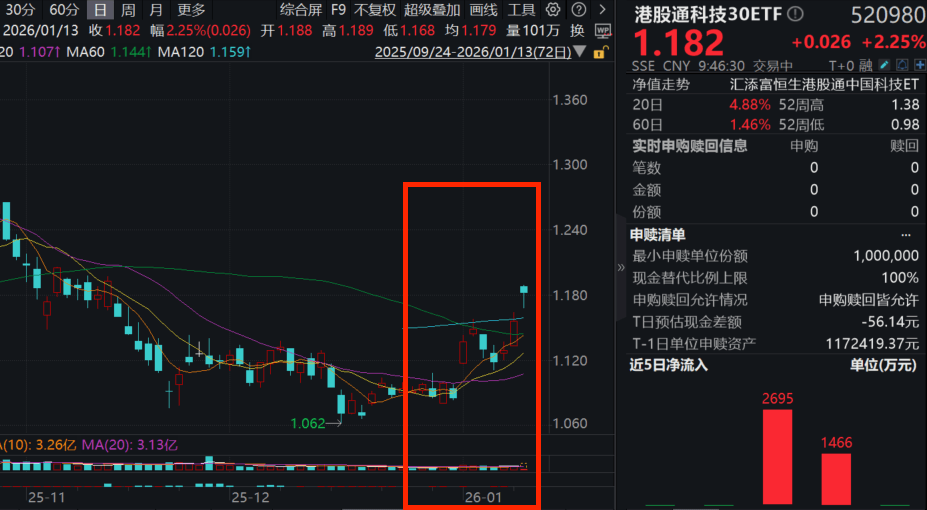
阿里巴巴大涨超4%,云收入增长预期猛增!港股通科技30ETF(520980)、恒生科技ETF基金(513260)涨超2%!
Xin Lang Cai Jing· 2026-01-13 02:01
Group 1 - The core viewpoint of the news highlights a significant increase in Hong Kong technology stocks, driven by positive developments in overseas Chinese concept stocks, with the Hong Kong Stock Connect Technology 30 ETF (520980) rising over 2% and achieving a trading volume exceeding 100 million HKD [1][3] - The Hang Seng Technology ETF (513260), which has the lowest management fee in its category at 15 basis points, also saw an increase of nearly 2%, with a trading volume surpassing 1.6 billion HKD and a net inflow of over 180 million HKD in the last 20 days [3] - Overseas, the Nasdaq Golden Dragon China Index rose over 4%, with notable increases in stocks such as Kingsoft Cloud (up over 21%) and Alibaba (up over 10%), driven by Morgan Stanley's expectations of accelerated revenue growth for Alibaba Cloud due to the expansion of generative AI workloads [5] Group 2 - In the Hong Kong technology sector, Alibaba's stock rose over 4%, while BYD and Xpeng Motors increased by over 3%, and Tencent and Kuaishou saw gains of over 1% [6] - Recent data indicates that southbound funds have consistently flowed into Hong Kong stocks, with Xiaomi Group leading with a net buy of 6.1 billion HKD, followed by Kuaishou and Tencent [8][9] - The report from Western Securities suggests that the Hong Kong market is expected to outperform the A-share market in 2025, with a potential rebound in 2026 driven by a weaker US dollar, appreciation of the RMB, and recovery in the Chinese economy [10][11] Group 3 - The "three doors" concept for the Hong Kong market includes international capital, Chinese capital, and the recovery of the Chinese economy, which are expected to drive significant investment opportunities in 2026 [10][11] - The report emphasizes that the inflow of Chinese capital into Hong Kong will not be limited to mainland southbound funds, as a substantial amount of Chinese capital currently overseas may also invest in Hong Kong stocks [11] - The anticipated recovery in corporate earnings and the potential for a favorable economic environment in 2026 could lead to a significant rebound in the Hong Kong technology sector, which has been relatively stagnant [10][11]

AI眼镜迈入独立智能终端时代,开始接管手机核心功能
硬AI· 2026-01-12 15:40
Core Viewpoint - AI glasses are transitioning from smartphone accessories to independent smart terminals, driven by the integration of eSIM technology and multimodal AI capabilities, marking a significant shift in the industry towards standalone functionality [3][4]. Group 1: Industry Trends - The introduction of eSIM technology allows AI glasses to operate independently from smartphones, enabling functionalities such as calls, real-time AI conversations, and online streaming without needing a mobile connection [6]. - The global shipment of smart glasses is projected to see a 110% year-on-year increase in the first half of 2025, with AI glasses accounting for 78% of this growth [4][16]. - Major tech companies, including ByteDance and Alibaba, are accelerating their entry into the AI glasses market, with new products expected to launch soon [8][10]. Group 2: Product Innovations - Rayneo's X3 Pro Project eSIM, the first AI glasses with eSIM support, showcases the ability to function independently, enhancing user experience [6]. - Rokid's new AI smart glasses, Rokid Style, emphasize an open ecosystem, supporting various AI models and maintaining a lightweight design [6]. - ByteDance's "Doubao" AI glasses are set to enter the market with a focus on user-friendly features and competitive pricing [8]. Group 3: Market Dynamics - The market for AI glasses is expected to benefit from government policies, including subsidies for consumers purchasing smart glasses, which will stimulate demand [18]. - The report indicates that Meta holds a leading market share of 73% in the smart glasses sector, with a significant increase in the proportion of AI-enabled glasses [16].

智能眼镜行业跟踪报告:智能眼镜:多厂商发力,走向规模化应用
GUOTAI HAITONG SECURITIES· 2026-01-12 15:23
Investment Rating - The report assigns an "Overweight" rating for the smart glasses industry [4]. Core Insights - The CES 2026 event highlighted the integration of AI with hardware, indicating a shift towards "Physical AI" [2][5]. - The smart glasses sector is experiencing rapid growth, with global shipments increasing by 110% year-on-year in the first half of 2025 [17]. - The inclusion of smart glasses in national subsidy policies is expected to drive further growth [21]. Summary by Sections Industry Overview - The CES 2026 showcased approximately 4,300 exhibitors from over 160 countries, with 942 Chinese exhibitors, representing 22% of total participants [5]. - Major Chinese brands like Thunderbird Innovation and Rokid are making significant advancements in smart glasses technology [5][6]. Product Developments - Thunderbird Innovation launched the X3 Pro Project eSIM, enabling independent communication capabilities [5]. - Rokid introduced the Rokid Style, weighing only 38.5g, featuring an open AI ecosystem [6]. - ByteDance's "Doubao" AI glasses are set to enter the market, with various configurations planned for release [9]. Market Trends - The trend towards lightweight designs is evident, with many products now weighing between 30-50g [15]. - AI glasses are evolving into independent smart devices capable of complex functions like communication and AI processing [15]. - The market is seeing a shift from basic audio glasses to more advanced AI-integrated models, with AI glasses' shipment share rising from 46% to 78% [17]. Investment Recommendations - The report recommends investing in companies such as Kangnait Optical, Doctor Glasses, and Aishide, with Tianyin Holdings also mentioned as a relevant target [21][24].
国泰海通|批零社服:智能眼镜:多厂商发力,走向规模化应用
国泰海通证券研究· 2026-01-12 14:01
Core Insights - The article emphasizes the emergence of "Physical AI," indicating a shift towards the deep integration of AI with hardware, as highlighted by NVIDIA's CEO Jensen Huang at CES 2026 [1]. Group 1: CES 2026 Overview - CES 2026 took place in Las Vegas, featuring approximately 4,300 exhibitors from over 160 countries, with 942 Chinese exhibitors, accounting for about 22% of the total [1]. - Major companies are accelerating their strategies in the smart glasses sector, which is still in a growth phase and maintaining high market vitality [1]. Group 2: Smart Glasses Developments - 23 exhibitors related to AI glasses were present, with 16 from China, including brands like Thunderbird Innovation, Rokid, and ByteDance [2]. - Thunderbird launched the X3 Pro Project eSIM smart glasses, capable of independent functions such as calls and real-time AI dialogue [2]. - Rokid introduced the Rokid Style smart glasses, weighing only 38.5g, supporting an open AI ecosystem [2]. - ByteDance's "Doubao" AI glasses are set to enter the shipping phase, with plans for multiple configurations [2]. - Alibaba's Quark glasses sold out their new inventory by December 23, with an OTA upgrade scheduled for December 31 [2]. Group 3: Industry Trends - The design of smart glasses is shifting towards lightweight models, with mainstream products weighing between 30-50g [3]. - Multi-modal technology integration is driving AI to transition from passive responses to proactive services, encompassing audio, visual, and tactile experiences [3]. - The market is seeing a trend towards vertical scene layouts, leading to a highly segmented product ecosystem focused on specialization and customization [3]. - Smart glasses are evolving into independent smart terminals capable of functions like calls, internet connectivity, and complex AI computations [3]. - Global smart glasses shipments are projected to grow by 110% year-on-year in the first half of 2025, indicating sustained high growth [3]. - The inclusion of smart glasses in national subsidy programs is expected to provide additional market growth [3].

AI眼镜迈入独立智能终端时代,开始接管手机核心功能
Hua Er Jie Jian Wen· 2026-01-12 09:19
Core Insights - Smart glasses are transitioning from smartphone accessories to independent smart terminals, integrating eSIM communication modules and multimodal AI technology to take over core functions like calls, connectivity, and complex computations [1][2] Group 1: Industry Trends - The introduction of AI glasses as a focal point at CES 2026, with 23 exhibitors, 16 of which are from China, indicates a significant shift towards independent communication capabilities, breaking the reliance on smartphones [1][2] - The concept of "Physical AI" proposed by NVIDIA's CEO signifies a shift in AI development focus from the digital realm to hardware integration that can interact with the physical world [1][2] Group 2: Product Developments - Rayneo's X3 Pro Project eSIM, the first smart glasses supporting eSIM, allows users to make calls and access AI services independently from smartphones or WiFi [2] - Rokid's new AI smart glasses, Rokid Style, emphasize an open ecosystem, featuring a dual-chip design for enhanced functionality and a 12-hour battery life [2][3] Group 3: Market Dynamics - Counterpoint's data shows a 110% year-on-year increase in global smart glasses shipments in the first half of 2025, with AI glasses accounting for 78% of the total [1][8] - Meta leads the market with a 73% share, while the proportion of AI-enabled glasses has surged from 46% in the first half of 2024 to 78% in the same period of 2025 [8] Group 4: Policy Support - China's new policy includes smart glasses in the "trade-in" subsidy program, offering a 15% subsidy for purchases under 6000 RMB, which is expected to boost consumer demand and accelerate market penetration [11]

国产大模型怎么样?
小熊跑的快· 2026-01-08 06:25
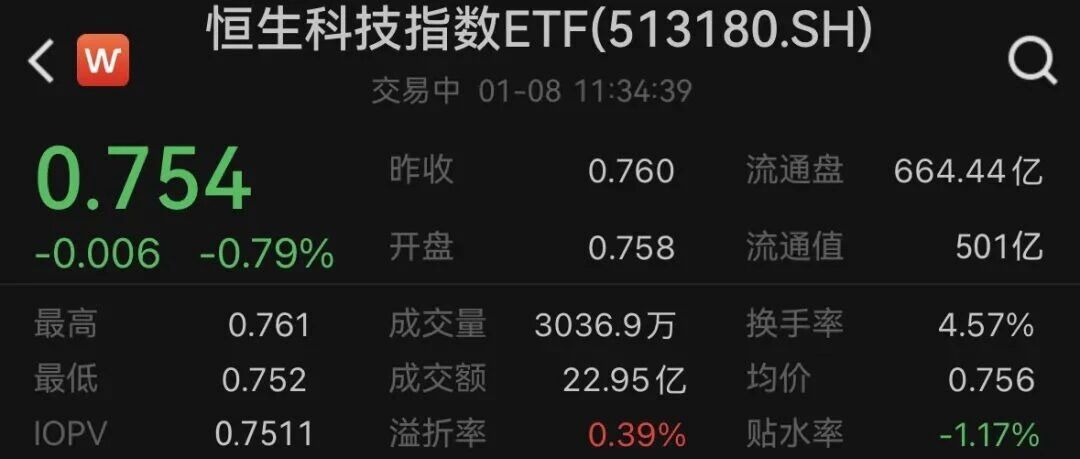
Core Insights - The article discusses the evolution of OpenAI's models, particularly the GPT-5.2 series and its ongoing iterations with GPT-4o, focusing on enhancing model accuracy and reducing hallucinations [1] - It suggests that significant changes in the industry are no longer expected, with current models primarily focusing on engineering optimizations and cost reductions rather than transformative innovations [2] - The article anticipates that by 2026, domestic models will emerge, potentially narrowing the gap with international counterparts and possibly surpassing them in application [3] Industry Developments - The upcoming release of version 4 is expected to further reduce costs for domestic applications [4] - Companies like Tencent are actively recruiting talent, indicating a competitive landscape, while Alibaba is investing heavily in AI applications, including edge computing and significant resources in cloud infrastructure [5] - ByteDance has projected a capital expenditure of 290 billion, doubling its previous expectations, and has seen a substantial increase in daily usage from 60 trillion to 500 trillion [5] Market Analysis - The article highlights that leading domestic model manufacturers are currently underperforming in the Hang Seng Technology Index ETFs, which may be influenced by recent IPO activities in Hong Kong [5] - The Hang Seng Technology Index ETF (513180) is noted to have a forward P/E ratio of approximately 19.3x, indicating it is below historical averages and may have room for recovery [5] - The article mentions that major players like TSMC are positioned for growth in 2026, with expectations of price increases and capacity expansions [10] Future Expectations - There is optimism surrounding Tencent's upcoming agent, which is anticipated to make a significant impact in the market [11]
豆包AI眼镜即将出货
财联社· 2026-01-05 07:59
Core Viewpoint - ByteDance's "Doubao" AI glasses are set to enter the shipping phase, developed in collaboration with Longqi Technology, with a focus on integrating the product with the Doubao app [3][4]. Group 1: Product Development - The AI glasses project was initiated less than a year ago, with production taking place at Longqi's factories in Huizhou and Nanchang [3]. - The glasses will feature a self-developed spatial algorithm chip, weigh less than 50 grams, and will offer multiple configurations, including options for camera functionality and display features, with a starting price expected to be under 2000 yuan [3]. - The initial release will be a non-display version in the first quarter of the year, followed by a display version in the fourth quarter [3]. Group 2: R&D Strategy - ByteDance's strategy to launch a single product first is based on the current market's acceptance of this product category [4]. - The joint R&D model is preferred to mitigate risks associated with pure self-research, as it allows for better communication between design and manufacturing teams [4]. - Manufacturing challenges, particularly with small components and limited internal space, necessitate a collaborative approach to ensure feasibility [4]. Group 3: Market Position and Competition - ByteDance has established a long-term partnership with Longqi Technology, which helps in standardizing technology and significantly reducing costs [5]. - The current order requirement for AI glasses from Longqi is set at 1 million units, indicating ByteDance's strong commitment to this market [5]. - Despite the popularity of the AI glasses segment, competition is intensifying, with significant investments from competitors like Alibaba and high return rates in the market [5].


上晚会、进演讲,AI竞争已经进入「大厂时间」
Tai Mei Ti A P P· 2026-01-05 00:57
Core Insights - The AI industry is increasingly dominated by large companies, with significant competition emerging between established players and startups [1][2] - Major tech firms are leveraging high-profile events like New Year's Eve celebrations to promote their AI products, marking a shift in marketing strategies [3][4] - The competitive landscape for AI startups is becoming more challenging, as they struggle to compete with the resources and ecosystem advantages of larger companies [2][6] Group 1: Industry Trends - The release of ChatGPT 3.5 in November 2022 marked the beginning of a new AI wave, making year-end a critical observation point for AI industry trends [1] - By the end of 2025, large companies have taken the lead in AI infrastructure, model development, and application promotion, changing the competitive dynamics [1][2] - Major firms are not only investing in AI technology but are also engaging in aggressive marketing strategies to capture public attention during significant events [3][4] Group 2: Company Actions - Companies like Alibaba, Tencent, and ByteDance are heavily investing in AI products, with notable launches and marketing campaigns leading to significant user engagement [6][7] - Tencent has made structural adjustments to enhance its AI capabilities, indicating a more aggressive approach in the AI sector [7] - Alibaba's financial commitment includes a strategic investment plan of 380 billion yuan, while ByteDance is expected to increase its capital expenditure to 160 billion yuan in 2026 [7] Group 3: Startup Challenges - AI startups face increasing difficulties in becoming industry leaders due to the overwhelming advantages held by large companies in terms of resources and market presence [2][6] - Some startups, like Zhiyu and MiniMax, are opting for IPOs, while others like Manus have chosen to sell to larger firms, reflecting a trend of consolidation in the industry [2][8] - The potential for smaller companies to find niche opportunities exists, as larger firms focus on more prominent market segments, leaving gaps for innovation in specialized areas [8][10]