
PQQ

Search documents
简报口服抗衰抗衰低龄化趋势显著,口服抗衰迎来升级革命
Tou Bao Yan Jiu Yuan· 2026-01-31 00:30
Investment Rating - The report does not explicitly provide an investment rating for the oral anti-aging industry Core Insights - The oral anti-aging market is experiencing a significant shift from being targeted primarily at older adults to encompassing all age groups, driven by the rise of the beauty economy and younger consumers seeking anti-aging solutions [10] - The demand for oral anti-aging products is increasing, with a notable rise in the purchase of such products among the 25-35 age group, from 28% in 2021 to 45% in 2023 [10] - Key consumer concerns include visible signs of aging such as skin issues and decreased physical and immune strength, with collagen, vitamin C, and vitamin E being the most recognized ingredients [12][14] Summary by Sections Definition and Classification - Oral anti-aging refers to the intake of specific nutrients and bioactive substances to regulate physiological mechanisms and delay cellular aging, categorized into comprehensive and targeted anti-aging [8][10] Consumer Insights - Consumers prioritize visible improvements in skin and physical health over cellular-level changes, with 56% seeking skin tightening and 50% focusing on enhancing physical and immune strength [12][14] - The understanding of emerging anti-aging ingredients like NMN and ergothioneine is still low, indicating a need for better consumer education [12] Market Participants - The market features both international brands focusing on NMN and ergothioneine, and domestic brands like汤臣倍健 that primarily use collagen peptides [21][23] - International brands dominate the NMN market with a 79.3% share, while domestic brands are recognized for their collagen-based products [22][23] Development Trends - The market is shifting from single-ingredient products to complex formulations that offer systemic solutions, with a focus on convenience and palatability through innovative dosage forms like gummies and powders [24][25] - Regulatory support is increasing, with policies promoting the anti-aging industry and the compliance process for new ingredients like ergothioneine accelerating [26]
简报:口服抗衰-抗衰低龄化趋势显著,口服抗衰迎来升级革命
Tou Bao Yan Jiu Yuan· 2026-01-30 14:24
Investment Rating - The report indicates a positive investment outlook for the oral anti-aging industry, highlighting significant growth potential driven by increasing consumer demand across all age groups [2]. Core Insights - The oral anti-aging market is experiencing a shift from being perceived as a niche for the elderly to a broader appeal among younger demographics, with a notable increase in the purchase of anti-aging products by individuals aged 25-35, rising from 28% in 2021 to 45% in 2023 [10]. - Key consumer demands focus on visible signs of aging, such as skin improvement and enhanced physical/immune health, with collagen, vitamin C, and vitamin E being the most recognized ingredients [12][14]. - The market is evolving towards more complex formulations that combine multiple active ingredients for synergistic effects, moving away from single-component products [24]. Summary by Sections Definition and Classification - Oral anti-aging refers to the intake of specific nutrients and bioactive substances to regulate physiological mechanisms and delay cellular aging, categorized into comprehensive and targeted anti-aging approaches [8][10]. Consumer Insights - Consumers prioritize products that visibly improve skin issues and boost physical/immune health, with 56% seeking skin tightening and 50% focusing on energy and immunity [12][14]. - The understanding of emerging anti-aging ingredients like NMN and ergothioneine is still low, indicating a need for better consumer education [12]. Market Participants - The market features both international and domestic brands, with international brands like W+ Telomere Tower and Swisse leading in NMN and ergothioneine segments, while domestic brands like Tongrentang focus on collagen peptides [21][22][23]. Development Trends - The oral anti-aging market is transitioning towards multi-ingredient formulations, with innovations in product forms such as powders and gummies to meet consumer preferences for convenience and taste [24][25]. - Regulatory support is increasing, with policies aimed at promoting the anti-aging industry and the compliance process for new ingredients like ergothioneine accelerating [26].
口服抗衰低龄化趋势显著,口服抗衰迎来升级革命
Tou Bao Yan Jiu Yuan· 2026-01-30 13:48
Investment Rating - The report does not explicitly state an investment rating for the oral anti-aging industry Core Insights - The oral anti-aging market is experiencing a significant shift from being targeted primarily at older adults to encompassing all age groups, driven by the rise of the beauty economy and younger demographics seeking anti-aging solutions [10] - Consumer demand is increasingly focused on visible signs of aging, such as skin improvement and enhanced physical/immune health, rather than cellular or molecular changes [12][14] - The market is witnessing a trend towards innovative formulations that combine multiple active ingredients for synergistic effects, moving away from single-component products [24] Summary by Sections Definition and Classification - Oral anti-aging refers to the intake of specific nutrients and bioactive substances to regulate physiological mechanisms and delay cellular aging, categorized into comprehensive and targeted anti-aging [8][10] Consumer Insights - Consumers prioritize products that visibly improve skin issues and enhance physical/immune health, with collagen, vitamin C, and vitamin E being the most recognized ingredients [12][14] - The awareness of emerging anti-aging components like NMN and ergothioneine is still low, indicating a need for better consumer education [12] - Key factors influencing purchase decisions include efficacy, safety, ingredient transparency, and authoritative endorsements [15][17] Market Participants - The market features both international brands focusing on NMN and ergothioneine, and domestic brands like汤臣倍健 that primarily use collagen peptides [21][23] - International brands dominate the NMN market, with a significant share held by brands like W+ and Swisse [22] Development Trends - The oral anti-aging market is evolving towards complex formulations that address specific aging concerns, with a notable increase in innovative dosage forms like powders and gummies [24][25] - Regulatory support is enhancing the market's growth, with policies recognizing the anti-aging industry as a key area within the silver economy [26]
小菌种“撬动”大制造
Zheng Quan Ri Bao Zhi Sheng· 2025-11-27 16:07
Core Insights - The article discusses the transformative potential of biomanufacturing, which utilizes microorganisms to create sustainable products, thereby reducing reliance on fossil fuels and minimizing environmental impact [1][2][4]. Group 1: Biomanufacturing Overview - Biomanufacturing is defined as a process where microorganisms convert renewable resources into valuable products, such as biodegradable plastics and high-performance materials [2][3]. - The shift from traditional petrochemical-based production to biomanufacturing is seen as essential for achieving a more sustainable industrial model [2][4]. Group 2: Economic Impact and Market Potential - The biomanufacturing industry in China is approaching a total scale of nearly 1 trillion yuan, driven by policy support and capital investment [6]. - Utilizing agricultural waste, such as crop straw, could potentially generate over 1 million tons of biodegradable plastic annually, creating a market worth hundreds of billions [5][6]. Group 3: Industry Development and Collaboration - Companies like Kasei Biotech are forming strategic partnerships to develop biobased materials, demonstrating a collaborative approach to building a competitive biomanufacturing ecosystem [7]. - The integration of biomanufacturing in various sectors, including healthcare and consumer products, is expanding, with companies innovating in areas like biodegradable medical materials and low-sugar food products [8]. Group 4: Challenges and Barriers - The biomanufacturing sector faces challenges in scaling up from laboratory to industrial production, particularly in optimizing microbial strains and production processes [9][10]. - Regulatory hurdles and slow approval processes for genetically engineered strains hinder the speed of innovation and market entry for new biomanufactured products [9][10].

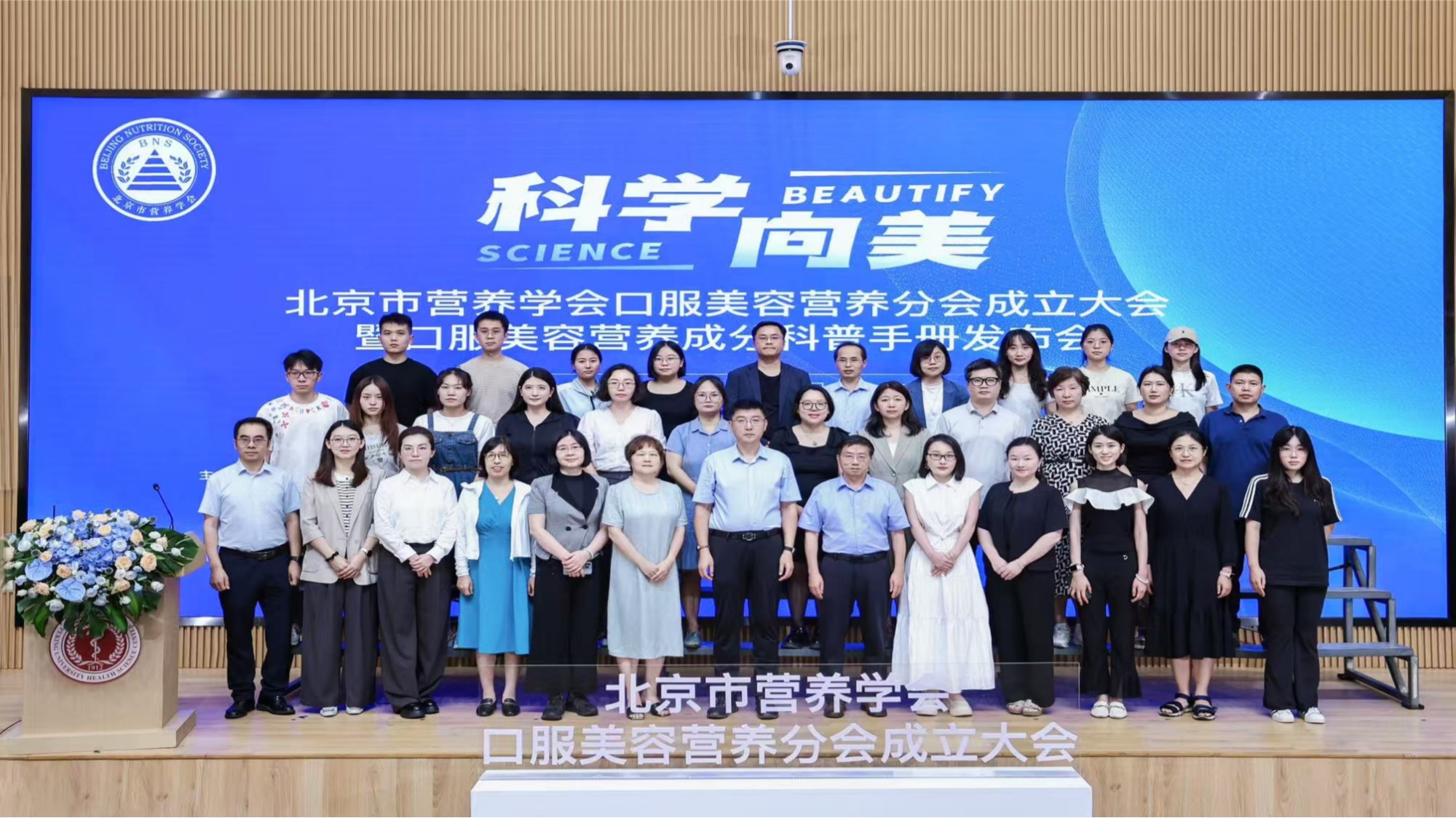
产学研共促行业高质量发展 北京市营养学会口服美容营养分会成立
Yang Guang Wang· 2025-07-30 07:08
Core Viewpoint - The establishment of the Oral Beauty Nutrition Branch of the Beijing Nutrition Society marks a new phase of standardization and professionalism in the oral beauty industry, aiming to integrate scientific research, standard construction, popular science education, and industrial development [4][6]. Group 1: Industry Development - The oral beauty market in China is projected to exceed 25.57 billion yuan by 2025, with a compound annual growth rate (CAGR) of over 3.8%, and it is expected to become the largest oral beauty market globally by 2030 [4]. - The market is witnessing a diversification of ingredients, with collagen products expected to hold a 42% market share in 2024, and oral hyaluronic acid showing the fastest growth with a year-on-year sales increase of 58% [6][4]. - New nutritional ingredients such as ergothioneine and PQQ are also showing significant growth potential, with ergothioneine expected to grow by 25% in the health food market in 2024 [6]. Group 2: Scientific Contributions - The Oral Beauty Nutrition Branch aims to provide a comprehensive platform for scientific research and market practice, offering scientific basis and normative guidance for product development and efficacy evaluation [4][6]. - The "Oral Beauty Nutrition Ingredient Popular Science Handbook" was released, featuring nine popular ingredients and four new oral beauty nutrition technologies, providing a systematic and authoritative guide for the public [9]. - Experts at the event discussed the benefits of key ingredients such as collagen peptides, EGCG, and astaxanthin, highlighting their roles in skin health and anti-aging [10][12]. Group 3: Organizational Structure - The first committee of the Oral Beauty Nutrition Branch consists of 41 members, with Professor Luo Yongkang elected as the chairman and several other experts appointed as vice-chairmen and secretary [6][4]. - The branch will collaborate with regulatory bodies, medical institutions, research institutes, and enterprises to establish a long-term cooperative mechanism to promote the development of the oral beauty nutrition industry [6].

含辅酶Q10、虾青素等!浙江医药子公司年产1400吨生物发酵类系列产品及配套建设项目
合成生物学与绿色生物制造· 2025-07-23 13:47
Core Viewpoint - Zhejiang Kemin Biopharmaceutical Co., Ltd. is advancing its production capabilities by launching a project to produce 1,400 tons of bio-fermentation products annually, focusing on environmentally friendly alternatives to previously planned products [1][2]. Project Overview - Project Name: Annual production of 1,400 tons of bio-fermentation series products and supporting construction project [2] - Project Nature: Technological upgrade [2] - Construction Unit: Zhejiang Kemin Biopharmaceutical Co., Ltd. [2] - Location: Zhejiang Xinchang Economic Development Zone [2] - Scale: The project includes two adjacent closed production lines, one for fermentation processes and another for extraction processes, with advanced equipment to achieve a production capacity of 1,400 tons per year [2]. Product Details - The project will produce various bio-fermentation products, including: - Coenzyme Q10: 1,080 tons/year - Astaxanthin: 100 tons/year - Calcium Pantothenate: 1,090 tons/year - Beta-Carotene: 60 tons/year - Lycopene: 3 tons/year - PQQ: 7 tons/year - Dehydroacetic Acid: 60 tons/year [2]. Financial Performance - Zhejiang Pharmaceutical Co., Ltd. expects a net profit attributable to shareholders of 600 million to 720 million yuan for the first half of 2025, representing a year-on-year increase of 90.28% to 128.33% [2]. - The net profit excluding non-recurring gains and losses is projected to be between 590 million and 708 million yuan, reflecting an increase of 86.27% to 123.53% year-on-year [2]. Market Dynamics - The company is focusing on maintaining safety in production and product quality amidst intense market competition and a complex economic environment [3]. - The demand and sales prices for the company's main products in the life nutrition segment have increased compared to the same period last year, driving revenue growth [3]. Industry Event - The 4th Synthetic Biology and Green Bio-Manufacturing Conference (SynBioCon 2025) will be held from August 20-22, 2025, in Ningbo, Zhejiang, focusing on AI and bio-manufacturing, green chemicals, new materials, future food, and agriculture [4][6].


2025新健康消费生活趋势报告-第一财经商业数据中心
Sou Hu Cai Jing· 2025-07-20 02:30
Core Insights - The health consumption market is transitioning from a passive "treatment" mindset to an active "prevention" approach, driven by policy, technology, and consumer upgrades [1][28] - The report identifies five consumer segments, each with distinct health management preferences and behaviors [1][49] Group 1: Consumer Trends - Health is becoming a core aspect of beauty, with non-prescription drugs and oral beauty products gaining popularity [2] - Weight management is a key focus, with scientific weight loss principles and innovative food products emerging [2] - The concept of "preventive health" is gaining traction, emphasizing dietary and lifestyle habits [2] - Emotional well-being is increasingly recognized, with consumers using purchases as a means to cope with emotions [2] Group 2: Market Dynamics - The health consumption market is experiencing a supply-demand restructuring, with a shift towards personalized health solutions [33] - The market is expanding across various categories, including "health + home," "health + pets," and "health + beauty" [35] - The pharmaceutical market in China reached approximately 14,480 billion yuan in 2020, with a projected compound annual growth rate of 9.6% over the next five years [35] Group 3: Consumer Segmentation - The report categorizes consumers into five segments: 1. High-intelligence action-oriented individuals who prioritize authoritative endorsements and transparent efficacy [1][49] 2. Passive followers who respond to external health trends and are influenced by social media [1][49] 3. Family health managers focused on disease prevention and safety of ingredients [1][49] 4. Relaxed wellness enthusiasts who practice balanced diets and prefer traditional health products [1][49] 5. Emotionally healing individuals who seek professional psychological support and smart companionship devices [1][49] Group 4: Challenges and Solutions - The industry faces challenges such as information overload, brand trust crises, and the need for clearer health narratives [40] - The TRUTH principle proposed by CBNData aims to address these challenges by establishing a cognitive benchmark and rebuilding trust mechanisms [40]

金达威(002626) - 002626金达威投资者关系管理信息20250717
2025-07-18 00:30
Group 1: Company Overview - The company primarily engages in the research, production, and sales of nutritional health foods (including raw materials and finished products) and feed additives [2][3] - The production of health food raw materials and feed additives mainly occurs domestically, with a high export ratio; finished health food products are primarily produced and sold overseas, showing significant growth through cross-border e-commerce [3] Group 2: Product Development and Market Position - The company utilizes synthetic biology as a foundational technology for large-scale production of various raw materials, including Coenzyme Q10, NMN, NADH, Vitamin K2, and others [3] - Coenzyme Q10 holds the largest global market share, demonstrating notable cost and scale advantages [3] - The company aims to reduce production costs for products like astaxanthin, DHA, and EPA to enhance market competitiveness [3] Group 3: Brand and Sales Strategy - The company owns two major health food brands, Doctor's Best and Zipfizz, with production capabilities for capsules, tablets, and powders [3][4] - Doctor's Best is a well-known health brand in North America, showing steady growth, while Zipfizz maintains stable performance with new products developed for the U.S. market [4] - The marketing strategy for domestic health food business focuses on market insights, product strategy, resource integration, and data-driven upgrades to create market-leading products [4] Group 4: Financial Performance - The company's performance growth in the first half of 2025 is primarily attributed to increased sales of Coenzyme Q10, vitamins, and domestic health products [3]

金达威(002626) - 002626金达威投资者关系管理信息20250522
2025-05-22 08:42
Group 1: Company Operations - The company has successfully completed a 1.5 times expansion of its coenzyme Q10 raw material production line, with new fermentation tanks successfully tested and currently maintaining a strong production and sales momentum [2][3] - The price of Vitamin A has decreased due to market fluctuations, while DHA products have improved competitiveness through technological upgrades and market promotion, laying a solid foundation for future market expansion [2][3] - Other raw material products such as astaxanthin and Vitamin K2 are showing significant positive trends [3] Group 2: Market Expansion and Product Development - The company's health food finished product business is expanding well in the domestic market, benefiting from the rapid development of the domestic health consumption industry [3] - The overseas subsidiary VitaBest's soft capsule production line is under construction and is expected to be operational in the second half of the year; Zipfizz functional beverages will introduce four new flavors and a new "YOU" ready-to-drink product series [3] Group 3: Regulatory and Market Challenges - The current tariff rate for coenzyme Q10, Vitamin A, Vitamin D3, and Vitamin K2 exported to the U.S. is 20%. The company has mitigated the tariff impact by raising sales prices or having downstream customers bear the tariff costs; the sales proportion of vitamin products in the U.S. is small, limiting the overall impact [3] Group 4: Marketing Strategies - The company plans to develop marketing strategies for end-nutrition health products based on industry characteristics, market demand, brand positioning, and resource integration capabilities, utilizing market insights and data-driven approaches to create market-leading products [3] Group 5: Synthetic Biology Applications - The company employs synthetic biology as a foundational technology for the large-scale production of various raw material products, including coenzyme Q10, NMN, NADH, Vitamin K2, nattokinase, PQQ, SAMe, DHA, and ARA, while also exploring new products such as astaxanthin, algal oil EPA, glutathione, inositol, calcium pantothenate, and biological sweeteners [3]