Qira

Search documents
Motorola Qira Can Share Links and Book Uber For You #mwc2026 #motorola
CNET· 2026-03-02 10:15
Say there's a post that was shared on LinkedIn and I want to share it with someone else. I would have to go on LinkedIn, find the person post, right. What we can do is we can just put a simple command here, right.Saying ask LinkedIn to get so and so's latest post and send it to so and so in Slack. Once I hit send, Kira agent takes over your phone. It now is understanding what is the command that we have asked, right.We have asked him to open LinkedIn. So it opens LinkedIn. It searches Jeff Snow. It knows th ...


联想集团(00992.HK)第三财季营收增长18%至222亿美元 人工智能相关收入同比大幅增长72%
Ge Long Hui· 2026-02-12 04:14
Core Insights - Lenovo Group reported a robust financial performance for the third quarter, with revenue reaching a record $22.2 billion, representing an 18% year-over-year growth, driven by double-digit growth across all three business groups [1] - AI-related revenue surged by 72%, accounting for 32% of the total revenue, highlighting the company's strong positioning in the AI market [1] Financial Performance - Adjusted profit attributable to equity holders was $589 million, a 36% increase, outpacing revenue growth [1] - The adjusted net profit margin increased by 34 basis points to 2.7%, reflecting improved operational leverage and efficiency [1] Business Group Performance - All three business groups—Infrastructure Solutions, Solutions Services, and Intelligent Devices—reported strong quarterly results, with the Intelligent Devices group maintaining a leading position in the global PC market [2] - The Infrastructure Solutions group achieved a record quarterly revenue of $5.2 billion, driven by robust demand for AI servers and a strong project pipeline of $15.5 billion [2] Strategic Initiatives - The Infrastructure Solutions group announced a restructuring to optimize cost structures and accelerate sustainable profit growth, targeting over $200 million in net cost savings annually for the next three fiscal years [3] - The Solutions Services group continued its strong growth trajectory, with an 18% year-over-year revenue increase, marking the 19th consecutive quarter of double-digit growth [3] Investment in AI - The company continues to invest in enhancing its AI capabilities, with R&D spending maintaining at 3% of total revenue [4] - The launch of the Qira product, a unified cross-platform personal superintelligence, showcases Lenovo's commitment to leading the AI ecosystem [4] Cash Flow and Financial Management - Operating cash flow for the third quarter reached $952 million, with free cash flow rising to $451 million, supporting growth plans and capital expenditures [4] - Adjusted net financial costs decreased year-over-year, reflecting effective working capital management and lower market interest rates [4]

Omdia:2025年,全球平板出货量增长10%,市场增速接近放缓
Canalys· 2026-02-04 10:25
Core Insights - The global tablet market is expected to recover in 2025, with a year-on-year shipment growth of 9.8%, reaching 162 million units [2] - The strongest performance is anticipated in the fourth quarter of 2025, with shipments reaching 44 million units, also reflecting a 9.8% year-on-year increase [2] - The Central and Eastern Europe region is projected to be the fastest-growing market in 2025, followed by the Asia-Pacific region [2] Market Performance - In Q4 2025, the global tablet market is expected to grow by 10% year-on-year [7] - Apple is projected to lead the market with shipments of 19.6 million iPads, a 16.5% increase driven by strong demand for the iPad Air and M5 chip-equipped iPad Pro series [7] - Samsung, despite being second, is expected to see a 9.2% decline in shipments to 6.4 million units due to overall market slowdown [7] - Lenovo is anticipated to have the fastest growth among major manufacturers, with shipments of 3.9 million units, a 36% increase [7] - Huawei and Xiaomi are also expected to show growth, with shipments of 3 million and 2.8 million units, reflecting increases of 14.8% and 10.1% respectively [7] Manufacturer Strategies - Manufacturers are advised to balance competitiveness and profitability, as potential disruptions in the memory market could affect supply availability and increase prices [4] - Growth opportunities are expected to be limited, focusing on high-end and flagship model refresh cycles in developed markets, as well as education demand supported by public sectors in emerging markets [4] - Product positioning and marketing strategies are anticipated to evolve, with manufacturers aiming to position tablets as central devices in ecosystems, incorporating cross-operating system functionalities and AI-driven experiences [4]



当AI走出屏幕:CES 2026与物理智能时代的来临
Jing Ji Guan Cha Wang· 2026-01-15 11:22
Core Insights - CES 2026 highlights the intersection of technology, geopolitics, and business strategy, showcasing emerging trends that shape the future of consumer technology and economic competition [1][2] Group 1: Artificial Intelligence as a Foundation - Artificial intelligence (AI) has become the cornerstone of innovations at CES 2026, driving advancements in various technologies and products [3] - New devices like laptops, smartphones, and wearables are increasingly integrating AI capabilities, enabling them to perform tasks independently without relying on cloud services [3] - Edge AI is emphasized, allowing AI algorithms to process data locally on devices, enhancing efficiency and privacy [4] - AI is evolving into a "digital agent" role, coordinating tasks across multiple devices and applications, with a focus on continuous, context-aware workflows [4] Group 2: Physical Artificial Intelligence Takes Center Stage - The concept of "physical AI" is introduced, referring to intelligent systems that perceive, decide, and execute actions in real environments [6] - Robotics is a key pillar of physical AI, with robots transitioning from conceptual designs to practical tools for collaboration in various sectors [7] - The integration of AI and robotics is evident in products like Boston Dynamics' Atlas, which showcases advanced capabilities for industrial applications [7][8] Group 3: Automotive Industry as AI Technology Pioneer - The automotive sector is increasingly merging with AI, with companies positioning themselves as technology leaders in the field [12] - Significant market opportunities are projected in the automotive industry, with a potential market value of $123 billion by 2032, reflecting an 85% growth from 2023 [12] - Companies like Ford and Nvidia are unveiling advanced autonomous driving systems, emphasizing the need for robust onboard computing resources [13][14] Group 4: Transition from Consumer Electronics to Social Infrastructure - AI is moving beyond traditional consumer electronics boundaries, becoming integral to social infrastructure, including transportation, energy systems, and smart homes [17] - The narrative at CES 2026 indicates a shift from novelty consumer products to large-scale industrial deployments of AI [17] - Collaboration among various systems and platforms is essential for effective AI implementation in real-world environments [18]
黄仁勋、杨元庆,给人工智能划了两个重点丨2026 CES观察
3 6 Ke· 2026-01-11 23:36
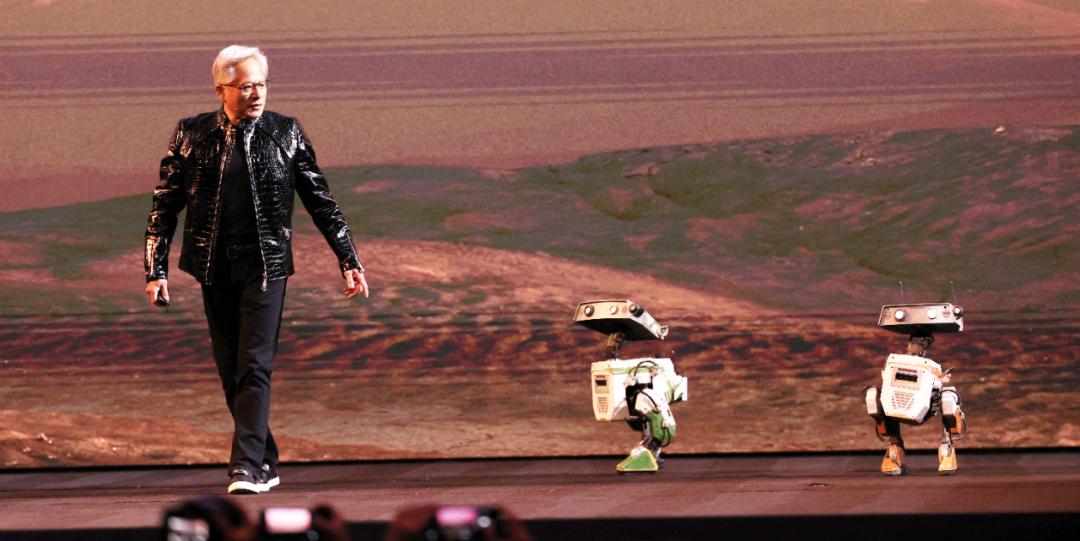
Core Insights - The article discusses the evolving narratives around artificial intelligence (AI) showcased at CES 2026, emphasizing two main themes: "AI is physical" and "AI is personal" [3][12]. Group 1: AI is Physical - CES has historically focused on the next technological advancements, transitioning from electric vehicles (EVs) to "physical AI," which integrates AI with physical entities like cars and robots [5][11]. - General Motors (GM) announced advancements in its Super Cruise system, allowing for "eyes-off driving" by 2028, and plans to integrate a Google Gemini-powered AI assistant in vehicles to enhance user interaction [7][8]. - The concept of physical AI is exemplified by vehicles acting as personal assistants, capable of managing tasks and providing support, thus transforming traditional transportation into intelligent, interactive machines [8][11]. - NVIDIA's CEO Jensen Huang highlighted the significance of physical AI, stating that breakthroughs in understanding the real world are opening new application scenarios, supported by NVIDIA's advancements in training and inference technologies [9][10]. Group 2: AI is Personal - Companies like General Motors and Sony Honda Mobility are developing AI assistants for vehicles, enhancing user experience through personalized interactions and management of applications and settings [13][14]. - Lenovo introduced Qira, a personal ambient intelligence system that operates across various devices, providing context-aware assistance and creating a dynamic model of user interactions [16][18]. - The trend towards personalized AI is evident in the development of systems that learn from user behavior and preferences, aiming to integrate seamlessly into daily life and enhance productivity [21][22]. - Privacy considerations are emphasized in the design of personal AI products, ensuring user data is handled securely and allowing users to maintain control over their information [23]. Group 3: Future Directions - The article identifies two key paths for the evolution of AI: the embodiment of AI in physical devices and the deep personalization of AI in individual lives, both of which are crucial for the next stage of intelligent systems [24].