Racco(海獭)

Search documents
比亚迪将在埼玉川越开设关东地区最大门店
日经中文网· 2026-03-13 08:00
Core Viewpoint - BYD is expanding its presence in Japan by opening a large dedicated store in Kawagoe, Saitama, which will enhance customer service through a one-stop shop model that includes vehicle display and maintenance services [2][4]. Group 1: Store Opening Details - The "BYD AUTO Kawagoe" store will open on April 3, showcasing up to 6 vehicles and featuring a maintenance facility [2]. - The store will display all current models, including the plug-in hybrid vehicle "Sealion 6," set to launch in December 2025, and the Japan-exclusive electric light vehicle "Racco," expected in summer 2026 [4]. Group 2: Expansion Strategy - BYD aims to establish a network of 100 stores in Japan, with the Kawagoe location being the 50th official store [4]. - Including preparation rooms for test drives and purchase consultations, BYD has a total of 69 outlets in Japan [4][5]. - The company is also planning to open smaller stores in local cities to promote the sales of electric light vehicles beyond the 100-store framework [5].


丰田换帅背后:日系车阵营加速分裂
Zhong Guo Jing Ji Wang· 2026-02-11 01:21
Core Viewpoint - Toyota is undergoing significant management changes to address declining profits and increasing market competition, particularly in China, while maintaining its global sales leadership [1][2]. Group 1: Management Changes - Toyota announced a major management reshuffle, with CFO Koji Sato becoming President and CEO effective April 1, while former President Akio Toyoda will serve as Vice Chairman and Chief Industry Officer [1]. - The management change is seen as a response to the need for better cost control and internal management amid competitive pressures, especially from Chinese brands [2]. Group 2: Financial Performance - For the third quarter of the 2026 fiscal year, Toyota reported a net profit of 1.26 trillion yen, a 43% decline year-on-year, despite a sales revenue increase of 8.6% to 13.46 trillion yen [2]. - The board has prioritized enhancing profitability and reducing the breakeven point as urgent tasks [2]. Group 3: Market Position - Toyota's global sales reached a record 11.32 million vehicles in 2025, marking a 4.6% increase and maintaining its position as the world's top automaker, leading Volkswagen by approximately 2.3 million vehicles [1]. - In the Chinese market, Toyota's sales slightly increased by 0.23% to over 1.78 million vehicles, making it the only Japanese automaker to achieve positive growth, while Nissan and Honda saw declines of 6.26% and 24.28%, respectively [1][6]. Group 4: Strategic Focus - Toyota plans to increase the annual production of hybrid and plug-in hybrid vehicles to approximately 6.7 million by 2028, a 30% increase from 2026 estimates, with hybrids expected to account for nearly 60% of total planned production [3]. - The company has adjusted its financial forecasts for the 2026 fiscal year, raising its operating profit expectation from 3.4 trillion yen to 3.8 trillion yen and net profit from 2.93 trillion yen to 3.57 trillion yen [4]. Group 5: Competitive Landscape - Japanese automakers, including Toyota, are facing significant profit losses due to U.S. import tariffs, with an estimated total loss of about 1.5 trillion yen (nearly 10 billion USD) from April to September 2025 [7]. - The Japanese automotive market is experiencing turmoil, with Toyota maintaining its lead in domestic sales, while Nissan's new car sales dropped by 15% [7]. Group 6: Industry Challenges - The rise of Chinese and American electric vehicle manufacturers poses a significant threat to Japanese automakers, with Tesla and BYD showing substantial sales growth in Japan [8]. - The Japanese automotive industry is at a critical juncture, requiring improvements in international competitiveness and talent development to survive [8].

百年难遇!外国汽车扎堆进攻日本市场
汽车商业评论· 2026-02-07 23:07
Core Viewpoint - The Japanese automotive market, historically dominated by local brands, is witnessing a significant shift as foreign electric vehicle (EV) manufacturers are beginning to penetrate this previously closed market, driven by the slow electrification of domestic brands and changing consumer preferences [4][5][6]. Group 1: Market Overview - Japan's automotive market has long been considered one of the most challenging for foreign brands, with local manufacturers holding over 90% market share [4]. - In 2025, Japan's total new car sales are projected to reach 4.5658 million units, with a 3.3% year-on-year increase, while foreign brands are starting to gain traction [5]. - The electric vehicle market in Japan is still in its infancy, with only 60,677 EVs sold in 2025, representing a mere 1.6% of total vehicle sales [5]. Group 2: Foreign Brands' Entry - The Japanese Imported Automobile Association reported a 7% increase in non-local brand vehicle sales in 2025, totaling 243,129 units, with pure electric imports surging by 26% to a record 30,513 units [6]. - Hyundai is making a comeback in Japan, with a 89% increase in sales in 2025, reaching 1,169 units, driven by the introduction of several electric models [8][10]. - Tesla's sales in Japan saw a remarkable 90% increase in 2025, reaching approximately 10,600 units, attributed to a shift in sales strategy towards physical stores [12][14]. Group 3: Chinese Brands' Expansion - BYD entered the Japanese market in 2023 and aims to establish 100 dedicated stores by 2025, achieving a 62% sales increase to 3,870 units in 2025 [15][18]. - Other Chinese brands, such as Zeekr and GAC, are also planning to enter the Japanese market, with unique offerings tailored to local consumer preferences [19][21]. Group 4: Domestic Brands' Response - Japanese automakers are not standing still; Toyota's new EV model bZ4X received over 10,000 orders within three months of its launch in late 2025, becoming the top-selling EV in Japan [24][27]. - Nissan and Honda are also launching new EV models to compete with foreign brands, with Nissan's new LEAF and Honda's N-ONE e: entering the market [27][28].


比亚迪2025年在日本卖出3870辆
36氪· 2026-01-16 14:41
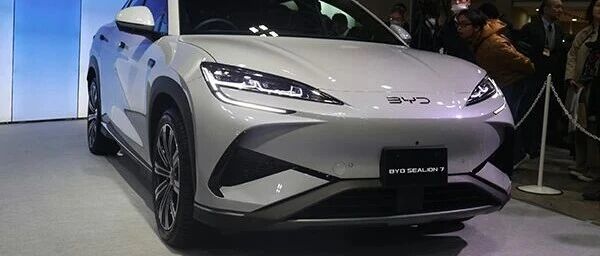
Core Insights - Japan's imported car sales (excluding domestic manufacturers) are projected to grow by 7% in 2025, reaching 243,129 units, marking the first positive growth in two years [4][5] - Electric vehicle (EV) sales are expected to increase by 26%, reaching 30,513 units, setting a new historical record [5] - BYD's sales in Japan surged by 62%, totaling 3,870 units, driven by the strong performance of the SUV "Hai Lion 7" [5][7] Group 1: Electric Vehicle Market - EV sales in Japan have seen continuous growth for seven years, with EVs accounting for 13% of total sales in 2025, an increase of 2 percentage points from the previous year [5] - Tesla's sales in Japan, although not officially disclosed, saw an 88% increase in the "other" category, reaching 10,693 units, marking the first time Tesla's monthly sales exceeded 10,000 units [5] - Hyundai's sales grew by 89%, reaching 1,169 units, supported by the strong sales of the small EV "INSTER" launched in April 2025 [7] Group 2: Overall Market Trends - The overall imported car market saw a decline in sales for some traditional brands, with Mercedes-Benz sales decreasing by 4% to 50,857 units, while BMW and Volkswagen saw slight increases [7] - In terms of price segments, vehicles priced above 10 million yen (approximately 446,000 RMB) increased by 3% to 40,602 units, while those priced between 4 million yen (approximately 178,000 RMB) and 10 million yen increased by 9% to 151,273 units [10] - The Japanese government plans to increase the subsidy cap for purchasing EVs by 400,000 yen, reaching a maximum of 1.3 million yen (approximately 58,000 RMB), which may temporarily affect consumer purchasing behavior [10]
比亚迪2025年在日本卖出3870辆
3 6 Ke· 2026-01-09 05:50
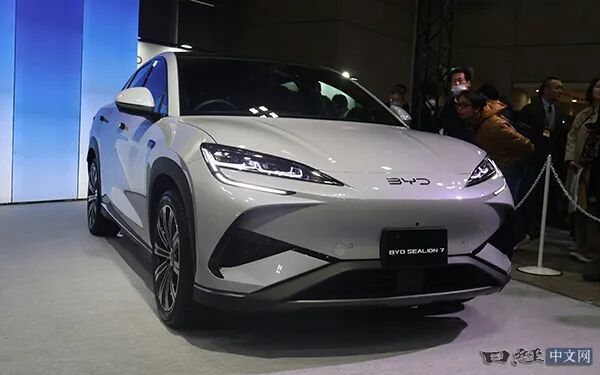
Group 1 - In 2025, Japan's imported car sales (excluding domestic manufacturers) increased by 7% year-on-year, reaching 243,129 units, marking the first positive growth in two years [1] - Electric vehicle (EV) sales grew by 26% to 30,513 units, achieving a record high, with Tesla and other EV manufacturers contributing to this increase [1] - EVs accounted for 13% of total sales in 2025, up 2 percentage points from the previous year, indicating a continuous growth trend for EVs in Japan over the past seven years [1] Group 2 - Tesla's sales in Japan, although not officially disclosed, saw an 88% increase in the "other" category, reaching 10,693 units, marking the first time Tesla's sales exceeded 10,000 units in Japan, moving up from 10th to 7th place in brand rankings [1] - BYD's sales in Japan surged by 62% to 3,870 units, driven by the strong performance of the SUV "Hai Lion 7," which was launched in April 2025 [1] - Hyundai's sales increased by 89% to 1,169 units, supported by the strong sales of the small EV "INSTER," which is well-suited for Japan's narrow roads and is competitively priced [3] Group 3 - In terms of brand performance, Mercedes-Benz saw a 4% decrease in sales, dropping to 50,857 units, while BMW's sales grew by 1% to 35,729 units, and Volkswagen's sales increased by 36% to 31,031 units [3] - The overall sales of imported cars in December 2025 showed a slight increase of 0.3% year-on-year, reaching 23,551 units, although EV sales decreased by 14% to 2,549 units during the same period [5] - The Japanese government announced an increase in the subsidy cap for purchasing EVs starting January 1, 2026, which may have temporarily affected consumer purchasing behavior [5]
比亚迪2025年在日本卖出3870辆
日经中文网· 2026-01-09 02:36
Core Insights - Japan's imported car sales (excluding domestic manufacturers) increased by 7% in 2025, reaching 243,129 units, marking the first positive growth in two years [1] - Electric vehicle (EV) sales grew by 26%, totaling 30,513 units, setting a new historical record, driven by increased sales from manufacturers like Tesla [1][3] - Tesla's sales in Japan saw an 88% increase, surpassing 10,000 units for the first time, while BYD's sales rose by 62% to 3,870 units, supported by the strong performance of the "海狮7" SUV [3][5] Group 1: EV Market Performance - EVs accounted for 13% of total car sales in Japan in 2025, up 2 percentage points from the previous year [3] - BYD's "海狮7" SUV, launched in April 2025, significantly boosted its sales, and the company plans to introduce the "Racco" model in summer 2026 to further increase market share [3] - Hyundai's EV sales increased by 89% to 1,169 units, driven by the strong performance of the "INSTER" model [5] Group 2: Brand Performance - Mercedes-Benz saw a 4% decline in sales, dropping to 50,857 units, while BMW's sales grew by 1% to 35,729 units, and Volkswagen's sales increased by 36% to 31,031 units [6] - The price segment analysis showed a 3% increase in sales for vehicles priced over 10 million yen, reaching 40,602 units, while the segment below 4 million yen saw a 7% increase to 42,789 units [8] Group 3: Market Trends and Government Policy - In December 2025, imported car sales in Japan grew by 0.3% year-on-year to 23,551 units, but EV sales decreased by 14% to 2,549 units due to a temporary purchasing slowdown caused by changes in government subsidies [8]