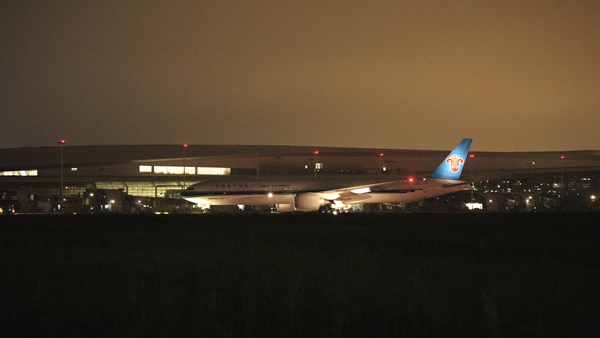
T3航站楼

Search documents
海南机场青年工程师:扎根机场群建设逐梦海南自贸港
Hai Nan Ri Bao· 2025-12-14 01:33
Core Viewpoint - The article highlights the significant contributions of young engineers, particularly in the construction of the Hainan Free Trade Port's airport infrastructure, showcasing rapid project completion and alignment with national development strategies [2]. Group 1: Project Development - The T3 terminal of the Hainan airport was completed in less than 18 months, marking it as the fastest construction of a terminal of similar scale in recent years within China's civil aviation sector [2]. - The project is part of a broader initiative to enhance the airport cluster in Hainan, which is crucial for the operational closure of the Hainan Free Trade Port [2]. Group 2: Personal Growth and Professional Commitment - The engineer transitioned from a recent graduate to a competent professional, emphasizing the integration of personal aspirations with national development goals [2]. - There is a strong commitment to continue contributing to the development of the Hainan Free Trade Port, indicating a long-term vision for professional growth within the region [2].

新航站楼投运一个月 广州白云机场客流与航线双增长
Ren Min Ri Bao· 2025-12-04 21:59
Core Insights - Guangzhou Baiyun International Airport has experienced significant growth in passenger traffic and flight routes following the operational launch of Terminal 3 and the fifth runway, enhancing its role as an "air gateway" for the Guangdong-Hong Kong-Macao Greater Bay Area [1][2] Group 1: Passenger Traffic Growth - As of December 2, 2023, Baiyun Airport has served a total of 76.52 million passengers this year, surpassing the annual passenger throughput of 76.37 million projected for 2024 [1] - In November, the airport recorded 7.32 million passengers, reflecting a year-on-year increase of over 12.56% [1] - International passenger numbers reached 15.84 million, marking a year-on-year growth of 19.01%, which constitutes 20.70% of total passenger traffic [1] Group 2: Operational Enhancements - The operational launch of Terminal 3 on October 30, 2023, signifies the airport's transition to a "five-runway and three-terminal" operational model [1] - Five airlines, including China Eastern Airlines and Shanghai Airlines, have transferred 21 domestic flights to Terminal 3, indicating a smooth transition and efficient operations [1] - The introduction of the domestically produced C919 aircraft by major airlines at Terminal 3 enhances the travel experience for passengers [1] Group 3: International Route Expansion - This year, Baiyun Airport has opened, restored, and increased over 30 international passenger routes, including new destinations such as Almaty, Algiers, Madrid, and Darwin [2] - The number of international and regional destinations has exceeded 100, reflecting the airport's expanding global connectivity [2] - Several international carriers, including Astana Airlines and Nepal Airlines, have been introduced, further broadening the airport's international network [2]

白云机场迎最忙金秋:T3与第五跑道投运,单月客流刷新纪录
Nan Fang Du Shi Bao· 2025-11-04 09:09
Core Insights - Guangzhou Baiyun International Airport has achieved significant milestones with the opening of the new T3 terminal and the fifth runway, leading to a record monthly passenger flow of over 7.6 million in October 2025, a year-on-year increase of over 11% [1] - The airport aims to enhance its hub capabilities and global connectivity, positioning itself as a key link between the Greater Bay Area and the world, thereby strengthening China's position in the global aviation landscape [1] Hub Capability Enhancement - The airport has transitioned from "three runways and two terminals" to "five runways and three terminals," establishing a comprehensive air route network with over 240 destinations and more than 160 international routes [2] - The recent International Airport Expo in Guangzhou highlighted the airport's growing international hub status, with participation from over 170 airports and 190 aviation-related enterprises from more than 70 countries [2] - Baiyun Airport is evolving from a "single hub" to a "super node" that drives regional collaboration, enhancing its role as a core city for international aviation exchanges [2] Operational Performance - From January to October 2025, Baiyun Airport handled 450,000 flights, a year-on-year increase of 7.6%, and transported 68.74 million passengers, up 8.83% [3] - The airport's international passenger traffic saw a significant increase, with 14.15 million international travelers, reflecting a growth of 18.74% [3] - The airport aims to reach an annual passenger throughput of 120 million by 2030 and 140 million by 2045, with a cargo capacity of 600,000 tons [3] Route Network Expansion - The T3 terminal's operation has significantly improved the airport's international route density and transfer efficiency, with over 20 new or enhanced routes to Southeast Asia and the Middle East [4] - The airport has optimized its transfer processes, reducing transfer times by 25% and achieving over 99% luggage tracking accuracy [5] - Baiyun Airport is positioned as the primary gateway from Southern China to Africa and the Middle East, with plans to expand routes to Southeast Asia, South Asia, and beyond [5] Connectivity and Economic Impact - The Greater Bay Area's total passenger throughput is expected to exceed 200 million by 2024, reflecting the region's economic vitality and openness [6] - Baiyun Airport serves as a critical link for the Bay Area's transportation network, integrating various transport modes to facilitate seamless transfers [6] - The airport's development is integral to the Bay Area's economic growth, projected to reach 14.79 trillion yuan by 2024, positioning it among the world's top economic regions [6] Cultural and Future Development - The T3 terminal incorporates cultural elements into its design, enhancing the travel experience and showcasing the region's cultural charm [7] - Baiyun Airport aims to become a world-class airport, collaborating with nearby airports to create a world-class airport cluster and striving to establish a "global 12-hour air traffic circle" [7] - The airport is committed to optimizing its route network and enhancing regional collaboration to support high-quality development in China's civil aviation sector [7]
白云机场进入“五跑三楼”时代,广州临空经济蓄势腾飞
2 1 Shi Ji Jing Ji Bao Dao· 2025-10-31 12:26
Core Insights - The opening of the T3 terminal and the fifth runway at Baiyun Airport marks the transition into the "five runways and three terminals" era, with a total investment of 53.77 billion yuan for the expansion project [2] - Baiyun Airport's annual passenger throughput capacity is expected to reach 140 million, and cargo throughput capacity is projected to hit 6 million tons, positioning it among the world's top airports [2] - The upgraded airport is seen as a catalyst for regional economic development, enhancing Guangdong's role in the global supply chain [2] Infrastructure Development - Baiyun Airport has expanded from a "dual runway" system in 2004 to the current state, with T3 and the fifth runway now operational [5] - The airport is expected to rank among the top ten busiest airports globally by 2024, with over 240 air traffic points and more than 160 international routes [5] - The T3 terminal will facilitate the opening and resumption of over 30 international passenger routes this year, with a planned weekly flight schedule of 10,728 flights [5] Economic Impact - The airport's expansion is anticipated to accelerate the growth of related industries such as aviation logistics, high-end manufacturing, and biomedicine, with over 20,000 companies currently operating in the Guangzhou Airport Economic Zone [2][3] - The T3 terminal is designed to enhance logistics efficiency, with smart cargo stations capable of processing over 1.2 million tons annually [6] - The integration of logistics and supply chain services is expected to create a more efficient and responsive supply chain, particularly for high-value industries [7] Industry Trends - The aviation maintenance sector is evolving, with increasing complexity in aircraft repairs and a growing demand for skilled technicians [4] - The Guangzhou Airport Economic Zone is developing a modern industrial system focused on low-altitude economy, aerospace, and advanced manufacturing [9] - New business models are emerging, such as digital freight platforms that enhance efficiency in air cargo management [10] Future Outlook - The airport aims to attract more high-end industries and strengthen its role as a global supply chain hub, particularly in electronics, biomedicine, and precision instruments [7] - The development of cold chain logistics and pharmaceutical supply chains is becoming increasingly important, leveraging the airport's rapid customs clearance capabilities [9] - Companies are actively seeking opportunities to invest in the airport's economic zone, indicating a positive outlook for future growth [10]

T3航站楼启用在即 广州白云机场“升维”冲击全球航空枢纽
Nan Fang Du Shi Bao· 2025-10-23 09:22
Core Insights - The Guangzhou Baiyun International Airport (referred to as "Baiyun Airport") is set to unveil its T3 terminal, significantly enhancing its capacity and role as a key international aviation hub [2][5][14] - Baiyun Airport's strategic location in South China positions it as a vital gateway to Southeast Asia and Oceania, facilitating rapid connectivity [2][9] - The T3 terminal will increase the airport's annual passenger throughput capacity to over 120 million and cargo capacity to 3.8 million tons, placing it among the world's leading airports [2][5][14] Infrastructure Development - The T3 terminal and associated projects have recently passed construction acceptance, marking a critical step towards operational readiness [5][6] - Baiyun Airport's expansion includes a comprehensive transportation hub that integrates air and rail services, enhancing connectivity within the Guangdong-Hong Kong-Macao Greater Bay Area [6][7][14] - The airport's infrastructure is designed to support high passenger volumes, with projections of daily inbound and outbound traffic reaching approximately 52,000 during peak periods [4][6] Economic Impact - The 138th China Import and Export Fair (Canton Fair) is expected to drive significant international traffic to Baiyun Airport, with a notable increase in passenger numbers from Southeast Asia [3][4] - The airport's strategic initiatives align with China's Belt and Road Initiative, enhancing its role in global trade and commerce [11][12] Competitive Landscape - Baiyun Airport has been recognized as one of the busiest airports in China, competing closely with Beijing and Shanghai airports, each with distinct geographical advantages [8][9][10] - The airport's focus on Southeast Asian markets and its strategic partnerships aim to bolster its international connectivity and competitiveness [11][12] Future Prospects - The T3 terminal is anticipated to facilitate a seamless integration of air and rail transport, significantly improving travel efficiency and expanding the airport's catchment area [7][14] - Baiyun Airport's ongoing development is expected to enhance its capacity to support high-value, time-sensitive logistics, reinforcing its position as a modern trade center [14]
广州白云国际机场第五跑道成功试飞
Zhong Guo Min Hang Wang· 2025-07-30 06:26
Group 1 - The successful test flight of the fifth runway at Guangzhou Baiyun International Airport marks a significant milestone for its official operation [1][2] - The test flight lasted 5 hours and 6 minutes, validating various operational aspects including communication, navigation, and runway conditions, all meeting industry standards [2] - The fifth runway, located 1530 meters east of the second runway, is 3600 meters long and 45 meters wide, designed to accommodate large E-class aircraft [2] Group 2 - The total investment for the third phase expansion of Guangzhou Baiyun International Airport is 53.77 billion yuan, which includes the construction of a new T3 terminal and two new runways [2][3] - The expansion aims to enhance the airport's capacity to handle 140 million passengers and over 6 million tons of cargo annually, supporting its development as a comprehensive international aviation hub [3] - Significant progress has been made in the construction of the T3 terminal and other associated facilities, with the project entering the final stages of completion [3]