
VF9

Search documents
VinFast Auto Q4 Earnings Call Highlights
Yahoo Finance· 2026-03-16 13:35
VinFast said Vietnam remained its largest market and that it maintained the number-one OEM position there. The company ended 2025 with an estimated 36% market share versus 22% in 2024, and said models VF3 and VF5 represented 51% of domestic volume. For the first time since it began selling internationally, the company said overseas markets accounted for 18% of Q4 deliveries and 11% of full-year 2025 deliveries.For 2026, VinFast guided to at least 300,000 EV deliveries . Thuy said the target is supported by ...

VinFast Auto .(VFS) - 2025 Q4 - Earnings Call Transcript
2026-03-16 13:02
Financial Data and Key Metrics Changes - Revenue for Q4 2025 was $1.6 billion, up 118% quarter-over-quarter and 139% year-over-year, while full-year revenue reached $3.6 billion, an increase of 105% year-over-year [24][25] - Gross margin improved to -40% in Q4 2025 from -79% in Q4 2024, and for the full year, gross margin improved to -43% compared to -57% in 2024 [24][25] - Net loss for Q4 2025 was -$1.4 billion, with a net loss margin improving to -89% compared to -186% a year ago [30] Business Line Data and Key Metrics Changes - VinFast delivered 196,919 EVs for the full year, exceeding guidance to at least double the number of EVs delivered in 2024, with Q4 alone accounting for 86,557 EVs delivered [6][7] - The two-wheeler segment saw full-year deliveries grow 5.7x to 406,496 units, with expectations for two-wheeler deliveries to be at least 2.5x last year's volume for 2026 [7][8] Market Data and Key Metrics Changes - In Vietnam, VinFast maintained a 36% market share by the end of 2025, up from 22% in 2024, with VF3 and VF5 accounting for 51% of domestic volume [8] - International markets contributed 11% of total deliveries for the full year 2025, with overseas deliveries accounting for 18% in Q4 [8][9] Company Strategy and Development Direction - VinFast aims to expand its capacity for international markets and is focused on scale and unit cost optimization as primary levels in the path to profitability [4][5] - The company is investing in technology and industrial capabilities, with a focus on AI-driven software-defined vehicles and a vertically integrated software-defined EV platform [4][6] Management's Comments on Operating Environment and Future Outlook - Management noted that higher oil prices could influence EV adoption dynamics, reinforcing the long-term value proposition of EVs [44][46] - The company expects to achieve at least 300,000 EV deliveries in 2026, supported by new model introductions and expansion of the dealer network [7][66] Other Important Information - The company recorded a one-off impairment charge of approximately $236 million for the North Carolina factory, reflecting a disciplined approach to accounting adjustments [28] - CapEx for Q4 was $304 million, with total CapEx for 2025 reaching $922 million, primarily driven by overseas factories and expansion in Vietnam [32] Q&A Session Summary Question: Will VinFast pursue hybrid vehicles? - Management confirmed the VF 8 REEV is planned for launch in Vietnam starting 2027, viewing it as a practical interim solution to expand EV accessibility [40] Question: What are the drivers behind the narrowing of the gross profit loss? - Improvement is driven by BOM optimization, production scale, and supplier pricing, with expectations for sustainable improvements [41] Question: How will higher oil prices influence EV adoption? - Higher oil prices are expected to reinforce the long-term value of EVs, with management focusing on cost competitiveness and product availability [44] Question: What is the status of the North Carolina factory? - The U.S. remains a strategic market, with construction expected to resume this year and a target for SOP in 2028 [47] Question: What are the CapEx plans for 2026? - Most CapEx will go into building out the core manufacturing footprint, with around $400 million for domestic and $600 million for international factories [50] Question: What is the expected cash usage for this year? - Expected cash spending for CapEx is around $1.6 billion, with R&D spending around $1.4 billion [63] Question: Can VinFast achieve the target of 300,000 EV deliveries in 2026? - Management confirmed capability to manufacture and deliver at least 300,000 vehicles in 2026, supported by existing capacity and a global supplier network [66]
VinFast Auto .(VFS) - 2025 Q4 - Earnings Call Transcript
2026-03-16 13:00
Financial Data and Key Metrics Changes - Revenue for Q4 2025 was $1.6 billion, up 118% quarter-over-quarter and 139% year-over-year. Full-year revenue was $3.6 billion, an increase of 105% year-over-year [22][23] - Gross margin improved to -40% in Q4 2025 from -79% in Q4 2024, and for the full year, it improved to -43% from -57% in 2024 [22][23] - Net loss for Q4 was -$1.4 billion, with a net loss margin improving to -89% compared to -186% a year ago. Full-year net loss margin was -108%, an improvement from -176% in 2024 [28][29] Business Line Data and Key Metrics Changes - VinFast delivered 196,919 EVs for the full year, exceeding guidance to at least double the number of EVs delivered in 2024. Q4 alone saw a record delivery of 86,557 EVs [5][6] - The two-wheeler segment saw full-year deliveries grow 5.7 times to 406,496 units, with expectations for 2026 to reach at least 2.5 times last year's volume [6][7] Market Data and Key Metrics Changes - In Vietnam, VinFast maintained a 36% market share, up from 22% in 2024, with VF3 and VF5 accounting for 51% of domestic volume [8] - International markets accounted for 18% of Q4 deliveries and 11% of total deliveries for the full year 2025, with significant growth in India, Indonesia, and the Philippines [8][9] Company Strategy and Development Direction - VinFast aims to be a vertically integrated software-defined EV platform, focusing on scale and unit cost optimization as primary levels in the path to profitability [4][5] - The company plans to expand its manufacturing capacity and dealer network across Asia, Europe, and North America, with a focus on introducing new models in international markets [6][11] Management's Comments on Operating Environment and Future Outlook - Management noted that higher oil prices could accelerate EV adoption, reinforcing the long-term value proposition of EVs [42][44] - The company remains committed to the U.S. market despite current demand challenges, with plans to resume construction of the North Carolina factory in 2026 [45][46] Other Important Information - CapEx for Q4 was $304 million, with total CapEx for 2025 at $922 million, primarily for overseas factories and expansion in Vietnam [30] - The company has a total liquidity of $3.1 billion as of December 31, 2025, reflecting cash and funding commitments [31] Q&A Session Summary Question: Interest in launching a hybrid vehicle - Management confirmed plans for the VF 8 REEV to launch in Vietnam starting 2027, viewing it as a practical interim solution to expand EV accessibility [38] Question: Drivers behind narrowing gross profit loss - Improvement is driven by BOM optimization, production scale, and supplier pricing, with expectations for sustainable improvements [39] Question: Impact of higher oil prices on EV adoption - Higher oil prices are expected to reinforce the long-term value of EVs, with management focusing on cost competitiveness and product availability [42] Question: Update on North Carolina factory and impairment charge - Management reiterated commitment to the U.S. market, with the North Carolina factory construction expected to resume in 2026 [45] Question: CapEx plans for 2026 - Expected CapEx for 2026 is around $1 billion, focusing on building out manufacturing capabilities [48] Question: Timeline for VF7 in North America - Production of VF7 is targeted to start by the end of the month, with plans to bring it to the U.S. by the end of the year [51] Question: Expected cash usage for the year - Expected cash spending for CapEx is around $1.6 billion, with R&D spending around $1.4 billion [61]
在日系遍地的东南亚,中国车凿开了一道口子
创业邦· 2026-03-04 00:36
Core Viewpoint - Japanese car brands are losing market share in Southeast Asia, with a significant decline expected by 2025, as Chinese brands and local manufacturers gain ground [5][11][19]. Market Share Trends - Japanese brands hold about 30% of global sales, with Southeast Asia being a crucial market where their share has historically exceeded 80% [5][6]. - By 2025, Japanese car sales in six ASEAN countries are projected to drop by 22% compared to 2019, while their sales in the U.S. remain stable at around 6 million units [11][13]. - In Thailand, the market share of Japanese cars has decreased from nearly 90% in 2019 to 68% in 2025, while Indonesia's share remains at 81% but is also declining [15][17]. Chinese Brand Growth - Chinese brands have increased their market share in Southeast Asia from less than 1% in 2019 to approximately 12% now, with Thailand reaching 22% and Indonesia at 14% [17]. - In Thailand's top ten car manufacturers for 2025, brands like BYD and MG are showing significant growth rates, with BYD's sales increasing by 47.5% [18]. Local Brand Competition - Local Southeast Asian brands are also capturing market share previously held by Japanese manufacturers, with VinFast in Vietnam surpassing Toyota in sales [19][21]. - Malaysian brands Perodua and Proton account for 60% of the market, with some models being influenced by Chinese technology [21]. Historical Context - Japanese car manufacturers have established a strong presence in Southeast Asia since the 1960s through local assembly and production, which created a long-standing market dominance [23][24]. - The shift in market dynamics is attributed to Southeast Asian countries' desire to develop their own automotive industries and reduce reliance on Japanese brands [27]. Government Support for EVs - Southeast Asian governments are actively promoting electric vehicles (EVs) and providing incentives for local and Chinese manufacturers to establish production facilities [29][30]. - Thailand's EV 3.5 plan offers significant tax reductions and cash subsidies for electric vehicles, encouraging foreign investment [29]. Export and Manufacturing Strategy - China's export strategy has shifted towards high-tech industries, including automotive and battery production, contributing to a record trade surplus [30]. - This aligns with Southeast Asian countries' interest in collaborating with Chinese manufacturers to enhance their automotive capabilities [30][31].






越南首富港股“捞金”,身家超越马云、李在镕?
Sou Hu Cai Jing· 2026-01-27 15:55
Core Viewpoint - Vietnamese billionaire Pham Nhat Vuong is planning to list his electric mobility giant, GSM (Green and Smart Mobility), on the Hong Kong Stock Exchange in 2026, potentially making it the first Vietnamese stock on the HKEX [3][19]. Group 1: Company Overview - Pham Nhat Vuong has established a significant presence in Vietnam with five listed companies, totaling a market value of approximately 200 trillion VND, or about 53 billion RMB, projected to grow nearly 5.5 times by 2025 [4]. - VinFast, Vuong's automotive brand, was launched in 2017 and aimed to position Vietnam's industrial capabilities globally, with an initial investment of $1.5 billion to build a factory in Hai Phong [4][16]. - VinFast transitioned from gasoline vehicles to fully electric models in 2022, launching the VF8 and VF9 in North America and Europe [4]. Group 2: Financial Performance - VinFast has faced significant financial challenges, with cumulative losses exceeding $2.7 billion from 2021 to 2022, and a net loss of 24 trillion VND in Q3 2025 [6][11]. - The company's stock experienced a dramatic rise of 250% on its first day of trading, reaching a market cap of $85 billion, but subsequently plummeted over 97% due to low free float and speculative trading [9]. Group 3: Strategic Moves - Vuong's partnership with "Gambling King’s Son" He Youlong facilitated VinFast's SPAC merger, allowing it to bypass traditional IPO scrutiny and list on NASDAQ [8]. - GSM, established in 2023, operates entirely with vehicles sourced from VinFast, significantly contributing to VinFast's sales, with 72% of its revenue coming from internal sales [12]. - The decision to list GSM in Hong Kong aims for a valuation of $2-3 billion, raising at least $200 million to alleviate financial pressure on VinFast and support expansion in Southeast Asia [12][13]. Group 4: Market Position and Future Prospects - GSM has rapidly captured nearly 40% of the ride-hailing market in Vietnam within two years, surpassing established competitor Grab, and has expanded operations to Indonesia, the Philippines, and Laos [12]. - The Hong Kong market offers better liquidity compared to the US market, and Vuong aims to leverage this to connect with capital partners in Southeast Asia and Greater China [14][15].
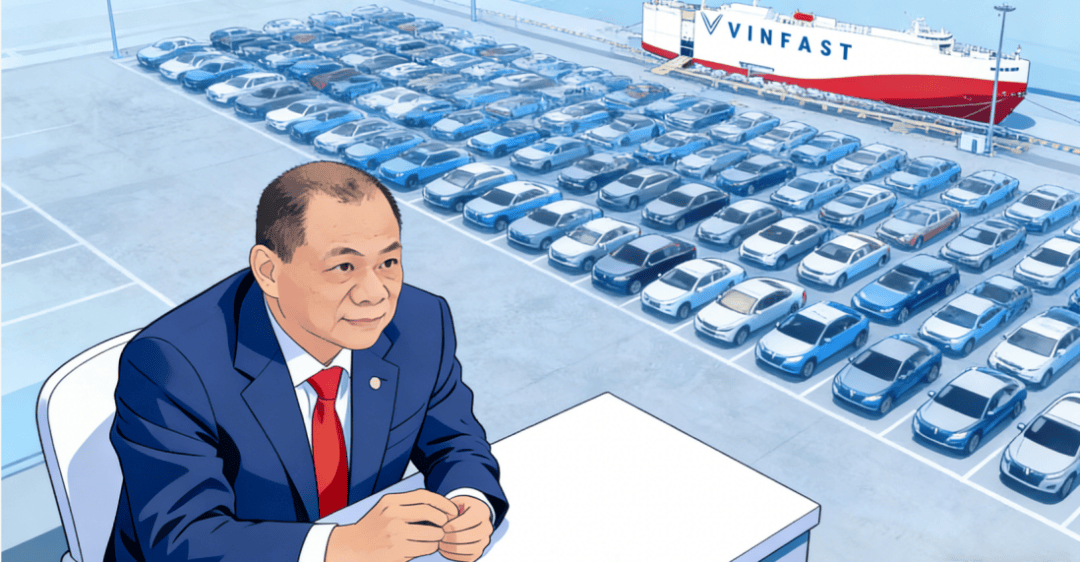
VinFast reports record sales in Vietnam in 2025
Yahoo Finance· 2026-01-15 09:50
Core Insights - VinFast Auto achieved record sales in Vietnam, delivering 27,649 battery electric vehicles (BEVs) in December 2025, leading to a total of 175,099 units sold for the year, nearly doubling sales compared to 2024 [1][5] - The company captured approximately one-third of the total vehicle sales in Vietnam, with the overall market exceeding 550,000 units, positioning Vietnam as one of the fastest-growing BEV markets globally [1] Sales Performance - The compact VF3 was the best-selling model for VinFast in 2025, with 44,585 deliveries, followed closely by the VF5 at 43,913 units and the Limo Green at 27,127 units [3] - In addition to domestic sales, VinFast delivered 11,000 BEVs in Indonesia and over 1,000 units in India after starting deliveries in August [5] Product and Service Expansion - VinFast expanded its model lineup with the introduction of the Limo Green MPV in August, which became the best-selling model in the fourth quarter with 10,981 units delivered in December [2] - The company has enhanced its aftersales network to 400 outlets and established over 150,000 charging points across 34 provinces and cities in Vietnam [4] Marketing and Customer Engagement - VinFast launched the 'Boundless Drive for a Green Future' campaign, offering incentives such as zero-down-payment financing, discounts of 6% to 10% on popular models, and free charging at V-Green stations until June 2027 [4] - The Deputy CEO of Global Automotive Sales at VinFast emphasized the company's commitment to quality and service, highlighting its leadership role in Vietnam's transition to electric vehicles [5]
VinFast连续15个月稳居越南市场第一
Shang Wu Bu Wang Zhan· 2026-01-15 02:59
Core Insights - VinFast has set a new benchmark in the Vietnamese automotive industry by delivering 175,099 electric vehicles (EVs) in 2025, doubling the previous record held by foreign brands [1] - The company maintained a leading market share for 15 consecutive months, with December 2025 alone seeing a record delivery of 27,600 vehicles [1] - The rapid transition of Vietnamese consumers towards electric vehicles positions Vietnam as one of the fastest-growing EV markets in the region [1] Product Performance - VinFast's diverse product matrix has allowed it to dominate most market segments, with notable sales figures for its small and personal vehicles: VF3 (44,500 units), VF5 (43,900 units), and VF6 (23,200 units) [1] - The mid-to-large SUV models VF7, VF8, and VF9 have shown stable sales, catering to family and business customers [1] - The Limo Green operational vehicle sold 2,710 units, while the Herio Green reached 1,250 units; the Limo Green MPV7 model quickly became a bestseller, delivering nearly 11,000 units in December 2025 alone [1] Infrastructure and Growth Strategy - VinFast currently operates approximately 400 service outlets and over 150,000 charging points across Vietnam [2] - To ensure sustainable growth, the company plans to expand its after-sales service system and charging infrastructure, promoting initiatives like free charging until 2027 [2] - The company aims to accelerate the transition to green transportation through favorable policies and financial support, further solidifying its leading position in the Vietnamese EV market [2]
VinFast Auto .(VFS) - 2025 Q1 - Earnings Call Transcript
2025-06-09 13:02
Financial Data and Key Metrics Changes - Net revenue for Q1 2025 was USD 657 million, a 150% increase year over year and largely in line with Q4 2024 [27] - Cost of goods sold for the quarter was USD 888 million, an increase of 113% year over year and down 25% quarter over quarter [27] - Q1 2025 gross margin was -35%, an improvement from -59% in the same period last year [27] - Net loss for the quarter was USD 712 million, with a net loss margin of -109%, compared to -226% in Q1 2024 [30] Business Line Data and Key Metrics Changes - In Q1 2025, VinFast delivered 36,330 electric vehicles, representing a 296% increase year over year and a 32% decline quarter over quarter [7] - Two-wheeler deliveries reached 44,904 units, marking a 473% year over year increase and a 44% rise quarter over quarter [8] - B2C deliveries accounted for over 70% of total sales for three consecutive quarters through Q1 2025 [9] Market Data and Key Metrics Changes - In Vietnam, VinFast's market share of overall auto sales increased to nearly 40% in Q1 2025 from approximately 20% last year [15] - EV penetration in Vietnam reached nearly 40% in Q1, while BEV adoption in Indonesia was 7% and 3% in The Philippines [11] - Vietnam led Southeast Asia in automotive sales growth with a 24% year over year increase [15] Company Strategy and Development Direction - VinFast aims to double vehicle deliveries in 2025 and maintain strong momentum into 2026 [39] - The company is transitioning from a direct-to-consumer model to a dealer-based model to enhance efficiency [28] - New vehicle platforms and EE architecture are expected to drive long-term cost savings and operational efficiency [26][22] Management Comments on Operating Environment and Future Outlook - Management expressed optimism about improved operating leverage driven by economies of scale [6] - The company is focused on scaling operations, accelerating product development, and executing cost optimization to achieve profitability [39] - Management acknowledged the challenges posed by global macroeconomic and trade uncertainties but remains committed to growth [7] Other Important Information - CapEx for Q1 2025 was USD 147 million, down 24% year over year and 40% quarter over quarter [30] - As of May 31, liquidity stands at approximately USD 2.4 billion, including various loans and grants [32] Q&A Session Summary Question: Timeline on new factories in Vietnam, India, and Indonesia - All facilities in Asia are expected to start operations this year, with the India factory opening in July [36] Question: Key catalysts for investors in 2025 - Growth will be driven by deeper market penetration in key international markets and new product offerings [39] Question: Timing of CapEx and when it might peak - Total CapEx planned for 2025 is USD 800 million, with over 50% allocated to R&D [44] Question: Expansion into the bus market - Deliveries of buses have already started in Vietnam, with plans to expand into other markets [46] Question: Average selling price (ASP) trajectory for the rest of the year - ASP for Q1 2025 was around USD 15,000, expected to remain under USD 20,000 for the full year [49] Question: Variable margin versus fixed costs in production - Variable costs are being optimized, with expectations for improvements in gross margin by 2026 [51] Question: Rationale for closing B2C showrooms in North America and Europe - Transitioning to a dealership model to enhance efficiency and scale globally [61] Question: Liquidity status - Total cash burn for 2025 is expected to be around USD 2 billion to USD 2.5 billion [64]
VinFast Auto .(VFS) - 2025 Q1 - Earnings Call Transcript
2025-06-09 13:00
Financial Data and Key Metrics Changes - Net revenue for Q1 2025 was USD 657 million, a 150% increase year over year and largely in line with Q4 2024 [24] - Cost of goods sold for the quarter was USD 888 million, an increase of 113% year over year and down 25% quarter over quarter [24] - Q1 2025 gross margin was -35%, an improvement from -59% in the same period last year [25] - Net loss for the quarter was USD 712 million, with a net loss margin of -109%, compared to -226% in Q1 2024 [28] - Operating cash flow for the quarter was -USD 607 million, an improvement from -USD 500 million in Q1 2024 [29] Business Line Data and Key Metrics Changes - In Q1 2025, VinFast delivered 36,330 electric vehicles, a 296% increase year over year but a 32% decline quarter over quarter [6] - Two-wheeler deliveries reached 44,904 units, marking a 473% year over year increase and a 44% rise quarter over quarter [7] - B2C deliveries accounted for over 70% of total sales for three consecutive quarters through Q1 2025 [7] Market Data and Key Metrics Changes - In Vietnam, VinFast's market share of overall auto sales increased to nearly 40% in Q1 2025 from approximately 20% last year [13] - EV penetration in Vietnam reached nearly 40% in Q1, while BEV adoption in Indonesia was 7% and in The Philippines was only 3% [9] - VinFast's charging partner, V Green, has deployed over 2,000 charging locations across Indonesia, with approximately 16% operational [11] Company Strategy and Development Direction - VinFast is transitioning from a direct-to-consumer model to a dealer-based model to improve operational efficiency [26] - The company plans to double vehicle deliveries in 2025 and maintain strong momentum into 2026 [37] - New vehicle platforms and EE architecture are expected to drive long-term cost savings and operational efficiency [23][19] Management Comments on Operating Environment and Future Outlook - Management expressed optimism about improved operating leverage driven by economies of scale despite ongoing global macroeconomic uncertainties [5] - The company anticipates higher R&D spending in the coming periods to support the development of next-generation platforms and technologies [27] - Management highlighted the importance of scaling operations and optimizing costs as key factors for achieving profitability [37] Other Important Information - CapEx for Q1 2025 was USD 147 million, down 24% year over year and 40% quarter over quarter [28] - As of May 31, the company's liquidity stands at around USD 2.4 billion, including various loans and grants [30] Q&A Session Summary Question: Timeline for new factories in Vietnam, India, and Indonesia - All facilities in Asia are expected to start operations this year, with the India factory opening in July [34] Question: Key catalysts for investors in 2025 - Key catalysts include scaling operations, accelerating product development, and executing cost optimization [37] Question: Timing of CapEx and expected peak - The company plans to spend a total of USD 800 million in 2025, with over 50% allocated to R&D [42] Question: Expansion into the bus market - The company expects to deliver about 1,000 buses in Vietnam this year and is expanding into other markets [45] Question: Average selling price (ASP) trajectory - ASP for Q1 2025 was around USD 15,000, expected to remain under USD 20,000 for the full year [48] Question: Closing of B2C showrooms in North America and Europe - The transition to a dealership model is aimed at enhancing efficiency and scale globally [60] Question: Liquidity status - The company has disbursed USD 1.2 billion in loans and has a liquidity of approximately USD 2.4 billion [64]