
WPP Open

Search documents
激进的4A广告巨头:用AI杀死自己
凤凰网财经· 2026-03-04 13:16
Core Insights - The article discusses the intense competition among traditional advertising giants (4A companies) in the face of the AI revolution, highlighting that AI is no longer just a tool for efficiency but a core strategic element for their future business models [2][3]. - The 4A companies are undergoing a transformation by integrating AI into their operations, which raises questions about their unique value proposition as AI can potentially replace many traditional roles [3]. Group 1: AI Investment and Strategy - Major 4A companies are making significant investments in AI, with WPP planning to invest approximately £250 million in 2024 and increasing it to £300 million in 2025 [4]. - Publicis Groupe has invested around €12 billion in data, technology, and AI over the past decade, while Omnicom aims to double its cost-saving target from AI to $1.5 billion [4]. - Dentsu plans to invest ¥45 billion in AI infrastructure from 2025 to 2027, and Havas is set to invest €400 million in data and AI by 2027 [4]. Group 2: AI Integration and Platform Development - 4A companies are creating centralized AI platforms to streamline operations, such as WPP's WPP Open and Publicis's CoreAI, which aim to consolidate various marketing functions into a cohesive system [5][7]. - The introduction of AI is seen as a necessary evolution to overcome the inefficiencies of traditional human-dependent workflows, allowing for better data utilization and operational efficiency [5][8]. Group 3: Data as a Competitive Advantage - Data is identified as a critical differentiator among 4A companies, with proprietary first-party data and long-term marketing insights being more valuable than publicly available data [20][25]. - WPP's Choreograph platform processes billions of data points to create proprietary AI models, while Publicis's CoreAI leverages trillions of data points for enhanced marketing effectiveness [25][26]. Group 4: Ecosystem and Capital Capabilities - The competition among 4A companies is not just about technology but also about capital and ecosystem capabilities, as they need to maintain access to rapidly evolving technologies [27]. - The ability to integrate new technologies and maintain strategic partnerships with leading AI firms is crucial for sustaining competitive advantages in the advertising landscape [27]. Group 5: Real-World Application and Client Engagement - The successful implementation of AI in real business scenarios is essential for building trust with clients, as demonstrated by WPP's integration of AI into daily workflows for major brands [28][30]. - 4A companies are focusing on delivering measurable results through AI, which helps reduce marketing costs and improve efficiency, making AI a default feature rather than an optional add-on [30][31]. Group 6: The Role of 4A Companies in the AI Era - Despite the rise of internal AI systems among major brands, 4A companies continue to play a vital role in managing complex marketing executions across different markets and channels [32][33]. - The value of 4A companies lies in their ability to leverage AI to simplify processes and enhance the predictability of marketing outcomes without increasing client burdens [33].


WPP plc(WPP) - 2025 Q4 - Earnings Call Transcript
2026-02-26 10:32
Financial Data and Key Metrics Changes - The company's like-for-like revenue, less pass-through costs, fell by 5.4% for the full year, slightly better than the guidance of a 5.5%-6% decline, with a Q4 decline of 6.9% [9][10] - Headline operating margin was 13%, down 180 basis points year-on-year on a like-for-like basis [9][10] - Fully diluted EPS decreased by 28.4% year-over-year to 63.2 pence, impacted by reduced operating margin and a higher effective tax rate [10][17] - Adjusted operating cash flow before working capital was GBP 1.2 billion, down from GBP 1.3 billion in 2024 [10][19] - Net debt increased to GBP 2.2 billion from GBP 1.7 billion in 2024, with an average adjusted net debt to headline EBITDA ratio of 2.2 times, up from 1.8 times in 2024 [18][22] Business Line Data and Key Metrics Changes - The major negative impacts for the year were driven by gross client losses, particularly in media, with significant deterioration in the U.S. and U.K. markets, and sectors like CPG and TME [11][12] - New business wins in Q4 included notable clients such as Reckitt, Henkel, and the U.K. government, but the overall level of in-year wins was lower than expected [12][13] - Existing clients exhibited cautious spending, particularly in CPG, auto, and tech sectors, impacting overall performance [14] Market Data and Key Metrics Changes - Industry estimates indicated a double-digit decline in global pitch activity for the year, affecting new business opportunities [12] - The company noted that the overall net new business headwind is expected to sustain into the first half of 2026 [13] Company Strategy and Development Direction - The company aims to embrace a unified growth strategy, focusing on becoming a simpler, more integrated organization with a strong emphasis on client success [6][8] - The new strategy, termed Elevate28, includes stabilizing the business, returning to growth by 2027, and achieving gross cost savings of GBP 500 million over three years [8][36] - The company is positioning WPP Open as a competitive advantage, integrating capabilities across marketing workflows to enhance client service [34][61] Management's Comments on Operating Environment and Future Outlook - Management acknowledged disappointing performance in core metrics and emphasized the need for transformation to meet evolving client needs [29][30] - There is optimism regarding the potential for growth, driven by a talented workforce and strategic investments in technology [34][35] - The company recognizes the transformative impact of AI on the industry and aims to leverage it for competitive advantage [46][59] Other Important Information - The board recommended a final dividend of 7.5 pence, totaling 15 pence for 2025, reflecting a commitment to maintaining shareholder returns despite a reduction year-on-year [17][18] - The company completed a successful EUR 1 billion bond issue in December 2025, enhancing liquidity and financial stability [23] Q&A Session Summary Question: What are the expectations for new business growth in 2026? - Management expects like-for-like revenue to decline mid-to-high single digits in the first half of 2026, with an improving trajectory in the second half [25] Question: How will the company address the challenges faced in 2025? - The company plans to implement cost actions and invest in WPP Open and AI to stabilize and improve performance [26] Question: What is the outlook for cash flow in 2026? - Anticipated adjusted operating cash flow before working capital is projected to be GBP 800 million-GBP 900 million, including restructuring charges [27]

WPP plc(WPP) - 2025 Q4 - Earnings Call Transcript
2026-02-26 10:32
Financial Data and Key Metrics Changes - The company's like-for-like revenue, less pass-through costs, fell by 5.4% for the full year, slightly better than the guidance of a 5.5%-6% decline, with a Q4 decline of 6.9% [9][10] - Headline operating margin was 13%, down 180 basis points year-on-year on a like-for-like basis [9][10] - Fully diluted EPS decreased by 28.4% year-over-year to 63.2 pence, impacted by reduced operating margin and a higher effective tax rate [10][16] - Adjusted operating cash flow before working capital was GBP 1.2 billion, down from GBP 1.3 billion in 2024 [10][18] - Reported revenue less pass-through costs was GBP 10.2 billion, a decrease of 10.4% year-on-year [15][16] Business Line Data and Key Metrics Changes - Major negative impacts were noted in media, particularly in the U.S. and U.K., driven by gross client losses [11][12] - New business wins in 2024 and 2025 contributed positively but were lower than expected, with industry estimates of global pitch activity down double digits [12][13] - Existing client spending was characterized as cautious, particularly in CPG, auto, and tech sectors, heavily impacting Ogilvy [13][14] Market Data and Key Metrics Changes - The company experienced a deterioration in client assignment losses and spending cuts, particularly in the U.S. and U.K. markets [11][12] - The overall net new business headwind is expected to sustain into the first half of 2026, with a significant drag from client losses [12][23] Company Strategy and Development Direction - The company aims to embrace a unified growth strategy, focusing on becoming a simpler, more integrated organization [6][8] - The new strategy, called Elevate28, emphasizes stabilizing the business, returning to growth by 2027, and accelerating growth from 2028 onwards [8][34] - Key objectives include driving superior growth for clients, leveraging the WPP Open platform for competitive advantage, and creating firm financial foundations [33][54] Management's Comments on Operating Environment and Future Outlook - Management acknowledged disappointing performance on core metrics and emphasized the need for change [28][30] - There is optimism about the potential for recovery and growth, driven by a commitment to client success and the integration of AI into operations [30][32] - The company recognizes the transformative impact of AI on the marketing landscape and aims to position itself as a trusted partner for growth and transformation [42][48] Other Important Information - The company has a stable dividend policy, with a total dividend of 15 pence for 2025, despite a reduction year-on-year [16][17] - The company ended 2025 with net debt of GBP 2.2 billion, up from GBP 1.7 billion in 2024, with an average adjusted net debt to headline EBITDA ratio of 2.2 times [18][21] - Fitch Ratings assigned WPP a BBB rating with a stable outlook, reinforcing its investment-grade balance sheet [22] Q&A Session Summary Question: What are the expectations for revenue growth in 2026? - The company anticipates like-for-like revenue, less pass-through costs, to decline mid-to-high single digits in the first half of 2026, with an improving trajectory in the second half [24][25] Question: How will the new business impact the overall performance? - New business performance in Q4 was encouraging, and while it will take time to ramp up, the company expects progressively improving impacts from net new business throughout 2026 [12][24] Question: What are the key components of the Elevate28 strategy? - The strategy focuses on stabilizing the business, returning to growth by 2027, and achieving gross cost savings of GBP 500 million over three years [34][54]
WPP plc(WPP) - 2025 Q4 - Earnings Call Transcript
2026-02-26 10:30
Financial Data and Key Metrics Changes - WPP's like-for-like revenue, less pass-through costs, fell by 5.4% for the full year, slightly better than the guidance of a 5.5%-6% decline, with a Q4 decline of 6.9% [7][8] - The headline operating margin was 13%, down 180 basis points year-on-year on a like-for-like basis [8] - Fully diluted EPS was 63.2 pence, a decrease of 28.4% year-over-year, impacted by reduced operating margin and a higher effective tax rate [9][15] - Adjusted operating cash flow before working capital was GBP 1.2 billion, down from GBP 1.3 billion in 2024 [9][17] Business Line Data and Key Metrics Changes - Major negative impacts included gross client losses, particularly in media, with significant deterioration in the U.S. and U.K. markets, and in the CPG and TME sectors [10][11] - New business wins in 2024 and 2025 contributed positively but were lower than expected, with industry estimates of global pitch activity down double digits [11][12] - Existing client spending was characterized by cautiousness and volatility, heavily impacting sectors like CPG, auto, and tech [12] Market Data and Key Metrics Changes - The company experienced a decline in net sales performance, with a notable impact from client assignment losses and spending cuts [10] - The overall net new business headwind is expected to sustain into the first half of 2026, with a projected drag of 500-600 basis points from client losses [21] Company Strategy and Development Direction - WPP aims to embrace a unified growth strategy, focusing on becoming a simpler, more integrated company with a strong emphasis on client success [4][6] - The new strategy, named Elevate28, includes stabilizing the business, returning to growth by 2027, and accelerating growth from 2028 onwards [33][52] - Key objectives include leveraging the WPP Open platform for competitive advantage and creating firm financial foundations for the future [31][52] Management's Comments on Operating Environment and Future Outlook - Management acknowledged disappointing performance on core metrics and emphasized the need for change, driven by client feedback highlighting complexity and siloed operations [27][28] - There is optimism about the potential for growth, with a focus on adapting to the evolving needs of clients and the rapid changes in the marketing landscape due to AI [30][34] - The company anticipates a progressively improving impact from net new business through 2026, despite initial challenges [22][24] Other Important Information - The board recommended a final dividend of 7.5 pence, totaling 15 pence for 2025, reflecting a commitment to maintaining shareholder returns [15][16] - WPP's average adjusted net debt to headline EBITDA ratio increased to 2.2 times, up from 1.8 times in 2024, indicating a need for careful financial management [19] Q&A Session Summary Question: What are the expectations for revenue growth in 2026? - The company expects like-for-like revenue, less pass-through costs, to decline in the mid-to-high single digits in the first half of 2026, with an improving trajectory in the second half [22][24] Question: How will the new strategy impact operating margins? - The company anticipates headline operating profit margins in the range of 12%-13%, benefiting from cost actions taken in 2025 and a lower impact from severance costs [24] Question: What is the outlook for cash flow in 2026? - Adjusted operating cash flow before working capital is expected to be between GBP 800 million and GBP 900 million, including anticipated cash restructuring charges [25]
Advertising giant WPP to cut £500m in costs as it races to counter AI threat
Yahoo Finance· 2026-02-26 08:48
Core Viewpoint - WPP is undergoing a significant restructuring to address declining sales and client losses, with plans to cut £500 million in costs by 2028 and reinvest in high-growth areas like AI [2][3][5] Group 1: Cost-Cutting and Restructuring - WPP aims to achieve £500 million in cost savings by 2028 through selling some businesses and consolidating operations into four key pillars: creative, media, production, and enterprise solutions [2][4] - The company has already reduced its workforce by nearly 10,000 employees last year, bringing the total to 98,655 [5] Group 2: Investment in AI - The savings from cost-cutting will be reinvested into high-growth areas, particularly AI, with an annual investment of around £300 million in WPP Open, an AI marketing tool for clients [3] - Major brands like Coca-Cola and Heinz have started incorporating AI into their marketing campaigns, indicating a shift in the industry [3] Group 3: Performance and Market Position - WPP's shares have decreased by 65% over the past year, reaching their lowest level since 1998, and the company has lost its position as the world's largest advertising firm by revenue to Publicis [6] - Revenue excluding pass-through costs fell by 5.4% last year to £11.4 billion, with headline operating profit dropping by over 20% to £1.3 billion [7]
WPP’s CTO says AI is reshaping advertising. But creative judgment needs to remain in human hands
Yahoo Finance· 2026-01-21 18:04
Core Insights - The article highlights the significant adoption of WPP Open, an AI-enabled operating system, by WPP's workforce, indicating a major shift in how marketing campaigns are planned and executed [2] Group 1: AI Adoption and Workforce Engagement - Over 85,000 of WPP's 108,000 employees are using WPP Open monthly, a substantial increase from 30,000 in February 2024 [2] - WPP has implemented three levels of AI training to prepare its workforce, including a creative technology apprenticeship program aimed at training 1,000 apprentices over three years as part of a $400 million partnership with Google [4] - Senior staff at WPP are required to take courses on generative AI and its application in media planning and creative ideation [5] Group 2: Continuous Learning and Industry Trends - Ongoing AI upskilling programs are deemed essential, with the expectation that employees will continuously learn to work with AI tools [6] - A survey by Forrester indicates that 75% of ad industry executives expect their companies to use generative AI tools by 2025, up from 61% the previous year [6] Group 3: Financial Implications of AI Investments - Despite the adoption of AI, these investments currently represent a net cost for agencies, with the cost of business related to generative AI capabilities increasing by 83% in 2025 [7] - Only 7% of agencies have been able to sell generative AI capabilities as a separate service, indicating challenges in monetizing these investments [7]
AI加速狂飙,裁员如火如荼
3 6 Ke· 2025-11-12 09:17
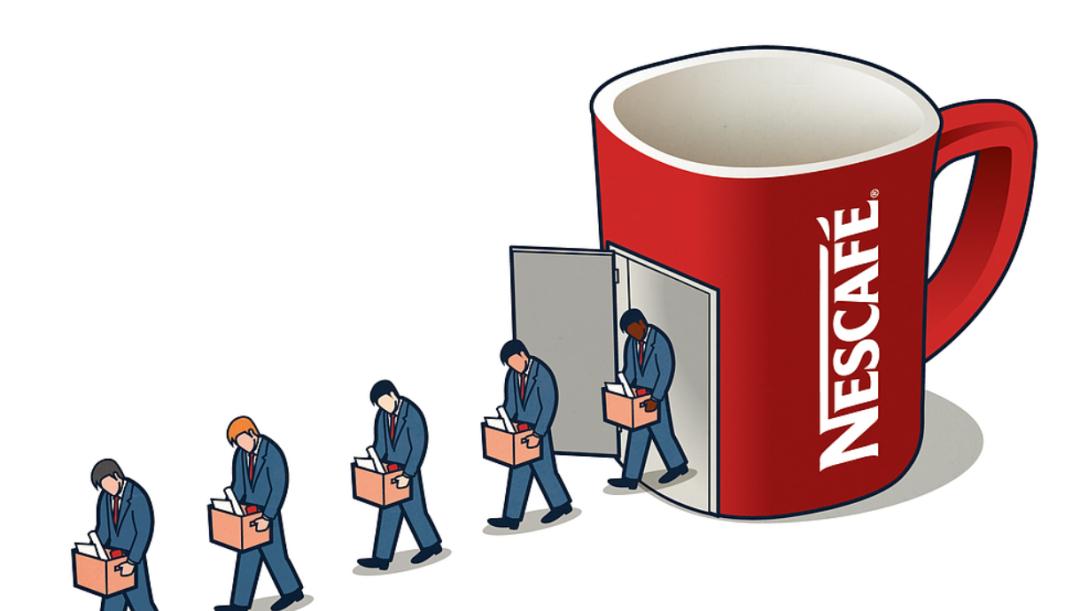
Core Insights - Accenture's CEO announced a significant workforce reduction, with over 10,000 employees laid off in three months due to the inability to adapt to AI skills [1] - The rise of generative AI is reshaping the skill requirements in industries traditionally reliant on human labor, such as consulting and advertising [1][2] - Major companies like Nestlé and Procter & Gamble are also cutting jobs, indicating a broader trend across consumer brands [2] Group 1: Impact on Industries - The consulting and advertising sectors are experiencing the most significant job cuts, as AI begins to take over core tasks previously performed by humans [2] - The advertising industry is particularly affected, with many companies reducing middle and junior creative roles due to the efficiency brought by generative AI [4] - AI Agents are becoming essential infrastructure in advertising, leading to reduced creative support needs and fewer jobs in the supply chain [4] Group 2: Job Restructuring and AI Integration - The automation of processes in programmatic advertising has shielded it from the job cuts seen in other areas, as these processes were already moving towards automation [5] - Job cuts are not merely about replacing humans but reflect a strategic restructuring to integrate AI into workflows, enhancing efficiency [6][9] - Companies are transitioning roles from traditional execution to AI collaboration and oversight, indicating a shift in job functions rather than outright replacement [10][12] Group 3: Future Trends and Organizational Changes - The trend of layoffs is not one-sided; companies like Microsoft are also considering rehiring for AI-driven roles, suggesting a dynamic adjustment in workforce needs [10] - The advertising industry is moving towards a decentralized model where individual roles will emphasize cross-functional skills and AI collaboration [12][14] - The ongoing adjustments in workforce structure highlight the need for companies to balance efficiency with strategic decision-making capabilities [14]

WPP韦棠梦:AI赋能广告业,WPP以技术与平台探新局
Jing Ji Guan Cha Wang· 2025-11-08 04:02
Core Insights - The 32nd China International Advertising Festival and the 34th Asian Advertising Congress were held together for the first time, creating a significant platform for the advertising industry to connect with Asia and the world [1] - Chris Reitermann, CEO of WPP China, discussed the impact of AI on the advertising industry, emphasizing that while AI presents challenges, it also offers substantial opportunities for efficiency and collaboration with clients [1][3] - WPP is investing £300 million annually in developing its AI marketing platform, WPP Open, and has partnered with Google to create AI-based client solutions [3][8] Group 1: AI Impact on Advertising - The advertising industry has historically adapted to technological disruptions and is now facing the AI wave as an opportunity for efficiency and new revenue streams [1][3] - WPP's approach to AI includes a focus on balancing short-term and long-term interests, as well as recognizing the current investment bubble in the AI sector [2] - Companies with AI capabilities tend to have higher brand value and disruptive potential, highlighting the importance of strategic AI investments [2] Group 2: WPP's AI Strategy - WPP Open marketing platform enables data acquisition, creative generation, and audience targeting, showcasing the integration of AI throughout the advertising process [3][8] - The platform's SaaS version, WPP Open Pro, adopts a subscription model, breaking traditional agency fee structures [3] - WPP aims to reshape business models and create new revenue sources through AI, while also emphasizing the need for talent with technical skills [3][9] Group 3: Industry Adaptation and Talent - The concept of "fluidity" was highlighted as a key characteristic of the current market, necessitating a shift in operational structures to remain competitive [4][5] - Brands must develop agile operational models to respond to rapid market changes, moving from linear structures to more flexible approaches [5] - AI is seen as a tool to enhance human creativity rather than replace it, with companies like Coca-Cola integrating AI across their operations to optimize marketing strategies [7][9]
WPP发布Q3财报:收入下滑8.4%,新CEOCindy Rose承诺采取AI战略进行业务整改
Jing Ji Guan Cha Wang· 2025-10-31 05:21
Financial Performance - WPP reported a Q3 revenue decline of 8.4%, with a year-over-year decrease of 3.5% [2] - The company now expects a revenue decline of 5.5% to 6.0% for 2025, revised down from a previous forecast of 3% to 5% [2] - WPP issued its second profit warning for the year, indicating ongoing financial challenges [2] Leadership and Strategy - New CEO Cindy Rose emphasized that the current financial performance is "clearly far from acceptable" and committed to implementing corrective measures [2] - In her first two months, Rose focused on enhancing WPP's AI capabilities, including a $400 million agreement with Google and the launch of the WPP Open Pro AI platform [3] - WPP Media was rebranded from GroupM, with Rose expressing confidence in the leadership of Brian Lesser to create a data and AI-driven ecosystem [3] Client Acquisition and Market Challenges - Despite challenges, WPP Media secured new business from clients such as Mastercard, Maersk, and Marks & Spencer [4] - The departure of WPP Media's North America CEO Sharb Farjami raised questions about the company's future direction [4]

WPP plc(WPP) - 2025 Q3 - Earnings Call Transcript
2025-10-30 10:32
Financial Data and Key Metrics Changes - Like-for-like revenue less pass-through costs fell 5.9% in Q3 2025, leading to a year-to-date decline of 4.8% [4][5] - Overall revenue less pass-through costs was down 11.1% in the quarter [5] - Adjusted net debt stood at £3.6 billion, stable year-on-year but up from year-end [16][17] - The company expects a like-for-like decline of -5.5% to -6% for the full year, revised from previous guidance [18][19] Business Line Data and Key Metrics Changes - Global integrated agencies experienced a like-for-like decline of 6.2% in Q3 [6] - WPP media saw a like-for-like decline of 5.7%, with a nine-month performance decline of 3.9% [7] - Public relations declined by 5.9% in Q3, following a 7.8% decline in Q2 [11] - Specialist agencies saw a decline of 2.2% in Q3, with strong growth from CMI Media Group offsetting weaker performance in other areas [12] Market Data and Key Metrics Changes - North America declined by 6% in Q3, with significant impacts from WPP Media and Ogilvy [12] - The UK saw an 8.9% decline in Q3, reflecting media client assignment losses [12] - Western continental Europe experienced a like-for-like decline of 4.4% [13] - Healthcare sector showed strong performance with high single-digit growth [15] Company Strategy and Development Direction - The company aims to strengthen financial performance and improve shareholder returns while delivering success for clients [2][3] - A focus on simplifying and integrating client offerings, powered by data and AI, is emphasized as a core principle for future growth [31] - The company is committed to leveraging technology partnerships, such as the expanded agreement with Google, to enhance AI capabilities [27][28] Management's Comments on Operating Environment and Future Outlook - Management acknowledges recent performance has been unacceptable and emphasizes the need for action [2][25] - There is a significant degree of polarization in client spending, with some sectors experiencing robust growth while others face declines [8][10] - The management expresses optimism about the growth opportunities ahead, particularly in the context of AI and technology [20][24] Other Important Information - The company has a strong liquidity position with £2.9 billion available at the end of September [18] - The weighted average maturity of bond debt is 6.1 years, with an average coupon of 3.5% [18] Q&A Session All Questions and Answers Question: Can you provide more details on the lower spend from existing clients? - The cuts are primarily in project work, with significant declines in CPG, automotive, and tech sectors [34][37] Question: What is the competitive landscape for the SMB market regarding WPP Open Pro? - The strategy is about expanding the addressable market, and revenues from WPP Open Pro are expected to be incremental [35][40] Question: Why is there no downgrade to the cash flow guidance despite lower margin and top-line guidance? - The unchanged operating cash flow guidance is due to disciplined cash management and some FX tailwinds [64][66] Question: What feedback did you receive from clients who stopped using WPP? - Feedback indicated a lack of clarity about the end-to-end story and complexity in the organizational structure [65] Question: What is the company's stance on its balance sheet strength? - The company maintains a strong investment-grade balance sheet with no covenants on debt [73]