Watch SE 3

Search documents
Counterpoint Research:全球智能手表出货量预计将在2025年年底同比增长7%
Zhi Tong Cai Jing· 2025-12-25 06:37
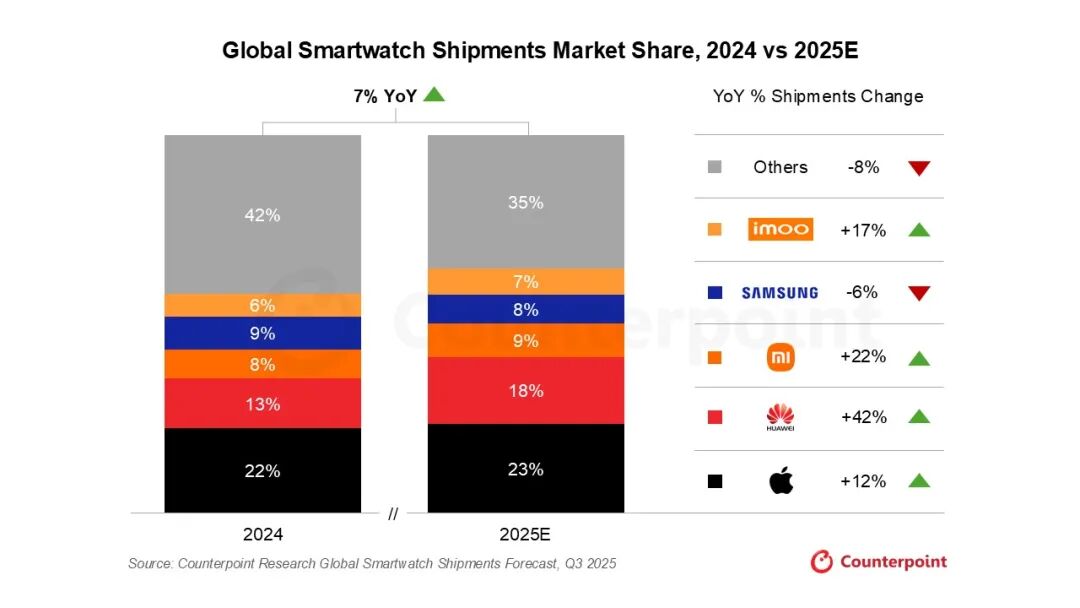
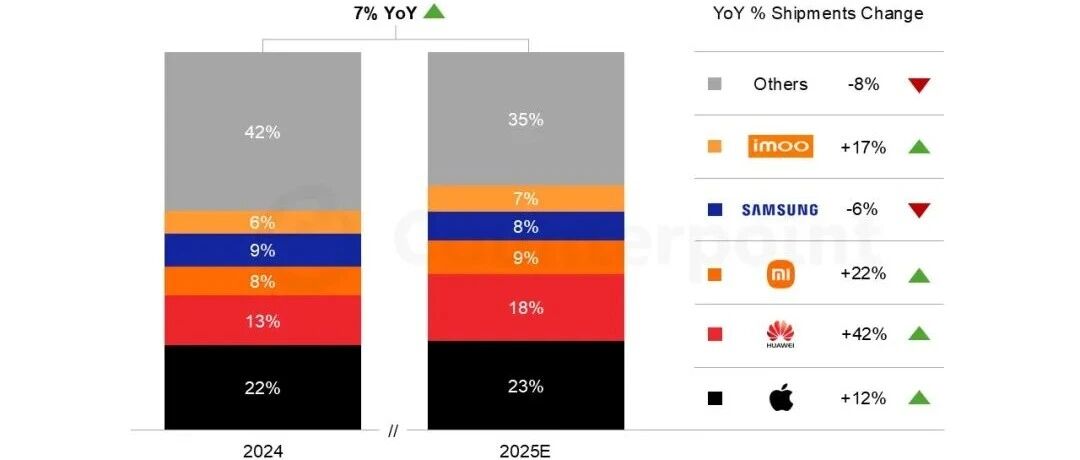
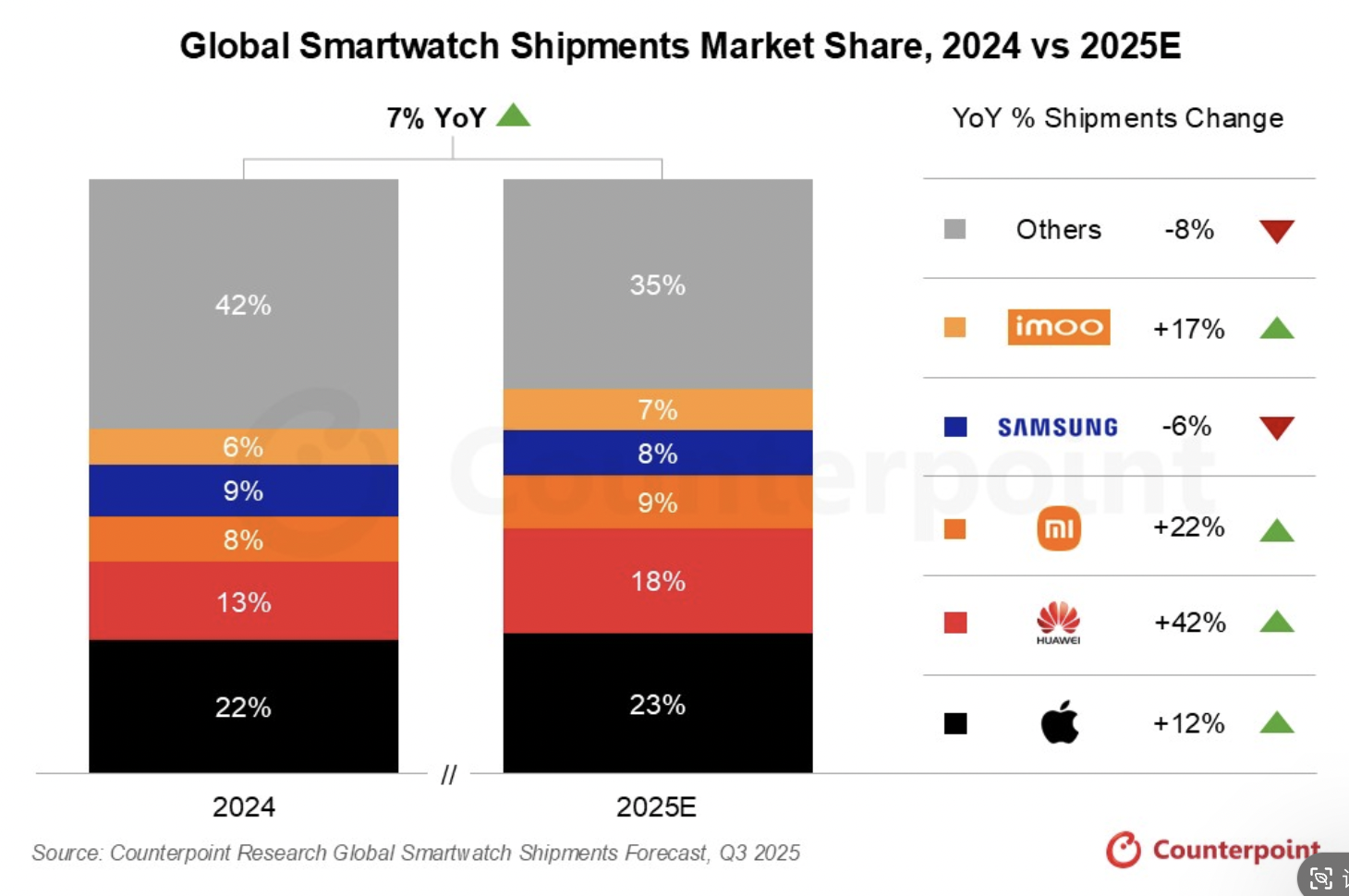
Core Insights - Global smartwatch shipments are expected to grow by 7% year-on-year by the end of 2025, following a decline in 2024, driven by new hardware and software features, increased consumer preference for mid-to-high-end smartwatches, and a growing focus on health-related functionalities [1][4] Group 1: Market Dynamics - China is identified as the key growth engine for the global smartwatch market, with three out of the top five brands originating from the country. Government subsidy policies are facilitating device upgrades, while brands like Huawei, Xiaomi, and Xiaotiancai are enhancing user engagement through differentiated product strategies [1] - The market share of China is projected to increase from 25% in 2024 to approximately 31% in 2025, supported by rising household incomes and the widespread adoption of local brands [1] Group 2: Company Performance - Apple's latest smartwatch generation achieved a 12% year-on-year increase in shipments during its launch quarter, with a similar growth forecast for the entire year of 2025. This rebound is attributed to the launch of the cost-effective Watch SE 3 and the premium Watch Ultra 3, which broaden Apple's coverage across different price segments [4] - The introduction of new health features, including 5G support, satellite communication, and hypertension alerts, has contributed to Apple's recovery after seven consecutive quarters of year-on-year declines [4] Group 3: Future Trends - The smartwatch industry in 2025 is expected to be characterized by a wave of function-driven innovations that fundamentally enhance device performance. Key upgrades include AI integration, 5G support, satellite communication, and MicroLED display technology [4] - Even lower-priced models are beginning to offer AI-driven experiences and upgraded health sensors, aiming to re-engage users who previously shifted away from basic smartwatches. This renewed focus on functional upgrades and user value is anticipated to create positive feedback loops, driving market growth in 2025 [4]

全球智能手表市场有望于 2025 年重回增长轨道,华为与苹果引领复苏
Counterpoint Research· 2025-12-25 06:14
Core Insights - The global smartwatch shipment is expected to grow by 7% year-on-year by the end of 2025, following a decline in 2024, driven by new hardware and software features, increased consumer preference for mid-to-high-end smartwatches, and a growing focus on health-related functionalities [2][5] - China is identified as the key growth engine for the global smartwatch market, with three out of the top five brands being Chinese. The market share in China is projected to increase from 25% in 2024 to approximately 31% in 2025 due to government subsidies and the strong presence of local brands like Huawei, Xiaomi, and Little Genius [2][5] Market Dynamics - Apple is expected to see a 12% year-on-year increase in shipments in Q3 2025, marking the end of seven consecutive quarters of decline, largely due to the launch of the cost-effective Watch SE 3 and the premium Watch Ultra 3 [5][6] - The integration of AI-driven health analysis and guidance features into products is accelerating among leading global brands, with key new technologies such as satellite communication, 5G RedCap, and MicroLED display expected to be commercially available in 2025 [5][6] Product Innovations - The latest Apple smartwatch models have significantly broadened the price range coverage, with new health features like high blood pressure alerts contributing to a rebound in sales [6] - The 2025 smartwatch industry is characterized by a wave of functional innovations that enhance device performance, with even lower-priced models beginning to offer AI-driven experiences and upgraded health sensors [6]
全球智能手表竞争格局生变:小米反超三星,苹果终结七个季度下滑局面
Xin Lang Cai Jing· 2025-12-24 08:29
Group 1 - The global smartwatch shipment is expected to grow by 7% year-on-year in 2025, driven by Huawei and Apple, after a significant decline in 2024 [1] - Apple, holding a 23% market share, has reversed its decline with a 12% increase in shipments in Q3 2025, ending a seven-quarter downturn [1][4] - Huawei is the fastest-growing brand among the top players, with a 42% year-on-year growth, increasing its market share from 13% in 2024 to 18% in Q3 2025 [4] Group 2 - Xiaomi has overtaken Samsung to become the third-largest brand, with a 22% year-on-year increase in shipments and a market share of 9%, while Samsung's market share decreased from 9% to 8% [4] - The Chinese market is projected to increase its share from 25% in 2024 to approximately 31% in 2025, driven by local brands like Huawei, Xiaomi, and Little Genius [5] - The smartwatch industry in 2025 is characterized by a wave of function-driven innovations, including AI integration, 5G support, satellite communication, and MicroLED display technology [5]


跳出AI战局 苹果豪赌“轻薄”未来
2 1 Shi Ji Jing Ji Bao Dao· 2025-09-10 23:10
Core Insights - The core focus of Apple's annual fall event was on design as a foundational element of the company, with significant updates to its product line, including the introduction of the iPhone 17 series and the new iPhone Air model [1][7] Product Launches - Apple launched four new models: iPhone 17, iPhone Air, iPhone 17 Pro, and iPhone 17 Pro Max, with prices starting at 5999 yuan and going up to 17999 yuan [1] - The iPhone Air, touted as the thinnest iPhone ever at 5.6 mm, replaces the Plus version and is seen as a strategic new category for Apple [2][3] - The iPhone 17 standard version features an A19 chip and a dual-camera system, while the Pro models received significant upgrades in imaging capabilities [3] Strategic Positioning - The iPhone Air serves three key functions: a testing ground for ultra-thin designs, a high-end complement to the Pro series, and a means to optimize profits by capturing both developed and emerging market demands [3] - Apple's approach to product line management emphasizes gradual evolution rather than aggressive diversification, maintaining a strong brand image and market position [8] Wearable Technology Updates - Apple also updated its wearable technology, including the Apple Watch Ultra 3, Series 11, and SE 3, aiming to regain growth in a segment that has seen a revenue decline over the past seven quarters [4] - The Apple Watch business has surpassed $100 billion in cumulative revenue, but faces increasing competition, particularly from Huawei [4] AI Integration Challenges - Despite the lack of a strong emphasis on AI features during the event, analysts noted that Apple is perceived as a latecomer in the AI space, which could impact user upgrade decisions [5][6] - Apple's market share in AI-capable smartphones in China is approximately 40%, but the absence of proprietary AI features may drive users to third-party applications [5] Market Dynamics - The global smartphone market is increasingly competitive, with high-end market growth driven by various manufacturers, including Huawei and Xiaomi, which are gaining market share in China [10][12] - Apple's high-end market share remains strong at 62%, but it has seen a slight decline due to faster growth from competitors [10][12] Future Outlook - Analysts predict that Apple will introduce a foldable iPhone by 2026, with expected shipments of 8 to 10 million units in the first year [7] - The company is strategically waiting for the market to mature before entering the foldable segment, which aligns with its historical approach to product launches [7][9]
苹果豪赌“轻薄”未来,或明年推出折叠屏手机
2 1 Shi Ji Jing Ji Bao Dao· 2025-09-10 09:26
Core Insights - Apple's annual fall event showcased significant updates to its product line, including the introduction of the iPhone 17 series and the new iPhone Air, emphasizing design as a core principle of the company [1][11] - The iPhone Air, positioned as a strategic new category, is expected to generate 10 million units in its first year, highlighting Apple's focus on lightweight design and advanced technology [3][5] Product Updates - The iPhone Air is the thinnest iPhone to date at 5.6 mm, featuring a single-camera design and full eSIM support, with a starting price of 5,999 yuan [5][6] - The iPhone 17 series includes the standard model with upgraded features such as the A19 chip and dual-camera system, while the Pro models emphasize enhanced imaging capabilities [6][8] - Apple Watch updates include the Apple Watch Ultra 3 and Series 11, with improved health monitoring features, aiming to regain market growth after a decline [8][9] Market Position and Strategy - Apple's strategy appears conservative compared to competitors, focusing on maintaining a stronghold in the high-end smartphone market, where it holds a 62% share [15][16] - The company is expected to introduce a foldable iPhone by 2026, indicating a long-term vision for product evolution while ensuring market readiness [11][12] - Despite facing competition from brands like Huawei and Xiaomi, Apple continues to leverage its loyal customer base and extensive distribution channels [16][17] Future Outlook - The upcoming iPhone 17 series may face challenges in the Chinese market due to increased competition and potential price adjustments [17] - Apple's recent financial performance in the Greater China region shows signs of recovery, with a 4% year-on-year revenue increase, suggesting a positive outlook for future sales [17]
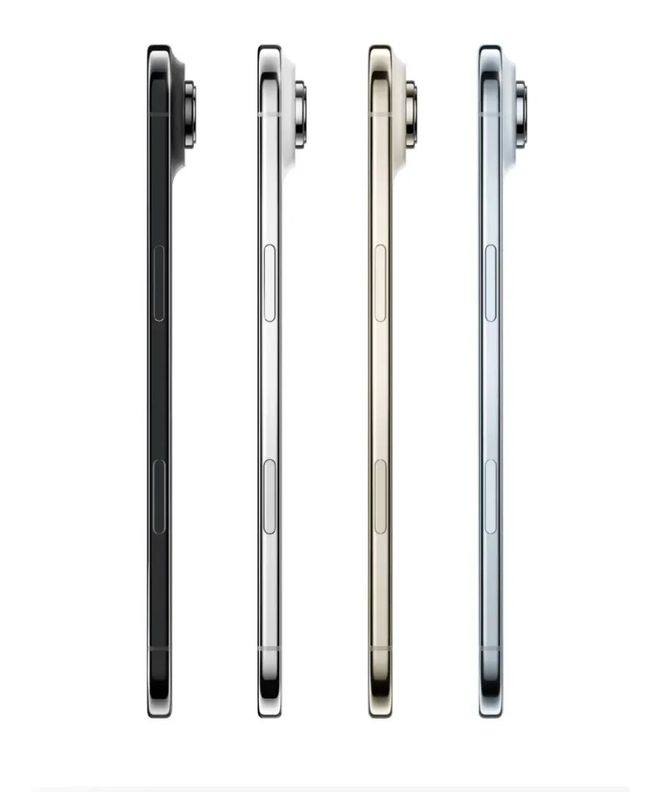
苹果豪赌“轻薄”未来,或明年推出折叠屏手机
21世纪经济报道· 2025-09-10 09:06
Core Viewpoint - Apple's annual fall event showcased significant updates across its product line, emphasizing design as a cornerstone of its business strategy, with the introduction of the iPhone 17 series and the new iPhone Air model, which is touted as the thinnest iPhone ever [1][10]. Product Launch Highlights - The iPhone 17 series includes four models: iPhone 17, iPhone Air, iPhone 17 Pro, and iPhone 17 Pro Max, with prices starting at 5999 yuan and going up to 17999 yuan [1]. - The iPhone Air, at only 5.6 mm thick, replaces the Plus version and is positioned as a high-end product, showcasing Apple's design prowess while maintaining flagship performance with the latest A19 Pro chip and other advanced components [5][6]. Strategic Implications of iPhone Air - The iPhone Air serves as a strategic experiment for Apple, allowing it to test new lightweight components and energy management technologies, potentially paving the way for future foldable devices [3][6]. - It is positioned as a complement to the Pro series, enhancing Apple's high-end brand image while providing a differentiated choice for consumers focused on design [6]. - The introduction of the Air model is seen as a move to balance sales and profitability, targeting both developed and emerging markets without cannibalizing existing products [6]. Upgrades in Other Product Lines - Apple also updated its wearable devices, including the Apple Watch Ultra 3 and Apple Watch Series 11, aiming to regain growth in a segment that has seen a decline in revenue over the past seven quarters [7]. - The AirPods Pro 3 received enhancements in noise cancellation and health monitoring features, although the translation function requires an AI-enabled iPhone [7]. AI Integration Challenges - Despite the successful product launches, Apple has been criticized for its slow integration of AI features compared to competitors, which may impact user upgrade decisions and long-term market positioning [8]. - In China, Apple holds about 40% of the AI-enabled smartphone market share but lacks proprietary AI functionalities, leading users to rely on third-party applications [8]. Market Position and Future Outlook - Apple's product line expansion reflects a steady approach to maintaining its dominant position in the high-end smartphone market, with a focus on incremental improvements rather than radical changes [10][11]. - The company is expected to introduce foldable devices in the future, with projections estimating shipments of 8 to 10 million units by 2026 and growth to 25 million units by 2027 [10]. - In the competitive landscape, Apple remains the largest brand in the high-end smartphone market, with a 62% market share, although it faces increasing pressure from competitors like Huawei and Xiaomi, particularly in China [15][16].