Windows Phone

Search documents
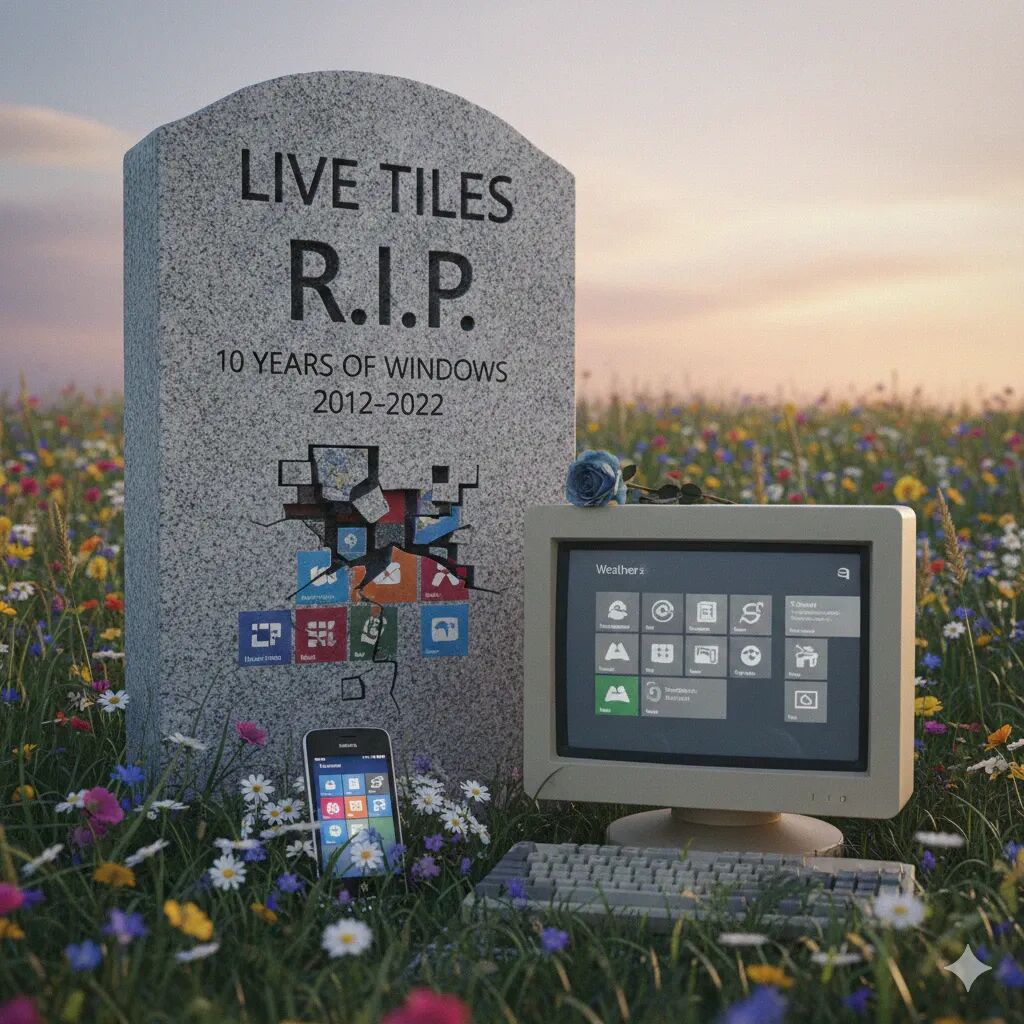
聊聊“动态磁贴”悄然消亡的这十几年……
3 6 Ke· 2026-02-26 08:38
Core Concept - Dynamic tiles were a significant feature in Microsoft's product history, representing an attempt to redefine human-computer interaction and transition from desktop computing to mobile connectivity [1][24][64] - With the introduction of Windows 11, dynamic tiles have quietly exited without formal acknowledgment, yet their underlying philosophy continues to influence modern design [1][37][64] Origin - The concept of dynamic tiles traces back to the Metro design language, later known as Microsoft Design Language, which emphasized functionality over decorative elements [2][10] Design Philosophy - Microsoft Design Language aimed to eliminate unnecessary decorations and focus on the essence of functionality, promoting a clear hierarchy of information [4][10][18] - The design drew inspiration from public transportation systems, emphasizing quick comprehension across diverse cultural backgrounds [7][8] Implementation in Windows Phone - Dynamic tiles were not merely widgets or shortcuts; they displayed real-time data that users cared about, marking a shift from traditional app-centric interfaces [10][12][16] - Windows Phone's design allowed for a more efficient information retrieval process, suitable for mobile devices where users needed quick access to key information [17][24] Transition to Desktop - The radical shift to Windows 8 attempted to integrate dynamic tiles into the desktop environment, which led to significant user backlash due to a mismatch with established desktop usage patterns [22][24][29] - Users found the new interaction model cumbersome, as it deviated from the traditional task-oriented approach of desktop computing [24][29] Evolution and Decline - Windows 8.1 showed signs of compromise by allowing users to boot directly to the desktop, but dynamic tiles still struggled to fit into the desktop paradigm [25][27] - Windows 10 attempted a hybrid approach with a return to the classic start menu while retaining a dynamic tile area, but this did not satisfy either user group [29][31] Final Removal - Dynamic tiles were completely removed in Windows 11, replaced by a new static icon grid and widgets, marking the end of their presence in Microsoft's ecosystem [37][64] - Despite their removal, the design principles of dynamic tiles have influenced modern UI trends, such as card-based interfaces and widget designs in current operating systems [49][53][64] Legacy - The ideas behind dynamic tiles, such as prioritizing information visibility and integrating content into the interface, continue to resonate in contemporary design practices [64]


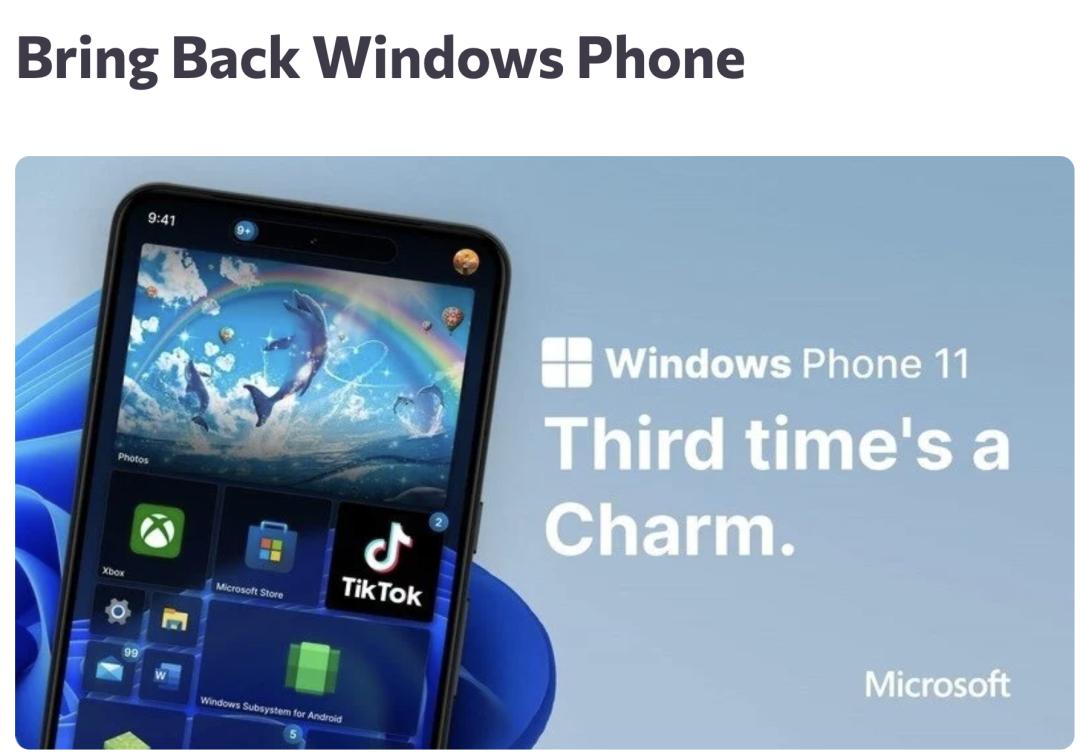
“让Windows Phone回来!”网友向微软请愿:重启曾经的第三大OS
3 6 Ke· 2025-12-25 11:27
Core Viewpoint - The article discusses a petition on Change.org titled "Bring Back Windows Phone," which calls for Microsoft to revive the Windows Phone platform, indicating that there is still a small group of users interested in its return despite its previous failure in the market [1][2][5]. Group 1: Petition Details - The petition was initiated by a user from Greece, Σπύρος Κ, and has garnered nearly 500 participants, reflecting ongoing interest in the Windows Phone concept [5]. - The core demand of the petitioners is not to recreate the old system but to reimagine Windows Phone using modern hardware and services like Microsoft 365 and Copilot [5][7]. - The petition envisions a new Windows Phone that incorporates a modern interface and better developer support, suggesting that there is still a market for a third mobile ecosystem focused on simplicity and efficiency [5][7]. Group 2: Reasons for Previous Failure - The article outlines that Windows Phone's failure can be attributed to several factors, including Microsoft's acquisition of Nokia in 2014, which was intended to boost Windows Phone's market presence but ultimately did not yield the expected results [6][8][9]. - A significant issue was the lack of a robust application ecosystem, as many mainstream apps were either absent or poorly updated, leading to a diminished user experience [10][11][12]. - The article emphasizes that the completeness of the application ecosystem and the economic model for developers were critical factors in determining the platform's success or failure [13]. Group 3: Current Market Context - As of now, Microsoft has no official plans to re-enter the mobile operating system market, despite some observers suggesting that a dedicated mobile platform could be beneficial for the company [19][20]. - The current focus of Microsoft is on cloud and AI strategies, which raises questions about the absence of a mobile platform as a key entry point in the AI era [20]. - The article notes that some users believe the conditions for a potential return of Windows Phone are maturing, suggesting that a third competitor in the smartphone market could positively impact the competitive landscape [21].
破解“缺芯少魂”,中国走到哪一步了?
Xin Lang Cai Jing· 2025-12-04 02:12
Core Viewpoint - HarmonyOS is rapidly expanding its ecosystem, covering various device categories and entering a "national upgrade period," with over 27 million devices running HarmonyOS 5 and 6, growing at a rate of over 100,000 devices daily [1][8]. Group 1: Ecosystem Development - The success of an operating system largely depends on the number of applications available, and HarmonyOS has achieved compatibility with mainstream applications, becoming the world's third-largest mobile operating system [1][8]. - Despite having 5,000 common applications, HarmonyOS needs to cover more niche but essential applications, particularly for government and enterprise internal work, to establish a self-sustaining ecosystem [1][8]. - The experience of Windows Phone serves as a cautionary tale, where the lack of a "long tail" ecosystem led to its failure despite initial advantages [2][10]. Group 2: Security and Independence - The development of domestic versions of government and enterprise applications is crucial for ensuring data security and digital sovereignty, especially given the reliance on foreign operating systems [2][11]. - Recent cyberattacks highlight the urgency for enterprises to enhance their information security, necessitating a unified, secure, and efficient domestic operating system [3][11]. Group 3: Technological Advancements - HarmonyOS 5 represents a significant step towards technological independence, featuring a comprehensive security and privacy protection system [4][11]. - The distributed technology of HarmonyOS enhances cross-device collaboration, improving efficiency in enterprise applications and adapting to the demands of the AI era [5][11]. Group 4: Future Goals - The industry consensus is that achieving 100,000 applications is a critical milestone for HarmonyOS to meet diverse consumer needs, which is a key target for the next six months to a year [6][12]. - Strategies to engage government and enterprise institutions include collaborative development of benchmark applications and innovative distribution models to lower adaptation costs [12][13]. Group 5: Long-term Vision - The next five years are pivotal for building a strong technological nation, with a focus on enhancing self-reliance in technology as a primary goal of economic and social development [6][13]. - The collective efforts of developers, internet companies, and stakeholders are essential for creating a robust, autonomous ecosystem that supports a fully connected intelligent world [7][13].
49天毁掉12亿美元,前HP CTO揭秘HP当年错失移动时代的真相
3 6 Ke· 2025-06-18 07:44
Core Insights - The article discusses the failure of HP's WebOS project, which was acquired from Palm for $1.2 billion, and how it was abruptly terminated just 49 days after the launch of the TouchPad tablet [1][2][3] Group 1: Acquisition and Initial Optimism - HP acquired Palm in 2010, believing that WebOS had the potential to be a leading mobile platform due to its advanced multitasking capabilities and elegant UI design [4][5] - The acquisition was seen as a strategic move to secure a foothold in the mobile computing market, which was shifting away from traditional PCs [4][5] Group 2: Leadership Changes and Strategic Shift - Following the acquisition, HP's CEO Mark Hurd resigned, and Leo Apotheker took over, who had a radically different vision for the company, focusing on software and services rather than hardware [7][8] - Apotheker viewed WebOS as a burden and aimed to pivot HP away from its traditional hardware business, which included the TouchPad [7][8] Group 3: Project Collapse and Decision-Making Failures - The TouchPad was launched on July 1, 2011, but failed to gain traction, selling only 25,000 units out of 270,000 shipped, while Apple sold 9 million iPads in the same period [10][11] - Just 49 days after the launch, HP announced the cessation of all WebOS device development, a decision made without adequate time to address the product's issues or build a developer ecosystem [11][12] Group 4: Aftermath and Reflection - The abrupt termination of the WebOS project led to significant internal backlash, with team members blaming leadership for the failure [12][13] - The article emphasizes the importance of having the right leadership and decision-making frameworks in place to avoid similar failures in the future [18][20][21] - Despite the failure of WebOS, the underlying technology was later repurposed by LG for smart TVs, indicating its potential value if managed correctly [23]

From IBM to OpenAI: 50 years of winning (and failed) strategies at Microsoft
TechXplore· 2025-04-02 18:40
Core Insights - Microsoft celebrates its 50th anniversary, marking its evolution from a small computer company to one of the world's most powerful corporations, with a net profit of $88 billion from sales of $245 billion in 2024 and a market value close to $3,000 billion [1][2] Group 1: Historical Development - Microsoft was founded in 1975 by Bill Gates and Paul Allen in Albuquerque, New Mexico, initially focusing on programming languages [2] - The first significant era involved a partnership with IBM, where Microsoft provided the operating system MS-DOS, leading to substantial profits and market presence [3][5][7] - The second era was characterized by the launch of Windows, which transformed user experience with a graphical interface, culminating in Windows 95, which held over 70% market share in operating systems [9][10] Group 2: Challenges and Internal Conflicts - The mid-1990s brought challenges as Microsoft struggled to adapt to the internet era, leading to legal issues and competition from new browsers like Google Chrome [12] - Under CEO Steve Ballmer, Microsoft attempted diversification into various sectors, with mixed results; successful ventures included Azure and Xbox, while failures included Windows Phone and Zune [13][14] - Internal conflicts and bureaucratization hindered innovation, leading to criticism of products like Internet Explorer 6 and Windows Vista [15][16] Group 3: Recent Developments and Future Outlook - In 2014, Satya Nadella took over as CEO, shifting the focus to cloud services, with Azure becoming the second-largest cloud service provider by 2024, contributing over 56% of Microsoft's revenue [17] - Significant acquisitions included LinkedIn for $26.2 billion and GitHub for $7.5 billion, alongside a $14 billion investment in OpenAI, positioning Microsoft favorably in the AI sector [18] - Microsoft's evolution reflects a series of strategic moves and adaptations, raising questions about its future sustainability and relevance in the tech landscape [19]

Microsoft retiring Skype after 20 years — as platform failed to keep up with Zoom, Slack
New York Post· 2025-02-28 16:52
Core Points - Microsoft will retire Skype on May 5, focusing on its Teams service to simplify communication offerings [1] - Skype, founded in 2003, disrupted the landline industry and reached hundreds of millions of users at its peak [2][3] - The platform struggled against competitors like Zoom and Slack, partly due to its technology not adapting to smartphones [3] - Microsoft integrated Teams with Office apps to attract corporate users, allowing Skype users to transition to Teams with existing credentials [4] - Skype's shutdown is part of a series of Microsoft’s mishandled ventures, including Internet Explorer and Windows Phone [5][7] - Teams currently has about 320 million monthly active users, while Skype's user base fell from 150 million in 2011 to approximately 23 million by 2020 [8]