Xiaomi 17 Ultra

Search documents
X @TechCrunch
TechCrunch· 2026-04-06 07:02
The Xiaomi 17 Ultra has some impressive add-ons that make snapping photos really fun https://t.co/UQCMVbO1hF ...
Interesting phones outside the U.S #Vergecast
The Verge· 2026-03-18 18:23
the telephoto camera really outside of the US just feels like the place where everything is happening on smartphones. I haven't actually tried this phone, but uh Huawei had a phone last year called the Pura 80 Ultra. And the fun thing that that did was it wanted to have two telephotos, but to save space on having two telephotos, it just has moving lenses that share one sensor. So, it has two different telephoto lenses that move in and out from above the one larger sensor, which allows them to fit in a bigge ...


小米将为徕卡生产智能手机
日经中文网· 2026-03-03 07:45
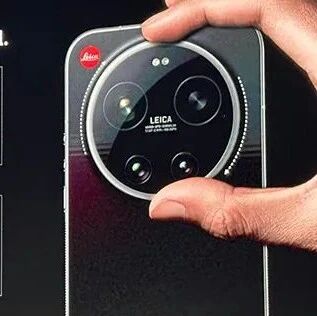
Core Viewpoint - Xiaomi is set to produce a new high-end smartphone named "Leitzphone" in collaboration with Leica, marking a shift from previous manufacturing by Sharp, which only sold Leica smartphones in Japan [2][4]. Group 1: Product Launch and Features - The "Leitzphone" is named after Ernst Leitz, the founder of Leica, and will be marketed globally as a high-end smartphone [4]. - The smartphone features two 50-megapixel lenses and one 200-megapixel lens, along with a manual dial for adjusting focus, shutter speed, and exposure, providing a camera-like experience [4][5]. - The starting price for the Leitzphone is set at €1999 (approximately ¥16,090), which is nearly double the price of the previous Sharp-made models [5]. Group 2: Strategic Collaboration - Leica's CEO Matthias Harsch emphasized that smartphones are seen as an extension of photography experiences rather than a threat to the camera industry, highlighting ongoing investments in mobile imaging [5]. - In the collaboration, Leica is responsible for optical technology and color science, while Xiaomi focuses on enhancing performance and processing capabilities, creating a synergistic partnership [5]. Group 3: Market Position and Future Investments - Xiaomi ranks as the third-largest smartphone manufacturer globally, following Samsung and Apple, but faces challenges in increasing the average selling price due to a high proportion of low-cost entry models [5]. - The CEO of Xiaomi announced plans to double the investment in core technologies over the next five years, reaching €24 billion, starting from 2026 [6].

Xiaomi’s Wildest MWC Yet: From the Leica Leitzphone to Its New Concept Hypercar!
CNET· 2026-03-02 22:50
I'm here at Xiaomi's booth to see some of my most exciting products of the show. This is all things mobile. Let's go take a look.So what you're going to start off with an amazing smartphone that Xiaomi has made in collaboration with Leica. It is the Leica Leitzphone. As you can see, it's got the iconic like a red dot logo.It's got a really powerful camera setup with this large main image sensor that uses this fancy new LOFIC technology for better HDR. And it's even got this physical control wheel that when ...

Xiaomi Reveals the 17 Ultra at MWC 2026: See All the Highlights in 14 Minutes
CNET· 2026-03-02 20:36
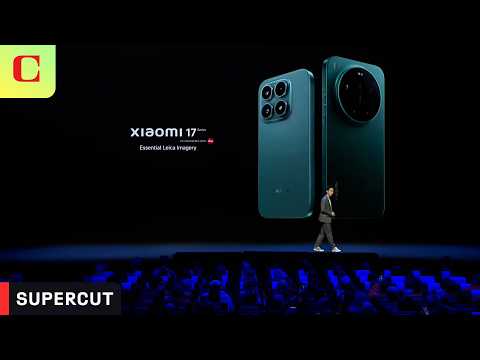
Today is Xiaomi Global's biggest launch event of the year. Thank you all for coming and today we're launching Xiaomi 17 series. They are our Yeah, they're our latest smartphone flagship series that deliver essential Leica imagery with their powerful camera systems and much more.So, without further ado, let's take a first look together at the new Xiaomi 17. What' you guys think. This is the new Xiaomi 17. And as you just saw, the new 17's design is all about one word, refinement.Its overall simplified aesthe ...
Unboxing Xiaomi 17 Ultra #unboxing #mwc2026
CNET· 2026-03-02 09:25
The Xiaomi 17 Ultra is the company’s lightest and thinnest Ultra phone, featuring a powerhouse camera. Let’s unbox it in a new Starlit Green color 💚📲 #xiaomi17ultra #unboxing #xiaomi #smartphone #mwc2026 ...

Xiaomi shows off its mechanical optical zoom #mwc2026 #xiaomi
CNET· 2026-03-02 09:19
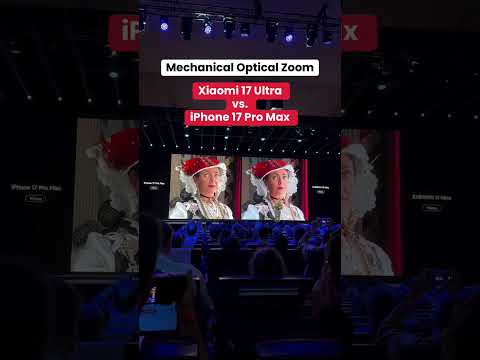
look at a set of comparisons. Imagine we want to capture the fine details in these architectural buildings. Well, if we zoom up close, we can see that with the mechanical optical zoom, our image will retain the authenticity of the scene rather than rely on digital sharpening or computational zoom.To be clear, both sets of photos, they look great, but Xiaomi 17 Ultra favors optical authenticity. Again, if we enlarge the image, we can see just how essential optical quality is in helping retain clarity, color, ...
Xiaomi launches flagship smartphone as memory price surge threatens sales
CNBC· 2026-02-28 14:32
Core Viewpoint - Xiaomi has launched its latest flagship smartphones, the Xiaomi 17 and 17 Ultra, amidst a significant increase in memory chip prices that could impact sales [1][2]. Group 1: Product Launch and Pricing - The Xiaomi 17 starts at 999 euros ($1,179) and the Xiaomi 17 Ultra starts at 1,499 euros, maintaining prices from last year's flagship despite rising memory costs [2]. - The surge in memory prices, which have increased by 80% to 90% in the first quarter, is attributed to a shortage of chips as supply is redirected to data centers for AI [3]. Group 2: Market Impact and Forecasts - Gartner forecasts a potential 13% increase in smartphone prices by 2026, while IDC predicts a 12.9% decline in the smartphone market due to the chip shortage [3]. - Analysts suggest that companies selling more expensive phones may be better positioned to absorb costs, but Xiaomi's primary volume comes from mid-range devices, which may face demand challenges [4]. Group 3: Company Performance and Strategy - Xiaomi's management has indicated that the industry may need to raise smartphone prices in 2026, highlighting the company's weaker position in the premium segment compared to competitors like Apple and Samsung [5]. - The company has been increasing its focus on the electric vehicle business, which now accounts for about 25% of total sales, providing a crucial revenue stream amid the memory chip crisis [6]. - In the September quarter, Xiaomi reported a 3% year-on-year decline in smartphone revenue, while its electric vehicle sales surged nearly 200% [7].

Omdia:2025年中国大陆智能手机市场出货量2.823亿台 华为时隔五年重夺第一
智通财经网· 2026-01-15 11:19
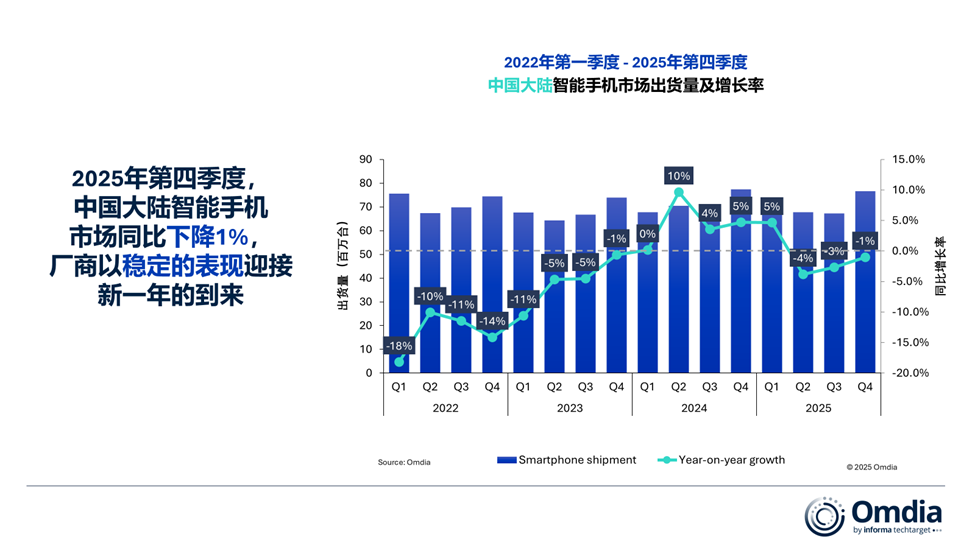
Core Insights - The Chinese smartphone market is projected to see a slight decline in shipments, with a total of 282.3 million units expected in 2025, representing a 1% decrease from 2024 [9] - Huawei leads the market with 46.8 million units shipped, capturing 17% market share, followed closely by Vivo and Apple [9] - Apple shows significant growth, particularly in Q4 2025, where it achieved 22% market share with 16.5 million units shipped [6][9] Market Performance - In Q4 2025, the overall smartphone market in China saw a 1% year-on-year decline, with total shipments of 76.4 million units [9] - Apple ranked first in Q4 shipments with 16.5 million units, while Vivo and OPPO followed closely [9] - Huawei's performance in Q4 was weaker, with 1.11 million units shipped, placing it fourth [9] Company Strategies - Apple is leveraging product differentiation and an upgraded product mix to drive sales, with the iPhone 17 series receiving positive consumer feedback [4] - Huawei is investing heavily in its HarmonyOS ecosystem, committing 1 billion RMB to support innovation in AI and its operating system [4] - Xiaomi is strategically launching its flagship model earlier to compete effectively against rivals [4] Future Outlook - Analysts predict that rising costs will pose significant challenges for smartphone manufacturers in both China and globally in 2026 [8] - Despite cost pressures, companies are expected to continue investing in long-term value areas such as channel upgrades and AI development [8] - The market is anticipated to maintain a foundation for steady growth and product innovation in 2026 [6][8]

Omdia:2025年中国大陆智能手机市场微幅下滑1%,华为时隔五年重夺第一
Canalys· 2026-01-15 09:17
Core Viewpoint - The Chinese smartphone market is projected to see a slight decline in shipments in 2025, with a total of 282.3 million units, down 1% from the previous year. Huawei leads the market with a 17% share, followed closely by Vivo and Apple, while the overall market dynamics are influenced by government subsidy policies and product differentiation strategies [2][6][9]. Market Performance - In 2025, Huawei's shipments reached 46.8 million units, maintaining a 17% market share, while Vivo and Apple followed closely with 46.0 million and 45.9 million units, respectively. Xiaomi and OPPO rounded out the top five with shipments of 43.7 million and 42.8 million units [9]. - The fourth quarter of 2025 saw a total shipment of 76.4 million units, a year-on-year decline of 1%. Apple led this quarter with 16.5 million units, capturing a 22% market share, while Vivo and OPPO showed improved performance compared to the previous year [2][9]. Strategic Insights - Apple has successfully increased its shipments through a differentiated product strategy, particularly with the iPhone 17 series, which has been well-received by consumers. The company has maintained competitive pricing for its base models, enhancing its product mix [4]. - Huawei is investing heavily in its HarmonyOS ecosystem, committing 1 billion RMB to support innovation in AI and the operating system, while Xiaomi is strategically timing the release of its flagship model to stay competitive [4][6]. Future Outlook - Analysts predict that rising costs will pose significant challenges for smartphone manufacturers in both China and globally in 2026. The increasing prices of storage components will require companies to balance cost distribution, pricing competitiveness, and hardware upgrades [8]. - Despite cost pressures, manufacturers are expected to continue investing in long-term value areas such as channel upgrades, AI, and cross-device ecosystem experiences, indicating that 2026 could still be a year of value growth and product innovation in the Chinese market [8].