
AIoT

Search documents
Hikvision to unveil multidimensional AIoT ecosystem at Hannover Messe 2026, redefining industrial safety and smart manufacturing
Prnewswire· 2026-03-27 03:18
Hikvision to unveil multidimensional AIoT ecosystem at Hannover Messe 2026, redefining industrial safety and smart manufacturing Accessibility StatementSkip Navigation HANGZHOU, China, March 26, 2026 /PRNewswire/ -- Hikvision, a global leader in AIoT solutions, is set to participate in Hannover Messe 2026, the world's premier industrial trade fair, taking place from April 20-24 at the Hanover Exhibition Center, Germany. Underscoring its commitment "Shaping Industrial Digitalization with AIoT," Hikvision ...


小米集团-W(01810):等待基本面拐点,AI战略图景显化:小米集团-W(01810):
Shenwan Hongyuan Securities· 2026-03-26 10:30
有业绩公布需要点评 买入(维持) | 市场数据: | 2026 年 03 月 25 日 | | --- | --- | | 收盘价(港币) | 32.52 | | 恒生中国企业指数 | 8582.74 | | 52 周最高/最低(港币) | 61.45/31.20 | | H 股市值(亿港币) | 8,433.25 | | 流通 H 股(百万股) | 25,932.50 | | 汇率(港币/人民币) | 0.8809 | 一年内股价与基准指数对比走势: 19% -41% -21% -1% HSCEI 小米集团-W 资料来源:Bloomberg 相关研究 上 市 公 司 《小米集团-W(01810)点评:看好 YU7、 AI 眼 镜 两 款 战 略 SKU 再 造 爆 款 》 2025/06/27 证券分析师 杨海晏 A0230518070003 yanghy@swsresearch.com 戴文杰 A0230522100006 daiwj@swsresearch.com 联系人 陈俊兆 A0230124100001 chenjz@swsresearch.com 2026 年 03 月 26 日 小米集团-W ...

无惧短期阵痛,高盛坚定看好小米:AI有望打开价值空间,AIoT提供安全垫
硬AI· 2026-03-25 15:18
高盛认为,尽管面临内存成本上涨与车研投入压力,小米凭借互联网及AIoT构成的"骨干利润"(2026年预估336亿元)展现出极强韧性。三年600亿元的AI战略投入已使大模型市场 份额跃升;同时,电车SU7改款订单强劲,全年交付目标明确。高盛维持41港元目标价,看好其生态赋能的长期价值。 硬·AI 作者 | 张雅绮 编辑 | 硬 AI 01 四季度业绩符合预期 运营效率管控可期 高盛指出, 小米第四季度各项核心指标基本符合预期,但手机毛利率承压最为明显,同比下降3.8个百分点、环比下降2.8个百分点至8.3%,主要受全球内存价格 大幅上涨拖累。 据高盛数据,截至2026年3月24日,LPDDR4X 6GB至12GB内存价格较2025年底上涨78%至100%,较2025年第一季度同比涨幅高达580%至 674%。 运营费用管控方面,高盛预计2026年非国际财务报告准则口径运营费用同比增长11%至约750亿元,但核心运营费用同比下降3%至约430亿元,占核心收入比例 约12.8%。销售及营销费用、行政费用分别仅同比增长约2%和8%,研发费用同比增长约21%,体现出公司在效率管控与技术投入之间的有序平衡。高盛同时指 出 ...

小米集团- 核心利润抵御智能手机 电动车利润率波动;AI 投入打造实体 AI 领先地位;更新估值情景,维持买入
2026-03-10 10:17
Xiaomi Corp. (1810.HK) Conference Call Summary Company Overview - **Company**: Xiaomi Corp. (1810.HK) - **Market Cap**: HK$866.1 billion / $110.7 billion - **Enterprise Value**: HK$677.0 billion / $86.4 billion - **Current Price**: HK$33.42 - **Target Price**: HK$41.00 - **Upside Potential**: 22.7% [1] Key Industry Insights - **Headwinds**: Rising upstream costs in consumer electronics and automotive sectors, alongside softening demand due to the taper-off of national subsidies and NEV incentives, are major challenges impacting Xiaomi's profitability and valuation [1] - **Revenue Adjustments**: Revenue estimates for 2025-2027 have been reduced by 2% to 9%, with adjusted net profit estimates cut by 8% to 24% for the same period [1] Financial Performance - **2026E Revenue**: Estimated at Rmb496.2 billion, down from previous estimates [6] - **Adjusted Net Profit**: Expected to be Rmb27.9 billion in 2026E, reflecting a significant decline from Rmb39.5 billion in 2025E [6] - **EBITDA**: Projected at Rmb40.3 billion for 2026E [6] - **EPS**: Expected to be Rmb1.13 in 2026E, down from Rmb1.47 in 2025E [6] Strategic Insights - **Backbone Profit**: Internet services, AIoT, and other income are expected to provide a buffer against industry challenges, with an estimated "backbone profit" of Rmb33.5 billion in 2026E [19] - **R&D Investments**: Increased R&D spending (Rmb40 billion in 2026E) is anticipated to drag near-term profits but is aimed at establishing Xiaomi as a leader in physical AI [20] - **Smartphone Segment**: Expected to face a decline in shipments, with a projected drop of 10% to 15% year-over-year in 4Q25E and 1Q26E [25][28] Market Position and Competitive Landscape - **Market Share**: Xiaomi is experiencing a decline in market share, while competitors like Apple and OPPO are gaining [30] - **Pricing Strategy**: Xiaomi's pricing for new models varies by region, with some markets seeing price increases while others remain stable [41] Future Catalysts - **Upcoming Events**: Key events include the release of 4Q25 results, new EV models, and updates on AI initiatives [22] - **Product Launches**: The launch of new smartphone models and EVs is expected to drive revenue growth in the coming years [22] Conclusion - Despite facing significant challenges, Xiaomi's strategic investments in AI and R&D, along with a strong balance sheet, provide a favorable risk-reward scenario for investors. The company maintains a "Buy" rating with a target price of HK$41, reflecting a potential upside of 22.7% [1][2]

Powerfleet, Inc.(AIOT) - 2026 Q3 - Earnings Call Transcript
2026-02-09 14:30
Financial Data and Key Metrics Changes - In Q3 2026, total revenue increased by 7% year-over-year, with an adjusted growth of 9% when accounting for a prior year comparison that included $2 million in accelerated product revenue [5][21] - Service revenue grew by 11% year-over-year, now representing 80% of total revenue, up from 77% in the prior year [5][21] - Adjusted EBITDA increased by 26% year-over-year to $25.7 million, with adjusted EBITDA margins expanding by 4% to 23% [6][21] - Net debt to Adjusted EBITDA improved to 2.7 times, with expectations to decline to around 2.4 times by year-end [6][23] Business Line Data and Key Metrics Changes - The company reported a strong focus on high-margin recurring revenue, with service revenue growth being a significant contributor to overall revenue [20] - The integration of the Fleet Complete acquisition is reflected in the financials, impacting service gross margins by over 6% due to non-cash amortization [20] Market Data and Key Metrics Changes - The company secured a significant contract with the South African public sector, expected to generate substantial recurring SaaS and services revenue over a multi-year term [6][7] - The AI video pipeline grew by 71% sequentially, indicating strong demand for advanced safety and compliance solutions [10] Company Strategy and Development Direction - The company is focused on accelerating high-margin recurring revenue growth, expanding profitability, and strengthening its balance sheet while maintaining disciplined execution [4] - The Unity platform is positioned as a key differentiator, enabling the company to deliver integrated solutions across various industries [12][16] - The Data Highway strategy aims to connect fragmented data across enterprises, enhancing operational efficiency and safety [13][16] Management's Comments on Operating Environment and Future Outlook - Management expressed confidence in achieving a Q4 exit run rate for FY26 of 10% total revenue growth and over 10% growth in recurring revenue [4][5] - The operating environment is perceived to be improving, with the company finding effective solutions to market challenges [36] Other Important Information - The company is maintaining operating expense investments to support business growth, resulting in updated Adjusted EBITDA guidance of approximately 45% annual growth [22][23] - The South African contract is expected to be one of the largest deployments in the company's history, with strong initial enrollments [7][45] Q&A Session Summary Question: Can you provide more color on the growth mix and contribution of new logos versus upsell? - The business is composed of 65%-70% from existing customers and 30% from new customers, with a developing new logo pipeline [28] Question: How is AI impacting fleet management platforms? - AI is seen as an enabler, helping to manage and interpret large amounts of data for better business decisions [32] Question: Is the business environment better, the same, or worse than six months ago? - The environment is improving, with the company finding effective market positions and generating tangible ROI for customers [36] Question: Can you provide an update on the AT&T reps and the South Africa contract revenue? - The South Africa contract is expected to be within the company's average ARPU and margin range, but specific financial details cannot be disclosed [39] Question: How competitive was the contracting process for the South African contract? - The contract was highly competitive, requiring robust capabilities and strong governance, with Powerfleet's partnership with MTN being a key differentiator [71]

境内严禁,境外严管,设备数据可能正在"踩线"?42号文给AIoT企业3个合规警示
3 6 Ke· 2026-02-09 10:42
Core Viewpoint - The recent regulatory documents from Chinese authorities signify a shift in the approach to digital asset regulation, moving from strict prohibition to a framework that allows for compliance and controlled utilization of tokenization of real-world assets (RWA) [1][15]. Regulatory Framework - The primary focus of the regulatory documents is on virtual currencies and RWA activities, explicitly prohibiting the tokenization of real-world assets within China and related services, which are deemed illegal financial activities [2][7]. - The documents establish a differentiated regulatory approach, allowing RWA activities under specific conditions while maintaining strict prohibitions on virtual currency operations [3][10]. Definition and Scope - RWA tokenization is defined as the use of cryptographic technology and distributed ledger to convert ownership and rights into tokens for issuance and trading [5]. - The distinction between asset digitization and tokenization is crucial, as the former does not fall under the regulatory scope, while the latter does [4][5]. Compliance Obligations - The regulations impose specific compliance obligations on various market participants, including financial institutions and technology service providers, to ensure that they do not engage in unauthorized RWA activities [9][11]. - For compliant cross-border RWA activities, technology service providers must adhere to legal frameworks, enhance risk management, and report their activities to relevant authorities [11]. Data Security and Cross-Border Concerns - The documents emphasize the importance of data security and the risks associated with cross-border data flows, particularly when domestic asset data is used in foreign financial contexts [12][13]. - Companies must ensure the legality of data transfers and classify data appropriately, especially when it pertains to sensitive information related to asset tokenization [13][14]. Implications for AIoT Companies - AIoT companies must recognize the potential implications of their data usage, especially if their outputs are utilized in RWA activities, as this could subject them to regulatory scrutiny [6][14]. - The regulatory framework necessitates that AIoT firms proactively clarify their data usage and ensure compliance with the new obligations set forth in the regulatory documents [15].
拟最高25亿港元回购股份,小米集团再“护盘”
Huan Qiu Lao Hu Cai Jing· 2026-01-23 03:46
Group 1 - Xiaomi Group announced a share buyback plan not exceeding HKD 2.5 billion, targeting Class B ordinary shares, with all repurchased shares to be canceled [1] - The buyback plan is set to start on January 23, 2026, and will end on the earliest of the day before the 2026 annual general meeting, when the total buyback cost reaches the HKD 2.5 billion cap, or if terminated early [1] - Following the announcement, Xiaomi's stock price rose over 3% at the opening on January 23, closing at HKD 36.02 per share, a 2.21% increase from the previous day, with a total market capitalization of HKD 775.8 billion [1] Group 2 - Since the beginning of 2026, Xiaomi has conducted 13 share buybacks, totaling approximately 60.56 million shares, which is 0.23% of the total share capital, with a cumulative investment of about HKD 2.25 billion, representing 30% of the total buyback amount for 2025 [2] - Xiaomi's co-founder and vice chairman, Lin Bin, announced a long-term plan to sell up to USD 5 billion of Class B ordinary shares annually starting December 2026, with a total cap of USD 20 billion, primarily to establish an investment fund [2] - Xiaomi's core business spans four major sectors: smartphones, AIoT, internet services, and new energy vehicles, establishing the largest consumer-grade AIoT platform globally [2] Group 3 - In the first three quarters of 2025, Xiaomi achieved a revenue of CNY 340.37 billion, a year-on-year increase of 32.49%, and a net profit attributable to shareholders of CNY 35.1 billion, surpassing the total for 2024, with a year-on-year growth of 139.87% [3]
手机业务如何应对内存风险、AIot、电车、研发布局.....一文读懂小米高管在高盛电话会发言
硬AI· 2026-01-07 15:35
Core Viewpoint - Xiaomi is focusing on increasing the average selling price of smartphones as a primary operational goal for 2026, while significantly boosting investments in artificial intelligence to transform its entire business line and setting an annual delivery target of 550,000 electric vehicles [1][3]. Group 1: Smartphone Business - Xiaomi's strategy to counter the unprecedented rise in memory chip costs involves increasing the average selling price (ASP) of its smartphones [5][6]. - The upcoming Xiaomi 17 Ultra will be priced 500-700 RMB higher than the Xiaomi 15 Ultra, reflecting the company's commitment to price increases [6]. - The company aims to improve its market share in China by 1 percentage point annually, emphasizing the strategic importance of the Chinese market for its premiumization strategy [8]. Group 2: AIoT Business - The AIoT segment is positioned as a profit stabilizer for Xiaomi, with expectations of approximately 20% year-on-year revenue growth in 2025 and a 2-2.5 percentage point expansion in gross margin [10]. - Xiaomi plans to increase the number of its retail stores from about 500 in 2025 to over 1,000 in 2026, while expanding product categories and exploring partnerships with cross-border e-commerce platforms [10][11]. - Currently, overseas AIoT revenue accounts for about 30% of total revenue, with the company viewing its overseas smartphone revenue (60%) as a long-term reference for AIoT business expansion [10]. Group 3: Electric Vehicle Business - Xiaomi has raised its 2026 delivery target for electric vehicles to 550,000, significantly higher than the previously set target of 410,000 for 2025 [13]. - The growth is driven by increased manufacturing capacity and consumer confidence in new vehicle models, including the SU7 and a new third model [14]. - The company aims to focus on the high-end electric vehicle market, which constitutes 50% of annual passenger car sales in China, while accounting for 80-90% of industry profits [15]. Group 4: R&D Investments - Xiaomi plans to invest 200 billion RMB in R&D from 2026 to 2030, focusing on AI, intelligent driving, and chip development [16]. - The company aims to leverage AI to empower its ecosystem and internal operations, with a significant portion of its code being AI-generated [17]. - Xiaomi has invested 135 billion RMB in the development of its XRING O1 chip over the past four years, with plans to enhance its self-developed smart electric vehicle chips [19][20].

手机业务如何应对内存风险、AIot、电车、研发布局.....一文读懂小米高管在高盛电话会发言
Hua Er Jie Jian Wen· 2026-01-07 08:54
Core Viewpoint - Xiaomi is focusing on increasing the average selling price of smartphones as a primary operational goal for 2026, while significantly boosting investments in artificial intelligence to transform its entire business line and setting an annual delivery target of 550,000 electric vehicles [1][2]. Group 1: Smartphone Business - Xiaomi's strategy to counter the rising costs of storage chips involves increasing the average selling price (ASP) of smartphones, with a clear focus on high-end models [3][4]. - The upcoming Xiaomi 17 Ultra will be priced 500-700 RMB higher than the Xiaomi 15 Ultra, reflecting this strategy [3]. - The company aims to increase its market share in China by 1 percentage point annually, emphasizing the strategic importance of the Chinese market for its high-end strategy [4]. Group 2: AIoT Business - The AIoT segment is positioned as a profit stabilizer for Xiaomi, with expectations of approximately 20% year-on-year revenue growth in 2025 and a margin expansion of 2-2.5 percentage points [5]. - Xiaomi plans to increase the number of its retail stores from about 500 in 2025 to over 1,000 in 2026, while expanding product categories and exploring partnerships with cross-border e-commerce platforms [5]. - Currently, overseas AIoT revenue accounts for about 30%, with overseas smartphone revenue at 60%, indicating potential for future growth in AIoT [5]. Group 3: Electric Vehicle Business - Xiaomi has raised its delivery target for electric vehicles to 550,000 units for 2026, significantly up from the previous target of 410,000 units for 2025 [6][7]. - The growth is driven by increased manufacturing capacity and consumer confidence in new models, including the SU7 facelift and a third model set for release in the second half of 2026 [6]. - The company aims for a healthy gross margin of over 20% in the electric vehicle segment, although margins may be lower in 2026 due to tax incentives and changes in product mix [6][7]. Group 4: R&D Investments - Xiaomi plans to invest 200 billion RMB in R&D from 2026 to 2030, focusing on AI, autonomous driving, and chip development [8][9]. - AI investments are expected to account for 25% of the 320-330 billion RMB R&D budget in 2025, with a commitment to maintaining reasonable levels of investment [9]. - The company has a strong focus on developing its own chips, with significant investments already made in the XRING O1 chip, which is expected to enhance its capabilities in the electric vehicle sector [11].
小米集团- 高盛中国汽车 2026 管理层展望电话会要点
Goldman Sachs· 2026-01-07 03:05
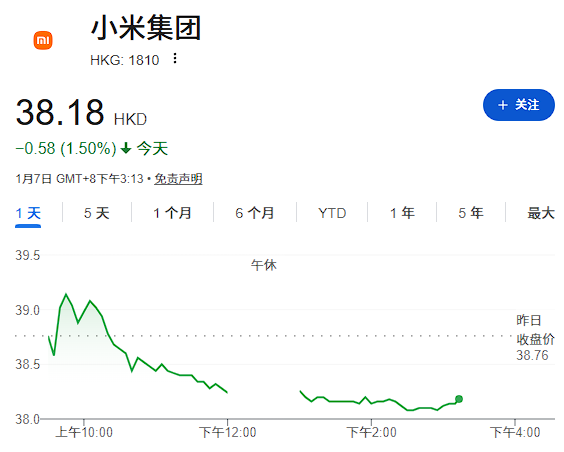
Investment Rating - The report assigns a "Buy" rating to Xiaomi Corp. with a 12-month target price of HK$53.50, indicating an upside potential of 38.0% from the current price of HK$38.76 [15][17]. Core Insights - Xiaomi is positioned as the world's 3 smartphone brand and a leading consumer AIoT/NEV platform, with a multi-year ecosystem expansion strategy under the "Human x Car x Home" framework, projecting revenue and EPS CAGRs of 24% and 28% respectively from 2024 to 2027 [13]. - The company plans to invest Rmb200 billion in R&D from 2026 to 2030, focusing on AI, assisted driving, and chipset development to enhance its competitive edge [7][14]. Summary by Sections Smartphone Segment - Xiaomi aims to increase the average selling price (ASP) of smartphones by raising prices for premium models and optimizing product structure, targeting a 1 percentage point annual market share increase in China [7][8]. - The company expects revenue growth in 2026 to be supported by government consumption subsidies and overseas expansion, while maintaining gross profit margin (GPM) at or above 2025 levels by reducing low-margin categories [8] AIoT Segment - The AIoT segment is seen as a profit stabilizer, with a revenue growth of approximately 20% year-over-year and a contribution of around 30% to overseas revenue by Q3 2025 [3][10]. - Xiaomi plans to expand its Mi Home store count to over 1,000 by 2026 and increase the contribution of large home appliances to its revenue [10]. Smart EV Segment - Xiaomi targets 550,000 unit deliveries for its smart EVs in 2026, up from over 410,000 in 2025, driven by increased manufacturing capacity and new model launches [9][11]. - The company focuses on the premium auto segment, which captures a significant profit pool, and plans to export EVs to Europe starting in 2027 [11][12]. R&D Investments - AI accounts for approximately 25% of Xiaomi's R&D budget, with plans to increase investments while leveraging AI for ecosystem empowerment and internal operations [14]. - Xiaomi has made significant progress in assisted driving technology and aims to release new features in 2026, alongside a commitment to self-developing chips for its smart EVs [14]. Share Buyback - In 2025, Xiaomi repurchased 150 million shares for a total consideration of HK$6.3 billion, indicating confidence in its stock value [14].