i4

Search documents
Germany Revives EV Subsidies: Industry Impact & Key Beneficiaries
ZACKS· 2026-01-26 16:00
Core Insights - Germany has reintroduced a significant electric vehicle (EV) subsidy program with a budget of €3.5 billion until 2029, aiming to support up to 800,000 EV purchases and revive demand in a price-sensitive market [1][9] Subsidy Framework - The updated incentive framework includes battery electric vehicles (BEVs), plug-in hybrids (PHEVs), and extended-range electric vehicles (EREVs), providing a more flexible approach to consumer needs [2] - BEVs are eligible for a base subsidy of approximately €3,000, which can increase to €6,000 for lower-income households, while PHEVs and EREVs qualify for around €1,500 [3][2] - The subsidy applies to both purchases and leases, provided the vehicle is owned or leased for at least 36 months, and includes imported vehicles from brands like those in China [3] Social Tier System - The program features a social tier system with eligibility capped at €80,000 in taxable household income, which can rise to €90,000 with children, aligning with the median income of new-car buyers [4][5] Impact on Automakers - BYD Co. is expanding its European presence, planning to double its sales network to around 2,000 outlets by 2026, with European sales tripling in 2025 to over 80,000 vehicles [6] - The inclusion of Chinese brands in the subsidy scheme reduces competitive barriers for BYD, potentially increasing consumer adoption [7] - Volkswagen AG continues to be a major player in the EV market, reporting significant growth in all-electric deliveries, particularly in Germany [8][10] - BMW AG is expected to benefit from the renewed subsidies, which could accelerate sales of its electric models and enhance production utilization [11] - Tesla, Inc. is committed to the European market despite slowing sales, with plans to increase battery production, making its models more competitive due to the new subsidies [12] Semiconductor Industry - Infineon Technologies AG stands to benefit indirectly from the revived EV subsidy program, as rising EV demand will likely lead to increased semiconductor orders from automakers [13][14] Conclusion - Germany's renewed EV subsidy program is a strategic move to enhance demand while allowing foreign competition, potentially reshaping consumer behavior in electric vehicle purchases and attracting investor interest in the automotive sector [15]

宝马回应降价:并非价格战
新华网财经· 2026-01-03 09:39
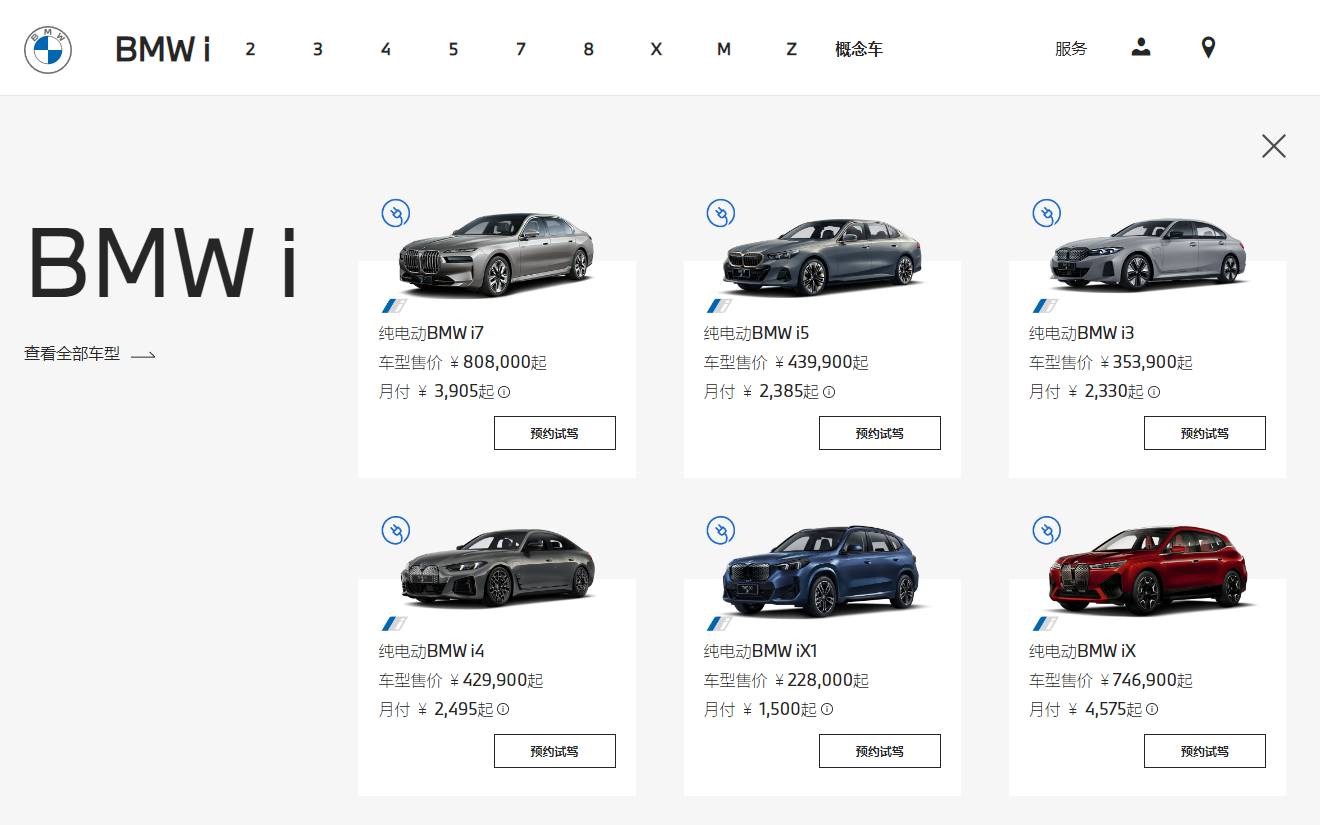
Group 1 - BMW China has lowered the official guide prices for 31 models at the beginning of the year, with the highest reduction reaching 301,000 yuan. The starting price for the iX1 has decreased from 299,900 yuan to 228,000 yuan, a drop of 24%, while the 2 Series has seen a reduction from 259,900 yuan to 208,800 yuan, a decrease of 20% [2][3] - BMW China clarified that this price adjustment is not a price war but a proactive adjustment of product strategy to meet the expectations of Chinese consumers. The final prices are still determined by dealers [3] - The company emphasizes that the value upgrade of certain products is part of its long-term strategy, aiming to provide higher value and more competitive product experiences to consumers, reinforcing its market competitiveness [3]


宝马31款车型开年降价,最高降30.1万元
Bei Ke Cai Jing· 2026-01-02 15:21
Core Viewpoint - BMW China has initiated a price reduction for 31 models, with the highest decrease reaching 301,000 yuan, reflecting a strategic move to adjust pricing in the competitive automotive market [1][3]. Price Adjustments - The flagship electric model, BMW i7 M70L, has seen a price drop of 301,000 yuan, now priced at 1,598,000 yuan, representing a 16% reduction [3]. - The starting price for the electric model iX1 has decreased from 299,900 yuan to 228,000 yuan, marking a 24% decline [3]. - The 2 Series has also been adjusted, with its starting price reduced from 259,900 yuan to 208,800 yuan, indicating a 20% drop [3]. - Other models, including X2, i4, i5, X6, and X7, have experienced varying degrees of price reductions [3].
X @TechCrunch
TechCrunch· 2025-09-02 06:13
I’m driving my i4 back to the dealership as my lease is over. I'm surprised to say I can't wait. https://t.co/kRebFkLkrq ...
业绩承压!宝马2025年上半年净利润同比暴跌29%
Xi Niu Cai Jing· 2025-08-05 14:07
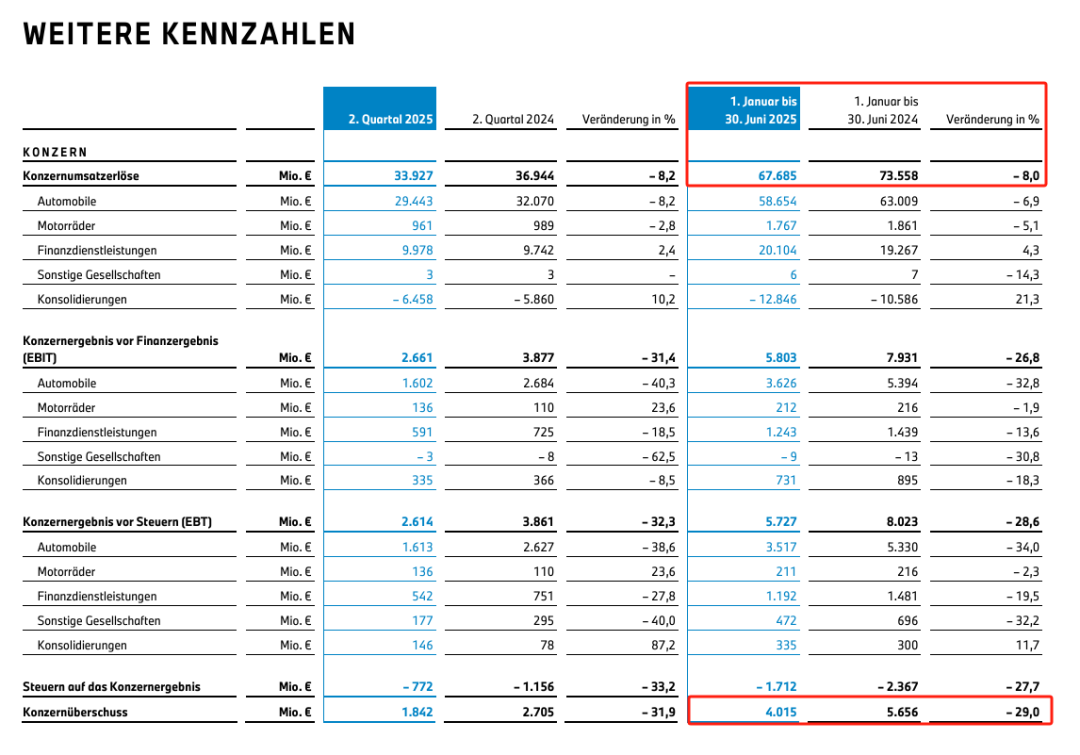
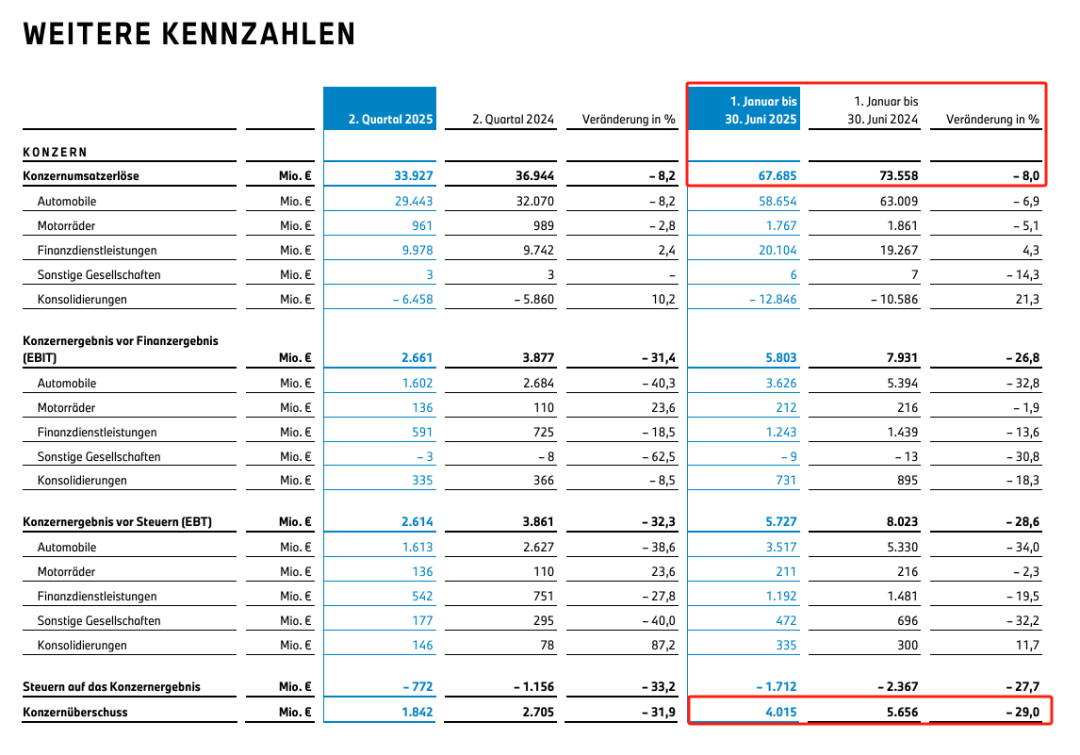
Core Insights - BMW Group reported a significant decline in financial performance for the first half of 2025, with sales revenue dropping by 8% to €67.7 billion and net profit falling by 29% to €4 billion, marking a recent low [1][2] - The second quarter of 2025 saw a sales revenue of €33.9 billion, down 8.2% year-on-year, and an EBIT of €2.66 billion, which represents a 31.4% decrease compared to the previous year [1][2] - Global deliveries in the second quarter increased slightly by 0.4% to 621,500 units, but profitability faced significant pressure [1] Financial Performance - Total sales revenue for the automotive segment in Q2 2025 was €29.4 billion, down 8.2% from €32.1 billion in Q2 2024 [2] - EBIT for the automotive segment fell by 40.3% to €1.6 billion in Q2 2025, compared to €2.7 billion in Q2 2024 [2] - The overall net profit for the group in Q2 2025 was €1.84 billion, a decrease of 31.9% from €2.7 billion in Q2 2024 [2] Market Performance - Europe remains BMW's largest market, with a cumulative sales volume of 497,800 units in the first half of 2025, reflecting an 8.2% year-on-year increase [2] - North American sales reached 237,200 units, up 3.4% year-on-year, while Asian market sales declined by 11.1% to 438,300 units, with China experiencing a 15.5% drop [2] - The decline in the Chinese market is attributed to the rise of local brands in the fields of new energy and smart technology, which are increasingly capturing BMW's market share [2] Electric Vehicle Performance - BMW delivered 318,900 electrified vehicles in the first half of 2025, marking an 18.5% increase and accounting for 26.4% of total deliveries [3] - The European market showed strong growth in electric and plug-in hybrid vehicles, with a 34.8% increase, driven by models like the i4, iX1, and iX [3] - However, BMW's electric vehicle offerings in China are lagging behind local competitors, impacting their market performance [3] Strategic Outlook - BMW's transformation is deemed urgent due to declining profits and sales, with plans to launch over 40 new and updated models by 2027, starting with the BMW iX3 [3] - The NEUE KLASSE platform's first model is set to debut at the IAA Mobility in September, representing a new beginning for the company [3]
宝马,突发!
Zhong Guo Ji Jin Bao· 2025-07-31 13:13
Core Insights - BMW Group reported a decline in sales revenue and net profit for the first half of 2025, with sales revenue at €67.7 billion, down 8% year-on-year, and net profit at €4 billion, down 29% [1][2]. Financial Performance - In Q2 2025, BMW's sales revenue was €33.9 billion, a decrease of 8.2% compared to Q2 2024 [2]. - The EBIT for Q2 2025 was €2.66 billion, reflecting a significant decline of 31.4% year-on-year [2]. - The automotive segment's EBIT margin fell to 5.4% from 8.4% in the previous year [2]. - Total vehicle deliveries for the first half of 2025 were over 1.2 million, remaining stable compared to the previous year [3]. Regional Performance - Sales in the Chinese market dropped by 15.5% due to weak demand for high-end models, indicating a decline in BMW's competitiveness in China [3]. - The European market saw double-digit growth in Q2, with BMW's market share continuing to expand [3]. - The Americas market experienced a cumulative growth of 3.4% in the first half of 2025 [3]. Electric Vehicle Strategy - BMW delivered 318,900 electrified vehicles in the first half of 2025, marking an 18.5% increase year-on-year, with over a quarter of total deliveries being electric models [3]. - The growth in electric models was primarily driven by the i4, iX1, and iX models, with strong performance in plug-in hybrid vehicles in Europe [4]. Strategic Outlook - BMW's Chairman, Oliver Zipse, emphasized the resilience of the company's business model, which is based on globalization, innovation, and attractive products [4]. - The company plans to launch over 40 new and updated models by 2027, covering all market segments and drive types [4]. Market Reaction - Following the disappointing Q2 performance, BMW's stock price has declined, with shares trading at €84, resulting in a total market capitalization of €47.6 billion [5].
宝马,突发!
中国基金报· 2025-07-31 13:10
Core Viewpoint - BMW Group reported a decline in sales revenue and net profit for the first half of 2025, with sales revenue down 8% year-on-year to €67.7 billion and net profit down 29% to €4 billion [2]. Financial Performance - In Q2 2025, BMW Group's sales revenue was €33.9 billion, a decrease of 8.2% compared to Q2 2024 [3]. - The EBIT for Q2 2025 was €2.66 billion, reflecting a significant decline of 31.4% year-on-year [3]. - The automotive segment's EBIT margin fell to 5.4% from 8.4% in the previous year [3]. Sales and Market Performance - BMW Group delivered 621,500 vehicles in the first half of 2025, a slight increase of 0.4% year-on-year [4]. - Sales in the Chinese market dropped by 15.5%, attributed to weak demand for high-end models, while the European market saw double-digit growth in Q2 [4]. - The Americas market experienced a cumulative growth of 3.4% in the first half of the year [4]. Electric Vehicle Transition - BMW Group delivered 318,900 electrified vehicles in the first half of 2025, marking an 18.5% increase year-on-year, with over a quarter of total deliveries being electric models [4]. - The growth in electric models was primarily driven by the i4, iX1, and iX, with strong performance in plug-in hybrid vehicles in the European market [4]. Strategic Outlook - BMW Group's Chairman, Oliver Zipse, emphasized the resilience of the business model, which is based on globalization, innovation, and attractive products [4]. - The company plans to launch over 40 new and updated models by 2027, covering all market segments and drive types, integrating innovative technologies and new design language [4]. Stock Market Reaction - Following the disappointing Q2 performance, BMW Group's stock price has seen a decline, trading at €84 per share with a total market capitalization of €47.6 billion [5].