x86芯片

Search documents
台积电才是英特尔的 “救命稻草”,不是英伟达!
是说芯语· 2025-12-28 00:33
Core Viewpoint - The collaboration between Intel and Nvidia marks a significant development in the semiconductor industry, with both companies aiming to design custom x86 chips for data centers and client markets, alongside Nvidia's $5 billion investment in Intel [5][7]. Group 1: Market Impact - Intel's stock price has seen a notable increase following the announcement of the partnership, indicating renewed investor confidence in Intel's potential within the semiconductor sector [5]. - The collaboration is expected to help Intel regain market share in data centers and personal computers, where it has been losing ground to competitors like AMD [7][8]. - Intel's share in the server processor market has dropped below 63%, with projections indicating further declines to around 55% by 2025 and potentially below 50% by 2028, while AMD's share is expected to rise to 40% [9]. Group 2: Competitive Landscape - The partnership allows Intel to customize x86 CPUs for Nvidia, integrating NVlink to enhance AI data center capabilities, which could help Intel reclaim its position in the market [8]. - In the consumer CPU market, AMD has begun to surpass Intel, particularly in desktop CPUs, while Intel's traditional stronghold in laptop CPUs faces challenges due to insufficient performance in recent product launches [11][12]. - Intel's ambition to become a major player in the foundry business faces hurdles, as Nvidia's investment has not translated into foundry orders, which are crucial for Intel's value proposition to the U.S. government [13][18]. Group 3: Technological Challenges - Intel's manufacturing technology has lagged behind TSMC, with the latest 18A process yielding only 55% efficiency compared to TSMC's 65% for its N2 process [14][13]. - The semiconductor industry is experiencing a supply shortage, particularly for advanced chips, which presents an opportunity for Intel to position itself as an alternative to TSMC [15][17]. Group 4: Strategic Positioning - Intel's future is increasingly tied to U.S. government interests, which complicates its operational independence and may hinder its ability to innovate effectively [20][21]. - The company's leadership faces challenges in navigating the political landscape while striving for technological advancement and market competitiveness [22].


“非风险资本”出身的成都国资,为何做了“敢投”的事?
Mei Ri Jing Ji Xin Wen· 2025-09-27 00:03
Core Insights - Chengdu state-owned capital has achieved a remarkable return of 100 billion yuan from an investment of less than 1 billion yuan in Haiguang Information over a decade, showcasing a successful case of strategic investment in the semiconductor industry [1][2][8]. Investment Strategy - The investment approach taken by Chengdu state-owned enterprises emphasizes equity binding instead of one-way subsidies, aiming to cultivate "chain leaders" and develop the entire semiconductor industry chain [2][11]. - The investment in Haiguang Information was driven by a long-term strategic vision rather than short-term financial gains, reflecting a shift from traditional government subsidy models to a partnership model where risks and rewards are shared [12][14]. Market Position - Haiguang Information has become a significant player in the semiconductor sector, with its market value reaching approximately 622.7 billion yuan, contributing to a combined market value of over 8,063 billion yuan with its merger partner Zhongke Shuguang [3][5]. - The top five stocks on the Sci-Tech Innovation Board, including Haiguang Information, represent a strong embodiment of China's semiconductor capabilities, with four out of five being semiconductor-related [3]. Financial Performance - Chengdu state-owned capital's investment in Haiguang Information has yielded a capital return rate exceeding 100 times, with the current market value of their holdings around 106.1 billion yuan, compared to an initial investment of just over 400 million yuan [8][10]. - The financial data indicates that Haiguang Information's subsidiaries, Haiguang Integrated and Haiguang Microelectronics, have significantly contributed to its performance, with the former accounting for 90% of total revenue in the first half of the year [13]. Long-term Commitment - The investment from Chengdu state-owned enterprises reflects a commitment to long-term value creation, focusing on industry contribution, job creation, and technological breakthroughs rather than immediate financial returns [14]. - The strategic decision to invest in Haiguang Information was made with the understanding that the semiconductor industry requires substantial R&D investment, with Haiguang Information allocating 95.35% of its revenue to R&D [10].

【公告全知道】AI芯片+算力+数据中心!这家公司是国内CPU/GPU龙头
财联社· 2025-09-25 15:40
Group 1 - The article highlights the importance of major announcements in the stock market, including suspensions, investments, acquisitions, and performance reports, to help investors identify potential investment opportunities and risks [1] - A leading company in AI chips, computing power, and data centers is noted as the only domestic producer of x86 chips, indicating its strong market position [1] - Another company is involved in humanoid robots, low-altitude economy, drones, and new energy vehicles, having established connections with top humanoid robot firms and completed sample testing of core products [1] - A company focusing on solid-state batteries, related to CATL concepts, machine vision, and hydrogen energy, has delivered core solid-state battery equipment to multiple clients [1]

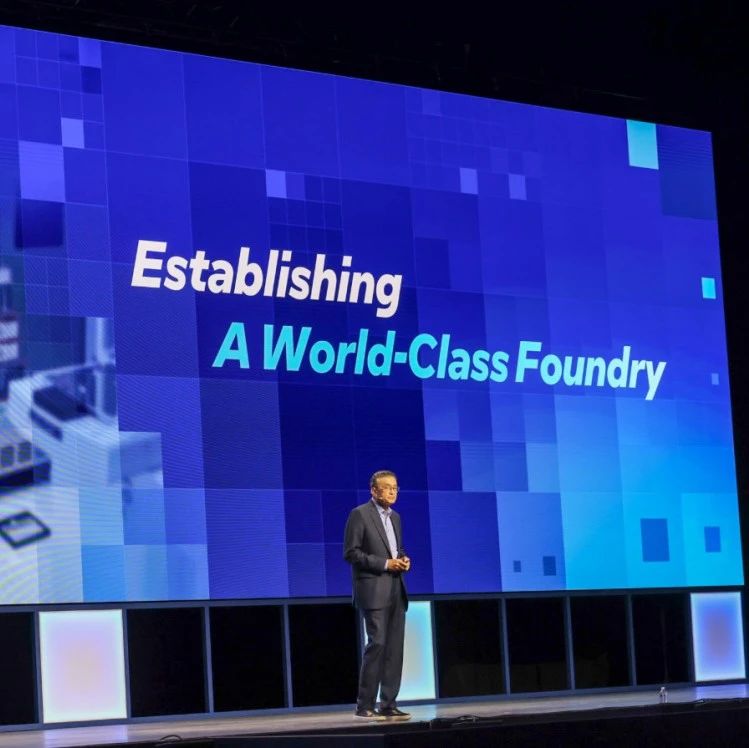
回应一切!英特尔首位华人CEO发表演讲!
证券时报· 2025-04-01 08:57
Core Viewpoint - The article discusses the strategic vision of Intel's new CEO, Chen Liwu, focusing on revitalizing the company's technology and manufacturing leadership, emphasizing innovation, talent retention, and adapting to market demands [2][5][6]. Group 1: Leadership and Vision - Chen Liwu expressed his commitment to helping Intel overcome its challenges, emphasizing the need for a cultural shift towards innovation and a startup-like environment [5][6]. - He aims to prioritize engineering excellence and customer satisfaction, stating that he will remain as long as the company needs him to ensure product delivery [6]. Group 2: Core Business Strategy - Chen outlined four key areas for Intel's core business planning, including advancements in wafer foundry services, with the Intel 18A process node on track for mass production later this year [7]. - The company is focusing on collaboration with the U.S. government to strengthen its technological and manufacturing leadership [7][8]. Group 3: Talent Management - Retaining top engineering talent is a priority for Chen, who noted that Intel has lost valuable personnel in recent years, impacting innovation and growth [10]. - He emphasized the need for Intel to become an engineer-centric company to create the best products and become a leading foundry [10]. Group 4: Investment and Innovation - Chen highlighted his experience in venture capital, noting that he has made 251 semiconductor-related investments, with 43 companies going public and 25 being acquired [12]. - His previous role as CEO of Cadence Design prepared him to foster a culture of innovation and collaboration with clients, significantly increasing the company's market value [12][13]. Group 5: Focus on AI and Future Technologies - Chen underscored the transformative impact of AI on the industry, stating that it drives rapid technological adoption and innovation [14]. - He is particularly interested in advancements in AI, quantum computing, and humanoid robotics, which he believes will create significant opportunities for Intel [14][15]. - The company plans to launch the Intel 18A product later this year, focusing on AI investments and enhancing data center products and services [15].