Bei Jing Ri Bao Ke Hu Duan

Search documents
外交部:反华势力炮制新疆强迫劳动谎言
Bei Jing Ri Bao Ke Hu Duan· 2025-11-14 09:09
【外交部:#反华势力炮制新疆强迫劳动谎言#】#外交部回应美方机构抹黑中国#11月14日,外交部发言 人林剑主持例行记者会。彭博社记者提问,摩根士丹利正面临美国众议院中国特设委的调查,调查该银 行在承销紫金黄金国际公司公开募股时是否进行了尽职调查,争议在于这笔交易可能帮助了中国企业紫 金矿业。而紫金矿业因涉嫌在新疆使用"强迫劳工"而被美国列入黑名单。外交部对该调查有何评 论?"我不了解你提到的商业行为。"林剑对此表示,所谓新疆存在"强迫劳动",完全是反华势力炮制的 谎言。我想说的是,一个惯于无中生有、抹黑中国的美方机构,反复翻炒一个早已被事实揭穿的虚假叙 事,无理打压中国企业,只会让世人进一步看清这个机构毫无信誉、大搞政治操弄的本质,最终伤及美 方自身的利益和信誉。(@北京日报 记者 刘晓琰 视频来源:环球时报) ...

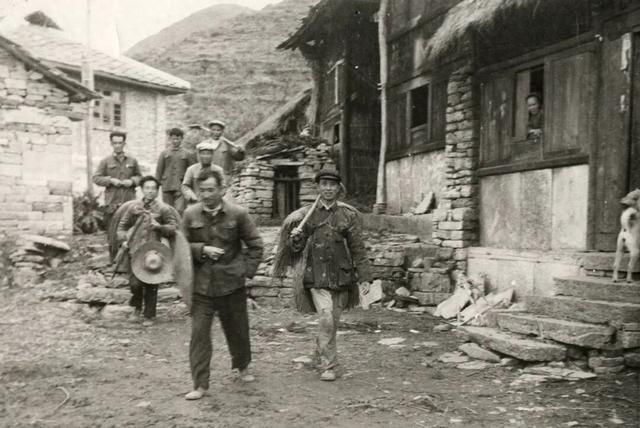
中国航发黎阳动力首任厂长王新民同志逝世,享年100岁
Bei Jing Ri Bao Ke Hu Duan· 2025-11-14 08:23
Core Viewpoint - The article commemorates Wang Xinmin, the first director of China Aviation Engine Corporation (AVIC) Li Yang Power, highlighting his significant contributions to the development of aviation engines in China and his dedication to the industry throughout his life [1][2][3]. Group 1: Early Life and Career - Wang Xinmin was born in 1925 in Suzhou, Jiangsu, and actively participated in anti-Japanese movements during his youth, later joining the Communist Party in 1945 [1][2]. - In 1954, he responded to the call for building the aviation industry in China and moved to Shenyang to contribute to the nascent aviation engine sector [2][3]. Group 2: Contributions to Aviation Engine Development - In 1966, Wang was appointed to establish the Li Yang Engine Factory in Guizhou, where he led the construction and production efforts under challenging conditions [2][4]. - He emphasized the importance of core technology and innovation, advocating for practical improvements based on frontline production experiences [5][6]. - Wang played a crucial role in the development of the WP-13 engine, which was successfully integrated into the J-7E fighter aircraft, marking a significant achievement for the factory [6][8]. Group 3: Legacy and Impact - Under Wang's leadership, the Li Yang factory became a key player in China's aviation engine production, establishing a comprehensive design, manufacturing, and quality management system over 60 years [8][9]. - Wang's commitment to the workforce included personal sacrifices, such as providing support to employees and their families during difficult times [9][10]. - His vision for the future of the aviation industry in China was encapsulated in his encouragement for the next generation to continue striving for excellence and contributing to national defense and economic development [13][14].

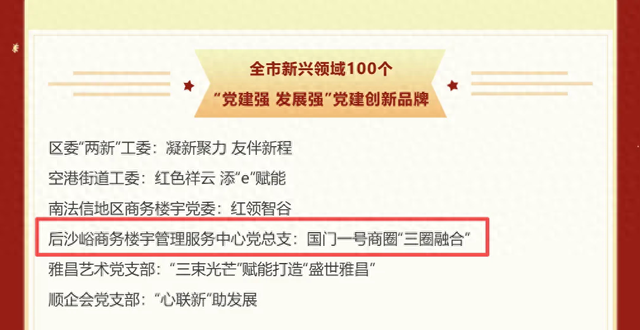
顺义区后沙峪国门一号商圈党建联盟获评市级荣誉
Bei Jing Ri Bao Ke Hu Duan· 2025-11-14 08:18
Core Viewpoint - The article highlights the recognition of six党建品牌 (Party Building Brands) in the Shunyi District, which were awarded as part of the city's initiative to promote innovative党建 (Party Building) practices in emerging fields, particularly focusing on the国门一号商圈 (Guomen No. 1 Business Circle) and its "three-circle integration" model [1][5]. Group 1: Party Building Initiatives - The Guomen No. 1 Business Circle faces challenges due to its diverse and rapidly changing business environment, necessitating innovative党建 efforts [5]. - The Shunyi District has established a "full-domain" Party Building Alliance system that integrates local, industry, and enterprise Party organizations to enhance governance and service quality in the商圈 (business circle) [5]. - The "Party Circle" focuses on enhancing organizational functions, creating a dual-layered "1+N" organizational system to ensure comprehensive coverage and service linkage among business entities [5]. Group 2: Community Engagement and Activities - The "Position Circle" aims to activate党建 vitality by creating physical党建 venues in key areas of the商圈, facilitating various community activities such as theoretical learning and cultural experiences [7][8]. - The "Service Circle" is designed to meet diverse needs, focusing on market entities and new employment groups, enhancing the business environment, and making党建 initiatives tangible and impactful [10]. - The district has organized various community events, including the "Guomen No. 1 Weekend Music Festival" and the "Guomen No. 1 Cup" table tennis event, to foster community engagement and vitality [21][23][25]. Group 3: Economic Development and Recognition - The Shunyi District emphasizes the role of enterprises as vital to economic development and has initiated the "Five Good" business recognition program to promote integrity and quality among local businesses [11]. - The district has hosted the "Party Building Alliance Cup" team-building events to facilitate communication and collaboration between government and businesses [11]. - The recognition of the Guomen No. 1 Business Circle's党建联盟 (Party Building Alliance) model is seen as a validation of its effectiveness, with plans to continue leveraging党建 to drive high-quality economic development in the region [37].
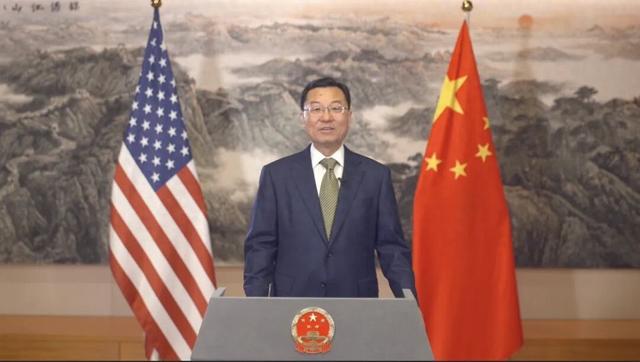
谢锋大使向中美工商界宣介两国元首釜山会晤和中共二十届四中全会两大利好
Bei Jing Ri Bao Ke Hu Duan· 2025-11-14 07:29
转自:北京日报客户端 2025年11月13日,中国驻美国大使谢锋应邀以视频方式在美国中国总商会芝加哥分会第九届年会上发表 主旨演讲。 谢锋鼓励两国工商界抓住机遇,发挥更大作用。一是保持定力,增强经贸合作信心。从具体领域、具体 项目入手,持续拉长中美合作清单,给两国关系发展提供源源不断的正能量。二是注入动力,强化务实 互利纽带。欢迎美企在"十五五"优先发展领域加大投资,美方也应为中国企业到美投资提供开放、公 平、非歧视的营商环境。三是增添活力,密切地方友好交往。积极支持两国友好省州、友好城市对接, 支持双方学校、智库、机构、商协会往来交流,让民心相通的涓涓细流汇聚成两国关系发展的磅礴之 力。期待工商界为中美关系巨轮平稳前行鼓与呼、起而行。 中美商界领袖、企业代表、专家学者以及美联邦议员、州市长、前政要等约800人参会。 国驻美国大使馆 来源:中 谢锋结合年会主题"赋能、突破、共赢——携手共创未来",分享前行道路上两项重大利好。一是习近平 主席同特朗普总统在釜山成功会晤,再次在关键时刻为中美关系巨轮校准航向。当务之急,双方要遵循 相互尊重、和平共处、合作共赢三原则,不折不扣把元首会晤重要共识转化为具体政策和实际行 ...
中国共产党领导的平郊抗日根据地斗争
Bei Jing Ri Bao Ke Hu Duan· 2025-11-14 07:18
Core Viewpoint - The article discusses the strategic shift of the Chinese Communist Party (CCP) from urban to rural areas in response to the Japanese invasion, emphasizing the establishment of anti-Japanese bases and guerrilla warfare as crucial to the resistance efforts in the Beijing area [1][2][5]. Group 1: Strategic Tasks and Developments - Following the Lugou Bridge Incident, the CCP focused on consolidating its efforts in rural areas, particularly in the Pingxi, Jidong, and Pingbei regions, to create a unified anti-Japanese front [1][2]. - The establishment of the Eighth Route Army's Jirecha Advance Army marked a significant step in organizing local party structures and guerrilla forces to combat Japanese and puppet regimes [2][5]. - The "three-in-one" strategic task was defined to guide the anti-Japanese struggle, ensuring a clear direction for the creation of resistance bases [5][6]. Group 2: Characteristics of the Anti-Japanese Base - The anti-Japanese bases in the Pingjiu area were characterized by a dual power structure, where local governments were established alongside underground party organizations to maintain resistance against the enemy [7]. - The bases emphasized the importance of local armed forces, organizing guerrilla units and militia to conduct various forms of warfare, including landmine and tunnel warfare [8]. - The establishment of a broad anti-Japanese national united front was crucial, as it involved building democratic governments that included non-party members and mobilized resources for the war effort [9]. Group 3: Impact on the Resistance Efforts - The creation of the Pingxi, Pingbei, and Jidong anti-Japanese bases effectively surrounded the Japanese-controlled Beijing, contributing significantly to the overall resistance strategy [6][9]. - The CCP's leadership in these areas facilitated coordination among various resistance forces, enhancing the effectiveness of guerrilla warfare against the occupying forces [7][9].
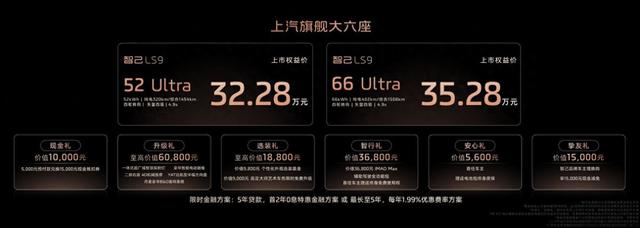
30万元级大六座SUV,智己LS9正式上市
Bei Jing Ri Bao Ke Hu Duan· 2025-11-14 06:59
Core Points - SAIC Group's high-end electric brand, IM Motors, has officially launched its flagship six-seat SUV, the IM LS9, with pricing starting at 322,800 yuan for the 52 Ultra version and 352,800 yuan for the 66 Ultra version equipped with a 66 kWh battery [1] Group 1: Product Features - The IM LS9 features the Lingxi Digital Chassis 3.0 and a bi-directional 24-degree smart four-wheel steering system, achieving a turning radius of 4.95 meters, comparable to that of compact cars [3] - The vehicle is equipped with an 800V architecture and a dual-motor vector all-wheel drive system, enabling a 0-100 km/h acceleration in the 4-second range, with a CLTC pure electric range of 402 kilometers and a comprehensive range of 1,508 kilometers, while maintaining a low energy consumption of 2.81 liters per 100 kilometers [3] Group 2: Intelligent Technology - The IM LS9 is equipped with 520-line ultra-vision lidar and NVIDIA Thor chips, supporting L3-level perception capabilities for L2-level assisted driving, capable of recognizing traffic gesture commands, and includes advanced safety features such as super-sensitive AEB and AES lateral emergency avoidance [5] - The vehicle introduces an AI Agent service assistant for various scenarios, including parking payment and food ordering, along with features like "Rainy Night Mode 2.0" and a one-button privacy function to enhance safety and privacy [5] Group 3: Interior Comfort - The IM LS9 boasts an 86% high "usable area" design, featuring three zero-gravity seats that can switch between a boudoir chair and a super-sized bed mode [7] - It includes a Danish B&O sound system, 4D mechanical massage seats, and a smart heating system for exceptional audio-visual and comfort experiences, complemented by a fresh air system and outdoor luxury package to enhance outdoor living comfort [7]

副中心绿色发展引燃京港洽谈会
Bei Jing Ri Bao Ke Hu Duan· 2025-11-14 06:57
转自:北京日报客户端 11月12日至13日,第二十八届北京·香港经济合作研讨洽谈会在香港会议展览中心举办。作为本届洽谈 会的重要组成部分,城市副中心专场推介会以"创新发展,绿色协同,携手共建国家绿色发展示范区"为 主题,通过项目签约、合作仪式、系列主题推介等环节,推动了北京城市副中心与香港企业的深度合 作。 通州区委常委、常务副区长李先侠致欢迎辞,北京市投资促进服务中心主任杨蓓蓓,香港贸易发展局首 席代表陈嘉贤等分别致辞。通州区委常委、常务副区长李先侠表示,香港是享誉全球的国际金融中心、 贸易枢纽与创新高地,在绿色金融、智慧城市、专业服务、跨境合作等领域积淀深厚、资源雄厚,与副 中心的产业方向、发展愿景高度契合。近年来,两地合作日益紧密、成果丰硕,以金融合作为先导,以 科技与产业协作为重点,持续拓宽合作领域、提升合作能级,为副中心高质量发展注入了强劲的动力。 在北京城市副中心国际招商联络站(香港站)揭牌仪式上,通州区委常委、常务副区长李先侠与首钢控 股(香港)有限公司总经理陈益共同为新站揭牌,京港创新中心成为副中心又一个国际招商联络站,该 中心是首钢控股(香港)有限公司设立的,旨在促进北京和香港两地在科技创新 ...
一窗京秋入画来!首都宾馆的银杏美景太好拍了
Bei Jing Ri Bao Ke Hu Duan· 2025-11-14 06:50
S 25 47 000 F (20 日 8 it 47 D Flass llat HC SS er 10 29 Blo ge ti 889 a the 2139 11 202 p 89.50 e C 2 12 USA sy @ HST 100 r # Se A 2 转自:北京日报客户端 百年银杏一窗京秋。 今日午后,风和日丽,天空湛蓝,首都宾馆玻璃窗的银杏景观引游人打卡。时光荏苒,古树风貌犹存, 与游人邂逅别样浪漫! 来源:北 京日报客户端 作者: 温红征 ...

荷兰宣布:派人来华磋商
Bei Jing Ri Bao Ke Hu Duan· 2025-11-14 04:01
Core Points - The Dutch government is sending a delegation to China to address issues related to the semiconductor company Nexperia, which is owned by the Chinese firm Wingtech Technology [1][3] - The Dutch Minister of Economic Affairs, Karremans, emphasized the need for a mutually acceptable solution to the concerns raised about Nexperia [1][3] Summary by Sections - **Background of the Issue** - On October 12, the Dutch government intervened in Nexperia's operations, citing risks to economic security in the Netherlands and Europe [3] - Wingtech Technology announced on October 13 that it would pursue legal and diplomatic avenues to challenge the Dutch government's directive, claiming systemic discrimination against Chinese companies [3] - **Responses from China** - The Chinese Ministry of Commerce and the Ministry of Foreign Affairs have responded multiple times, opposing the broad interpretation of national security and discriminatory practices against specific national enterprises [3][4] - On October 21, a phone call took place between Chinese Commerce Minister Wang Wentao and Dutch Minister Karremans, where the Dutch side expressed a commitment to maintaining trade relations with China [3] - **Ongoing Negotiations** - The Chinese side has called for the Dutch government to move beyond verbal commitments and to propose substantive solutions to restore stability in the global semiconductor supply chain [4] - The Chinese Ministry of Commerce reiterated its willingness to engage in discussions with the Dutch delegation to find constructive solutions to the Nexperia issue [4]


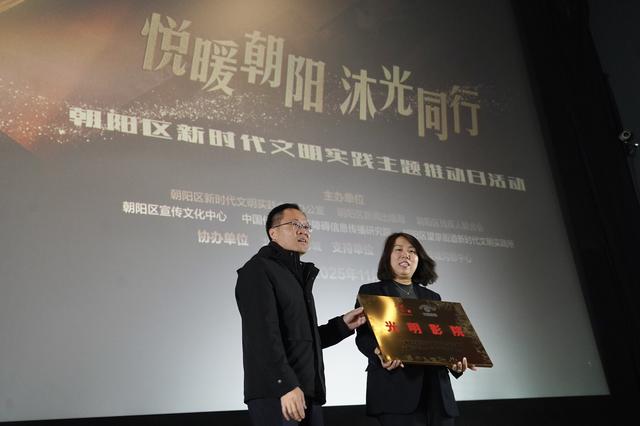
北京首家新时代文明实践“光明影院”落户朝阳
Bei Jing Ri Bao Ke Hu Duan· 2025-11-14 03:09
Core Points - The event "Warmth in Chaoyang, Light Together" was held in Beijing, marking the establishment of the first "Bright Cinema" in the city, aimed at providing accessible movie experiences for visually impaired individuals [1][3] - The "Bright Cinema" initiative includes audio descriptions inserted between dialogues to help visually impaired audiences understand film content, with over 700 accessible films produced so far [3] - The cinema will focus on enhancing accessibility through hardware improvements, employee training, and addressing the needs of special groups, as stated by the regional manager of Wanda Cinemas [3] - The event featured a screening of the accessible film "Chinese Ping Pong: The Resurgence," which tells a story of resilience, allowing visually impaired attendees to engage with the narrative through professional narration [3] - A volunteer service market was organized, offering various services such as blind running volunteer recruitment, African drum experiences, hearing tests, and health consultations, enhancing community support for visually impaired individuals [3][5] - A "volunteer escort" service was arranged to ensure safe transportation for visually impaired participants, providing point-to-point pick-up and guidance [5]