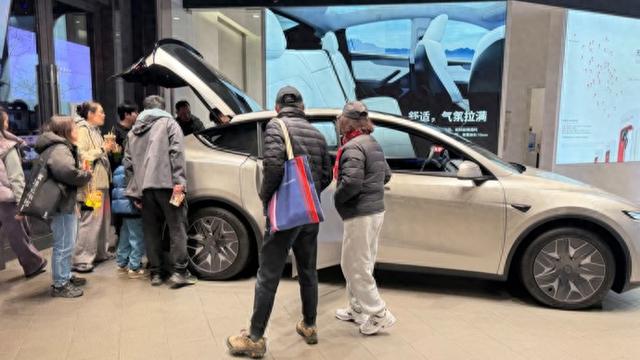
智己LS9

Search documents
上汽集团:整体销量逆市增长,自主品牌及出口表现较好-20260307
Orient Securities· 2026-03-07 13:25
Investment Rating - The report maintains a "Buy" rating for the company with a target price of 17.1 CNY [3][6] Core Views - The company is expected to see EPS of 0.91, 1.14, and 1.28 CNY for the years 2025-2027, with slight adjustments made to gross margin and expense ratios [3] - The company has shown resilience with overall sales growth of 6.8% year-on-year in the first two months, outperforming the industry average [9] - The company is focusing on expanding its presence in overseas markets, with significant growth in export sales, particularly in Europe [9] Financial Information Summary - Revenue for 2023 is projected at 726,199 million CNY, with a slight growth of 0.7% year-on-year, followed by a decline of 15.4% in 2024 [5] - Operating profit is expected to drop significantly to 10,376 million CNY in 2024, before rebounding to 17,234 million CNY in 2025, reflecting a growth of 66.1% [5] - Net profit attributable to the parent company is forecasted to be 14,106 million CNY in 2023, with a substantial recovery to 10,492 million CNY in 2025, marking a growth of 529.6% [5] - The gross margin is expected to improve from 9.5% in 2023 to 11.4% by 2027 [5] - The company’s PE ratio is projected to be 15.5 for 2025, decreasing to 11.1 by 2027 [5][10]

上汽集团(600104):整体销量逆市增长,自主品牌及出口表现较好
Orient Securities· 2026-03-07 12:39
Investment Rating - The report maintains a "Buy" rating for the company with a target price of 17.1 CNY, based on an average PE valuation of 15 times for comparable companies in 2026 [3][6]. Core Insights - The company has shown resilience with overall sales growth of 6.8% year-on-year in the first two months, outperforming the industry average during a period of consumer hesitation [9]. - The company is expected to benefit from new vehicle launches, which are anticipated to drive sales and market share for its self-owned brands [9]. - The export performance has been strong, with significant year-on-year growth in overseas sales, indicating that international markets will be a key growth driver moving forward [9]. Financial Forecasts - The earnings per share (EPS) are projected to be 0.91 CNY, 1.14 CNY, and 1.28 CNY for the years 2025, 2026, and 2027 respectively, with slight adjustments made to gross margin and expense ratios [3]. - Revenue is forecasted to reach 726.199 billion CNY in 2023, with a decline to 614.074 billion CNY in 2024, followed by a gradual recovery to 742.172 billion CNY by 2027 [5][12]. - The net profit attributable to the parent company is expected to rebound significantly from 1.666 billion CNY in 2024 to 14.698 billion CNY in 2027, reflecting a growth rate of 529.6% in 2025 [5][12]. Key Financial Metrics - The company’s gross margin is projected to improve from 9.5% in 2023 to 11.4% by 2027, while the net profit margin is expected to increase from 1.9% to 2.0% over the same period [5][12]. - The return on equity (ROE) is anticipated to rise from 5.0% in 2023 to 4.6% in 2027, indicating a gradual recovery in profitability [5][12]. - The price-to-earnings (PE) ratio is forecasted to decrease from 11.5 in 2023 to 11.1 in 2027, suggesting a more favorable valuation over time [5][12].
技术平权,用户为王:上汽的“开门红”不只是一场销量胜利
Xin Lang Cai Jing· 2026-02-28 02:33
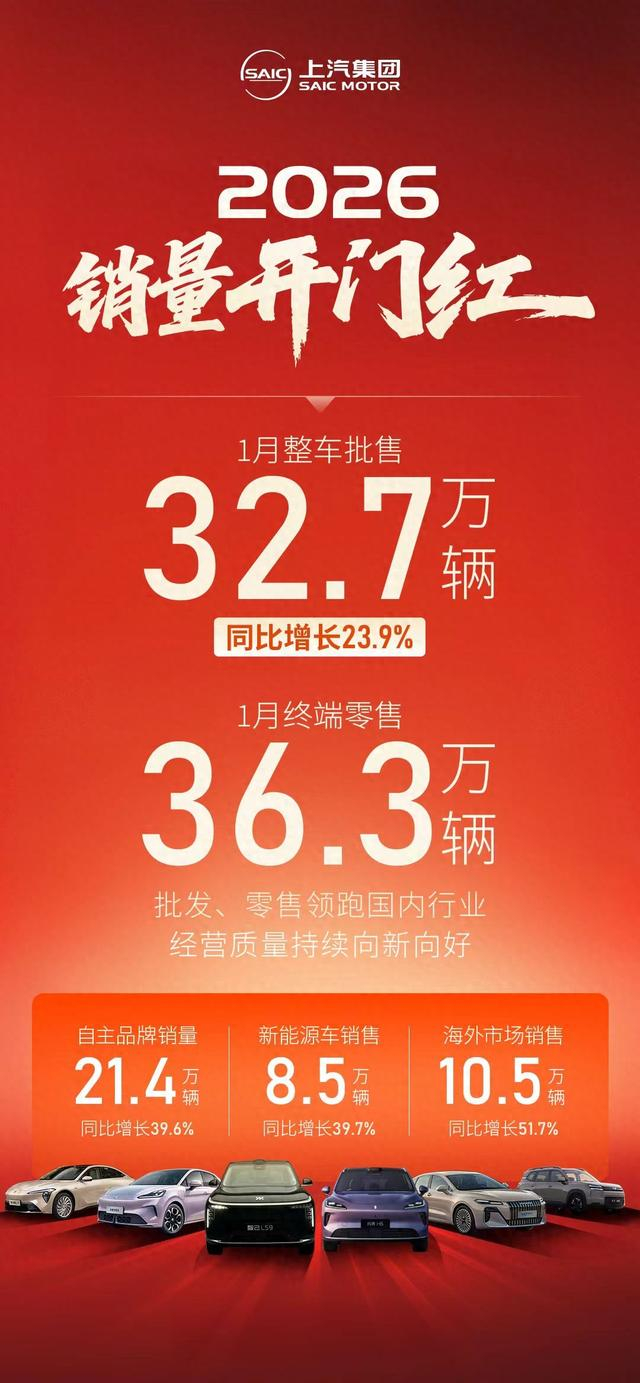
Core Insights - In January 2026, SAIC Motor Corporation achieved significant sales growth, with wholesale sales reaching 327,000 units, a year-on-year increase of 23.9%, and retail sales of 363,000 units [1] - The growth is attributed not only to scale but also to the implementation of "technology equality" and a "user-centric" approach, allowing the company to differentiate itself in a competitive market [1][5] - The company's self-owned brands played a crucial role, with sales of 214,000 units in January, up 39.6%, accounting for 65.3% of total sales, an increase of 7.3 percentage points year-on-year [1][6] Sales Performance - In the new energy vehicle segment, SAIC Motor's sales reached 85,000 units in January, marking a nearly 40% year-on-year increase, positioning the company among the industry leaders [1] - The MG4 model, featuring semi-solid-state batteries and integrated battery body technology, has become a standout product, achieving over 75,000 pre-orders and monthly sales exceeding 10,000 units [7][9] Overseas Strategy - Under the guidance of its Overseas Strategy 3.0, SAIC Motor's overseas sales reached 105,000 units in January, a 51.7% increase year-on-year, with MG delivering nearly 26,000 units in Europe, up approximately 15% [2] Reform and Innovation - The company initiated comprehensive reforms in the second half of last year, enhancing product definition, R&D, production, and marketing, which have begun to translate into improved sales and profitability [5] - SAIC Motor has invested over 150 billion yuan in electric and intelligent technologies, resulting in nearly 26,000 effective patents across various platforms [13][15] User-Centric Approach - The company has established a unified value expression of "understanding cars and understanding you," focusing on reshaping product and service logic to meet diverse user needs [12] - In early 2026, SAIC launched a series of promotional activities to enhance user experience and satisfaction, reinforcing its commitment to a user-centric philosophy [12] Future Product Launches - In 2026, SAIC plans to introduce a range of new products, including the A+ class sedan i6 and the LS9 Hyper version, which will feature advanced technologies such as line control steering [16][18] - The company aims to solidify its position in the high-end electric vehicle market with innovative models that leverage its technological advancements [18] Conclusion - The strong sales performance in January 2026 reflects the successful implementation of SAIC's reform and innovation strategies, marking a significant step towards establishing a new development paradigm focused on user needs and technological capabilities [19][21] - The company's ability to convert technological investments into user value will be crucial for maintaining its competitive edge in the evolving automotive landscape [21]

政策金融双轮驱动新春车市回暖 超20家车企力推超长低息贷
Zhong Guo Zheng Quan Bao· 2026-02-26 23:50
Group 1 - The domestic automotive market is experiencing a consumption boom driven by both policy and financial incentives, with various promotional activities and discounts from car manufacturers [1][4] - There is a notable increase in foot traffic at dealerships for both new energy and luxury fuel brands, with significant discounts being offered by brands like BMW and Mercedes-Benz [1][3] - Financial policies are becoming the mainstream promotional strategy, with over 20 car manufacturers offering long-term low-interest loans, indicating a shift from direct price reductions to financing options [1][4] Group 2 - The consumer purchasing behavior is shifting from basic needs to a focus on quality and personalization, as seen in the sales performance of different brands [2][3] - The implementation of the new vehicle trade-in policy has led to a significant increase in new car sales, with over 60,700 vehicles traded in by mid-February, generating sales worth 995.6 billion [5] - Industry experts suggest that the automotive market is entering a high-end consumption phase, emphasizing the need for manufacturers to enhance product value rather than relying solely on price reductions [6]
超20家车企力推超长低息贷 政策金融双轮驱动 新春车市回暖
Zhong Guo Zheng Quan Bao· 2026-02-26 21:40
Core Insights - The domestic automotive market is experiencing a consumption boom driven by both policy and financial incentives, with significant consumer interest in both new energy and luxury fuel vehicles [1][4] - Financial policies are becoming the mainstream promotional strategy for automakers, with over 20 companies offering long-term low-interest loans as a key selling point [4][5] - There is a noticeable shift in consumer purchasing behavior from basic needs to a focus on quality and personalization, indicating a trend towards consumption upgrading [1][5] Group 1: Market Dynamics - The automotive market is seeing increased foot traffic in showrooms, particularly for brands like BMW, Mercedes-Benz, and various new energy brands, driven by attractive financial offers [1][2] - Promotional activities such as the "Lego New Spring" event are enhancing market engagement, providing consumers with various incentives and subsidies [3][5] - Consumer sentiment is divided, with some buyers eager to take advantage of multiple subsidies while others remain cautious, reflecting concerns over price trends and policy sustainability [3][6] Group 2: Financial Strategies - The shift from direct price cuts to financial incentives is evident, with automakers offering extended low-interest loans and combining these with government subsidies to lower purchase costs [4][5] - Specific financial offers include 7-year loans with zero down payments and low-interest rates, which are becoming a standard promotional tool across the industry [4][5] - The implementation of the new vehicle trade-in policy has already led to significant sales figures, with over 60,700 vehicles traded in, generating sales worth approximately 995.6 billion yuan [5][6] Group 3: Future Outlook - Experts predict a potential decline in sales post-holiday due to cautious consumer attitudes and limited effective sales days in February, which may alleviate inventory pressures [6] - The automotive industry is entering a high-end consumption phase, where mere price reductions are insufficient, necessitating a focus on technology and product experience to meet evolving consumer demands [6]
政策金融双轮驱动 新春车市回暖
Zhong Guo Zheng Quan Bao· 2026-02-26 20:28
Core Viewpoint - The domestic automotive market is experiencing a consumption boom driven by both policy and financial incentives, with a notable shift towards financing options over direct price reductions [1][3][5]. Group 1: Market Trends - The automotive market is seeing a strong influx of customers, particularly for new energy and luxury fuel brands, with significant foot traffic reported at stores for brands like BMW, Mercedes-Benz, and others [1][2]. - There is a noticeable shift in consumer purchasing behavior from basic needs to a focus on quality and personalization, as evidenced by the diverse customer profiles visiting dealerships [2][3]. - The "Lego New Spring" promotional events across various regions are contributing to increased consumer engagement and sales activity in the automotive sector [3][5]. Group 2: Financial Policies - Over 20 automotive brands have introduced long-term low-interest financing options, with some offering up to 7 years of financing at low or zero interest rates, reflecting a strategic shift in promotional tactics [4][5]. - Major brands like Tesla and BYD are leading the way with attractive financing plans, which are becoming the primary method of promotion rather than direct price cuts [4][5]. - The combination of national and local subsidies, including the new vehicle replacement policy, is further reducing the cost of purchasing vehicles, enhancing consumer incentives [5][6]. Group 3: Consumer Sentiment - Consumer sentiment is divided, with some buyers eager to take advantage of multiple subsidies while others remain cautious, reflecting concerns over price trends and policy sustainability [3][6]. - The market is expected to face challenges post-holiday, with a potential decline in sales due to cautious consumer attitudes and high inventory levels [6]. Group 4: Industry Outlook - The automotive industry is entering a high-end consumption phase, where simple price reductions are no longer effective, necessitating a focus on technology and product experience to meet evolving consumer demands [6]. - Experts predict that the market will see a temporary adjustment period for new energy vehicles after the holiday season, as promotional activities may slow down [1][6].



【消费金融】春节车市流行“全家看车”,多重金融政策激活家庭选车热情
Xin Lang Cai Jing· 2026-02-24 11:05
Core Insights - The increasing integration of electric vehicles (EVs) into daily life is evident as families are now incorporating car shopping into their holiday routines, reflecting a cultural shift towards EV adoption [1][6] Group 1: Consumer Behavior - Families are prioritizing safety, battery range, and charging convenience over flashy features when selecting vehicles, indicating a more rational approach to purchasing EVs [4][10] - The decision-making process for families has become more comprehensive, with longer decision chains and a focus on practical needs for family travel [9][10] Group 2: Market Dynamics - Tesla has implemented a "春节不打烊" (Spring Festival not closed) sales strategy, ensuring high staff availability and service support during the holiday, which has resulted in a steady flow of orders despite the season not being traditionally busy [2][7] - The introduction of attractive financing options, such as "7-year low interest" and "5-year zero interest" plans, has been pivotal in driving consumer interest and sales, particularly among high-end vehicle owners looking to switch to EVs [2][8] Group 3: Industry Trends - Multiple automakers, including NIO, Li Auto, and Xpeng, are adopting similar low-interest financing strategies to enhance competitiveness in the EV market during the New Year period [3][8] - The shift towards online sales and immersive shopping experiences, such as live-streaming events, is being leveraged by car manufacturers to engage consumers during the holiday season [9]
智己汽车推7年0首付购车政策,低门槛解锁高端智电出行
Zhong Guo Ji Jin Bao· 2026-02-24 07:18
Group 1 - The core viewpoint of the articles highlights the launch of a new financial policy by Zhiji Auto, offering a 7-year no down payment and 3-year interest-free plan for popular models, along with a maximum brand trade-in subsidy of 5000 yuan, aimed at making car purchases more affordable for consumers [2] - Zhiji Auto, as a high-end intelligent electric brand under SAIC Group, achieved a historical sales high of 81,017 units in 2025, with sales exceeding 10,000 units for four consecutive months, and recorded monthly profitability in December [2] - The new generation Zhiji LS6 is positioned as a key sales pillar, ranking among the top three in the mid-to-large SUV segment, supported by technological advantages in super range extension, digital chassis, and advanced intelligent driving [2] Group 2 - The long-term zero-threshold financial policy covers multiple key models and includes additional benefits such as a maximum cash red envelope of 23,000 yuan and a maximum government trade-in subsidy of 20,000 yuan, aimed at lowering the entry barrier for consumers to high-end intelligent electric vehicles [3] - The new generation Zhiji LS6 features a stellar super range extension system with a range of over 1500 km, an 800V supercharging platform that allows for quick charging in low-temperature environments, and a fuel consumption of only 3.9 liters per 100 km [2] - The LS6 model is equipped with a digital chassis and intelligent four-wheel steering, offering a spacious interior with a 90% room utilization rate, zero-gravity seats, and a built-in refrigerator, along with comprehensive intelligent driving capabilities to meet diverse family travel needs [2]
春节申城车市流行“全家看车”
Xin Lang Cai Jing· 2026-02-22 06:37
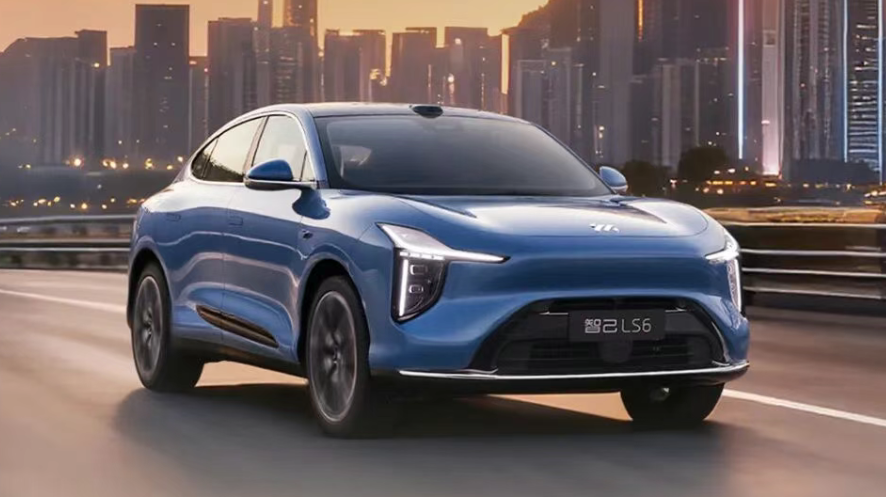
Group 1 - The core viewpoint of the articles highlights the increasing integration of electric vehicles (EVs) into daily life, with families actively engaging in car shopping during the Chinese New Year holiday [2][3] - Tesla has implemented a "Spring Festival non-stop" sales strategy, ensuring that at least 70% of staff are present in stores daily, with a significant portion of customers opting for trade-ins and new purchases [3][4] - The introduction of low-interest financing options, such as a 7-year low-interest plan, has become a key driver for consumer purchases, attracting a diverse range of customers including those looking to trade in luxury vehicles [3][4] Group 2 - Various automakers, including NIO, Li Auto, and Xpeng, have adopted similar low-interest financing strategies, indicating a competitive shift in the EV market during the holiday season [4] - The focus of car manufacturers has shifted from merely closing sales to creating immersive online shopping experiences, catering to families during the holiday period [5] - Consumer preferences are evolving, with a greater emphasis on safety and reliability over flashy features, marking a transition to a more rational approach in EV purchasing decisions [6]

春节车市流行 “全家看车”,多重金融政策激活家庭选车热情
Xin Lang Cai Jing· 2026-02-22 03:30
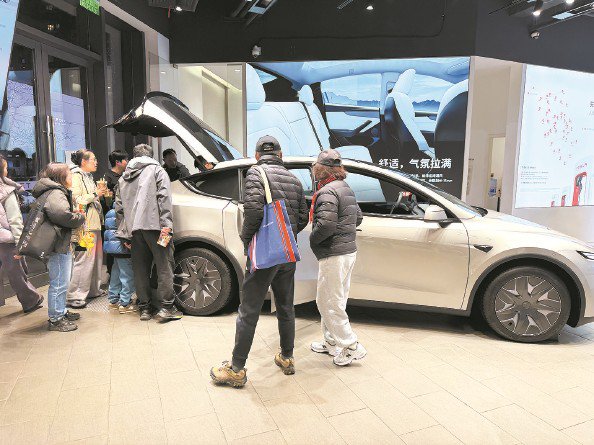
Core Insights - The article highlights the increasing trend of families visiting car dealerships during the Chinese New Year, indicating a shift in consumer behavior towards integrating electric vehicles into daily life [4] Group 1: Consumer Behavior - Families are increasingly using the holiday season to explore car options, with discussions focusing on safety, features, and convenience [4] - The decision-making process for families has become more comprehensive, with a longer decision chain and a focus on practical needs rather than flashy features [7] Group 2: Financial Policies - Tesla has implemented a "春节不打烊" (Spring Festival no closure) sales strategy, ensuring that at least 70% of staff are present in stores to meet customer needs [5] - New financial offerings, such as "7-year low-interest" and "5-year zero-interest" plans, have been introduced to stimulate consumer interest, with specific examples showing low down payments and monthly payments for popular models [5] - Other brands like NIO, Li Auto, and Xpeng are also adopting similar low-interest financing strategies to enhance competitiveness in the electric vehicle market [6] Group 3: Industry Trends - The focus of car manufacturers has shifted from merely pushing sales to creating immersive online shopping experiences, catering to family-oriented consumers during the holiday season [7] - There is a noticeable shift in consumer preferences towards reliable quality, real-world range, and practical features, indicating a more rational approach to purchasing electric vehicles [8]