
Zhong Guo Dian Li Bao

Search documents
浅析新型能源系统的系统解构与实践突破
Zhong Guo Dian Li Bao· 2025-05-13 02:14
Core Insights - China's energy system is undergoing the fastest transformation globally driven by "dual carbon" goals, involving not only technological innovation but also institutional restructuring and complex stakeholder negotiations [1] Group 1: Policy-Market-Technology Dynamics - The top-level design of China's energy transition shows a clear government-led characteristic, but the policy transmission often encounters multiple frictional resistances, resulting in a dynamic tension between institutional rigidity and market flexibility [2] - The conflict between national vision and local practice leads to path deviations, particularly in the renewable energy consumption area, where the "West-to-East Power Transmission" scheme faces challenges in mobilizing investment from resource-rich provinces [2] Group 2: Localization of the Triple Helix Theory - The classic triple helix theory, which views government, industry, and academia as the three pillars of innovation, faces adaptability challenges in the energy transition context, necessitating a new collaborative model that includes "unicorn" companies as key innovation players [3] - A new model should be constructed based on a dynamic balance mechanism, introducing bidirectional feedback and self-adaptive regulation, where policy innovation guides market direction, market signals optimize resource allocation, and technology enhances governance efficiency [3] Group 3: Governance Mechanism Reconstruction - Strategies for cultivating institutional resilience include establishing a flexible regulatory framework to achieve a dynamic balance between policy rigidity and flexibility, such as defining legal constraints for carbon neutrality while allowing trial-and-error space for emerging technologies [4] - To stimulate market vitality, innovative financial tools and trading models should be developed, including promoting green electricity trading and establishing a national unified green electricity certification platform to enhance market transparency [4] - The empowerment of technological momentum can be achieved through the application of digital twin technology to improve grid operation efficiency and deploying blockchain systems to ensure traceability in green certificate transactions [4]
电力可靠性管理40年 | 国网上海电力构建起“全景感知、全链管控、全局保障”可靠性管理体系
Zhong Guo Dian Li Bao· 2025-05-12 09:36
坚强的主网是电力可靠性的核心支柱,上海电力自20世纪80年代起,便精心谋划电力主网战略布局,历经多年不懈努力,取得了一系列令人瞩目的成就。 1990年,全国第一条±500千伏超高压直流输电线路在上海建成投运,这一标志性事件拉开了上海电力主网升级的序幕。2009年,超高压城市环网全面建 成,"双环九联络"的主网网架格局正式形成。与此同时,"五交四直"对外联络通道的建设确保了城市外部能源能够平稳输入。 ▲国网上海超高压公司1000千伏特高压交流练塘站开展4号主变年度检修工作。 上海电力将提升供电可靠性作为配电网发展的核心目标,从多个维度发力,精心打造"不停电"的配网。 ▲上海市区供电公司员工运用绝缘短杆桥接作业法开展不停电作业,全力保障上海配网网架高供电可靠性。 在网架结构优化上,上海电力根据城市配网特点,匠心独运地规划中压电缆网和10千伏架空网。中压电缆网以10千伏开关站为节点成环布局,中心城区 的"钻石型"双环网设计更是一大亮点,显著提升了负荷转供能力和故障自愈能力;10千伏架空网则采取多分段多联络的方式,配备故障指示器及配电自动 化装置,确保在发生故障时能够快速隔离故障、灵活转移负荷,实现快速复电,为超大城 ...




全国已有700座水电站大坝在国家能源局注册备案!
Zhong Guo Dian Li Bao· 2025-05-12 03:46
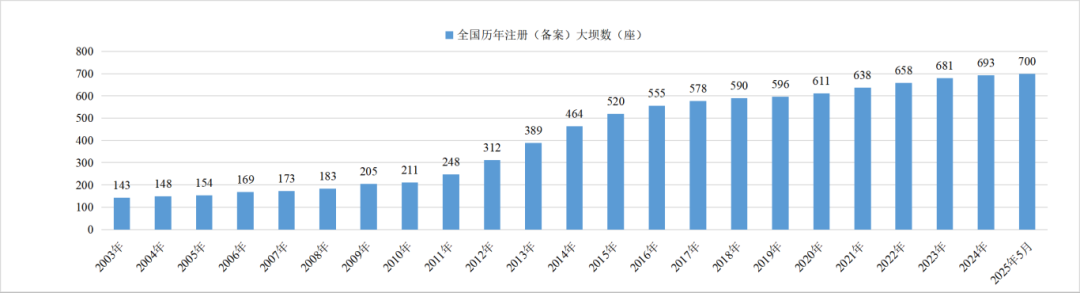
全国已有700座在国家能源局注册备案! 大坝数量和整体安全形势不断迈上新台阶 5月8日,随着金沙江上游巴塘水电站大坝完成备案,我国在国家能源局注册(含备案)的运行水电站大坝数量达到700座,总装机规模突破3.34亿千瓦, 总库容超5191亿立方米,分别占到全国水电总装机容量的76%,全国水库总库容的52%。 电力行业的水电站大坝多是高坝大库,是直接关系人民群众生命财产安全、能源安全、流域生态安全和经济社会发展大局的"国之重器"。近年来,面对全 球气候变化加剧、极端天气频发、地质灾害多发等新挑战,在国家能源局党组的坚强领导下,大坝中心与国家能源局各派出机构、地方能源主管部门、电 力企业齐抓共管,水电站大坝注册登记、定期检查、隐患治理、监测监控、应急管理、信息化建设、科技研发、法规与标准化建设等各项工作稳中有进。 抓实管理,大坝运维水平整体提升。近年来,国家能源局先后开展水电站和小散远发电企业安全风险隐患排查整治专项行动、水电站大坝安全提升专项行 动和能源电力领域安全生产治本攻坚三年行动,围绕规模小、分布散、地处偏远、基础薄弱的管理服务对象和输水发电系统、泄洪消能设施等小切口,提 供横向到边、纵向到底的下沉式、穿 ...
中国华能、中国华电、长江电力专家解读《电力辅助服务市场基本规则》
Zhong Guo Dian Li Bao· 2025-05-09 03:27
Core Viewpoint - The release of the "Basic Rules for the Electricity Auxiliary Service Market" marks a significant advancement in China's electricity auxiliary service market, transitioning from a planned compensation model to a market-driven approach, which is essential for supporting the new power system and energy transition [1][10][24]. Group 1: Importance of the Rules - The rules effectively ensure the safety and stability of the electricity system, promoting the development of the electricity auxiliary service market [3][4]. - They implement the requirements for a unified national electricity market system, providing guiding principles and frameworks for local auxiliary service market construction [3][4]. - The rules align with the development trends of the new power system, supporting the large-scale growth of renewable energy and ensuring its stable integration [4][10]. Group 2: Highlights of the Rules - The rules establish a legal and policy foundation for market system construction, clearly defining the concept and scope of electricity auxiliary services [6]. - They broaden the range of market participants, including new entities like energy storage companies and virtual power plants, while standardizing the entry and exit processes for market participants [6][29]. - The rules provide detailed guidance for local implementation, ensuring uniformity and completeness in market regulations [6][30]. Group 3: Market Mechanisms and Structures - The rules clarify the pricing principles for auxiliary services, establishing a fair and efficient cost-sharing mechanism based on the principle of "who benefits, who bears the cost" [7][20]. - They enhance the integration of the auxiliary service market with the energy market, ensuring smooth connections in registration, trading sequences, and clearing processes [8][20]. - The rules specify the measurement and settlement of auxiliary service costs, ensuring transparency and fairness in market operations [8][31]. Group 4: Risk Management and Regulatory Framework - The rules outline a comprehensive risk prevention mechanism for the auxiliary service market, addressing various risks such as supply-demand imbalances and market power monopolies [20][30]. - They emphasize the importance of precise monitoring and regulatory oversight throughout the market operation process to ensure fairness and transparency [31].

政策解读|“1+N”规则体系再添关键支撑
Zhong Guo Dian Li Bao· 2025-05-08 05:45
Core Viewpoint - The release of the "Basic Rules for the Electricity Auxiliary Service Market" marks a significant step towards optimizing resource allocation through market mechanisms, ensuring the safe and stable operation of the power system [1][2] Summary by Relevant Sections Importance of the Rules - The rules are crucial for ensuring the safety and stability of the power system and advancing the development of the electricity auxiliary service market [2] - Market-oriented reforms will enhance energy resource allocation and encourage participation from various stakeholders, including power generation and sales entities, thereby improving power supply security [2] - The rules align with the national unified electricity market system and summarize lessons learned from local auxiliary service market developments [2] Highlights of the Rules - The rules establish a legal and policy foundation for market system construction, defining the concept and scope of electricity auxiliary services [3] - They expand the range of market participants to include new entities such as energy storage companies and virtual power plants, while standardizing the entry and exit processes for market participants [3] - Detailed guidance is provided for local implementation, ensuring uniformity and completeness of market rules across regions [3] Compensation and Market Efficiency - The rules stipulate that auxiliary service prices are determined by market forces, establishing a fair cost-sharing mechanism based on the principle of "who benefits, who bears the cost" [4] - They facilitate the integration of the auxiliary service market with the energy market, ensuring orderly development and clear connections between different market segments [4] - The rules also define the settlement methods for auxiliary service costs, promoting transparency and fairness in market operations [4] Risk Management - The rules identify various risk types within the auxiliary service market and outline protocols for risk monitoring and emergency response [5] - In the event of market risks, power dispatch agencies are required to prioritize safety and document emergency measures taken [5]
四川宜宾虚拟电厂实现最大可调负荷14万千瓦
Zhong Guo Dian Li Bao· 2025-05-08 03:51
近日,四川省宜宾市标志性的大型商业综合体——财富广场(宜宾奕风景源商业管理有限公司)成功接 入宜宾市虚拟电厂统一建设平台。截至目前,宜宾虚拟电厂已接入169户运营商,涉及工业企业、商业 楼宇、充电站、光伏站、智能微电网等多种应用场景,实现最大可调负荷14万千瓦。 为构建虚拟电厂市场化运营体系,驱动能源行业数字化转型与智能化升级,北极星电力网将于2025年5 月22-23日在安徽合肥隆重举办"2025第三届虚拟电厂运营与未来发展研讨会"。本次研讨会共同就虚拟 电厂行业的发展现状进行深入探讨,分享成功案例经验,交流优秀技术方案。会议旨在为相关企业搭建 一个沟通交流、拓展商机的平台,共同推动虚拟电厂技术的创新发展,助力能效提升和碳减排,引领虚 拟电厂产业迈向更加繁荣的未来。 参会联系人:刘老师 13383650417(同微信) 2024年迎峰度夏期间,宜宾供电组织42户企业参与需求侧响应,最大响应负荷7.49万千瓦。今年迎峰度 夏期间,预计宜宾电网最高供电负荷将达505万千瓦,宜宾供电联合宜宾市虚拟电厂运营商,继续加大 聚合资源挖掘,扩大聚合规模和可调节能力,预计可形成全市最大用电负荷5%的柔性可调能力。 活动推荐 ...
政策解读|构建电力辅助服务市场六大支柱
Zhong Guo Dian Li Bao· 2025-05-08 03:47
Core Insights - The release of the "Basic Rules for the Power Auxiliary Service Market" signifies a shift from "planned compensation" to a "market-driven" approach in China's power auxiliary services, providing institutional support for the construction of a new power system [1][5] Group 1: Key Challenges Addressed - The power auxiliary service market aims to tackle three critical challenges in energy transition: the shortage of flexible resources, insufficient regulation capacity, and the dual randomness of the new power system [1] - The market is expected to enhance the flexibility of coal power plants, increasing their peak regulation capacity from an average of 40% to 60%, with some units reaching 70%-80% [1] - The market facilitates the efficient consumption of renewable energy, promoting an annual increase of 1.2 trillion kilowatt-hours in renewable energy generation, which corresponds to a reduction in the curtailment rate of wind and solar energy by 5.2 percentage points [1] Group 2: System Security Enhancement - A multi-variety collaborative approach is established to ensure grid stability, with the grid frequency compliance rate projected to reach 99.999% by 2024, and the unplanned outage rate expected to decrease by 45% [2] - The North China region successfully addressed a power shortfall of 3 million kilowatts caused by severe weather through the cross-province reserve market [2] Group 3: Mechanism Innovation - The "Basic Rules" outline six pillars for constructing a unified national power auxiliary service market, focusing on breaking down traditional market barriers and promoting clean energy transition [3] - Clear entry requirements for auxiliary service providers are established, ensuring they possess measurable and controllable capabilities [3] - The market construction mechanism is defined, with the power dispatching agency responsible for assessing market demand and developing technical specifications [3] Group 4: Market Structure and Risk Management - The auxiliary service market will include various service types such as peak regulation, frequency regulation, and reserve services, aimed at maintaining system stability [4] - A cost transmission mechanism is established based on the principle of "who benefits, who bears the cost," ensuring that auxiliary service costs are shared among users [4] - A comprehensive risk prevention system is created to address supply-demand imbalances, market monopolies, price volatility, technical failures, and cybersecurity risks [4] Group 5: Future Outlook - The auxiliary service market is positioned as the "value center" of the new power system, playing a crucial role in ensuring energy security, promoting green transition, and facilitating industrial upgrades [5] - Continuous improvement of market mechanisms and technological support is necessary to achieve safe, economical, and efficient operation of the power system under the dual carbon goals [5]
构建统一规范的电力辅助服务市场体系 保安全、促消纳、助转型
Zhong Guo Dian Li Bao· 2025-05-08 03:40
Core Viewpoint - The article discusses the "Basic Rules for the Electricity Auxiliary Service Market," which aims to establish a unified and standardized electricity auxiliary service market system to enhance safety, promote consumption, and assist in the transition of the energy sector [1][2][3] Group 1: Market Management - The rules clarify the responsibilities of various government departments and operating institutions, enhancing the full-process control of demand verification, risk prevention, and emergency response [1] - The construction of the electricity auxiliary service market requires demand analysis, scheme formulation, and implementation after public consultation, ensuring that parameters are reasonably determined [2] Group 2: Regional Adaptation - The rules consider regional resource allocation and market development characteristics, promoting tailored electricity auxiliary service markets that fit local conditions [2] - Cross-province and cross-region transactions are encouraged to ensure fair cost-sharing for auxiliary services, optimizing electricity resource allocation [2] Group 3: Market Participants - New types of operating entities, such as energy storage companies and virtual power plants, are included in the auxiliary service market, allowing for equal participation and enhancing the flexibility of resource adjustment [2] - The rules aim to address the insufficient adjustment capacity on the generation side and the lack of user-side resources in system regulation [2] Group 4: Market Variety - The rules introduce market mechanisms for ramping auxiliary services, with service fees calculated based on bid capacity, bid time, and clearing prices, guiding regions to expand and optimize market varieties [2] Group 5: Market Integration - The rules emphasize the integration of the auxiliary service market with existing mechanisms, ensuring consistent information disclosure and facilitating the connection with the spot market [3] - The rules promote the joint clearing of auxiliary services with the energy market when conditions permit, fostering collaborative development [3] Group 6: Risk Prevention - A comprehensive risk prevention mechanism is introduced, addressing various risks such as supply-demand, market power, price anomalies, and cybersecurity, with requirements for early warning and emergency response [3] - The rules mandate reporting to relevant authorities during risk events, ensuring effective safety measures [3] Group 7: Market Regulation - The rules strengthen market regulation through process control, parameter disclosure, monitoring, and clear regulatory responsibilities, ensuring fair and transparent market operations [3] - The aim is to promote the healthy and orderly development of the electricity auxiliary service market while safeguarding the legal rights of market participants [3]
内蒙古鼓励签订多年期购电协议
Zhong Guo Dian Li Bao· 2025-05-08 02:31
《通知》明确,多年期购电协议包括在交易平台通过双边协商或集中挂牌达成的多年期绿电交易合同、 电力用户与新能源发电企业在电力市场外签订的多年期绿电交易合约、电力用户与新能源发电企业达成 的战略合作协议等多种模式。 责任编辑:于彤彤 《通知》提出,鼓励电力用户,特别是重点产业电力用户与新能源发电企业签订多年期购电协议(3年 及以上周期,下同),明确电力(电量)、电价、绿色属性价值,或约定电力(电量)、电价、绿色属 性价值形成方式的协议或合约均可在交易机构备案后作为交易结算的依据。 近日,内蒙古自治区能源局发布《关于鼓励签订多年期购电协议稳定发用电主体市场预期有关事宜的通 知》(以下简称《通知》)。 《通知》鼓励重点产业电力用户与新能源发电企业签订多年期购电协议后进一步约定互保结算条款,互 保结算价格由协议双方自主协商形成,可由协议双方自行结算,也可在交易机构备案后委托结算。初 期,新能源发电企业对电力用户的保底结算价格可参考蒙西电网燃煤发电基准价格下浮20%(0.2263元/ 千瓦时),电力用户对新能源发电企业的保底结算价格可参考蒙西电网内新能源结算均价。(杜明俐) 多年期购电协议价格通过协商、挂牌或竞价等市场方 ...
中国电科院专家解读《电力辅助服务市场基本规则》
Zhong Guo Dian Li Bao· 2025-05-08 02:12
Core Viewpoint - The construction of the auxiliary service market in China's power system is essential for maintaining safety and stability, especially with the increasing share of renewable energy sources like wind and solar power, which poses new challenges to the power system [2][4]. Summary by Sections Development Stages of Auxiliary Service Market - The development of China's auxiliary service market can be categorized into three stages: 1. Vertical integration phase before 2002, where auxiliary services were bundled with generation and compensated through a unified electricity price [3]. 2. "Separation of generation and grid" phase starting in 2002, introducing compensation for auxiliary services based on cost and reasonable returns [3]. 3. Market exploration phase, initiated in 2014 with the launch of the first regional power peak-shaving service market, aimed at incentivizing participation in auxiliary services through market mechanisms [3][4]. Key Features of the New Rules - The newly introduced "Basic Rules for the Power Auxiliary Service Market" marks a significant shift towards a multi-dimensional market that includes auxiliary services alongside energy markets, providing a crucial institutional guarantee for the new power system [4][5]. - The core ideas of the rules include establishing a clear market framework, defining auxiliary service types, and creating a compensation mechanism that benefits both users and generators [5]. Main Content of the Rules - The rules encompass objectives, principles, member composition, service types, cost sharing, market connections, regulatory assessments, and risk prevention, aiming to standardize the auxiliary service market across the country [6][7]. - The rules consist of 12 chapters and 67 articles, detailing the overall requirements and operational guidelines for the auxiliary service market [6]. Implementation Goals and Pathways - The rules aim to support the participation of new operational entities such as energy storage, virtual power plants, and distributed energy sources in the auxiliary service market, while clarifying market establishment principles and transaction processes [7][8]. - The rules address key challenges in the current auxiliary service market, providing a framework for unified and standardized market construction across regions [8][9]. Cost Transmission Mechanism - The rules clarify the composition and calculation of auxiliary service costs, establishing a reasonable cost framework and principles for compensation based on the "who provides, who benefits" approach [9]. - They also outline the cost-sharing mechanism for users and generators, ensuring that the costs are fairly distributed among all parties involved [9].
