新型能源系统

Search documents
“十五五”双碳行业全产业链研究与前景趋势预测预判专项报告
Xin Lang Cai Jing· 2025-12-08 12:25
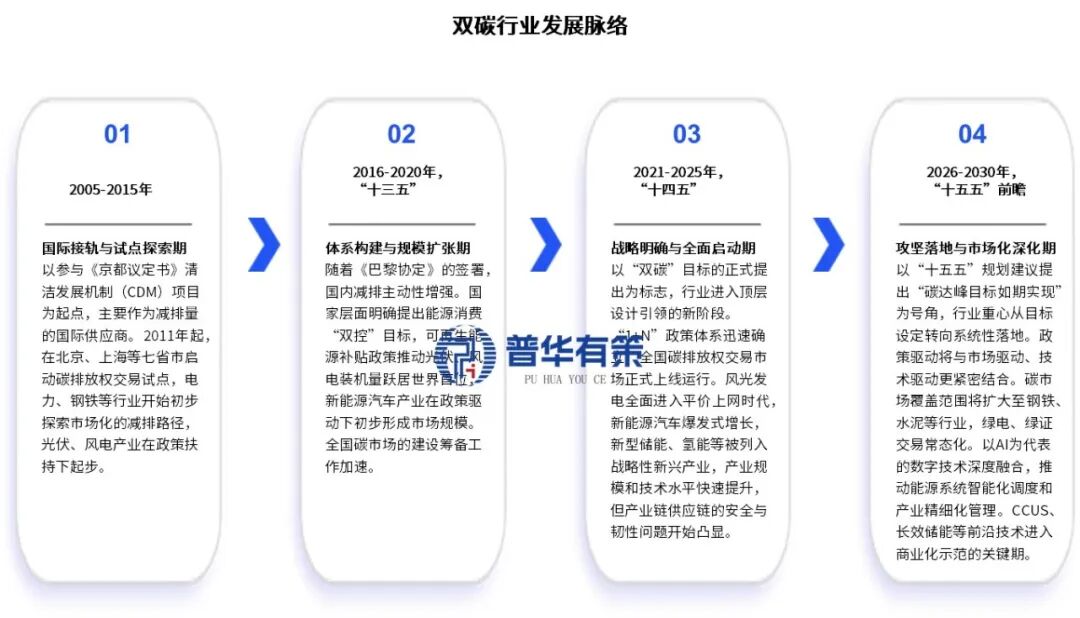
Core Viewpoint - The dual carbon industry is positioned as a strategic emerging industry aimed at achieving carbon peak and carbon neutrality, encompassing a range of economic activities, technological research, industrial manufacturing, and service provision to build a green low-carbon circular economy [1][12]. Industry Development History - The industry has evolved through various stages, transitioning from pilot projects to comprehensive efforts in carbon reduction [92]. Industry Chain Analysis Upstream - Resources, Materials, and Core Equipment - The upstream sector includes critical mineral resources such as lithium, cobalt, nickel, rare earths, and silicon materials, which are essential for production equipment and software. This sector is capital and technology-intensive, directly influencing cost control and technological advancement in the midstream manufacturing sector. China has significant advantages in photovoltaic silicon materials and rare earth permanent magnets, but still faces risks in high-end chips and precision instruments [3][95]. Midstream - Manufacturing, Integration, and Services - The midstream sector is the core of the industry chain, covering the manufacturing of photovoltaic modules, wind turbines, energy storage systems, and various digital solutions. Chinese companies have established a global advantage in this area, particularly in photovoltaic modules and power batteries. The trend is shifting from providing single devices to integrated solutions that combine wind, solar, storage, and hydrogen [4][96]. Downstream - Application and Operation - The downstream sector includes renewable energy power station operations, grid companies, and high-energy-consuming industries such as steel, chemicals, and cement. The demand from these sectors, driven by transformation needs and compliance pressures, is a fundamental driver of industry growth. The EU's Carbon Border Adjustment Mechanism (CBAM) is pushing Chinese export-oriented companies to procure green electricity and implement energy-saving modifications, creating substantial market demand [5][96]. Major Industry Development Trends - AI and digital technologies will deeply empower the industry, driving an intelligent revolution. AI will be integrated into various applications, including power forecasting and carbon management, transforming digitalization from a supportive tool to a core element of productivity and business model reconstruction [6][97]. - The construction of new energy systems will accelerate, shifting focus from single-point breakthroughs to system collaboration, emphasizing large-scale energy storage and smart grids [7][98]. - The decarbonization process in high-carbon industries such as steel and cement will accelerate, supported by technological innovation and financial tools [8][99]. - The carbon market will mature and become a core regulatory tool, with innovations in green financial products [9][100]. - International competition over green standards will intensify, with Chinese companies leveraging their full industry chain advantages to participate in global green supply chain restructuring [10][102].

行业景气度向好,电网设备ETF(159326)获资金逆势布局,规模再创新高
Mei Ri Jing Ji Xin Wen· 2025-11-21 02:21
Core Insights - The A-share market experienced a decline, with the only ETF tracking power grid equipment (159326) dropping by 0.56%, despite active trading with a daily turnover of 177 million yuan [1] - The power grid equipment ETF has seen a net inflow of over 300 million yuan over the past six trading days, reaching a record size of 1.916 billion yuan [1] - The industry outlook for power grid equipment remains positive, driven by policy support and the emphasis on new energy systems in the "14th Five-Year Plan" [1] Industry Summary - The power grid equipment ETF (159326) is the only ETF tracking the CSI Power Grid Equipment Theme Index, with a significant representation in sectors such as transmission and transformation equipment, grid automation, cable components, and distribution equipment [1] - The weight of ultra-high voltage equipment in the index is notably high at 64%, the highest in the market [1] - Local governments are also focusing on enhancing the competitiveness of new energy industry clusters, further supporting the growth potential of the power equipment sector [1]
双碳研究 | 领跑全球储能赛道中国装机容量突破亿千瓦
Sou Hu Cai Jing· 2025-11-09 16:06
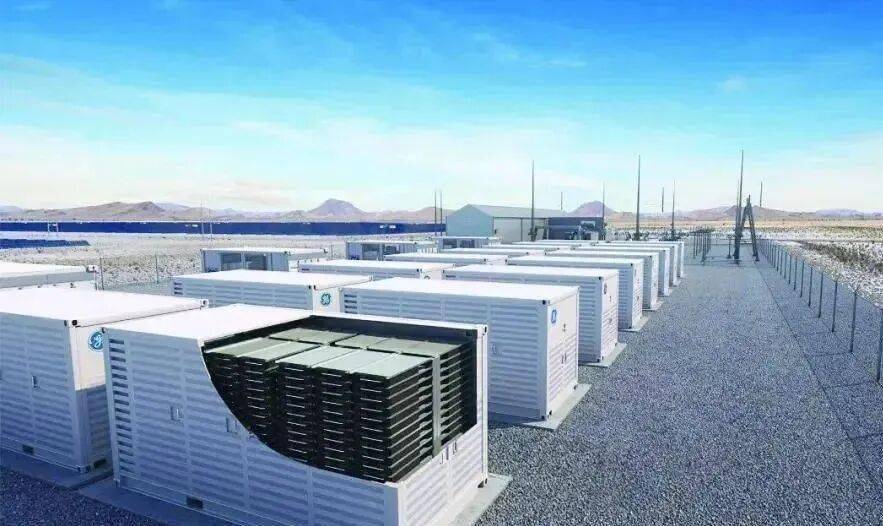
Core Insights - China's new energy storage capacity has surpassed 100 million kilowatts, marking a significant step towards the transition to a new energy system and reinforcing its global leadership in renewable energy development [3][4]. Group 1: Industry Growth - As of the end of September, China's new energy storage capacity has exceeded 100 million kilowatts, accounting for over 40% of the global total installed capacity [3][4]. - Since the 13th Five-Year Plan, China's new energy storage capacity has grown more than 30 times, indicating a shift from early commercialization to large-scale development [4]. Group 2: Technological Advancements - New energy storage systems are characterized by flexible deployment, rapid response, and short construction cycles, making them key technologies for supporting new energy and power systems [4]. - Emerging technologies such as solid-state batteries and hydrogen storage are rapidly developing, providing strong support for the future energy system's diverse and high-security storage needs [4]. Group 3: Investment and Economic Impact - Since the 14th Five-Year Plan, investment in new energy storage projects in China has exceeded 200 billion yuan (approximately 28 billion USD), driving over 1 trillion yuan in investments across the industry chain [4]. - Chinese products are contributing to the acceleration of global energy transition, showcasing China's role in the global green transformation [4]. Group 4: International Collaboration - Nicaragua has expressed strong interest in collaborating with China in the renewable energy sector, highlighting the need to expand energy supply due to rapidly growing industrial demand [5]. - Nicaragua currently sources 70% of its energy from renewable sources such as solar, wind, and geothermal energy, and is looking to expand cooperation with Chinese enterprises on photovoltaic and hydropower projects [5].
央企谱写能源转型“中国方案”
Zhong Guo Zheng Quan Bao· 2025-10-15 20:15
Core Insights - Central enterprises in China are actively participating in the energy transition, contributing to the construction of a green energy network that supports high-quality economic development [1][2][3] Group 1: Energy Infrastructure Development - The "Ningdian into Xiang" project has delivered over 900 million kilowatt-hours of green electricity to Hunan as of September 25, 2023, with the project officially starting on June 29, 2023 [1] - The national grid has built a vast transmission network with a cross-province capacity exceeding 370 million kilowatts, a 30% increase from the end of the 13th Five-Year Plan [3] - The Huaneng Longdong Energy Base is set to begin operations in October 2023, capable of transmitting over 36 billion kilowatt-hours of green electricity annually to Shandong [2] Group 2: Technological Innovations - The world's largest 26-megawatt offshore wind turbine, developed by Dongfang Electric Group, has set new records for single-unit capacity and rotor diameter, enhancing global offshore wind power standards [4] - China Baowu's Baosteel has developed laser-etched silicon steel that could save 90 billion kilowatt-hours annually if applied to existing transformers, equivalent to creating another Three Gorges Dam [5] - The digital control system at the Daya Bay Nuclear Power Base has been upgraded to a fully digital integrated control system, ensuring zero-defect operation [5] Group 3: Renewable Energy Integration - Beijing Petroleum has established 114 charging stations, significantly expanding its electric vehicle charging network in just two years [6] - The Southern Power Grid has built 15,700 charging stations, achieving full coverage of charging guns in 4,785 townships, facilitating electric vehicle accessibility [7] - China National Offshore Oil Corporation is enhancing the green energy system on Weizhou Island, contributing over 54 million kilowatt-hours of clean energy annually [7]
金砖国家生物质能源与材料国际会议在中石大举行
Sou Hu Cai Jing· 2025-09-17 01:21
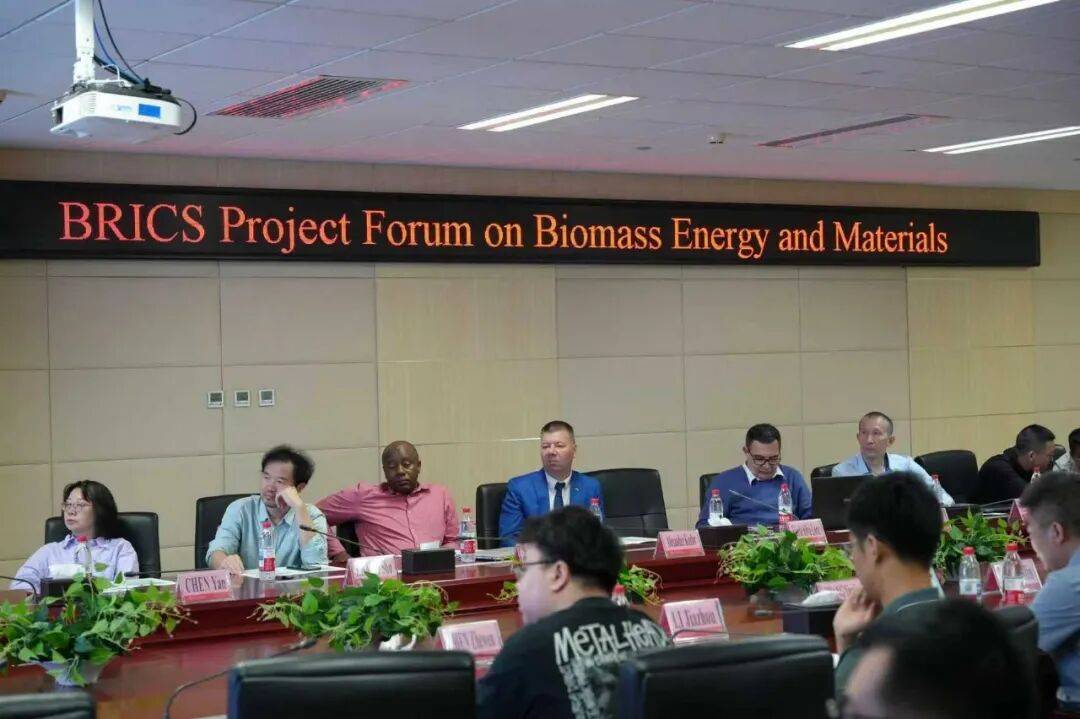
Core Insights - The BRICS Project Forum on Biomass Energy and Materials was held on September 11, focusing on the research progress of agricultural biomass directed thermal conversion in the context of sustainable development in the "water-energy-food" nexus [1][3] - The conference aimed to deepen cooperation among BRICS countries and establish a regular international energy forum to ensure long-term collaboration and strategic trust [1][3] Group 1 - The conference was initiated under the national key R&D program "Intergovernmental International Science and Technology Innovation Cooperation" with participation from various institutions including China University of Petroleum, Chinese Academy of Sciences, and Nanjing Forestry University [3] - Key international participants included experts from Brazil, Russia, and South Africa, indicating a collaborative effort across multiple BRICS nations [3][4] Group 2 - Discussions included future cooperation in clean utilization of biomass energy and new energy systems, with experts expressing optimism about achieving substantial collaborative outcomes under the BRICS intergovernmental cooperation framework [4] - Initial agreements were reached on research collaboration and talent cultivation, highlighting the importance of these areas for future partnerships [4][5]
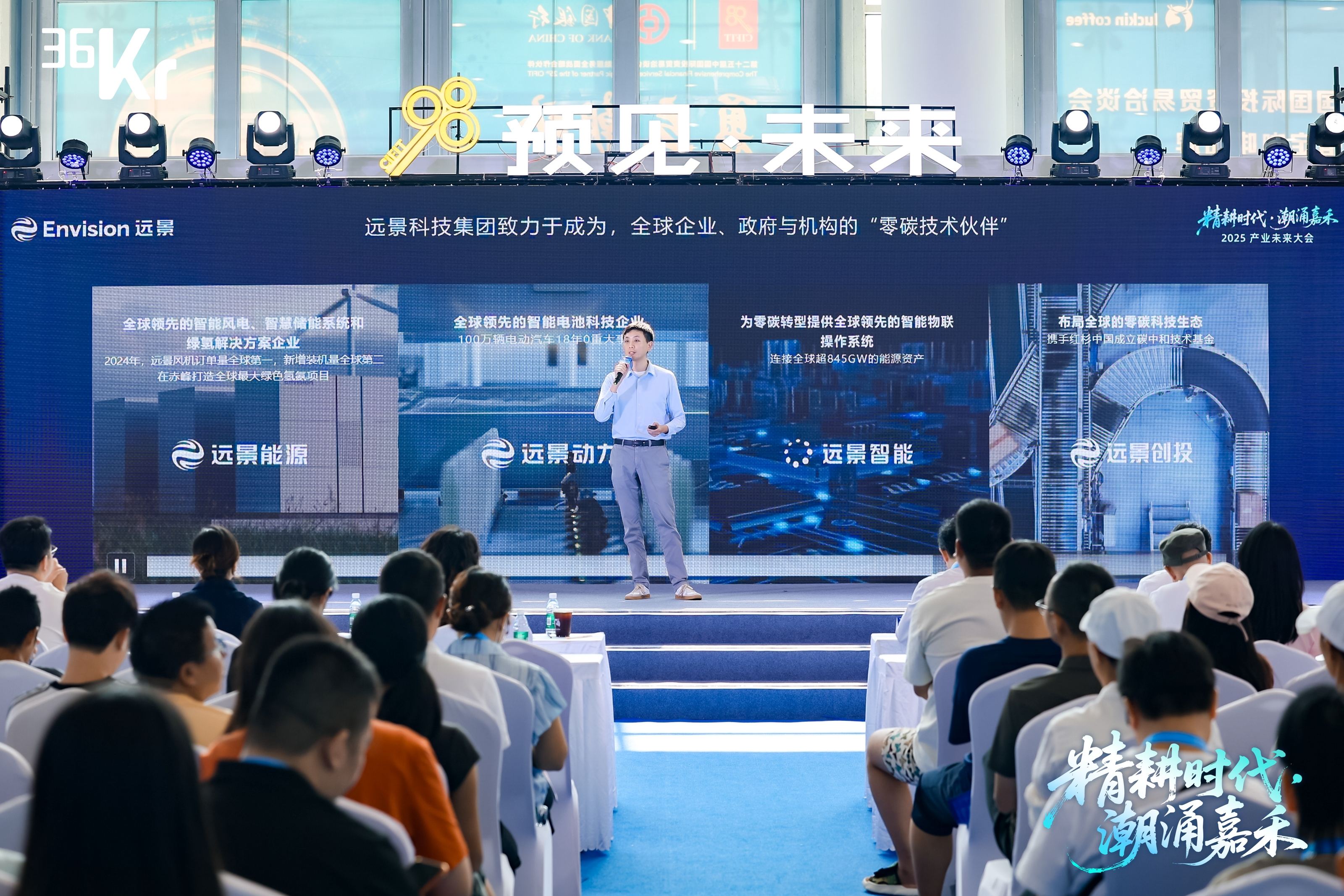
远景胡洋:AI+新能源,共筑面向未来的新型能源系统| 2025年36氪产业未来大会
3 6 Ke· 2025-09-16 07:20
Core Insights - The conference held in Xiamen, China, focused on five key sectors: artificial intelligence, low-altitude economy, advanced manufacturing, new energy, and large consumption, aiming to discuss development paths and industry future [1] - The event emphasized the collaboration between government, capital, and industry to address challenges in industrial development [1] Company Overview - Envision Group operates four main business segments: Envision Energy, Envision Power, Envision Intelligent, and Envision Ventures, focusing on smart wind power, energy storage systems, and green hydrogen solutions [7] - Envision Energy is a global leader in intelligent wind power and energy storage, with the largest wind turbine order volume globally in 2024 and the largest green hydrogen project in Chifeng [7][8] - Envision Intelligent provides a leading IoT operating system, EnOS, connecting over 845 GW of energy assets, equivalent to nearly 20 times the peak load of Shanghai's power grid [7] New Energy System Development - The new energy system is crucial for achieving global carbon neutrality, addressing both generation and consumption sides of energy [8] - Envision's approach involves integrating fluctuating generation and consumption through smart IoT platforms and AI algorithms [8][9] - The company has achieved dual championships in power generation and load forecasting accuracy in recent competitions [9] Zero-Carbon Solutions - Envision is developing comprehensive energy solutions for various sectors, including zero-carbon industrial parks and smart charging networks for electric vehicles [9][10] - The company has partnered with the Ordos government to create the world's largest zero-carbon industrial park, leveraging local wind and solar resources [9] - Envision's green ammonia project in Chifeng is the largest globally, integrating renewable energy with hydrogen production [11] Urban Energy Systems - Envision is building an AI-powered supercharging network to support electric vehicle charging and energy storage, aiming for a four-network integration in urban energy systems [12] - The company has launched a high-end charging station in Chengdu, featuring advanced charging capabilities and smart management systems [12]
浅析新型能源系统的系统解构与实践突破
Zhong Guo Dian Li Bao· 2025-05-13 02:14
Core Insights - China's energy system is undergoing the fastest transformation globally driven by "dual carbon" goals, involving not only technological innovation but also institutional restructuring and complex stakeholder negotiations [1] Group 1: Policy-Market-Technology Dynamics - The top-level design of China's energy transition shows a clear government-led characteristic, but the policy transmission often encounters multiple frictional resistances, resulting in a dynamic tension between institutional rigidity and market flexibility [2] - The conflict between national vision and local practice leads to path deviations, particularly in the renewable energy consumption area, where the "West-to-East Power Transmission" scheme faces challenges in mobilizing investment from resource-rich provinces [2] Group 2: Localization of the Triple Helix Theory - The classic triple helix theory, which views government, industry, and academia as the three pillars of innovation, faces adaptability challenges in the energy transition context, necessitating a new collaborative model that includes "unicorn" companies as key innovation players [3] - A new model should be constructed based on a dynamic balance mechanism, introducing bidirectional feedback and self-adaptive regulation, where policy innovation guides market direction, market signals optimize resource allocation, and technology enhances governance efficiency [3] Group 3: Governance Mechanism Reconstruction - Strategies for cultivating institutional resilience include establishing a flexible regulatory framework to achieve a dynamic balance between policy rigidity and flexibility, such as defining legal constraints for carbon neutrality while allowing trial-and-error space for emerging technologies [4] - To stimulate market vitality, innovative financial tools and trading models should be developed, including promoting green electricity trading and establishing a national unified green electricity certification platform to enhance market transparency [4] - The empowerment of technological momentum can be achieved through the application of digital twin technology to improve grid operation efficiency and deploying blockchain systems to ensure traceability in green certificate transactions [4]
倒计时20天!500份「ESIE 2025会刊」领取通道开启
中关村储能产业技术联盟· 2025-03-21 11:00
Core Viewpoint - The 13th International Energy Storage Industry Summit and Exhibition (ESIE 2025) will take place from April 10-12, 2025, at the Capital International Exhibition Center, aiming to establish a significant platform for energy storage communication and development in the new energy system [2][3]. Event Overview - ESIE 2025 is organized by the Zhongguancun Energy Storage Industry Technology Alliance, the China Energy Research Society, and the Institute of Engineering Thermophysics, Chinese Academy of Sciences, with the goal of promoting new energy systems and production capabilities [3]. - The exhibition will feature six major themed pavilions covering the entire energy storage industry chain across 12 key areas and over 30 sub-application scenarios [3]. Exhibition Highlights - The event will showcase over 800 exhibitors and cover an exhibition area of 160,000 square meters, featuring solutions from the power side, grid side, and user side [17]. - Major industry players such as Sungrow, CATL, and BYD will sponsor pavilions, highlighting the market's scale and significance [17]. - The exhibition will include 40+ thematic forums focusing on industry trends, policies, and technological advancements [8][18]. Thematic Pavilions - A1 Pavilion: System Integration Pavilion, showcasing various storage solutions including household, commercial, and portable storage [5]. - A2 Pavilion: Energy Storage Technology Pavilion, featuring lithium batteries, lead-acid batteries, and battery recycling technologies [5]. - B1 Pavilion: Energy Storage Technology Pavilion, focusing on sodium batteries, flow batteries, and other innovative storage technologies [5]. - B2 Pavilion: "Energy Storage+" Solutions Pavilion, covering applications in electric vehicle charging, data centers, and energy network operators [5]. Policy and Market Insights - The event will provide insights into the latest energy storage policies, market mechanisms, and financing strategies for storage projects [13][14]. - Discussions will include the integration of new energy and power storage under the "dual carbon" goals, as well as opportunities in the global energy storage market [14][15]. International Collaboration - ESIE 2025 aims to connect with over 50 international markets, facilitating opportunities for Chinese companies to expand into overseas residential and commercial energy storage sectors [17]. - The event will feature participation from various embassies and international B2B buying groups, enhancing its global outreach [20].