
Bei Jing Wan Bao

Search documents
当心!电诈“暑期档”来了 这五类电诈在暑期极易高发
Bei Jing Wan Bao· 2025-07-07 07:38
Group 1 - The summer season sees a rise in scams targeting students, citizens, and concert-goers, with five specific types of fraud being highlighted: part-time online shopping scams, flight ticket refund and change scams, concert ticket sales scams, game account trading scams, and education refund scams [1][2] - In the "part-time online shopping" scam, fraudsters lure victims with ads promising easy money, leading them to invest in shopping tasks that eventually result in significant financial loss when they are asked to pay additional fees to withdraw their earnings [1][2] - Scammers impersonate airline customer service representatives to trick victims into downloading fraudulent apps under the pretense of processing refunds or compensation, ultimately stealing their banking information [2][3] Group 2 - Fraudsters exploit the urgency of fans wanting concert tickets by posting fake sales on second-hand platforms, leading victims to download fraudulent apps or provide personal banking information under false pretenses [2][3] - In the gaming sector, scammers target young players through social media and gaming forums, directing them to fake trading platforms where they are tricked into transferring money [3] - Scammers also create fake documents from educational institutions to lure victims into downloading fraudulent apps for processing refunds, further facilitating their fraudulent activities [3][4]
大学生伴读成了“香饽饽” 带娃学习还能提供情绪价值
Bei Jing Wan Bao· 2025-07-07 07:38
Core Viewpoint - The article discusses the increasing trend of hiring university students for childcare and tutoring during summer, highlighting the benefits and challenges of this emerging market [1][10]. Group 1: Market Demand - Many dual-income families are seeking university students for childcare and academic support, valuing their energy and knowledge [1][3]. - Parents appreciate the ability of university students to connect with their children, as they often share common interests and communication styles [2][9]. - The demand for university students as tutors and companions is rising, particularly due to the increased emphasis on physical education scores in school assessments [2][3]. Group 2: Pricing and Services - The typical rate for hiring university students is around 300 yuan for two hours, which parents find reasonable compared to traditional childcare services [3][4]. - University students provide a range of services, from academic tutoring to physical training, adapting their approach based on the child's needs [2][4]. Group 3: Challenges and Concerns - The market faces issues such as information asymmetry and lack of standardized platforms for hiring, leading to potential exploitation by intermediaries [5][10]. - Many parents express concerns about the reliability of university students and the potential for misrepresentation, emphasizing the need for better verification methods [6][10]. - There is a call for official platforms to facilitate connections between students and parents, ensuring safety and trust in these arrangements [6][10]. Group 4: Legal and Ethical Considerations - Legal experts recommend that employers and students sign written contracts to clarify terms of engagement and protect both parties' rights [7][8]. - It is suggested that university students should be aware of their responsibilities and the potential risks involved in childcare roles, including the need for safety measures [8]. Group 5: Educational Insights - Experts suggest that university students should have some knowledge of child psychology to enhance their effectiveness in tutoring and caregiving roles [9]. - The experience of working with children can help university students develop valuable life skills, such as communication and responsibility [10].
幽燕深山藏古寺
Bei Jing Wan Bao· 2025-07-06 07:01
Group 1 - The historical significance of Tanzhe Temple in Beijing is highlighted, with its origins tracing back to the Jin Dynasty, and it is referred to as "the first famous temple in western Beijing" [2] - The temple has undergone several name changes throughout history, reflecting the political and cultural shifts of different dynasties, including its original name, Jiafu Temple, and later names such as Longquan Temple and Dawan Shou Temple [2] - The architectural influence of Tanzhe Temple is noted, particularly its resemblance to the Hall of Supreme Harmony in the Forbidden City, suggesting that the temple inspired the design of significant structures in Beijing [3] Group 2 - The rapid development of Buddhism in Beijing began in the Tang Dynasty, with many influential temples established during this period, particularly in response to the socio-political climate [3] - During the Liao Dynasty, there was a significant proliferation of Buddhist temples in Yanjing, with 36 major temples and numerous smaller ones, driven by the need to pacify the populace amidst ongoing warfare [3] - The Liao rulers actively promoted Buddhism as a means to alleviate public discontent, leading to the construction of many temples with direct royal support [3] Group 3 - The preservation of Buddhist texts through stone carvings at Yunju Temple is emphasized as a key method for the long-term transmission of Buddhist culture [4] - The history of Yunju Temple is linked to the Sui Dynasty, with its establishment attributed to a monk who recognized the area's potential for carving Buddhist scriptures [4] - The continuous efforts of monks to carve and preserve Buddhist scriptures in the region contributed to the rich heritage of Buddhist culture in Beijing [5]


演唱会深度激发城市新活力
Bei Jing Wan Bao· 2025-07-06 06:59
Core Insights - The recent surge in star concerts in Beijing has significantly boosted nighttime consumption and the local economy, with venues attracting thousands of attendees [1][5][6] Group 1: Concert Impact on Local Economy - Concerts have become a major driver of economic activity, with a single concert ticket generating 4.5 to 5 times its value in surrounding consumption, impacting transportation, accommodation, dining, shopping, and leisure [5][6] - On June 28 alone, six major venues in Beijing hosted concerts, attracting over 100,000 attendees, indicating a strong demand for live entertainment [3] Group 2: Surrounding Business Opportunities - The area around the National Stadium ("Bird's Nest") has seen a proliferation of small businesses offering services such as hairstyling and makeup for concert-goers, with individual stalls potentially earning over 1,000 yuan per concert [2][3] - Hotels near concert venues have experienced a surge in bookings, with prices increasing by 1 to 2 times on concert days, reflecting the high demand from concert attendees [3][4] Group 3: Targeted Services by Hotels - Hotels are responding to the influx of concert-goers by offering special packages, discounts, and services such as transportation to venues, catering to the needs of younger audiences aged 27 to 35 [4] - The hospitality sector is adapting to the new customer base by providing late-night dining options and other amenities to enhance the overall experience for concert attendees [4]
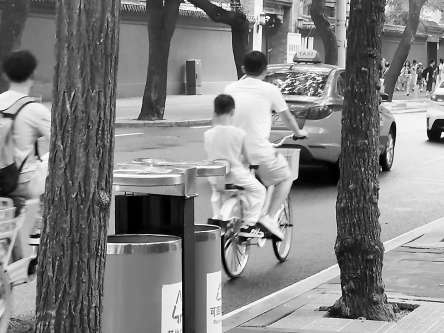
前后各载一个娃车身左摇右晃 “亲子单车”隐患重重步步惊心
Bei Jing Wan Bao· 2025-07-05 02:38
Core Insights - The emergence of counterfeit "family shared bicycles" during the summer tourism peak has raised concerns due to high rental fees and safety risks [1][3][4] - Regulatory authorities have initiated joint actions to address the illegal deployment of these bicycles, leading to the recovery of non-compliant vehicles [3][4] Pricing and Rental Structure - The rental fee for these "family bicycles" is notably high, with a deposit requirement of 100 yuan and a service fee of 30 yuan per hour, which is charged on an hourly basis after two minutes of use [1][4] - Some users reported being charged 50 yuan for a 16-minute ride, indicating a significant cost burden for families [2][3] Safety Concerns - The design of these bicycles, which includes added child seats, has resulted in operational difficulties, particularly in terms of balance and control, especially in adverse weather conditions [2][3] - There is a prevalent issue of overloading, as regulations permit only one child under 12 years old per bicycle, yet many bicycles were observed carrying two children, leading to instability [2][3] Regulatory Actions - The Beijing Transportation Enforcement Team has identified nine brands of these "family bicycles" and has mandated the recovery of non-compliant vehicles, with eight brands cooperating and one brand facing a fine of 15,000 yuan [4][5] - A summer special rectification action has been launched to prevent the disorderly expansion of these bicycles, involving multiple regulatory departments [4][5]
晚上去超市“薅羊毛”成潮流?清仓折扣“盲盒”需理性
Bei Jing Wan Bao· 2025-07-05 02:38
Core Insights - The rise of nighttime supermarket discounts has attracted consumers, particularly in Beijing, where many chain supermarkets have adopted "day clearing" strategies to boost sales during evening hours [1][2][3] Group 1: Consumer Behavior - Consumers are increasingly savvy about timing their purchases, with many learning the best times to shop for discounts, such as 8 PM for major markdowns [2][3] - The atmosphere during discount hours is lively and communal, resembling a market where customers engage with each other and staff, enhancing the shopping experience [5][6] - Many shoppers report feeling compelled to buy items due to the perceived savings, often leading to impulse purchases that may not align with their actual needs [7][8] Group 2: Pricing Strategies - Different categories of products have varying discount schedules, with fresh produce often marked down earlier in the day, while prepared foods see significant discounts closer to closing time [2][3] - The use of eye-catching discount labels in supermarkets, such as white tags with black text or bright yellow labels, is designed to attract attention and encourage purchases [7] - Regular priced items struggle to sell as consumers focus on discounted products, leading to a potential issue for supermarkets in moving full-priced inventory [4][6] Group 3: Market Dynamics - The competition among supermarkets to attract evening shoppers has intensified, with stores like Wumart and Seven Fresh implementing similar discount strategies to draw in crowds [2][3] - The phenomenon of "nighttime clearance" reflects broader trends in consumer behavior, where shoppers seek value and are willing to navigate crowded environments for perceived savings [5][6] - The experience of shopping during these discount periods is often described as more engaging and social compared to traditional daytime shopping, which may influence future shopping habits [5][6]
“焦虑生意”盯上准大学生的钱包
Bei Jing Wan Bao· 2025-07-05 01:05
Core Viewpoint - The article discusses the rising trend of preparatory programs and services aimed at incoming college students, highlighting the anxiety and pressure faced by students and parents in navigating the transition from high school to university [1][4][5]. Group 1: Services Offered - Various organizations are offering summer camps and "university running" services, which promise to help students enhance their skills and prepare for university life [1][3]. - A summer camp includes courses on emotional intelligence, career planning, and practical experiences, aiming to equip students with tools to navigate university challenges [3][7]. - Some services are priced over ten thousand yuan, indicating a lucrative market for these preparatory programs [2][3]. Group 2: Parental Perspectives - Parents express mixed feelings about investing in these services, with some believing that proactive engagement can lead to better outcomes for their children [4][5]. - There is a concern that these services may create dependency rather than fostering independence in students [5][7]. - Parents are often drawn to success stories presented by these organizations, which can create a sense of urgency to enroll their children in such programs [4][5]. Group 3: Institutional Offerings - Many universities already provide free career planning and guidance services, which may overlap with the offerings of private organizations [6][8]. - Institutions like Beijing Wuzi University offer structured courses and one-on-one guidance to help students navigate their academic and career paths [6][7]. - The article suggests that students should prioritize utilizing their university's resources over seeking external services [6][8]. Group 4: Market Dynamics - The article highlights a growing market for "anxiety-driven" services that capitalize on the uncertainties faced by students transitioning to university [4][5]. - There is a suggestion that these services may exploit information asymmetry, as many parents lack the knowledge or time to guide their children effectively [7][8]. - The effectiveness of these services remains uncertain, with a need for parents to critically assess the value offered by such programs [8].
企业创新展现北京数字经济实践
Bei Jing Wan Bao· 2025-07-04 06:57
Group 1 - The 2025 Global Digital Economy Conference opened in Beijing, focusing on how digital technology can enhance urban governance, improve people's livelihoods, and achieve high-quality development [1] - The conference adopted a "1+6+N" activity structure, including one opening ceremony, six main forums, and multiple thematic forums, aiming to promote global digital governance and cooperation [1] - Beijing is striving to become a global benchmark city for digital economy, with a reported 8.3% year-on-year growth in digital economy value added in Q1, and a 9.7% growth in core industries [2][3] Group 2 - Beijing's digital economy initiatives are characterized by strong innovation capabilities, particularly in artificial intelligence, where it holds 43% of the nation's top talent and 35% of the national total of large models [2] - The city has seen a 37.63% year-on-year increase in the trading scale of high-quality data products, with over 4400 million yuan in transactions from January to May [3] - The launch of a digital economy experience week and a 6000 square meter experience center showcases the integration of technologies like AIGC and the metaverse, enhancing public engagement with digital economy [3] Group 3 - The conference featured a "first launch" event highlighting new technology developments and applications, showcasing how digital technology drives industry transformation [6] - China Unicom is investing in AI and computing infrastructure in Beijing, focusing on a comprehensive resource layout to support AI model training [6][7] - The Elpis model series from Tianyun Data represents a new approach in AI development, emphasizing continuous evolution and the integration of multiple modalities for enhanced intelligence [10][11]
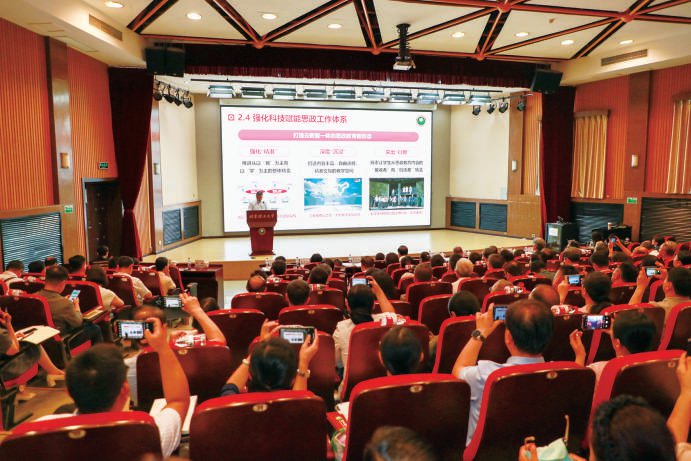
“四大行动”建强立德树人关键队伍
Bei Jing Wan Bao· 2025-07-03 05:47
Core Points - The event held on June 26 in Beijing aimed to promote the development of ideological and political education in schools, aligning with Xi Jinping's vision for building a strong education nation [1][3] - The meeting emphasized the importance of enhancing the quality of the ideological and political education teacher workforce in Beijing, as part of a broader strategy to strengthen educational leadership in the capital [3][4] Group 1: Objectives and Strategies - The main objective is to implement the "Beijing Plan" for the construction of the ideological and political education teacher workforce, which is part of the broader "2025-2027 Plan" [5] - The focus will be on creating a high-quality teacher workforce that is primarily composed of full-time educators, with a balanced structure and excellent qualifications [5] - Specific goals for 2025 include optimizing the quantity and structure of teachers, enhancing their quality and capabilities, and ensuring effective transitions across educational stages [5] Group 2: Key Initiatives and Developments - The meeting highlighted five key systems for the development of ideological and political education: theoretical armament, quality improvement, collaborative linkage, renowned teacher cultivation, and organizational support [4] - New measures and achievements in building a curriculum centered on Xi Jinping's thoughts were discussed, showcasing the continuous release of vitality in the "Big Ideological and Political Class" [4] - The event featured experiences from various universities, including the integration of Xi Jinping's economic thoughts into the curriculum and the use of cutting-edge technology to enhance the quality of ideological education [4][5]
种菜养花、点豆种瓜?小区空地不是居民自留地
Bei Jing Wan Bao· 2025-07-03 03:30
Core Viewpoint - The article discusses the issue of residents in Beijing's communities using public spaces for personal gardening, leading to conflicts and safety concerns, highlighting the need for better understanding of public space ownership and regulations [1][2][3] Group 1: Issues and Concerns - Residents' initiatives to beautify their communities through gardening are often met with mixed reactions, including neighborhood disputes [1] - The use of public space for personal gardening can lead to negative consequences such as unpleasant odors and pest attraction [1] - Safety hazards arise from makeshift structures like grape trellises during summer storms [1] Group 2: Legal and Regulatory Framework - Relevant laws state that green spaces within residential areas are collectively owned by residents, prohibiting individual occupation [1][2] - Authorities are encouraged to increase inspections and enforce regulations against unauthorized use of public spaces [2] Group 3: Solutions and Innovations - Some communities in Beijing have introduced innovative solutions like "shared gardens" and "adopt-a-green-space" initiatives to meet residents' gardening desires while preserving public space [2]