Business Insider

Search documents
'Potentially fatal': Crisis experts warn Intel not to stay silent after Trump calls on its CEO to resign
Business Insider· 2025-08-07 20:15
Core Viewpoint - The situation surrounding Intel CEO Lip-Bu Tan has escalated following President Trump's call for his resignation due to concerns over Tan's reported holdings in Chinese companies, which has led to a decline in Intel's stock price [1][7]. Group 1: Company Response Strategies - Intel has not yet issued a public statement regarding Trump's call for Tan's resignation, which could risk the crisis escalating if not addressed promptly [2][3]. - Experts suggest that Intel should move swiftly to communicate its position to various stakeholders, including investors, customers, and employees, to mitigate potential fallout [3][11]. - A coordinated response team should be formed, including legal, government affairs, and PR departments, to ensure that the company supports Tan and addresses any national security concerns related to his investments [11][12]. Group 2: Communication Tactics - It is crucial for Intel to decide whether to stand behind Tan and to clearly communicate this decision to the public [8][9]. - The company should consider having Tan or a strong surrogate represent Intel in media engagements to reinforce its message [9][10]. - Experts recommend creating an "offramp" by engaging with influential figures around Trump to position Intel as an ally rather than an adversary, potentially appealing to Trump's transactional nature [13][14].


Japanese automakers Toyota and Honda take a big hit from Trump's tariffs
Business Insider· 2025-08-07 09:07
Core Insights - President Trump's tariff policy is significantly impacting Japan's auto industry, with Toyota expecting a reduction in operating income for the 2026 fiscal year by 1.4 trillion Japanese yen ($9.5 billion), which is 1.2 trillion yen higher than its initial forecast [1] - Honda reported a 50% year-over-year decline in operating profits, attributing a loss of approximately 122 billion Japanese yen to tariffs, with a potential total impact of 450 billion yen for the year [3] - A recent trade deal between the US and Japan has lowered tariffs on Japanese auto imports from 25% to 15%, providing Japanese automakers a competitive edge over American rivals like Ford and GM, who still face a 25% tariff [4] Company-Specific Insights - Toyota's operating income in North America has declined due to tariffs, with the company citing "exchange rate fluctuations and increased expenses" as contributing factors [2] - Honda has adjusted its full-year operating profit forecast upward by 40%, indicating that the impact of tariffs may be less severe than initially expected [3] - Ford's CEO expressed concerns that the trade deal gives Japanese automakers a "meaningful advantage," potentially allowing them to undercut Ford models by up to $10,000 [5]


CEO Brian Chesky says Airbnb is going to become an AI-first app with agents that can book trips for you
Business Insider· 2025-08-07 02:27
Not only does Airbnb want to be the "everything app" — where users can book literally everything, from accommodations to experiences and services — it also wants to do the booking for you. Brian Chesky, cofounder and CEO of Airbnb, laid out his vision for the travel app's AI-powered future during the company's second-quarter earnings call on Wednesday. Airbnb beat revenue expectations for quarter two and announced a $6 billion stock buyback, but said it expected slower growth in Q3. The stock was down more ...

What Apple's $100 billion US pledge really means — and what it doesn't mean
Business Insider· 2025-08-06 19:05
Group 1 - Apple plans to invest an additional $100 billion in US manufacturing, which is part of a broader strategy to align with political pressures and tariffs [1][5][11] - This new investment follows a previous commitment made in 2021 to invest $430 billion over five years and hire 20,000 employees, with some projects already underway [2][5] - The recent announcement indicates an increase in spending by $25 billion annually, building on earlier plans, although there is no mention of additional hiring [3][5] Group 2 - There are doubts about whether Apple will manufacture iPhones in the US, as recreating the necessary supply chain is considered nearly impossible [4][9] - The investment is seen as beneficial for political optics, particularly for Donald Trump, who seeks to showcase corporate investment in America [9][12] - Apple is also looking for relief from tariffs imposed by Trump, having already incurred approximately $2 billion in tariffs over the last two quarters [11][12]

Alaska Airlines is flying to Europe for the first time — and the planes are getting a fresh look
Business Insider· 2025-08-06 16:17
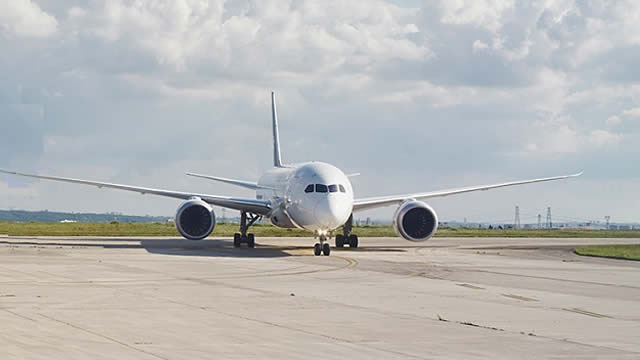
Core Insights - Alaska Airlines is launching transatlantic flights for the first time, marking a significant expansion in its international routes following a $1.9 billion acquisition of Hawaiian Airlines [1][2] - The airline has introduced a new livery for its Boeing 787s, described as its "first-ever global livery," inspired by the northern lights and reflecting its transition to a global airline [9][10] Fleet Expansion - The acquisition of Hawaiian Airlines has added four Boeing 787 Dreamliners to Alaska Airlines' fleet, with an additional 13 on order, transitioning from single-aisle jets to wide-body aircraft [2] - The first Dreamliner flights will commence from Seattle to Seoul on September 12, with additional routes to Tokyo and Rome planned for early 2024 [2][4] New Routes - Alaska Airlines will begin service to Reykjavík, Iceland from Seattle in May, utilizing the Boeing 737 Max, marking it as the longest route operated by a US airline with such an aircraft [3] - By next spring, the airline will also offer daily, non-stop flights to London Heathrow using the Boeing 787, catering to a high-demand international market [4] Customer Experience - The Boeing 787's business class will feature fully lie-flat seats with privacy doors, enhancing the premium travel experience, which has become increasingly important post-pandemic [4][8] - The airline aims to attract new customers with its updated premium offerings, despite a slow recovery in overall travel demand [8] Livery Redesign - The new livery for the Boeing 787s features blue and cyan colors inspired by the northern lights, marking the first update since 2016 [9] - The redesign has led to the removal of the smiling Inuit character, Chester, from the livery of the Dreamliners, although he will still appear on most other Alaska Airlines jets [11]

Disney gave up a ton to land 3 more NFL games. It doesn't have much choice.
Business Insider· 2025-08-06 12:44
Core Insights - The NFL continues to dominate television viewership, with its games accounting for 72 of the 100 most-watched shows last year [2] - Recent deals between the NFL and Disney's ESPN highlight the significant value of NFL content for media companies [3][10] NFL and Disney Deal - The transactions involve rights for various NFL assets, including ownership of the NFL Network and access to the RedZone live highlight show [3] - The NFL will receive a 10% stake in ESPN, valued at approximately $3 billion, along with new license fees [3] - Disney will acquire rights to three out of seven NFL games per week, while the NFL retains the other four games for potential licensing to other media companies [3][4] Market Dynamics - The NFL's strategy appears to involve maximizing revenue by selling game rights in multiple packages to various buyers, rather than consolidating all rights with a single company [5] - The NFL has successfully negotiated deals with other platforms, such as Amazon for Thursday night games and Netflix for Christmas games, indicating a trend of diversifying its media partnerships [5][10] NFL Network Performance - The NFL Network has struggled to attract viewership outside of live games and the annual draft, which has limited its appeal to potential partners [9] - The recent deal suggests that the NFL's leverage has increased as traditional TV viewership declines, making NFL content essential for media companies [10] Strategic Focus - The NFL's media deals head emphasized the importance of finding the right deal rather than rushing into an agreement, indicating a strategic approach to asset management [11] - The deal's success is attributed to the NFL's ability to sell its most valuable asset—live game rights—despite only offering a portion of its total games [12]


Rivian expects tariffs to increase car production costs by 'a couple thousand dollars per unit'
Business Insider· 2025-08-06 01:38
Core Insights - Rivian is facing challenges due to evolving policies affecting EV production in the US, which are expected to impact results and cash flow [1][2] - The company has revised its anticipated EBITDA losses for the 2025 fiscal year to a range of $2 billion to $2.5 billion, up from a previous estimate of $1.7 billion to $1.9 billion [1] - Rivian's CFO indicated that total sales in regulatory credits are expected to be around $160 million, nearly half of the prior outlook of $300 million [2] Financial Performance - Rivian reported second-quarter revenue of $1.3 billion, slightly exceeding Wall Street estimates of $1.28 billion, but operating losses were higher than anticipated with total operating expenses of $908 million [12] - The stock fell about 5% after trading hours following the earnings report [13] Production and Cost Outlook - Production costs are expected to increase due to recent policy changes, with tariffs anticipated to have a net impact of a couple thousand dollars per unit for the remainder of 2025 [3] - Rivian is on track to deliver its R2 model, a midsize SUV priced between $45,000 and $50,000, expected next year [10] - The company has secured contracts with suppliers to ensure that the cost of making the R2 will be about half that of the R1 model [11]


AT&T CEO John Stankey's hard-charging leadership style is winning over Wall Street
Business Insider· 2025-08-05 20:24
Core Perspective - AT&T is undergoing a significant transformation under CEO John Stankey to adapt to modern demands for speed and mobility, moving away from its legacy copper network towards fiber optic and wireless infrastructure [1][5]. Company Strategy - Stankey emphasizes the need for AT&T to "disrupt itself" and has initiated a cultural shift within the company, prioritizing a tech-style, market-based culture over traditional corporate values [3][5]. - The company plans to phase out most of its copper network in the US by the end of 2029, which is part of its strategy to remain relevant in a competitive landscape [3][5]. Financial Performance - AT&T's stock has seen a 22% increase this year, outperforming competitors T-Mobile (8.25%) and Verizon (6.7%), indicating a positive market response to its strategic refocus on fundamentals [4]. - The company reported strong second-quarter earnings, driven by growth in wireless and fiber subscribers, and anticipates a multi-year tax benefit of up to $8 billion from the One Big Beautiful Bill Act [11]. Workforce Changes - AT&T's workforce currently stands at approximately 141,000 employees, with ongoing reductions to align more closely with competitors like Verizon (99,000) and T-Mobile (70,000) [14]. - The company has implemented a strict return-to-office mandate, leading to further workforce reductions, as Stankey indicated a willingness to let go of employees not aligned with the new company direction [15][16]. Competitive Landscape - AT&T is focusing on building extensive wireless and fiber optic networks to compete against Verizon, T-Mobile, and smaller operators, aiming to attract more customers through bundled services [5][10]. - Analysts suggest that AT&T's renewed focus on core competencies and a simplified strategy may enhance its profile among investors, contrasting with past misallocations of capital into non-core assets [19][20].

Microsoft is considering a stricter RTO policy
Business Insider· 2025-08-05 19:17
Core Viewpoint - Microsoft is considering implementing a stricter return-to-office (RTO) policy, potentially requiring employees to work in the office at least three days a week starting in January, aligning more closely with other major tech companies [1][3][4]. Group 1: Policy Changes - The company has had a flexible work policy since late 2020, allowing employees to work remotely for up to 50% of the time without prior approval, but this has been more flexible in practice [2]. - The new policy under consideration would require most employees to work in the office at least three days a week, similar to policies at Meta and Google [3][8]. - Some teams within Microsoft, such as the Corporate, External, and Legal Affairs (CELA) group, already work in the office more than three days a week [8]. Group 2: Industry Trends - The potential policy change reflects a broader trend in the tech industry, where companies like Amazon have implemented stricter RTO policies, requiring in-person work five days a week [4]. - Increased pressure on employee performance is noted, with Microsoft having fired thousands of low performers this year and introducing a new performance improvement plan [9][10]. Group 3: Leadership Communication - Microsoft's cloud and AI head indicated that the flexible work policy would not change unless there was a noticeable drop in productivity, although it remains unclear if such a drop has occurred [9]. - The company's top finance executive emphasized that the upcoming year will require "intensity," building on previous calls from the CEO for dedication and hard work from employees [11].

Shareholders sue Tesla and Elon Musk on heels of deadly self-driving verdict, alleging its robotaxi violates traffic laws
Business Insider· 2025-08-05 15:35
Core Viewpoint - A group of Tesla shareholders has filed a class action lawsuit against the company and CEO Elon Musk, alleging misleading information regarding the robotaxi service and overstating the effectiveness of its autonomous driving technology [1] Group 1: Lawsuit Details - The lawsuit claims that Tesla failed to disclose issues with its robotaxi service and that there was a significant risk of dangerous operation of its autonomous vehicles [1] - The lawsuit names Tesla, Elon Musk, former CFO Zachary Kirkhorn, and current CFO Vaibhav Taneja as defendants [9] Group 2: Robotaxi Testing Issues - Tesla began testing its robotaxi service on June 22, which faced several operational issues, including driving in the wrong lane and exceeding speed limits [2] - Videos from influencers and shareholders highlighted these irregularities, prompting an investigation by the National Highway Traffic Safety Administration (NHTSA) [2] Group 3: Market Reaction - Following the reports of the robotaxi test issues and the NHTSA investigation, Tesla's stock price dropped by 6.05% on June 24 and June 25 [3] Group 4: Legal Context - The lawsuit references a recent jury verdict in Florida that awarded $329 million in damages to the family of a victim in a Tesla crash while on "Autopilot," which has raised concerns about the safety of automated driving technology [8] - Legal experts suggest that the verdict serves as a warning to the automated driving industry regarding the need for safety and transparency in marketing [9]