Business Insider

Search documents
The big problem Disney is looking to solve with its OpenAI deal
Business Insider· 2025-12-11 21:44
Disney is losing the war for attention. Can its blockbuster OpenAI licensing deal change the momentum on the battlefield? Soon, you'll be able to use OpenAI products, such as ChatGPT and the video generator Sora, to create content featuring Disney characters like Mickey Mouse, Ariel, and Darth Vader.CEO Bob Iger said the move would let Disney take advantage of a fast-growing area of entertainment. Iger said initially Disney would "curate some of the videos that have been created on the Sora platform and p ...



Here are 4 ways Rivian just stepped deeper into Tesla's turf
Business Insider· 2025-12-11 17:20
Core Insights - Rivian is intensifying its focus on autonomous driving, unveiling a roadmap for developing self-driving capabilities for its upcoming R2 vehicle, Rivian's most affordable model to date [1][4] Group 1: Autonomous Driving Development - Rivian plans to introduce a new in-house silicon chip to power its next-generation autonomous driving hardware, expected to ship with the R2 by the end of 2026 [2][5] - The company aims to achieve Level 4 autonomy, similar to Alphabet's Waymo, where driver supervision is not required [8][10] - Rivian's "Gen 3 Autonomy" hardware is currently under validation and is set to be integrated into the R2 vehicle [7] Group 2: Competitive Landscape - Rivian's announcement heightens competition with Tesla, as both companies aim for fully autonomous driving and software licensing opportunities [4] - Rivian's partnership with Volkswagen is a strategic move towards its licensing ambitions, contrasting with Tesla's reluctance to license its Full Self-Driving (FSD) technology [4] Group 3: Technology and Features - Rivian plans to incorporate lidar technology into the R2 vehicle, which is positioned above the windshield, enhancing safety and redundancy in self-driving capabilities [10] - The company will update its advanced driver assistance system (ADAS) to include hands-free assisted driving, operational on over 3.5 million miles of roads in the USA and Canada [11] Group 4: Subscription Model and AI Integration - Rivian is adopting a subscription model for its autonomous driving software, named "Autonomy+," priced at $49.99 per month or $2,500 for a one-time purchase, launching in early 2026 [12][13] - An AI voice assistant, "Rivian Assistant," will be introduced, allowing drivers to control vehicle features through voice commands and integrate with third-party apps like Google Calendar [14][15]



Blackstone, Apollo, and Blue Owl are all in on data center bets — but there's one thing making them wary
Business Insider· 2025-12-11 17:14
Core Insights - Concerns about an AI bubble are rising, yet major private investors remain optimistic about their investments in data centers and AI technology [1][2] Investment Sentiment - Blackstone's President Jon Gray highlighted that data centers are the firm's biggest moneymaker, while Ares CEO Michael Arougheti noted that international data center investments are exceeding expectations and enhancing revenue forecasts [2] - Blue Owl co-CEO Doug Ostrover expressed strong confidence in data center investments, indicating a positive outlook for continued investment growth [2] Demand and Supply Dynamics - Apollo CEO Marc Rowan emphasized the global demand for data center capacity, stating that major users require more compute resources, but supply is constrained by natural, energy, and regulatory limits [3][4] - Ostrover pointed out an unprecedented supply-demand imbalance in the market, with demand accelerating while supply remains stagnant [4] Risk Considerations - Rowan discussed the risks associated with lease renewals for data centers, indicating a preference for lease-up risk over renewal risk, as the future of energy and compute usage remains uncertain [5] - The variability in energy usage projections for 2030 raises concerns about the reliability of long-term investments in data centers [5] Lease Quality and Investment Strategy - Blackstone focuses on long-term lease data centers, only commencing construction with a 15-plus year lease from large market cap companies, thereby mitigating risk [6] - Blue Owl's strategy includes securing favorable leases with high-quality tenants, transitioning from traditional tenants to major tech companies like Microsoft and Google, which enhances investment security [9][10] Financial Returns - Blue Owl's triple-net-lease business model, where tenants cover taxes, insurance, and maintenance, has historically yielded over 20% returns, and the firm expects similar terms with top-tier tenants [8][9] - Even in scenarios where facilities may have no residual value at the end of their lives, Ostrover believes returns can still be achieved, indicating a robust investment strategy [10]



Disney CEO Bob Iger explains why he just did a blockbuster deal with OpenAI
Business Insider· 2025-12-11 17:10
Disney CEO Bob Iger says his company's major licensing deal with OpenAI is all about establishing a foothold in a new realm of entertainment and engaging younger audiences. The licensing agreement gives ChatGPT and OpenAI's Sora video platform access to Disney characters like Mickey Mouse and Darth Vader. Disney is also investing $1 billion in the AI company and becoming a "major customer."Speaking on CNBC about the deal with OpenAI's Sam Altman on Thursday, Iger said it gives Disney a chance to get in on ...

Oracle Earnings Revive Fears That Tech Giants Are Spending Too Much on AI
Business Insider· 2025-12-11 14:44
Core Viewpoint - Oracle's disappointing earnings report has raised concerns among investors about the sustainability of tech companies' aggressive capital expenditure (capex) strategies, particularly in the AI sector [1][5][9]. Financial Performance - Oracle reported earnings that exceeded expectations but revenue of $16.06 billion fell short of the $16.21 billion forecast by analysts, leading to a 14% drop in its stock [1][2]. - Cloud sales increased by 34% from the previous quarter but also did not meet estimates, contributing to investor concerns [1][2]. Capital Expenditure Concerns - The company announced plans to increase its capex by approximately $15 billion next year, raising alarms about the aggressive spending habits of major tech firms [2][9]. - Analysts have speculated that Oracle's ambitious spending plans may take time to yield results, leading to skepticism about the AI trade [5][9]. Market Impact - Oracle's stock decline negatively affected other AI-related stocks, contributing to a 0.31% drop in the S&P 500 index during premarket hours [7][8]. - Major AI stocks such as Nvidia, Palantir, Advanced Micro Devices, and Broadcom each saw a 3% decline following Oracle's earnings report [8]. Investor Sentiment - The market reaction indicates a growing skepticism among investors regarding the viability of AI investments, particularly if major players like Oracle are unable to meet revenue expectations [5][10]. - Concerns about Oracle's debt-fueled data center expansion and the uncertainty surrounding AI spending are likely to exacerbate caution among investors [9].


Disney bets $1 billion on OpenAI in deal that opens its vault of characters to ChatGPT and Sora
Business Insider· 2025-12-11 14:13
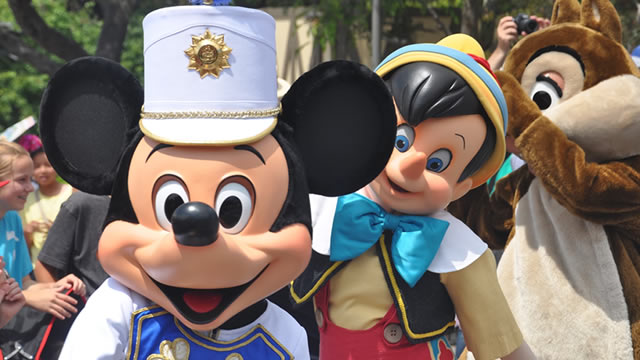
Darth Vader is coming to ChatGPT and OpenAI's Sora AI video app. The House of Mouse and OpenAI struck a three-year licensing agreement on Thursday to make Disney "the first major content licensing partner on Sora."It's also investing $1 billion into the AI pioneer. "As part of this new, three-year licensing agreement, Sora will be able to generate short, user-prompted social videos that can be viewed and shared by fans, drawing from a set of more than 200 animated, masked and creature characters from Disn ...
Warren Buffett hired Todd Combs to take over Berkshire's portfolio one day. Here's what close watchers say about his surprise exit.
Business Insider· 2025-12-11 11:22
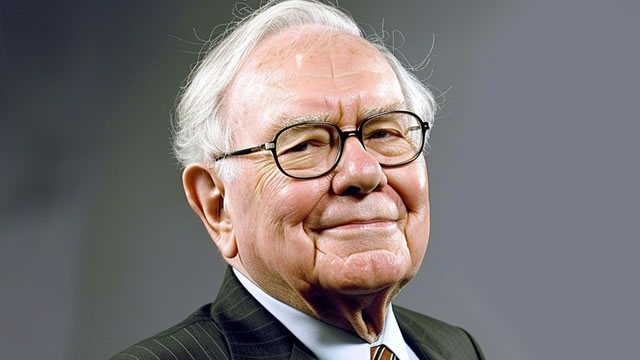
Core Insights - Todd Combs, who was hired by Warren Buffett in 2010 to help manage Berkshire Hathaway's investment portfolio, has left to join JPMorgan, coinciding with Buffett's impending retirement as CEO after 60 years [1][9]. Group 1: Combs' Contributions and Departure - Combs was praised by Buffett for his integrity and contributions to Berkshire, including a significant role in the acquisition of Precision Castparts for over $30 billion [5]. - His leadership at Geico led to a successful turnaround, which Buffett acknowledged in his recent letter, highlighting Combs' hard work and the "spectacular improvement" at the company [6]. - The announcement of Combs' departure was formal, with Buffett referring to him in a more distant manner compared to other colleagues, indicating possible dissatisfaction with the exit [8][9]. Group 2: Implications of Combs' Exit - Combs' departure raises questions about his diminishing role in managing Berkshire's portfolio, as he had taken on various responsibilities outside of direct investment management [11]. - There are suggestions that Combs may have aspired to a larger role in managing the portfolio, which was unlikely given Buffett's recent comments about Abel taking over capital allocation responsibilities [12][13]. - The transition to JPMorgan may reflect Combs' desire for new opportunities, especially as he resigned from his position on JPMorgan's board prior to starting his new role [10].
Walmart is one of the last major retailers that still doesn't accept Apple Pay. It probably won't anytime soon, either.
Business Insider· 2025-12-11 10:41
Core Insights - Walmart continues to avoid NFC-based payment options like Apple Pay and Google Pay, despite the growing trend among other retailers to adopt such technologies [1][2] - The company promotes its own payment solutions, such as the Walmart Pay app and the Scan and Go feature, which allow customers to bypass traditional checkout methods [2][4] - Younger consumers increasingly expect digital payment options, leading to frustration when retailers do not offer them [3] Payment Strategy - Walmart's avoidance of NFC payments aligns with its broader retail strategy, as upgrading to NFC-compatible hardware incurs costs that can be significant given the number of stores and terminals [4] - The company focuses on providing its own contactless payment alternatives through its apps, which it believes are sufficient for customer needs [5] - Walmart's preference for its own payment tools allows it to gather valuable customer data, enhancing its understanding of shopping habits [6] Competitive Landscape - Other major retailers, including Amazon, Target, and Costco, also utilize their own apps and membership programs to collect customer data [7] - While Walmart may reconsider its stance on NFC payments in the future, it currently benefits from its unique approach in the retail market [7]



3 Investing Ideas to Cash in on a Coming Economic Boom: Morgan Stanley
Business Insider· 2025-12-11 10:15
Core Viewpoint - Morgan Stanley suggests that despite some negative economic signals, the economy is in an "early cycle" environment, indicating potential for growth ahead [1][2]. Economic Indicators - Earnings revisions for the S&P 500 have rebounded from a low of negative 25% in April to around positive 15%, signaling improved business confidence [2]. - Wage growth has slowed to a three-month moving average of 4.1% year-over-year, down from 6.7% in July 2022, providing room for profit margin expansion [2][3]. - Consumer demand is expected to accelerate as companies gain higher pricing power, allowing them to raise prices without significantly affecting demand [3]. Federal Reserve Actions - The Federal Reserve is expected to cut rates, with two cuts anticipated in 2026, aimed at stimulating economic activity [3]. Market Projections - The S&P 500 is projected to rise by 14% in 2026, reaching 7,800 [4]. Investment Recommendations - Morgan Stanley recommends an "overweight" position on consumer discretionary stocks, which are expected to perform well during economic recoveries [5]. - Small-cap stocks are also expected to do well due to their cyclical nature and sensitivity to falling interest rates, with rising earnings growth noted in the Russell 2000 index [6]. - The financial sector is viewed positively, with expectations of improved loan growth benefiting banks [7]. Investment Vehicles - Investors can gain exposure to recommended sectors through ETFs such as the Vanguard Consumer Discretionary ETF (VCR), iShares Russell 2000 ETF (IWM), and iShares U.S. Financials ETF (IYF) [8].

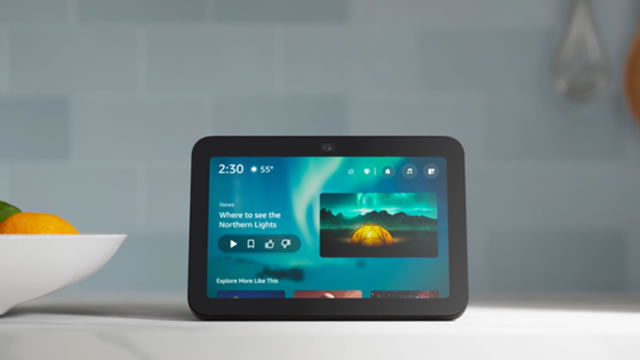
Amazon plans a new 'rush' pickup service as it doubles down on rapid delivery
Business Insider· 2025-12-11 10:00
Core Insights - Amazon is developing a "rush" pickup service to allow shoppers to collect orders from Amazon-owned stores within an hour, aiming to enhance delivery speed and convenience [1][3][10] Group 1: Service Development - The new "rush" pickup service will enable a "unified" order system, allowing customers to order from both Amazon's online marketplace and items in physical stores [2] - The pilot launch of this service is planned for at least one metro area by the first quarter of 2026, although the timeline may be subject to change [3] Group 2: Market Context - In-store pickup, or "click-and-collect," is experiencing significant growth, with total US sales projected to reach $112.96 billion in 2024, a 17% increase from 2023, and expected to grow to $129.33 billion by 2027 [8] - Approximately 152.9 million Americans, or 68% of digital buyers, are projected to use click-and-collect services by 2025 [8] Group 3: Competitive Landscape - Amazon leads in e-commerce sales, but Walmart has a competitive edge in delivery speed, reaching about 95% of American households within three hours due to its extensive store network [9] - Walmart is also a leader in click-and-collect services, with projected sales of $38.50 billion in 2024 [9] Group 4: Strategic Goals - The "rush" pickup service aims to meet customer demand for faster access to a wider product selection while optimizing Amazon's physical store network and logistics [10] - The initiative is part of Amazon's broader strategy to validate customer demand for rapid pickup and effectively integrate physical and digital offerings [10]