Business Insider

Search documents
Few workers are quitting right now. These people share why they did it anyway.
Business Insider· 2025-09-14 11:06
Group 1: Job Market Trends - The worker quit rate in the U.S. has remained around 2% for much of the year, marking one of the lowest levels since 2018, excluding the pandemic's onset [3] - There is a noticeable trend of "job-hugging" rather than "job-hopping," indicating that fewer people are leaving their jobs [3] Group 2: Personal Stories of Career Changes - Jessica Yen transitioned from data analytics to entrepreneurship, expressing a willingness to work longer hours for her own company [7] - Evelyn Ramli took a pay cut to switch to a corporate marketing role, reflecting uncertainty about her decision after leaving content creation [8] - Blair Lonergan left her attorney position to focus on a family lifestyle website, prioritizing lifestyle over financial gain [8] - Sofia Javier moved from PwC to Comcast as a senior financial analyst, encouraging others to pursue what makes them happy [8] - Cindy Sheahan improved her quality of life after moving to Italy, highlighting the personal benefits of her decision to quit her job [9] Group 3: Corporate Policies and Changes - Microsoft is implementing a return-to-office mandate requiring employees to work at least three days a week, starting in February 2026 [14][15] - The return-to-office policy will be phased, beginning with Seattle-area employees and expanding to other U.S. and international offices [15] Group 4: Economic Trends - Businesses are increasingly stratifying customers to boost revenue, particularly in sectors like entertainment, travel, and retail, where consumers face more choices [11]



5 Luxury Goods That Are Smart Investments: Birkin, Rolex
Business Insider· 2025-09-13 10:55
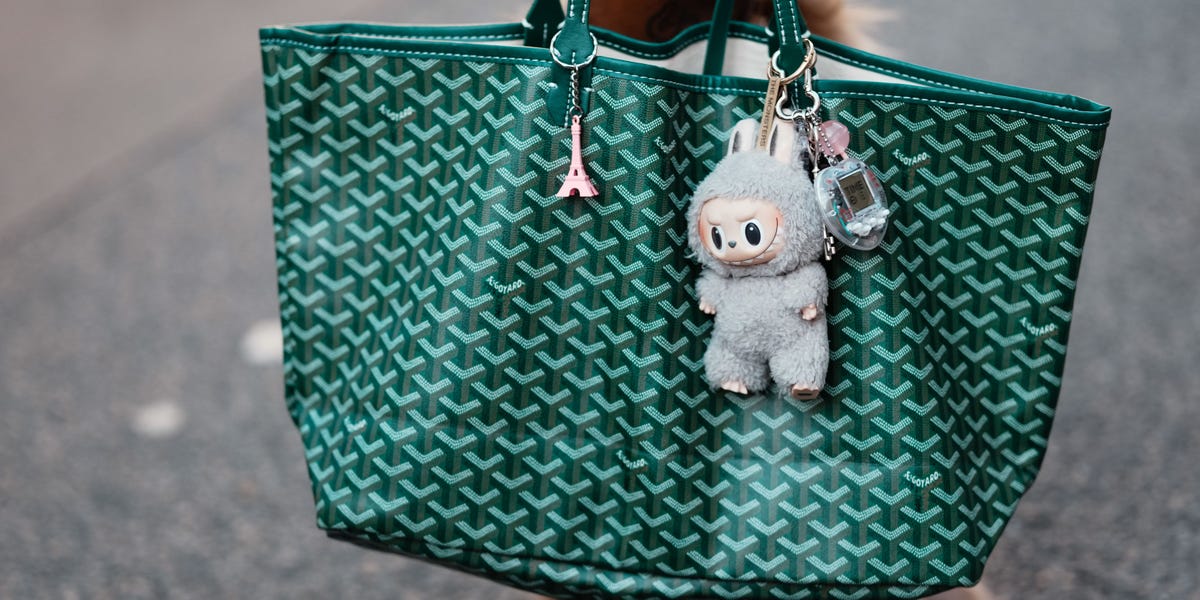
Core Insights - The resale market for luxury goods has significantly expanded, with one in three American luxury consumers engaging in buying or selling on resale platforms, indicating a growing trend towards secondhand luxury shopping [1] - A notable percentage of shoppers, 47%, consider the resale value of clothing before making purchases, highlighting a shift in consumer behavior towards investment-minded buying [1] - The RealReal's report indicates that certain luxury items have maintained or increased their resale value over time, driven by factors such as tariffs and market demand [2][3] Luxury Item Insights - The Louis Vuitton Speedy bag has seen a 13% increase in average resale price since 2021, with current resale prices ranging from $380 to $13,500 depending on model and condition [6][7] - The Hermès Birkin 30 bag commands an average resale price that is 1.7 times its retail price, with a 15% increase in average price since 2021, and current resale prices ranging from $9,450 to $350,000 [11][12] - The Goyard Saint Louis tote has experienced an 18% increase in average resale price since 2021, with resale prices ranging from $720 to $5,200 [16] - Van Cleef & Arpels' Alhambra jewelry line has seen a 20% increase in prices since 2021, with items priced between $1,425 and $165,000 [21]
Opendoor chair says the company currently has 1,400 employees but only needs 200 of them
Business Insider· 2025-09-13 00:47
Core Insights - Opendoor Technologies is facing significant operational inefficiencies, with cofounder Keith Rabois stating that the company is "bloated" and could reduce its workforce from 1,400 employees to around 200 [1][2] - The company has recently gained attention as a meme stock, with its stock price increasing by 470% year-to-date following the announcement of leadership changes [1] - Rabois criticized the company's culture, particularly regarding remote work and diversity, equity, and inclusion (DEI) initiatives, indicating a shift back to a focus on merit and excellence [2][7] Company Overview - Opendoor Technologies specializes in buying and selling homes, and it has recently seen a surge in stock performance, attributed to the rejoining of cofounders Rabois and Eric Wu on the board and the appointment of Kaz Nejatian as CEO [1] - The company currently employs 1,400 individuals, but Rabois believes that the majority of these positions are unnecessary, suggesting a drastic reduction in workforce [1] Cultural and Operational Changes - Rabois described the company's culture as "broken," emphasizing the ineffectiveness of remote work and the need to move away from DEI-focused initiatives [2][7] - The shift in focus will prioritize merit and excellence, indicating a potential restructuring of company values and operational strategies [2]


Tesla board chair says Elon Musk being involved in things outside of the company 'actually helps Tesla'
Business Insider· 2025-09-13 00:05
Core Insights - Tesla's board has crafted a new $1 trillion compensation package for CEO Elon Musk, aimed at motivating him to achieve 12 ambitious operational milestones, including increasing Tesla's valuation to $8.5 trillion and selling approximately 12 million cars over the next decade [1][2] Group 1: Compensation and Goals - The compensation package is designed to incentivize Musk to meet specific operational milestones [1] - Key milestones include reaching a valuation of $8.5 trillion and selling around 12 million cars in the next ten years [1] Group 2: Musk's External Ventures - Tesla's chair, Robyn Denholm, stated that Musk's involvement in various external ventures, such as SpaceX and Neuralink, positively impacts Tesla by providing motivation and resources [2][3] - Denholm emphasized that Musk's creative energies from outside endeavors benefit Tesla, despite some skepticism about this perspective [3] Group 3: Political Involvement - Tesla's board has expressed concerns regarding Musk's political involvement and has sought assurances that it will diminish in a timely manner [4] - Denholm acknowledged Musk's right to engage in politics but indicated that his previous roles in administration are behind him [4][8] Group 4: Investor Sentiment - Some investors and analysts have voiced concerns about Musk's focus, suggesting that the board should establish ground rules for his political activities [9][10] - Ross Gerber, an early Tesla supporter, argued that the company would benefit from a different CEO who could refocus on Tesla's core mission [11]


Bank of America names top deputies, offering clues to Moynihan's successor
Business Insider· 2025-09-12 22:10
Management Changes - Bank of America announced a management shake-up, promoting Jim DeMare and Dean Athanasia to co-presidents, while Alastair Borthwick was named executive vice president [1][2] - The new co-presidents will oversee the company's business lines, with individual business heads reporting to them [2] Succession Planning - CEO Brian Moynihan, who has led the bank since 2010, has not indicated plans to step down, but succession planning remains a topic of interest [3] - Moynihan mentioned that a succession plan is in place, although specific individuals were not named [3] Performance Highlights - Jim DeMare has been recognized for his contributions, with a notable 35% improvement in sales and trading revenue over the past three years highlighted by Moynihan [4]

The best Sony TVs of 2025
Business Insider· 2025-09-12 21:35
Core Insights - Sony's Bravia 8 II OLED is recognized as the best TV for enthusiasts seeking premium picture performance, outperforming competitors like LG and Samsung in certain aspects such as picture processing [2][8][11] - The Bravia 9 QLED is noted for its high peak brightness, making it suitable for bright rooms, while the Bravia 7 QLED offers a more affordable option with solid performance [21][32][34] Group 1: Product Performance - The Bravia 8 II OLED features a QD-OLED panel, providing pixel-level contrast and perfect black levels, with a peak brightness of approximately 1,560 nits on a 10% window and 1,900 nits on a 5% window, making it one of the brightest OLEDs available [11][12] - The Bravia 9 QLED achieves a peak brightness of over 2,600 nits, enhancing HDR content visibility and making it ideal for environments with significant glare [22][23] - The Bravia 7 QLED peaks at just under 2,000 nits, offering a bright image that competes well with other midrange options [34] Group 2: Technology and Features - The Bravia 8 II incorporates quantum dot technology, allowing for brighter images and high color saturation, resulting in exceptional visual quality [10][44] - All Sony TVs utilize the Google TV OS, providing smooth navigation and access to various streaming services, although the Bravia 8 II lacks backlit buttons on its remote [14][46] - The Bravia 9 employs a Mini LED backlight with local dimming, optimizing contrast control and minimizing blooming effects, which enhances overall viewing experience [23][24] Group 3: Market Positioning - Sony's high-end TVs, particularly the Bravia 8 II and Bravia 9, are positioned as premium products, often priced higher than competitors, reflecting their advanced technology and performance [1][3] - The Bravia 7 is highlighted as a more affordable option within Sony's lineup, appealing to consumers seeking quality without the premium price tag of flagship models [32][35] - Despite offering lower-priced models, Sony's entry-level TVs are often considered overpriced compared to budget alternatives from other brands [3]


Apple's iPhone Air launch hits a snag in China
Business Insider· 2025-09-12 19:04
Core Insights - Apple's new iPhone Air, launched as its thinnest phone at 5.6 millimeters, is facing challenges in China due to its eSIM-only design, which may not be supported by all local carriers [1] - Following the launch, Apple's website removed the initial release date for the iPhone Air in China, indicating potential delays in availability [2] - Apple lists major Chinese carriers, including China Mobile, China Telecom, and China Unicom, as eSIM supporters, but the timing of support is contingent on regulatory approval [3] Market Context - The iPhone Air is priced at 7,999 yuan (approximately $1,123) in China, amidst increasing competition from local brands like Xiaomi and Huawei, which offer more affordable options [7] - Despite competitive pressures, Apple's revenue in China grew by about 4% year over year last quarter, indicating some resilience in the market [7] - Analysts suggest that resolving the eSIM issue could enhance the iPhone Air's market performance in China, which is a critical region for Apple [8]


Lockheed Martin says the US is interested in its '5th-generation-plus' F-35 that uses tech from its failed 6th-generation bid
Business Insider· 2025-09-12 17:58
Core Viewpoint - The U.S. government is showing interest in Lockheed Martin's "fifth-generation-plus" concept for the F-35 stealth jet, which aims to incorporate advanced technologies previously developed for a failed sixth-generation fighter bid [1][10]. Group 1: Government Engagement and Interest - Lockheed Martin's CEO, Jim Taiclet, indicated that there is active engagement with the Department of Defense regarding the upgraded F-35, with expectations for discussions to reach the White House soon [1][13]. - Taiclet noted that while there is no contract yet, the upgraded F-35 could achieve near sixth-generation capabilities over time if it remains under the Pentagon's current approved plan [1][10]. Group 2: Technological Advancements - The proposed technology for the new jet includes stealth coating, improved weapons, and a more advanced engine, which are characteristic of sixth-generation systems [2]. - The company aims to update the F-35 to match 80% of the capabilities of Boeing's sixth-generation F-47 fighter at half the cost [9]. Group 3: Market Position and Financial Implications - The new jet is expected to be considerably lower-cost than a sixth-generation fighter, potentially undermining the rationale for purchasing Boeing's F-47 [3]. - Following the loss of the sixth-generation fighter bid to Boeing, Lockheed Martin's shares dipped but have since risen approximately 8% [3]. Group 4: Future Projections - Taiclet projected that the U.S. could have around 1,000 to 1,500 fifth-gen-plus capable F-35s in the future, as two-thirds of the 2,300 ordered F-35s are intended for the U.S. and could be upgraded with sixth-generation technology [12]. - The sixth-generation F-47 is expected to be operational by the end of 2029, according to the U.S. Air Force chief of staff [14].


Boeing's CEO says it might have to delay its much-anticipated new plane, the 777X, once again
Business Insider· 2025-09-12 10:56
Core Viewpoint - Boeing's 777X aircraft certification is significantly delayed, impacting financial forecasts and customer relations [1][2][4]. Group 1: Certification and Delays - Boeing CEO Kelly Ortberg acknowledged that the certification for the 777X is behind schedule, with no new technical issues reported but a substantial amount of work remaining [2][3]. - The initial service entry was planned for 2020, but the timeline has now shifted to 2026, with potential further delays into 2027 not ruled out [4][9]. Group 2: Financial Implications - Ortberg noted that even minor delays in the 777 program can have significant financial repercussions for Boeing [3][2]. - Following Ortberg's comments, Boeing's share price dropped by 3.3%, indicating investor concern over the delays [2]. Group 3: Customer Reactions - Emirates, the largest customer for the 777X, expressed frustration over the delays, with its president Tim Clark calling for a serious discussion regarding delivery forecasts [8]. - The 777X has garnered substantial interest, with 624 orders listed on Boeing's website, indicating strong market demand despite the delays [10].

'Y'all Street' is booming: What financial giants like Goldman Sachs and Bank of America are building in Texas
Business Insider· 2025-09-12 09:54
Core Insights - The trend of financial institutions relocating or expanding in Texas, particularly in Dallas, is gaining momentum, with Goldman Sachs' new campus being a significant indicator of this shift [2][7]. Company Developments - Goldman Sachs is investing $500 million in a new 800,000-square-foot campus in Dallas, expected to house over 5,000 employees and open in 2028, featuring various amenities [7]. - Bank of America is set to open a new campus in Dallas by 2027, accommodating around 1,000 employees, with plans for modern amenities [9][10]. - JPMorgan Chase's Plano campus has expanded to 1.5 million square feet, housing over 12,500 employees, with a significant increase in workforce since its opening in 2017 [13][14]. - The New York Stock Exchange is relocating its Chicago location to Dallas, with the new NYSE Texas campus expected to open in 2025 [18][19]. - Charles Schwab has established its global headquarters in Westlake, Texas, with a campus that includes multiple facilities and employs nearly 10,000 people across the state [22][23]. - Nasdaq is in the process of scouting a location for a new regional headquarters in Dallas, continuing its presence in Texas [27][28]. - Citigroup has maintained a campus in Irving, Texas, since 2000, employing approximately 11,000 staff across various divisions [31][32]. - Wise, a fintech company, is expanding its office space in Austin, Texas, reflecting growth in the region [35][36]. Industry Trends - The migration of financial firms to Texas is driven by factors such as lower taxes, lighter regulations, and a more affordable cost of living, contributing to the emergence of Dallas as a new financial hub [2][8].