TechCrunch

Search documents
Facebook Group admins complain of mass bans; Meta says it's fixing the problem
TechCrunch· 2025-06-24 20:36
Core Insights - Meta is facing significant backlash due to mass bans affecting Facebook Groups, with thousands of groups impacted both in the U.S. and internationally [1][8] - The cause of these mass suspensions is suspected to be related to faulty AI-based moderation, although Meta has not confirmed this [2][9] - Users are organizing to share information and strategies regarding the bans, with many advising against appealing the suspensions immediately [5][10] Impact on Facebook Groups - Many suspended groups focus on benign topics such as savings tips, parenting support, and hobbies, which typically do not raise moderation concerns [3][4] - Group admins have reported receiving vague violation notices for content that does not exist in their groups, such as "terrorism-related" content or nudity [4][6] - Some large groups, with memberships in the tens of thousands to millions, have been affected, raising concerns about the effectiveness of moderation practices [4][8] User Reactions and Community Response - The Reddit community dedicated to Facebook is filled with complaints from group admins and users expressing frustration over the mass suspensions [6][10] - A petition has been initiated, gathering over 12,380 signatures, urging Meta to address the ongoing issues [10] - Some users are considering legal action due to the impact on their businesses and community engagement [10] Broader Industry Context - Other social networks, including Pinterest and Tumblr, have also experienced complaints about mass suspensions, suggesting a wider issue with AI moderation across platforms [9] - Pinterest acknowledged an internal error as the cause of its mass bans, while Tumblr linked its issues to testing a new content filtering system [9]



Feds question Ford in hands-free driving investigation
TechCrunch· 2025-06-24 16:32
Core Insights - The National Highway Traffic Safety Administration (NHTSA) is investigating Ford's BlueCruise hands-free driver-assistance system following two fatal crashes, marking a significant regulatory scrutiny on the technology [1][4][8] - The NHTSA has sent Ford a detailed list of 25 questions regarding the BlueCruise system, including requests for internal documents related to the crashes and the software's development [2][3][8] - The investigation was escalated to an "engineering analysis" level, which is a precursor to potential recall actions by the NHTSA [3] Group 1: Investigation Details - The NHTSA's Office of Defects Investigation opened the investigation in April 2024 after two fatal crashes involving BlueCruise, where drivers crashed into stationary vehicles [4][8] - The NHTSA's inquiry includes basic questions about the vehicles equipped with BlueCruise and more complex requests for information on the software's logic and algorithms for hazard detection [2][8] - Ford has until August 6 to respond to the NHTSA's questions or risk facing civil penalties [9] Group 2: System Capabilities and Limitations - BlueCruise is designed to operate on pre-mapped highways, utilizing cameras, radar sensors, and software for steering, speed, and braking [5] - The system includes an in-cabin camera with eye-tracking to ensure driver attention, but the recent crashes have raised concerns about its ability to detect stationary objects, a known issue with similar systems like Tesla's [5][6][8] - The NHTSA noted limitations in BlueCruise's performance under poor visibility conditions, as both fatal incidents occurred at night [8]


Amazon to spend over $4B to expand Prime delivery to rural communities in the US
TechCrunch· 2025-06-24 14:09
Amazon announced on Tuesday that it is expanding its Same-Day and Next-Day delivery services to over 4,000 small cities and towns across rural U.S. This expansion will bring its fast Prime delivery service to millions of customers in places such as Asbury, Iowa; Fort Seneca, Ohio; Lewes, Delaware; North Padre Island, Texas; and Sharptown, Maryland.The e-commerce giant plans to invest more than $4 billion to triple the size of its delivery network by 2026. Amazon has recognized a growing demand for faster de ...

UK may require Google to give users alternative search options and rank its results ‘more fairly'
TechCrunch· 2025-06-24 14:05
Core Viewpoint - The U.K.'s Competition and Markets Authority (CMA) is considering designating Google with "strategic market status" under the new Digital Markets Competition Regime, which would impose various measures to enhance competition and user choice in search services [1][2][4]. Group 1: Proposed Measures - Google would be required to provide choice screens for users to select and switch between search services, potentially including AI Assistants [2]. - The search results would need to be ranked more fairly, ensuring better transparency and equity in how results are displayed [1][2]. - Publishers would gain greater control over how their content is utilized in Google's AI services, including AI Overviews and the Gemini AI Assistant [2]. - Users would be allowed to transfer their data, such as search history, enhancing user autonomy [2]. Group 2: Market Context - In the previous year, U.K. businesses spent over £33,000 per advertiser on Google search ads, indicating a significant reliance on Google's advertising platform [3]. - Google search dominates the U.K. market, accounting for more than 90% of all general search queries, suggesting a lack of effective competition [3]. - The CMA aims to unlock greater opportunities for innovation across the U.K. tech sector and the broader economy through these proposed measures [4]. Group 3: Consultation Process - The CMA is currently gathering opinions from industry stakeholders regarding the proposed designation and measures [4]. - A decision on the designation is expected by October 13 [4].


Uber and Waymo's commercial robotaxi service is open for business in Atlanta
TechCrunch· 2025-06-24 11:00
Core Insights - Waymo and Uber have launched the "Waymo on Uber" robotaxi service in Atlanta, expanding their existing partnership that began in Austin [1][10] - The service will initially cover approximately 65 square miles in Atlanta, with plans for fleet expansion over time [1][3] Company Operations - Uber has established partnerships with 18 autonomous vehicle companies and currently has an annual run-rate of 1.5 million mobility and delivery AV trips on its network [2] - Waymo provides 250,000 paid robotaxi rides weekly across Austin, Los Angeles, Phoenix, and San Francisco, with the addition of Atlanta expected to increase these numbers [2] Fleet Management - Waymo's fleet in Atlanta is currently in the "dozens" but is expected to grow to hundreds as the service expands [3] - The "Waymo on Uber" service allows Uber users to set preferences in the app to increase the likelihood of being matched with a Waymo robotaxi [5] User Experience - When matched with a Waymo, Uber users can choose to accept the ride or switch to a human-driven vehicle [6] - The cost of robotaxi rides will be equivalent to UberX, Uber Comfort, or Uber Comfort Electric rides [8] Operational Responsibilities - Uber is responsible for the charging, maintenance, and cleaning of the autonomous vehicles, while Waymo oversees the technology and autonomous operations [9]

Tesla's robotaxis have already caught the attention of federal safety regulators
TechCrunch· 2025-06-23 22:44
Core Viewpoint - The U.S. National Highway Traffic Safety Administration (NHTSA) has contacted Tesla following reports of its robotaxis violating traffic laws during a limited rollout in Austin, raising concerns about the safety of the autonomous vehicle technology [1][2]. Group 1: NHTSA's Involvement - NHTSA is aware of incidents involving Tesla robotaxis and is gathering additional information from the manufacturer [2] - The agency emphasizes that it enforces laws on all vehicle manufacturers and investigates potential safety defects without pre-approving new technologies [2] Group 2: Tesla's Robotaxi Launch - Tesla began offering paid rides in its robotaxis to invited customers in South Austin, marking a significant test of its autonomous vehicle technology [1][3] - The robotaxis are equipped with an unsupervised version of Tesla's Full Self-Driving (FSD) software, which allows them to drive autonomously, although a human safety monitor is present during rides [3] Group 3: Safety Concerns - Videos have surfaced showing Tesla robotaxis exceeding speed limits and swerving into the wrong lane, raising safety concerns [3] - An incident was reported where a Tesla robotaxi abruptly hit its brakes without apparent reason, particularly when approaching police vehicles [4]

US insurance giant Aflac says customers' personal data stolen during cyberattack
TechCrunch· 2025-06-23 14:50
Core Points - Aflac, a major U.S. insurance company, reported a cyberattack that resulted in the theft of customer personal information [1][2] - The company confirmed the breach occurred on June 12, with personal data including Social Security numbers and health information being compromised [2][3] - Aflac's systems were not affected by ransomware, and the breach was attributed to a cybercrime group targeting the U.S. insurance industry using social engineering tactics [3][4] Company Impact - Aflac has approximately 50 million customers, making it a significant player in the insurance market [4] - The breach has raised concerns as it follows a trend of cyberattacks on other U.S. insurance companies, indicating a broader threat to the industry [4][6] Industry Context - The cybercrime group known as Scattered Spider has been linked to multiple intrusions in the U.S. insurance sector, employing social engineering tactics to gain access [5][6] - Recent attacks have also affected other companies like Erie Insurance and Philadelphia Insurance, highlighting a pattern of financially motivated cyberattacks across the insurance and retail sectors [6]

Tesla launches robotaxi rides in Austin with big promises and unanswered questions
TechCrunch· 2025-06-22 20:58
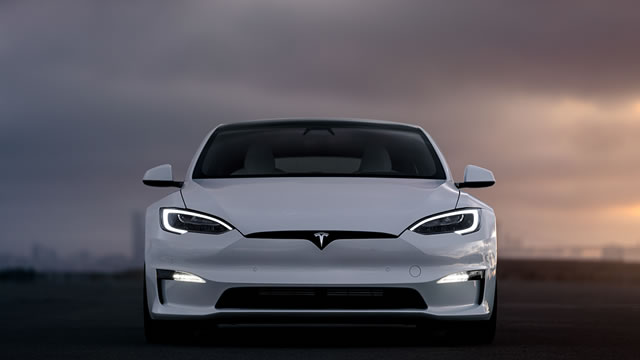
Core Viewpoint - Tesla has initiated driverless rides using Model Y SUVs in Austin, marking a significant test of CEO Elon Musk's vision for fully autonomous vehicles relying solely on cameras and AI technology, differing from competitors like Waymo [1] Group 1: Service Launch Details - The robotaxi service began with a flat fee of $4.20 per ride, confirmed by social media videos and local sources [2] - Early-access invitations were sent to selected customers who could use a new robotaxi app to hail rides, although the number of invitees remains unclear [3] - The service operates daily from 6:00 a.m. to 12:00 a.m., with limitations during inclement weather, and includes a Tesla employee as a safety monitor in the front passenger seat [4] Group 2: Initial Fleet and Operations - The initial fleet consists of approximately 10 Model Y SUVs, operating in a limited area of South Austin [5] - Observations noted a Tesla robotaxi depot in South Austin, with vehicles entering and exiting under employee supervision [7] Group 3: Safety and Monitoring - The role of the human safety monitor is not fully defined, but they may have a kill switch to stop the vehicle if necessary [12] - Unlike traditional testing phases where two operators were present, Tesla is employing a single safety monitor during commercial operations [13] Group 4: Technology and Features - The service utilizes 2025 Model Y vehicles equipped with a new "unsupervised" version of Tesla's Full Self-Driving software, without using in-cabin cameras during rides unless requested or in emergencies [14] - Riders are encouraged to document their experiences, but must adhere to rules that prohibit certain behaviors, with potential penalties for violations [14] Group 5: Company Communication and Transparency - Leading up to the launch, information was primarily shared by Tesla's supporters, with the company attempting to limit external information requests [9][10] - Tesla claims to seek transparency, but has cited confidentiality and trade secrets as reasons for withholding certain information [11] Group 6: Initial User Experiences - Early reports from riders indicate a smooth experience, although there were instances where Tesla's remote support team had to intervene [15]
Nvidia wants in on the nuclear renaissance, invests in Bill-Gates backed TerraPower
TechCrunch· 2025-06-20 16:41
Funding and Investment - TerraPower announced a new funding round of $650 million to support the construction of its first commercial power plant [1] - Nvidia's venture arm, NVentures, participated in this funding round, marking its first investment in the energy sector [1] - Bill Gates and HD Hyundai, both existing investors, also contributed to this funding round [1] Project Development - TerraPower began construction of its first power plant in Wyoming in June 2024, although it has not yet received approval for the reactor [2] - The company anticipates receiving the necessary permits in the following year, supported by the favorable regulatory environment under the Trump administration [2] - The first reactor is expected to generate 345 megawatts of electricity, positioning it between conventional large reactors and future small modular reactors [2] Reactor Technology - TerraPower's Natrium reactors utilize molten sodium for cooling instead of water, allowing for a more efficient operation [3] - The design incorporates excess sodium to maintain operation during low demand periods, storing heat for later use when demand increases [3] - This operational flexibility enables Natrium reactors to maintain a steady output, addressing the challenge of nuclear plants' inability to easily ramp production up or down [3] Future Plans and Costs - The company claims it can complete a reactor within three years after the initial concrete is poured, although significant site preparation is required beforehand [7] - The projected cost for the first Natrium reactor could reach $4 billion, with the Department of Energy potentially covering half of this expense [7] - TerraPower previously considered a different reactor design but shifted to the Natrium design due to uncertainties [6]

After trying to buy Ilya Sutskever's $32B AI startup, Meta looks to hire its CEO
TechCrunch· 2025-06-20 15:32
Group 1 - Meta is actively pursuing AI talent, attempting to acquire Safe Superintelligence, a $32 billion AI startup co-founded by Ilya Sutskever [1] - Although Sutskever declined the acquisition, Meta is in discussions to hire Safe Superintelligence's CEO, Daniel Gross, and former GitHub CEO Nat Friedman [2] - The addition of Gross and Friedman could enhance Meta's AI superintelligence lab, leveraging their experience in AI research and investment [3] Group 2 - Meta is also reportedly investing in Friedman and Gross's joint venture firm, NFDG, which has backed notable AI startups like Perplexity and Character.AI [2] - Earlier this month, Meta announced the hiring of Scale AI CEO Alexandr Wang and several executives from a data labeling startup [3]