
芯世相

Search documents
【买卖芯片找老王】260205 华邦/美光/三星/海力士/TI/英飞凌
芯世相· 2026-02-05 06:16
算笔账 一批十万的呆料压在库存 每月仓储费➕资金成本至少5k 放半年就亏3万 有料单不知道怎么推广? 芯片超人已经 累计服务2.2万用户 ,打折清库存,最快半天完成交易! 找不到,卖不掉,价格还想再好 点 ,都可以来找我们! 优势物料,特价出售 品牌 型号 年份 数量 华邦 W25Q40CLWI 22+ 30K 美光 MT41K128M16JT-125 IT:K 两年内 30K SAMSUNG/三星 K4B4G1646E-BCNBO00 25/23+ 10K | SAMSUNG/三星 | K4B4G1646E-BYMA | 23+ | 10K | | --- | --- | --- | --- | | SAMSUNG/三星 | K4A4G165WF-BCTD000 | 25+ | 10K | | SAMSUNG/三星 | K4A8G165WC-BCTD000 | 25+ | 10K | | SAMSUNG/三星 | K4A8G165WG-BCWEO00 | 25+ | 10K | | KIOXIA/铠侠 | THGBMTG5D1LBAIL | 25+ | 10K | | SAMSUNG/三星 | KLM4G1 ...


75亿美元!TI官宣收购Silicon Labs,图啥?
芯世相· 2026-02-05 06:16
Group 1 - The core viewpoint of the article is the announcement of Texas Instruments (TI) acquiring Silicon Labs for approximately $7.5 billion, marking TI's largest acquisition since 2011 [3][5][6] - The acquisition aims to enhance TI's position in the wireless connectivity chip market for industrial and consumer electronics applications [3][5] - Silicon Labs' stock surged by 49% following the announcement, reaching its highest level in four years [3] Group 2 - The acquisition agreement was officially announced on February 4, 2023, after initial reports surfaced on February 3 [3][5] - TI will pay $231 per share in cash to Silicon Labs shareholders, with the transaction expected to close in the first half of 2027 [5][6] - The deal is anticipated to generate approximately $450 million in manufacturing and operational cost savings annually within three years post-closure, subject to regulatory approvals [6][8] Group 3 - TI's strengths lie in analog chips for managing electronic device signals and power, focusing on everyday devices like smartphones, automotive, and medical equipment [5][7] - Silicon Labs specializes in low-power connectivity solutions, particularly for smart home and industrial devices, having previously divested some automotive chip assets [5][7][12] - The merger is expected to create a competitive product portfolio in wireless and analog chips, leveraging TI's manufacturing capabilities and Silicon Labs' specialized technology [5][8][14] Group 4 - TI's revenue has been under pressure since Q4 2022, with expectations of recovery starting in 2025, projecting revenues of $17.682 billion, a 13% increase year-over-year [8][9] - Silicon Labs experienced a decline in revenue from $720 million in 2021 to $580 million in 2024, but showed signs of recovery with a projected revenue of $785 million in 2025, a 34% increase [12][12] - The combined entity will enhance customer engagement through improved market channels and cross-selling opportunities, aiming for significant synergies post-acquisition [14]



华邦的存储芯片,最近更火了
芯世相· 2026-02-04 08:53
有华邦的热门料号,一个月内涨幅惊人 。 热搜榜上 ,华邦 出现得更频繁 。 行业群里求购、出 货信息也肉眼可见地变密。 阅读本文你将了解: 华邦最近啥情况,需求主要集中在哪些型号上?华邦的热度是怎样变化的? 为什么华邦火了,这是一家怎样的公司? 01 我是芯片超人花姐,入行20年,有50W+芯片行业粉丝。 有很多不方便公开发公众号的, 关于芯片买卖、关于资 源链接等, 我会分享在朋友圈 。 扫码加我本人微信 华邦,最近在芯片现货市场更火了。 华邦哪些料最火? 最近一两个月,华邦在现货市场的表现瞩目,价格与热度皆大幅上涨。以华邦最火热的 W25Q128JVSIQ 为例,近期1个月内 从 6元涨到9-10元 。 与此同时,华邦的其他料号近期热度也开始明显升高,在第三方网站热搜榜上,华邦在TOP10占 据的位置也明显变多。而在行业群里,华邦的求购与出售消息也有明显增多。 根据第三方网站热搜榜以及行业群求购出售消息,我们统计了近期华邦比较热门的型号 ( 仅供参 考,不构成交易建议) : | 华邦近期热门芯片分析 | | | | --- | --- | --- | | 型号 | 菜蛋 | | | W25Q128JVSI ...

【买卖芯片找老王】260204 华邦/美光/金士顿/TI/英飞凌/Cypress
芯世相· 2026-02-04 08:53
算笔账 一批十万的呆料压在库存 每月仓储费➕资金成本至少5k 放半年就亏3万 有料单不知道怎么推广? 芯片超人已经 累计服务2.2万用户 ,打折清库存,最快半天完成交易! 找不到,卖不掉,价格还想再好 点 ,都可以来找我们! 优势物料,特价出售 品牌 型号 年份 数量 华邦 W25Q40CLWI 22+ 30K 华邦 W25Q16JVBYIQ 无 98210 金士顿 EMMC16G-MW28-GA01 两年内 3040 | 金士顿 | EMMC32G-TS0A-GA01 | 两年内 | 4560 | | --- | --- | --- | --- | | 金士顿 | EMMC64G-TY29-GA5B | 两年内 | 6080 | | Fitipower/天钰 | FP6381AS5CTR | 21+ | 10000 | | Cypress/赛普拉斯 | S29GL032N90TFI040 | 2046 | 960 | | SGMICRO/圣邦微 | SGM2588CYN5G/TR | 20+ | 3000 | | POWLICON/宝砾微 | PL56001IQN20A | 23+ | 4000 | | T ...

【买卖芯片找老王】260203 美光/华邦/GD/TE/博通/Molex
芯世相· 2026-02-03 08:37
算笔账 一批十万的呆料压在库存 每月仓储费➕资金成本至少5k 放半年就亏3万 有料单不知道怎么推广? 芯片超人已经 累计服务2.2万用户 ,打折清库存,最快半天完成交易! 找不到,卖不掉,价格还想再好 点 ,都可以来找我们! 优势物料,特价出售 | 品牌 | 型号 | 年份 | 数量 | | --- | --- | --- | --- | | WINBOND/华邦 | W25Q40CLWI | 22+ | 30K | | Micron | MT60B4G4HB-56B:G | 22+ | 4000 | | Micron | MT60B4G4HB-48B:A | 22+ | 6000 | | Micron | MT60B4G4HB-48B:A | 22+ | 1154 | | --- | --- | --- | --- | | Micron | MT53E1536M32D4DE-046 WT:C | 25+ | 10K | | BROADCOM/博通 | BCM53415A0KFSBG | 23+ | 1400 | | GD/兆易创新 | GD25LT512MEBARY-SK | 25+ | 10000 | | ...

第一波人形机器人倒闭潮,来了
芯世相· 2026-02-03 08:37
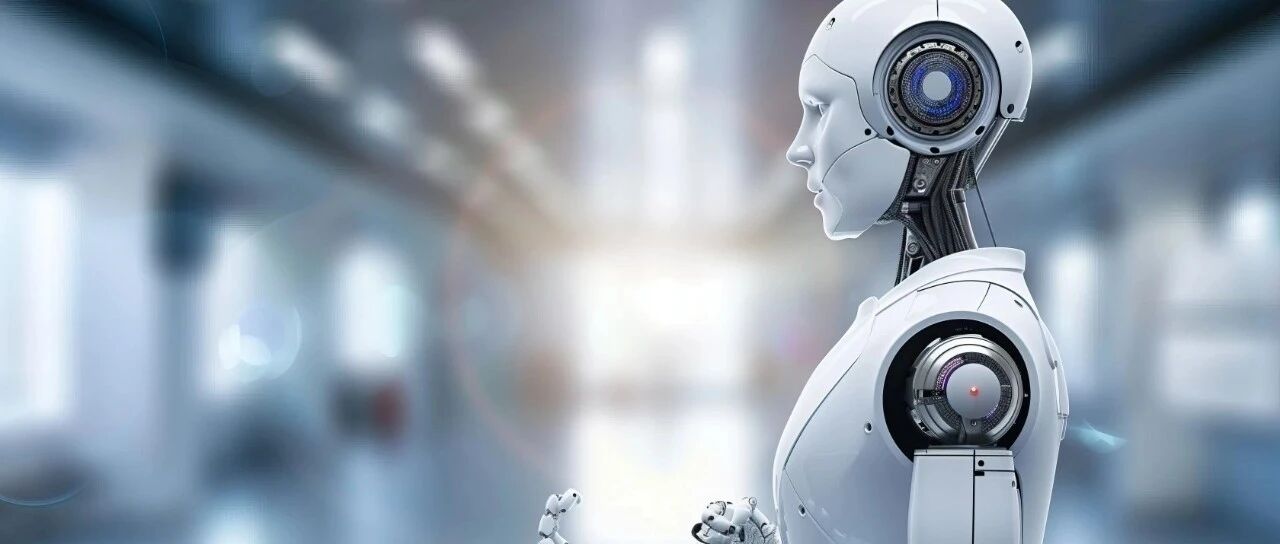
Core Viewpoint - The humanoid robot industry is experiencing a dual reality in 2025, with significant financing and market activity on one side, while many companies face collapse due to operational and financial challenges on the other [4][10]. Group 1: Industry Overview - In 2025, the humanoid robot sector saw 57 billion yuan in financing, with nearly 30 companies preparing for IPOs, while over 100 companies are struggling, leading to a stark divide between the leading and lagging firms [4][14]. - The industry is undergoing a brutal elimination process, with many once-prominent companies failing to transition from concept to production, revealing a gap between technological enthusiasm and commercial viability [4][9]. Group 2: Company Failures - K-Scale Labs, a notable startup, collapsed just before mass production due to cash flow issues, highlighting the challenges faced by U.S. companies lacking a complete local supply chain [5][10]. - Rethink Robotics, a pioneer in collaborative robots, faced its second closure in 2025 after failing to meet market expectations, demonstrating the risks of rushed product launches [6][10]. - The closure of Embodied, which produced a social robot for children, underscores the vulnerabilities of cloud-dependent models, as the company's failure rendered its product useless [8][10]. - iRobot, known for its Roomba, filed for bankruptcy in December 2025, attributed to prolonged financial struggles and competition from lower-priced alternatives [8][10]. Group 3: Common Causes of Failure - The primary reasons for company failures include funding shortages, commercialization failures, product homogeneity, and insufficient technological reserves [10][11]. - Funding shortages are critical, as many companies, like K-Scale Labs and iRobot, faced insurmountable debts and cash flow issues leading to their demise [10][11]. - Over 50% of humanoid robot orders are primarily for public relations and data collection rather than genuine productivity, indicating a failure in commercial viability [11][12]. - Product homogeneity has led to a competitive landscape where many companies produce similar offerings, diluting their market differentiation [12][13]. Group 4: Future Outlook - The humanoid robot industry is expected to see a significant shift in 2026, with a focus on industrial applications rather than academic research, as companies seek to establish reliable commercial orders [14][15]. - Predictions for global humanoid robot shipments in 2026 vary, with estimates ranging from 30,000 to over 50,000 units, depending on technological advancements [15]. - Surviving companies must differentiate their products, establish real commercial cycles, maintain funding capabilities, and leverage data to enhance AI models [15][16].
村田最新业绩:MLCC需求,暴增!
芯世相· 2026-02-03 08:37
Core Viewpoint - Murata Manufacturing reported a 4.3% year-on-year increase in net sales for Q3 of FY2025, reaching 467.5 billion yen, while operating profit fell by 50.2% to 37.9 billion yen due to goodwill impairment related to the acquisition of Resonant [3][5]. Financial Performance - Net sales for Q3 FY2025 were 467.5 billion yen, up from the previous year, while operating profit dropped to 37.9 billion yen, a significant decline of 50.2% [3][4]. - Net profit decreased by 64.8% to 25 billion yen, attributed to the impairment loss from the Resonant acquisition [3][4]. - The company’s revenue from passive components, including capacitors, grew by 11.7% to 295.5 billion yen, with MLCC sales increasing by 12.2% to 239.1 billion yen [8][10]. Market Demand and Orders - Demand for MLCCs in the AI server sector is strong, leading to a 29.4% increase in capacitor orders to 268.1 billion yen [6][12]. - The total order amount for Q3 was 500.7 billion yen, reflecting an 11.5% year-on-year increase, with a book-to-bill ratio of 1.07, indicating orders slightly exceeded sales [6][12]. Strategic Focus - The company plans to prioritize gaining market share in the high-end smartphone segment, which will significantly impact the SAW filter business [6]. - There is a cautious approach regarding price increases, with the company considering market conditions before making any decisions [3][6]. Future Outlook - The full-year sales forecast for FY2025 has been raised by 60 billion yen to 1.8 trillion yen, driven by the depreciation of the yen and increased demand from AI servers and smartphones [12][13]. - However, operating profit expectations have been lowered by 10 billion yen to 270 billion yen due to the impact of impairment losses [12][13].

【买卖芯片找老王】260202 美光/华邦/南亚/TE/博通/村田
芯世相· 2026-02-02 06:08
芯片超人已经 累计服务2.2万用户 ,打折清库存,最快半天完成交易! 找不到,卖不掉,价格还想再好 点 ,都可以来找我们! 优势物料,特价出售 算笔账 一批十万的呆料压在库存 每月仓储费➕资金成本至少5k 放半年就亏3万 有料单不知道怎么推广? | 品牌 | 型号 | 年份 | 数量 | | --- | --- | --- | --- | | WINBOND/华邦 | W25Q40CLWI | 22+ | 30K | | Micron | MT60B4G4HB-56B:G | 22+ | 4000 | | Micron | MT60B4G4HB-48B:A | 22+ | 6000 | | Micron | MT60B4G4HB-48B:A | 22+ | 1154 | | --- | --- | --- | --- | | Micron | MT53E1536M32D4DE-046 WT:C | 25+ | 10K | | BROADCOM/博通 | BCM53415A0KFSBG | 23+ | 1400 | | MACOM | MAAM-011185 | 22+ | 82177 | | MACOM | ...

上海存储芯片“小巨人”冲刺港交所!年入10亿,市值275亿
芯世相· 2026-02-02 06:08
我是芯片超人花姐,入行20年,有50W+芯片行业粉丝。 有很多不方便公开发公众号的, 关于芯片买卖、关于资 源链接等, 我会分享在朋友圈 。 扫码加我本人微信 作者 | ZeR0 来源 | 芯东西(ID:aichip001) 芯东西1月30日报道,1月26日,上海高性能非易失性存储(NVM)芯片设计公司 聚辰股份 正式 递表港交所。 根据弗若斯特沙利文的资料,按2023年及2024年收入计,聚辰股份是 全球第三、 中国第一大 EEPROM供应商 ,以及 全球第二大DDR5 SPD芯片供应商 。 全球能够大规模提供配套DDR5存储器模组的SPD芯片供应商仅有 2家 。按2024年收入计,聚辰股 份拥有全球DDR5 SPD芯片市场超过 40% 的份额,且拥有全球EEPROM市场 14.0% 的份额。 在消费电子EEPROM板块,该公司在摄像头模组EEPROM及液晶面板EEPROM市场亦分别以 40.3%和21.8%的份额排名 全球第一 。 聚辰股份成立于2009年11月,致力于满足AI时代高速迭代与扩容的存储需求,研发及供应 SPD芯 片、EEPROM、NORFlash 等关键存储类芯片 、 摄像头马达驱动芯片等 ...
印度芯片强国梦:越努力,越遥远?
芯世相· 2026-01-31 01:06
Core Viewpoint - The article discusses the ongoing challenges and historical context of India's semiconductor industry, highlighting the repeated failures in attracting foreign investment and technology partnerships, despite high expectations and strategic initiatives [4][10][51]. Group 1: Historical Context - India's semiconductor industry has a high starting point, with Bharat Electronics Ltd. producing silicon and germanium transistors as early as 1962, which was ahead of the global curve [14][16]. - The collaboration with Fairchild Semiconductor in the 1960s failed due to India's stringent licensing requirements and bureaucratic inefficiencies, leading to missed opportunities for technological advancement [19][22]. - The establishment of SCL in 1984, supported by significant government investment, ultimately failed due to a catastrophic fire and subsequent bureaucratic delays, resulting in a loss of competitive edge [23][25][26]. Group 2: Current Challenges - India's ambition to become a "chip superpower" is hindered by a lack of core technology and the inability to effectively utilize its resources, leading to a reliance on low-value manufacturing [27][30][51]. - Recent attempts to attract foreign investment, such as the partnership between Foxconn and Vedanta, have faltered due to India's slow policy implementation and lack of a coherent semiconductor strategy [40][50]. - The exit of Foxconn from a $19.5 billion semiconductor project underscores the fragility of India's "market for technology" approach, revealing deeper issues in the industry [51][52]. Group 3: Structural Issues - The inefficiency of India's bureaucratic system creates hidden costs for foreign companies, complicating project execution and leading to delays [82][83]. - Resource management in India is inefficient, particularly regarding water and power supply, which are critical for semiconductor manufacturing [88][93]. - Despite a large pool of engineers, the high turnover rates and focus on low-value tasks contribute to a talent drain, undermining the industry's potential [96][100]. Group 4: Future Outlook - The article emphasizes the need for India to address its foundational issues, such as infrastructure, bureaucratic inefficiencies, and talent management, to successfully develop its semiconductor industry [102][103]. - The collaboration between Intel and Tata Group is seen as a potential turning point, but the article stresses that India must demonstrate a commitment to overcoming past challenges to achieve meaningful progress [104].

