芯世相

Search documents
【买卖芯片找老王】260126 美光/SK海力士/三星/Vishay/TDK/英飞凌/Skyworks
芯世相· 2026-01-26 04:32
Core Insights - The article discusses the challenges faced by companies in managing excess inventory, particularly in the semiconductor industry, highlighting the financial burden of storage and capital costs associated with unsold materials [1] - It emphasizes the services provided by a company called "Chip Superman," which has successfully served 22,000 users and offers rapid inventory clearance solutions [2][11] - The article lists various semiconductor components available for sale at discounted prices, indicating a significant inventory of over 50 million chips valued at over 100 million [10] Group 1: Inventory Management - Companies are incurring monthly storage and capital costs of at least 5,000, leading to potential losses of 30,000 after six months if inventory remains unsold [1] - The article suggests that companies struggling to promote their materials can seek assistance from Chip Superman [1] Group 2: Services Offered - Chip Superman has a smart warehouse spanning 1,600 square meters, with over 1,000 models and 100 brands in stock, totaling 50 million chips [10] - The company claims to complete transactions in as little as half a day, providing a quick solution for businesses looking to clear their inventory [11] Group 3: Product Listings - A detailed list of available semiconductor components is provided, including brands like Micron, SK Hynix, and Samsung, with quantities ranging from 1,360 to 44,000 units for various models [5][6][7] - The article also includes a request for specific components, indicating ongoing demand in the market [8]





内存涨价,一台车会涨多少钱?
芯世相· 2026-01-24 01:06
Core Viewpoint - The article discusses the significant impact of rising memory prices on the automotive industry, driven by increased demand from AI applications and the structural changes in memory consumption patterns [5][9][10]. Group 1: Memory Price Increase Impact - In early 2026, memory prices surged, affecting the entire tech industry due to supply constraints, particularly in the automotive sector, which faces both cost pressures and supply stability concerns [5][8]. - The core drivers of the current memory price increase are not traditional supply-demand fluctuations but rather the shift in AI applications from training to inference, leading to a structural change in memory consumption [9][10]. - The automotive industry is experiencing a complex situation where the demand for memory in smart vehicles has increased significantly, with requirements rising from a few GB to 64GB or even 256GB in high-end models [9][10]. Group 2: Cost Impact on Automotive - For a smart electric vehicle priced at 200,000 yuan, the cost of onboard memory typically ranges from 1,000 to 3,000 yuan. A 50% increase in memory prices could raise costs by 500 to 1,500 yuan, while a 100% increase could raise costs by 1,000 to 3,000 yuan [11]. - The real concern for automakers is not just the increased costs but the stability of supply, as memory may become a new risk point in the supply chain, potentially affecting production schedules and delivery timelines [12][14]. Group 3: Differentiated Impact on Automakers - Larger automakers can mitigate price increase risks through long-term procurement agreements and diversified supplier strategies, while smaller firms may struggle due to limited bargaining power and supply chain resilience [14][16]. - The memory price increase is expected to push up vehicle prices, reflecting the limited profitability of automakers compared to AI giants, which dominate the memory supply chain [16]. Group 4: Consumer Behavior and Market Dynamics - In the short term, memory price increases are unlikely to significantly alter consumer purchasing behavior, as buyers prioritize safety, brand, and smart features over price sensitivity [15]. - The importance of storage resources is expected to rise, prompting automakers to rethink memory architecture and explore alternatives to high-end DRAM, especially as domestic storage manufacturers make technological advancements [15][16].

索尼退场,日本电视全军覆没
芯世相· 2026-01-23 08:41
Core Viewpoint - Sony's decision to form a joint venture with TCL for its home entertainment business marks a significant shift in the global television market, indicating Japan's exit from the competitive landscape of television manufacturing [4][9]. Group 1: Sony's Strategic Move - Sony will transfer its television business and the BRAVIA brand to a joint venture with TCL, with TCL holding a 51% stake, effectively rebranding Sony's television operations [4]. - The move reflects Sony's lack of display panel production capabilities, which limits its profit margins in the television sector, relying instead on LG and TCL for panel supply [4][9]. - Sony's television market presence has been minimal, often categorized under "others" in market share rankings, and its television segment has historically underperformed compared to its other business units like CIS chips and gaming [4][9]. Group 2: Implications for the Japanese Market - The partnership signifies the end of Japan's independent television brands, as major players like Sharp, Toshiba, and Panasonic have either exited or significantly downsized their television operations [9][10]. - The historical context shows that since 2010, Japanese electronics companies have been selling off their consumer electronics divisions, with Sony's television business being the latest casualty [11][16]. - The decline of Japanese brands in the television market is attributed to their loss of panel production capabilities, which has led to a diminished ability to control pricing and market presence [20][26]. Group 3: The Rise of Chinese and Korean Competitors - TCL's acquisition of Sony's television business is positioned to enhance its competitive stance against Samsung, leveraging Sony's brand equity alongside its own manufacturing capabilities [9]. - The shift in market dynamics has seen Chinese and Korean companies dominate the display panel production, with significant investments leading to a loss of market share for Japanese firms [22][25]. - The transition from Japanese dominance in the television market to a landscape where Chinese and Korean manufacturers hold the majority of panel production capabilities illustrates a broader trend of technological and market leadership shifting eastward [20][29].



【买卖芯片找老王】260123 GD/旺宏/美光/博通/TI/英飞凌/Skyworks
芯世相· 2026-01-23 08:41
Core Insights - The article discusses the challenges of managing excess inventory in the semiconductor industry, highlighting the financial burden of storage and capital costs associated with unsold materials [1] - It emphasizes the services provided by a company called "Chip Superman," which has successfully served 22,000 users and offers rapid transaction completion for inventory clearance [2][9] Group 1: Inventory Management - A significant amount of obsolete materials is causing financial strain, with monthly storage and capital costs amounting to at least 5,000, leading to a potential loss of 30,000 over six months [1] - The company is promoting its services to help clients sell excess inventory, indicating a market need for better inventory management solutions [10] Group 2: Service Offerings - "Chip Superman" has a large inventory, with over 50 million chips in stock, covering more than 1,000 models and 100 brands, valued at over 100 million [8] - The company operates a smart warehousing facility of 1,600 square meters and has an independent laboratory for quality control of each item [8] Group 3: Market Dynamics - The article mentions ongoing price adjustments in the semiconductor market, suggesting that some manufacturers have started to increase prices [12] - There is a call for users to check the "Factory Obsolete Materials" mini-program for better pricing and inventory options [10]

【买卖芯片找老王】260122 美光/海力士/三星/闪迪/江波龙/赛灵思/ON
芯世相· 2026-01-22 08:09
Core Insights - The article discusses the challenges of managing excess inventory in the chip industry, highlighting the financial burden of storage and capital costs associated with unsold materials [1] - It promotes a service called "Chip Superman," which has served 22,000 users and offers rapid transaction completion for inventory clearance [2][10] - The article lists various semiconductor components available for sale at discounted prices, indicating a significant inventory of over 50 million chips valued at over 100 million [9] Group 1: Inventory Management - Excess inventory of 100,000 units incurs monthly storage and capital costs of at least 5,000, leading to a potential loss of 30,000 over six months [1] - The article emphasizes the need for effective promotion strategies for unsold materials to mitigate financial losses [1] Group 2: Sales and Services - "Chip Superman" has a large inventory with over 1,000 models and 100 brands, facilitating quick sales, often within half a day [2][10] - The service aims to assist those struggling to sell their inventory by providing a platform for better pricing and visibility [11] Group 3: Product Listings - A detailed list of available semiconductor components is provided, including brands like Micron, Xilinx, ON Semiconductor, and Samsung, with quantities ranging from thousands to hundreds of thousands [5][6] - The article also includes a section for requested components, indicating active demand in the market [7][8]


存储涨疯了,终端厂商开始扛不住了
芯世相· 2026-01-22 08:09
Core Viewpoint - The article discusses the significant price increase in storage components, particularly DRAM and NAND Flash, driven by rising demand from AI applications and the resulting impact on various consumer electronics and automotive industries [3][16][20]. Group 1: Impacted End Products - By Q4 2025, various manufacturers across mobile phones, PCs, laptops, and even the automotive sector began to publicly acknowledge the cost pressures from rising storage prices, leading to price hikes or reduced shipment forecasts [3][5]. - Xiaomi has signed long-term supply agreements to mitigate cost increases and has raised the price of its new model, Xiaomi 17 Ultra, by 500 yuan due to increased memory costs [5][6]. - Other smartphone manufacturers, including Redmi, iQOO, Lenovo, and OPPO, have also raised prices by up to 20% and some have canceled product launches due to memory price surges [6][7]. - Major PC manufacturers like Lenovo, Dell, and HP are also planning price increases, with Dell's commercial PCs seeing price hikes of up to 30% [8][9][10]. Group 2: Price Trends and Market Dynamics - Storage prices have been on a significant upward trend since August 2023, with major manufacturers like Samsung and Micron announcing price increases and even pausing quotes [13][14]. - In December 2025, storage module prices continued to rise, with fluctuations ranging from 10.42% to 68.42%, while DRAM prices surged significantly [15][19]. - The market is experiencing a "seller's market" dynamic, where the balance of power is shifting towards suppliers due to limited availability and rising costs [18][19]. Group 3: Future Outlook and Industry Challenges - The ongoing shortage of high-end storage chips is expected to persist until at least 2028, driven by AI demand, which is reshaping the storage market [20]. - The structural changes in production capacity are leading to reduced availability for consumer electronics, with potential impacts on automotive electronics and home appliances [16][20]. - The article warns that if storage prices exceed a certain threshold, demand may decline, leading to a challenging environment for manufacturers who must balance profit margins with market share [19][20].

存储芯片现状:暴涨、缺货、鸽子满天飞
芯世相· 2026-01-21 09:30
Core Viewpoint - The storage chip market is currently experiencing significant volatility, with frequent price changes and supply issues, leading to a phenomenon referred to as "pigeon" incidents where suppliers fail to deliver as promised [4][5][6]. Group 1: Current Market Conditions - The storage market is characterized by a high demand for DDR4 and DDR5, with NAND Flash and NOR Flash also seeing substantial price increases, particularly after December [7][10]. - The price of a common 8Gb DDR4 chip has surged from $1.7 in March last year to nearly $35 recently, while Micron's 16Gb DDR4 has seen prices rise from $2.88 to $80 [11][12]. - The market is influenced by several factors, including increased participation from distributors, rapid price changes, and a hot market environment, which has led to a rise in "pigeon" incidents [6][12]. Group 2: Supply Chain Dynamics - Distributors report that many suppliers are failing to deliver on agreed orders, with some only able to fulfill partial quantities, leading to frustration in the market [5][6]. - The phenomenon of "pigeon" incidents is exacerbated by the complexity of the supply chain, with many new entrants lacking stable channels for procurement [6][12]. - Established distributors with reliable channels are less likely to encounter these issues, as they focus on selling their own inventory rather than engaging in speculative trading [6][12]. Group 3: Future Outlook - The storage market is expected to continue its upward trend, with projections indicating a 55-60% increase in DRAM contract prices and a 33-38% rise in NAND Flash prices in the coming quarters [16]. - The demand for NAND Flash is driven by AI applications, with significant increases in enterprise SSD requirements, leading to structural shortages and price hikes [12][14]. - The introduction of new contract forms by suppliers, requiring full upfront payments for guaranteed supply, indicates a tightening market and heightened competition for available resources [14][15].

【买卖芯片找老王】260121 美光/华邦/三星/南亚/英飞凌/ST/Marvell/ON
芯世相· 2026-01-21 09:30
Core Insights - The article discusses the challenges faced by companies in managing excess inventory, particularly in the semiconductor industry, highlighting the financial burden of storage and capital costs associated with unsold materials [1] - It emphasizes the services provided by a company called "Chip Superman," which has successfully served 22,000 users and offers rapid inventory clearance solutions [2][10] - The article lists various semiconductor components available for sale at discounted prices, indicating a significant inventory of over 50 million chips valued at over 100 million [9] Group 1: Inventory Management - Companies are facing substantial costs due to excess inventory, with monthly storage and capital costs amounting to at least 5,000, leading to potential losses of 30,000 after six months [1] - There is a need for effective promotion strategies for unsold materials to mitigate financial losses [1] Group 2: Services Offered - "Chip Superman" has a robust operational capacity with a 1,600 square meter smart storage facility, housing over 1,000 different models and 100 brands of chips [9] - The company guarantees quality control (QC) for each component, ensuring reliability for customers [9] Group 3: Sales and Discounts - The article highlights a range of semiconductor components available for sale, including various models from brands like MICRON, SAMSUNG, and INFINEON, with quantities ranging from thousands to millions [5][6] - The company is actively promoting discounted sales to clear inventory, with transactions completed in as little as half a day [2][10]



抢料、涨价、扩产,高端电子布大缺货
芯世相· 2026-01-20 06:25
Core Viewpoint - The global shortage of high-end electronic-grade glass fiber cloth is significantly impacting the supply chain, with major companies like NVIDIA, Google, and Amazon competing for materials, leading to price increases and extended shortages expected to last until the second half of 2027 [3][4][5]. Group 1: Market Dynamics - The demand for Low CTE (low coefficient of thermal expansion) glass fiber cloth is rising due to its critical role in next-generation PCB materials, which enhances signal integrity and thermal stability [4][5]. - The collaboration between Nanya Plastics and Nitto Boseki aims to increase production capacity to meet the growing market demand for high-end glass fiber cloth [3][4]. - Nitto Boseki currently dominates the market, supplying over 90% of Low CTE glass fiber cloth globally, and has announced a 20% price increase for its products starting in Q3 2025 [6]. Group 2: Supply Chain Impacts - The shortage of glass fiber cloth is affecting the entire supply chain, with companies like Resonac announcing price hikes of over 30% for PCB materials due to rising costs of raw materials [6]. - Nanya Plastics has also indicated an 8% price increase for all CCL products and prepregs starting from November 20, 2025, due to the collective rise in international copper prices and other upstream materials [7]. - The ongoing supply constraints are expected to further escalate prices across the industry, impacting the production of advanced electronic materials [5][6].
拆解日产Note e-POWER逆变器:构造太简洁了
芯世相· 2026-01-20 06:25
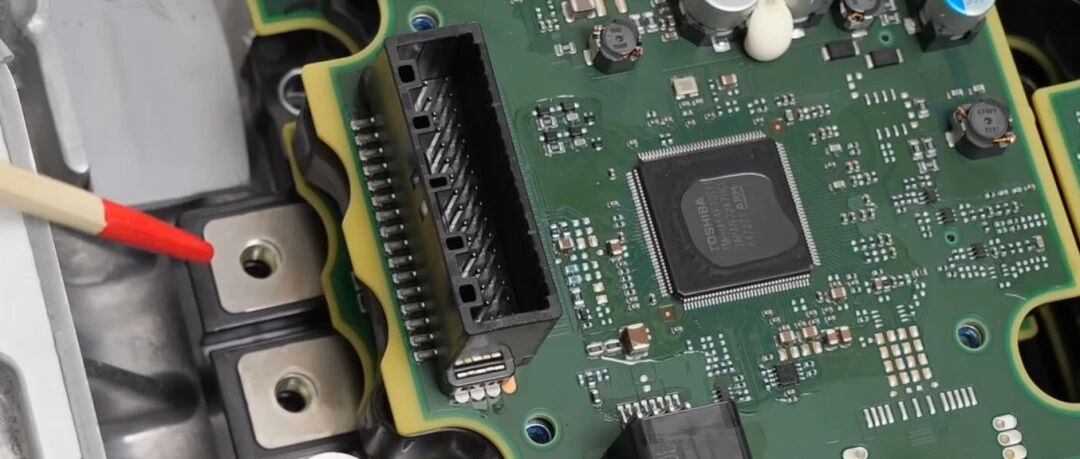
Core Viewpoint - The article provides an in-depth analysis of Nissan's e-POWER series hybrid system, focusing on its unique series hybrid architecture and the internal structure of its inverter, highlighting both its advantages and limitations in fuel efficiency compared to other hybrid systems [5][13][58]. Group 1: e-POWER System Overview - The e-POWER system is a series hybrid system where the engine only functions as a generator, not directly driving the wheels, which allows for optimal engine performance and fuel efficiency [7][13]. - The system includes multiple operational modes: battery direct supply mode, regenerative braking mode, and engine operation mode, each contributing to energy efficiency [10][13]. Group 2: Energy Flow and Efficiency - The series hybrid system's design allows the engine to operate at its most efficient speed and load, enhancing fuel economy, particularly in urban driving conditions [13][15]. - However, at high speeds, the fuel efficiency of the e-POWER system may be lower than that of other hybrid systems due to energy losses during the conversion and transmission processes [13][14]. Group 3: Inverter Structure and Analysis - The inverter used in the Nissan Note e-POWER model features a simple structure, with key components including film capacitors and power semiconductors, designed for efficient energy management [16][21][58]. - The inverter's internal components, such as the power semiconductors and printed circuit boards, are standardized to reduce production costs and enhance compatibility across different e-POWER models [47][50]. Group 4: Comparison with Other Hybrid Systems - Compared to Toyota's Hybrid System II and Honda's e:HEV, Nissan's series hybrid system has higher energy losses due to its architecture, which is reflected in its fuel economy data [14][15]. - The fuel economy of Nissan's e-POWER models is reported at 28.4 km/l under WLTC conditions, which is slightly lower than similar compact models equipped with other hybrid systems [15]. Group 5: Cooling and Thermal Management - The inverter's cooling system is designed to prioritize the cooling of IGBT modules, ensuring stable operation during extended use [54]. - The cooling liquid flows through a structured pathway to effectively manage heat dissipation, which is crucial for maintaining performance [54]. Group 6: Conclusion - The analysis concludes that the inverter design of the Nissan Note e-POWER is simpler compared to competitors like the Toyota Prius, which has a more complex structure due to additional components [58].