芯片分销

Search documents
倒计时4天!5小时闭门大会,10+芯片分销实战案例现场拆解
芯世相· 2026-03-11 06:07
Group 1 - The article discusses the upcoming "Chip Distribution Club 2.0" conference scheduled for March 15 in Shenzhen, focusing on practical strategies for making profits in the chip distribution industry by 2026 [1][6] - Key topics include identifying distribution opportunities for 2026, achieving significant order volumes from scratch, and securing major clients with multi-million dollar orders [1][6] - The event promises a comprehensive training experience with over 200 participants expected to engage in deep networking and knowledge sharing [1] Group 2 - The article highlights the success stories of six practical members who have achieved substantial sales growth, including increasing single client sales from 5 million to 33 million [6] - It notes that despite a reduction of 20 million in orders from a major client, the company still experienced overall growth, indicating effective management and strategy [6] - The article emphasizes the importance of employee retention, with over 40% of employees having been with the company for more than ten years, suggesting a strong company culture [6]


芯片分销老大文晔:预计一季度营收暴增92%
芯世相· 2026-03-04 04:14
Core Viewpoint - The article highlights the optimistic growth outlook for the semiconductor distributor WPG Holdings, driven by strong demand in AI data centers and communication sectors, with significant revenue and profit growth expected in 2025 [3][4][7]. Group 1: Financial Performance - WPG Holdings anticipates Q1 2023 revenue between NT$460 billion and NT$490 billion, representing a quarter-over-quarter increase of 39% and a year-over-year increase of 92% [3]. - The company reported a consolidated revenue of NT$1,957.5 billion in January 2023, marking a year-over-year increase of over 151% [3]. - For 2025, WPG expects to surpass NT$1 trillion in revenue for the first time, projecting NT$1.18 trillion (approximately US$378.61 billion) with a year-over-year growth of 22.8% [4][6]. Group 2: Market Dynamics - The demand for high-end semiconductors in AI-driven data centers and communication devices is a major growth driver for WPG in 2025 [7]. - The company has strengthened its presence in the European and American markets through the acquisition of Richtek Technology, enhancing its market position [7]. - WPG is expanding its product range by deepening strategic cooperation with passive component distributors, moving from active to passive components [7]. Group 3: Profitability and Margins - Despite achieving record profits, WPG's gross margin for Q4 2025 is projected to decline to 3.7%, down 0.4 percentage points year-over-year, due to the increasing share of lower-margin AI data center products [12]. - The company emphasizes that the focus is on increasing absolute profit values rather than percentage margins, as the demand for AI infrastructure remains strong and sustainable [12]. - WPG's CFO noted that the significant increase in AI-related product shipments, although lower in margin, contributes to substantial revenue growth [12]. Group 4: Supply Chain and Pricing - WPG's chairman indicated that recent memory shortages have minimal impact on AI applications and industrial sectors, primarily affecting consumer products [14]. - The company is monitoring regional price adjustments in semiconductor components due to rising costs and plans to implement strategies accordingly [14]. - WPG has not yet observed significant operational impacts from recent geopolitical uncertainties, but prolonged uncertainty could affect end-demand and increase costs [14].

2025 TOP4芯片分销商,文晔杀疯了
芯世相· 2026-02-10 07:09
Core Insights - The article highlights the performance of the top four global semiconductor distributors in 2025, showcasing significant revenue growth across all companies, indicating a recovery in the semiconductor industry after a challenging period [3][32]. Group 1: Revenue Performance of Top 4 Distributors - The top four semiconductor distributors by revenue in 2025 are: WPG Holdings (文晔) with approximately $37.861 billion, WPG Holdings (大联大) with about $32.058 billion, Arrow Electronics (艾睿) at $30.853 billion, and Avnet (安富利) with $23.151 billion [3][4]. - WPG Holdings achieved a record revenue of approximately NT$1.18 trillion, marking a year-on-year growth of 22.8% [6][32]. - WPG Holdings' revenue is primarily driven by demand from AI-related applications, with data center and server revenue accounting for 48.1% of its total revenue in Q3 2025 [20][21]. Group 2: Market Trends and Growth Drivers - The semiconductor sales in 2025 reached $791.7 billion, a 25.6% increase from 2024, with Asia-Pacific contributing 45% of the total sales [18][32]. - The recovery in the semiconductor market is attributed to the resurgence of demand in various sectors, including AI, data centers, and automotive electronics, which are expected to continue driving growth into 2026 [21][26]. - Arrow Electronics reported a strong performance in the Americas, driven by aerospace, defense, and industrial sectors, while EMEA and Asia also showed significant growth [26][30]. Group 3: Future Outlook - WPG Holdings anticipates sustained growth in 2026, driven by strong demand for AI servers and cloud services, alongside a recovery in automotive and industrial markets [21][28]. - Both Arrow Electronics and Avnet expect continued recovery, with positive trends in demand across most end markets, particularly in Asia [28][31]. - The overall sentiment in the semiconductor industry is optimistic, with all top four distributors showing signs of recovery and growth potential as they adapt to changing market dynamics [32].

文晔、大联大,全年业绩破纪录!
芯世相· 2026-01-13 04:13
Core Viewpoint - The article analyzes the recent revenue performance of leading chip distributors Wenye and Dalian Da, highlighting their growth trajectories and market dynamics in the semiconductor industry for December 2025 and the entire year [4][5]. Group 1: Revenue Performance - Dalian Da reported a December 2025 revenue of NT$933.4 billion, marking a month-on-month increase of 18.7% and a year-on-year increase of 11.7%, achieving a record high for the month [5][10]. - Wenye's December 2025 revenue was NT$986.2 billion, reflecting a year-on-year increase of approximately 2.9% but a month-on-month decrease of about 15.4% [5][12]. - For the entire year of 2025, Wenye's consolidated revenue reached approximately NT$1.18 trillion, representing a year-on-year growth of about 22.8% [6][12]. Group 2: Market Trends and Drivers - The growth in Dalian Da's revenue is attributed to the rapid adoption of generative AI applications, which has driven demand for AI and traditional server components, leading to a strong performance in Q4 2025 [5][10]. - Dalian Da's product mix and market positioning have benefited from industry trends, with AI and data center-related products accounting for 45% of their sales [10][11]. - Wenye's growth is primarily driven by the increasing demand for high-end semiconductors in data centers and communication devices, particularly influenced by AI [15][16]. Group 3: Strategic Developments - Dalian Da has expanded its logistics services, transitioning from a pure chip distribution model to include logistics as a service (LaaS), which is expected to enhance profitability [10][11]. - Wenye has strengthened its market presence in Europe and the US through acquisitions, which have improved its inventory levels and shipping cadence [16]. - Both companies are optimistic about future growth, with expectations of continued demand for AI-related semiconductors and recovery in consumer electronics and automotive markets [16].

硬蛋创新再涨超13% 公司近期发布自研新品 布局商业航天前沿赛道
Zhi Tong Cai Jing· 2026-01-07 02:35
Group 1 - The core point of the article highlights that Hard Egg Innovation (00400) has seen a significant stock increase of over 30% this week, with a current price of 4 HKD and a trading volume of 52.41 million HKD [1] - Hard Egg Innovation's subsidiary, Kepler Lab, has achieved breakthroughs in self-developed products, launching two new products aimed at the commercial satellite internet sector and high-bandwidth special detection [1] - The expansion of the fifth set of listing standards on the Sci-Tech Innovation Board to include the commercial aerospace sector indicates that the industry is moving towards a critical point of industrialization, which may lead to a systematic revaluation of the commercial aerospace industry chain [1] Group 2 - The new products developed by Kepler Lab include the "KPL-Multi-Channel RF SOM" based on AMD's next-generation core chip authorization and the "KPL-High-Speed Edge AI SOM" based on Versal Gen2 VE3858 VE3558 [1] - The strategic alignment of Hard Egg Innovation's new product development with its traditional chip distribution business is noted, leveraging the company's understanding of global top-tier chip technologies [1] - The successful mass deployment of several self-developed products in downstream sectors demonstrates the company's capability and market readiness [1]
4 个月,芯片分销俱乐部为会员做了啥?
芯世相· 2025-12-15 05:38
Core Insights - The article discusses the activities and achievements of the Chip Distribution Club 2.0 over the past four months, focusing on how it has facilitated collaboration and information sharing among chip distributors in a complex market environment [1][3]. Summary by Sections Activities Delivered - The club has organized multiple events, including 3 offline salons, 4 offline dinners, and 2 new original courses totaling 4 hours, aimed at enhancing collaboration and understanding of market dynamics [2][4][17]. - The offline salons have focused on critical industry topics such as inventory management, quality control, and domestic production, with significant participation from members [4][6][8]. Member Engagement - Members have actively participated in discussions during salons, sharing their business directions and collaboration opportunities, creating a vibrant networking environment [10][26]. - The club has also introduced a dedicated mini-program that provides exclusive content, including market insights and operational strategies, to enhance members' decision-making capabilities [19][22]. Educational Content - The club launched a new course titled "Chip Distribution Practical Training," which includes live sessions and Q&A, focusing on practical strategies for business success in chip distribution [17][30]. - A total of 44 exclusive articles have been published, covering market trends and operational insights, helping members stay informed and make better business decisions [19][22]. Upcoming Events - An annual closed-door conference is scheduled for December 23, where members will share practical experiences on how to achieve profitability in a challenging market, including case studies of significant sales achievements [12][22]. Networking Opportunities - The club has successfully integrated informal gatherings, such as dinners, to foster deeper connections among members, with high demand for participation [16][26]. - The transition from a physical directory to a digital format in the mini-program allows members to easily access and connect with each other [26].

11月最新业绩:大联大创新高,文晔破万亿!
芯世相· 2025-12-11 06:18
Core Viewpoint - The article analyzes the recent financial performance of leading chip distributors, Wenye and Dalian, highlighting their revenue growth and market dynamics influenced by the rapid development of generative AI and related technologies [3][4][11]. Group 1: Revenue Performance - Wenye reported a revenue of 116.59 billion NTD in November, a month-over-month decrease of 8.12% but a year-over-year increase of 72.85%, maintaining its position in the "billion club" for four consecutive months [3][12]. - Dalian's November revenue reached 78.64 billion NTD, down 5.69% month-over-month but up 7.37% year-over-year, with cumulative revenue from January to November surpassing 900 billion NTD, reflecting a 13.65% annual growth [3][6]. - Cumulatively, Wenye's revenue for the first eleven months reached 1,079.33 billion NTD, marking a 24.98% year-over-year increase and surpassing last year's total revenue of 959.43 billion NTD [4][12]. Group 2: Future Outlook - Wenye's fourth-quarter revenue is projected to be between 290 billion and 320 billion NTD, with a median estimate of 305 billion NTD, indicating a year-over-year growth of 16.5% but a quarter-over-quarter decline of 7% [4][14]. - Dalian's management expressed optimism about the semiconductor industry's growth potential extending into 2026, driven by increasing demand for AI-related chips, which are expected to contribute approximately 40% to the overall semiconductor market by 2029 [11][16]. - Wenye's chairman noted strong demand for AI-related semiconductors, which has positively impacted revenue growth, particularly in data centers and communications sectors [13][16]. Group 3: Strategic Developments - Dalian is expanding its business model beyond traditional chip distribution to include logistics services, which are expected to enhance profit margins compared to core distribution activities [8][11]. - Wenye's acquisition of Fuchang Electronics has strengthened its presence in the European and American markets, while its collaboration with passive component distributor Richey has broadened its product offerings [16].

踩中存储行情,这家芯片分销商凭啥3个月翻6倍?
芯世相· 2025-12-03 09:47
Core Viewpoint - The article discusses the rapid rise of Xiangnon Chip Creation, a chip distributor, whose stock price surged sixfold in a few months due to the booming storage chip market driven by AI demand and server expansion. The company has become one of the top ten global chip distributors, but faces challenges related to profitability and supplier dependency [3][21][24]. Group 1: Stock Performance and Market Dynamics - Xiangnon's stock price increased from 22.88 yuan at the beginning of the year to around 204.57 yuan by November, with a total market value exceeding 900 billion yuan [4][21]. - The surge in stock price is attributed to the company's deep involvement in the storage sector, with storage products accounting for approximately 70% of its distribution business [3][4]. - The first wave of price increases began in April, with major manufacturers like Samsung and SK Hynix reducing production of DDR4 chips, leading to a tightening supply and subsequent price hikes [5][7]. Group 2: Financial Performance - In the first three quarters of the year, Xiangnon's revenue exceeded its total revenue for 2024, reaching 264 billion yuan, with significant year-on-year growth [19][21]. - The company's gross profit margin has been under pressure, dropping below 3%, the lowest in five years, despite revenue growth of 115.4% in 2024 [21][24]. - The operating costs increased by 63.37% year-on-year, outpacing revenue growth, indicating potential profitability issues [24][26]. Group 3: Company Background and Transformation - Xiangnon Chip Creation originated from a washing machine parts manufacturer and transformed into a semiconductor distributor after acquiring a controlling stake in a chip distribution company in 2019 [11][12]. - The company rebranded and shifted its focus to electronic component distribution, with distribution business accounting for nearly 97% of its revenue by 2024 [12][19]. - The acquisition of key supplier rights from major manufacturers like MediaTek and SK Hynix has been crucial for Xiangnon's growth trajectory [15][19]. Group 4: Risks and Challenges - The company faces significant risks due to its high dependency on a few suppliers, with SK Hynix accounting for 52.3% of its procurement [22][23]. - The concentration of revenue from a limited number of customers poses a risk, as nearly 90% of sales come from the top five clients [22][23]. - The cyclical nature of the storage industry introduces volatility in profit margins, with potential inventory devaluation risks if market conditions change [24][26].

一颗芯片是怎么被炒起来的?|记芯片分销俱乐部第三次线下沙龙
芯世相· 2025-12-01 08:58
Core Insights - The recent market trend for Anshi began not on October 12 with the announcement from Wentai, but rather showed signs of activity as early as late September, indicating that market movements often precede official announcements [4][2] - The dynamics of the automotive chip market are characterized by long certification cycles, high customization, short inventory cycles, and significant costs associated with production halts, making supply fluctuations difficult to manage [4] Market Dynamics - The initial signs of the Anshi trend were observed with increased search volumes for Anshi chips in mid to late September, prior to the announcement [4] - The market operates in a layered structure, with Tier 1 manufacturers at the top, followed by foreign trade entities, medium-sized traders, and finally individual "retail" traders who often enter the market late [4] Pricing and Payment Terms - Price discrepancies exist in the market, where a chip may be quoted at 150 yuan but actual transactions occur at much lower prices, indicating a significant gap that can affect market behavior [4] - Payment terms between large trade entities and end-users differ, with the latter often being less anxious during price surges compared to those in the middle of the supply chain [4] Business Models in Chip Distribution - Seven distinct business models for chip distributors were identified, including long-term cultivation, stable demand capture, inventory management, and leveraging information asymmetries [6] - Each model has unique characteristics and profit logic, influencing how distributors navigate market fluctuations and customer demands [6] European Market Insights - European chip procurement is still heavily reliant on traditional methods like email and Excel, which limits efficiency and collaboration [7] - Innovations such as real-time API connections are being explored to enhance visibility and synchronization of inventory, pricing, and delivery information [7] Community and Networking - The Chip Distribution Club 2.0 serves as a platform for industry professionals to share insights, strategies, and resources, fostering collaboration and knowledge exchange [11][12] - Regular offline events and discussions are organized to delve into specific industry topics, allowing participants to build relationships and explore business opportunities [13][18]

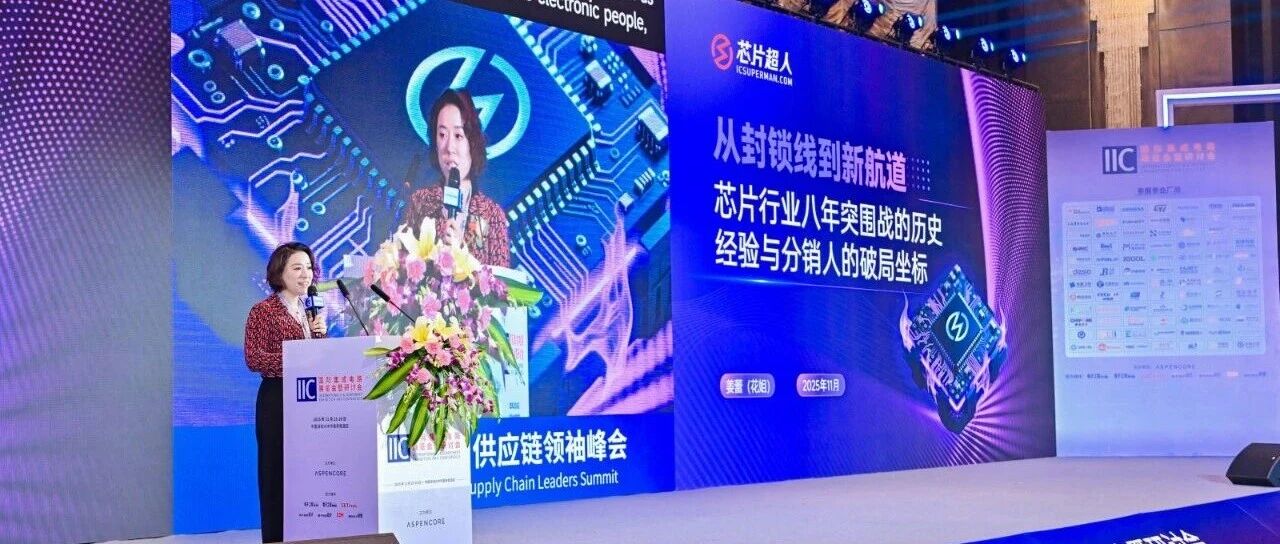
芯片分销八年突围战:从封锁线到新航道
芯世相· 2025-11-27 04:32
Core Insights - The core message emphasizes that selling chips is fundamentally about cycle trading rather than merely moving products, highlighting the importance of judgment and market understanding in the current landscape [2][17] - The evolution of the chip distribution industry is marked by five significant changes, reflecting a shift from product-centric to judgment-centric competition [4][12] Industry Changes - The Chinese chip industry has undergone drastic changes due to trade friction and the chip shortage, leading to a transformation in the role of distributors from mere sellers to critical players in risk management and supply chain stability [4][8] - The sales revenue of Chinese chip design companies is projected to grow from 194.5 billion RMB in 2017 to 835.7 billion RMB in 2025, indicating a fourfold increase [8] - China's chip exports are expected to rise from 66.9 billion USD in 2017 to 159.5 billion USD in 2024, showcasing a significant shift towards a dual circulation model in the chip market [10] Distribution Role Evolution - The role of distributors has evolved through five stages: from "merchandisers" to "firefighters," then to "risk managers," followed by "stabilizers," and currently to "judgment nodes" [26][28][30][33] - Distributors are now seen as essential buffers in the supply chain, providing stability and coordination during market fluctuations [34] Future Directions - The future of chip distribution will rely on a combination of capabilities, including clarity in market signals, stability in operations, agility in response, and strategic positioning within the supply chain [38] - Five growth avenues for distributors have been identified: AI server chains, engineering for domestic substitution, supply chain controllability, third-generation industry platforms, and global market expansion [40] Conclusion - The industry has demonstrated resilience, but future success will depend on navigating new pathways and adapting to changing market dynamics [44]