QYResearch

Search documents
全球与中国PAA负极胶市场现状及未来发展趋势
QYResearch· 2025-10-27 10:31
Core Viewpoint - PAA (Polyacrylic Acid) is an environmentally friendly anode binder material for lithium batteries, showing significant potential in replacing traditional binders like CMC+SBR, especially in high-capacity lithium battery applications where cycle life is critical [1][2]. Summary by Sections PAA Anode Binder Characteristics - PAA enhances electrode structure stability and improves battery cycle life, particularly compatible with silicon-based anode materials [1][2]. - The binder's primary function is to adhere active materials and conductive agents to the current collector, ensuring efficient electron and lithium ion transport [2]. Current Industry Status - PAA has a technological advantage over traditional binders, effectively mitigating the volume expansion of silicon materials (300%-400%) during charge and discharge cycles, thus significantly enhancing battery cycle life [3]. - The domestic market for PAA is highly concentrated, with leading companies like Yindile, Blue Ocean Black Stone, and Shenzhen Yanyi New Materials dominating the landscape [3]. - International participation in the PAA market remains low, with companies like Zeon and Arkema being early developers but not achieving significant commercial production [3]. Development Trends - The demand for PAA is surging due to the rapid growth of the lithium-ion battery industry, particularly in electric vehicles and energy storage [4]. - Government policies are supportive of key materials for lithium batteries, providing a favorable environment for PAA's development [4]. - The penetration rate of PAA in anode binders is currently low compared to mainstream products like SBR, but it is expected to increase as technology matures and costs decrease [4]. Global Market Analysis - The global PAA anode binder market is projected to reach $161.22 million in 2024 and $876.32 million by 2031, with a CAGR of 26.29% [8]. - China's market is rapidly evolving, expected to account for approximately 71.45% of the global market by 2031, with a projected size of $626.11 million [8]. Policy Analysis - The Ministry of Industry and Information Technology has included PAA in the "Key New Materials First Application Demonstration Guidance Catalog (2024 Edition)," highlighting its strategic importance as a new energy material [10]. - Policies like "Made in China 2025" encourage domestic substitution and high-end material research, aligning with PAA's development goals [10]. Industry Dynamics - The industry is shifting from extensive expansion to "smart manufacturing + service-oriented" transformation, with leading companies like CATL establishing comprehensive lifecycle service systems [6]. - International demand for PAA is expected to rise as more downstream companies successfully test and adopt the material [6].


Power Tool Market Introduction | QYResearch
QYResearch· 2025-10-24 02:22
Core Viewpoint - The power tool industry is experiencing significant growth driven by technological advancements, increasing demand in construction and manufacturing, and a rising consumer interest in home maintenance and DIY projects [3][9][10]. Market Size and Growth - The global power tool market reached $27.028 billion in 2024 and is projected to grow to $35.479 billion by 2030, with a compound annual growth rate (CAGR) of 4.64% from 2024 to 2030 [10]. - The power tool components market reached $11.349 billion in 2023 and is expected to grow to $17.245 billion by 2030, with a CAGR of 4.81% from 2024 to 2030 [31]. Technological Innovation and Development - The industry is advancing through innovations such as improved battery technology, high-efficiency motors, and smart features, enhancing performance, durability, and safety [4][25][26]. - Lithium-ion batteries are becoming the standard, providing higher energy density and longer lifespans, while brushless motors are increasing efficiency and runtime [25]. Demand from Key Sectors - The construction and manufacturing sectors are primary demand areas for power tools, with tools like electric drills and saws being essential for efficiency and precision [5][9]. - The home and consumer market is also growing, driven by increased interest in home maintenance and DIY projects [6]. Environmental Sustainability - Electric power tools offer environmental advantages over traditional fuel-powered tools, producing no exhaust emissions and aligning with sustainable development goals [7]. Regional Market Insights - North America and Europe dominate the global power tool market, with respective market sizes of $8.05 billion and $7.3 billion in 2023, accounting for 33.0% and 29.9% of the total market [16]. Major Manufacturers - Key global power tool manufacturers include Stanley Black & Decker, TTI, Bosch, and Makita, with Stanley Black & Decker leading the market with a revenue of $5,836.30 million in 2023, representing 23.93% of the total market [13][14]. Cordless Power Tool Market - The global cordless power tool market reached $13.926 billion in 2024, with a year-on-year growth rate of 12.51% compared to $12.377 billion in 2023, and is projected to reach $21.049 billion by 2031, with a CAGR of 6.28% [21]. Power Tool Components - The power tool components market includes critical parts such as motors, batteries, and switches, with major competitors like Stanley Black & Decker and Bosch leading in product quality and technological R&D [34].

行业聚焦:全球快速关断装置市场头部企业份额调研(附Top 10 厂商名单)
QYResearch· 2025-10-24 02:22
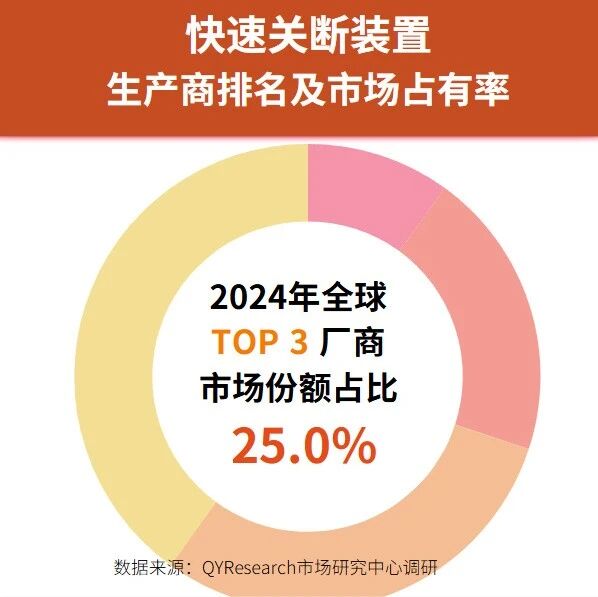
Core Viewpoint - The global rapid shutdown device market is experiencing strong growth driven by the increasing adoption of photovoltaic systems and stricter fire safety regulations such as the NEC 690.12 in the United States [3][9]. Market Overview - The global market size for rapid shutdown devices is projected to reach $1.21 billion by 2031, with a compound annual growth rate (CAGR) of 7.21% in the coming years [6]. - In 2024, the production volume of rapid shutdown devices is expected to reach 21.22 million units, with an average selling price of $35 per unit and a gross margin of approximately 18% [6]. Key Manufacturers - Major manufacturers in the global rapid shutdown device market include Yuneec Technology, Tigo Energy, HIITIO, and SMA Solar Technology, with the top three companies holding about 25.0% market share in 2024 [8][14]. Market Drivers and Opportunities - Increasing solar applications: The demand for rapid shutdown devices is growing due to the rising adoption of solar energy in residential, commercial, and utility-scale facilities [9]. - Strict regulatory requirements: Regulations such as the mandatory rapid shutdown requirement for rooftop solar installations in California are driving market growth [9]. - Technological advancements: Innovations in rapid shutdown devices, including improved communication protocols and integration with IoT devices, are enhancing efficiency and user experience [9]. - Growing safety awareness: Increased awareness of safety protocols related to solar installations is driving demand for rapid shutdown devices to protect emergency personnel and property [9]. Market Trends - Application trends: The primary applications of rapid shutdown devices are in residential and commercial solar installations, with significant growth expected in the residential market due to the increase in rooftop solar systems [10]. - Geographical trends: North America, Europe, and Asia are the main regions for the rapid shutdown device market, with North America having a large market due to strict regulations and high solar usage [10]. - Integration with smart grids and IoT: There is a rising trend of integrating rapid shutdown devices with smart grid technology and IoT, which enhances monitoring, control, and management of solar systems [10]. Market Limitations - Compatibility issues: Ensuring compatibility of rapid shutdown devices with various solar panel systems and inverters can be challenging, especially for existing installations [11]. - Complex regulatory environment: Different countries may have varying safety standards and regulations, which can complicate compliance for manufacturers [11]. - Supply chain and logistics issues: The global supply chain for rapid shutdown devices may face disruptions due to raw material shortages, manufacturing delays, and transportation problems [11].



全球与中国离子液体市场现状及未来发展趋势
QYResearch· 2025-10-24 02:22
Core Viewpoint - The ionic liquid market is experiencing steady growth driven by increasing demand for environmentally friendly alternatives, with a projected market size of $156 million by 2025 and a compound annual growth rate (CAGR) of approximately 9.39% over the next five years [2][7]. Group 1: Product Definition and Scope - Ionic liquids are liquid salts formed by organic cations and inorganic or organic anions, characterized by their ionic composition and low melting points [1]. Group 2: Current Industry Status - The ionic liquid market is expanding due to the global demand for eco-friendly alternatives, with the Asia-Pacific region being the fastest-growing market due to strong manufacturing bases and increased research investment [2]. - By 2024, the global ionic liquid market is expected to reach $142 million, with a forecasted growth to $267 million by 2031 [7]. Group 3: Technological Advances and Innovations - Advances in synthesis methods are leading to greener and more scalable production of ionic liquids, reducing costs and improving purity [3]. - The development of functionalized ionic liquids is enhancing their catalytic properties and adaptability for specific applications, such as magnetic and bio-based ionic liquids [3]. Group 4: Expansion of Application Areas - Ionic liquids are increasingly being used in high-growth sectors such as environmental protection, electrochemical energy storage, materials preparation, and biomedicine [4]. - In environmental applications, ionic liquids are utilized for CO2 capture, wastewater treatment, and heavy metal recovery, aligning with global carbon neutrality goals [4]. Group 5: Future Development Trends - The diversification of ionic liquid products is driven by technological innovations, with new types such as magnetic and responsive ionic liquids emerging for various applications [5]. - The rapid development of the electrochemical and energy sectors is making ionic liquids key materials for energy storage and conversion devices, enhancing energy density and cycle life [5]. - The push for green chemistry is leading to the replacement of traditional organic solvents with low-volatility, low-toxicity ionic liquids, which significantly reduce harmful emissions [5]. Group 6: Global Market Analysis - Major producers of ionic liquids include BASF, Evonik Industries, Solvay, Merck, and KOEI Chemical, with the top five companies holding nearly 65% of the market share [7][11]. - The primary consumption regions for ionic liquids are Europe, North America, China, and Japan, with Southeast Asian countries showing significant market potential due to rapid economic growth [7]. Group 7: Policy and Regulatory Environment - The Chinese government is promoting the ionic liquid industry through various policies aimed at green manufacturing and sustainable development, encouraging the adoption of ionic liquids in multiple sectors [8]. - Policies supporting green chemistry and carbon neutrality are expected to drive market demand for ionic liquids, facilitating their transition from laboratory-scale to industrial-scale applications [8].

全球与中国钢筋网焊接生产线市场现状及未来发展趋势
QYResearch· 2025-10-23 09:43
Core Viewpoint - The steel mesh welding production line industry is experiencing a shift towards automation and smart technology, driven by customization demands and international competition, with significant growth opportunities in emerging markets and high-end applications [4][5][15]. Group 1: Industry Overview - The steel mesh welding production line is an automated system that integrates various processes such as straightening, cutting, arranging, welding, and outputting finished products, ensuring high efficiency and precision [3]. - The market for steel mesh welding production lines is projected to reach $117.77 million by 2024, with a compound annual growth rate (CAGR) of -0.32% from 2025 to 2031 [10]. - China is expected to account for 19.70% of the global market share by 2031, with a market size of $22.23 million [10]. Group 2: Technological Trends - The industry is rapidly advancing towards smart and automated production, utilizing IoT, AI algorithms, and robotics to enhance efficiency and reduce manual intervention [5]. - There is a growing demand for non-standard steel mesh products, prompting manufacturers to develop high-precision welding and dynamic adjustment technologies [5]. Group 3: Market Dynamics - The European market leads in high-end production, while Chinese manufacturers dominate the mid-range market due to cost advantages, gradually penetrating the high-end segment [5]. - The rise of prefabricated construction is driving the demand for steel mesh welding production lines, necessitating equipment that meets higher strength and durability standards [5]. Group 4: Future Development - Future production lines will focus on human-machine collaboration, enabling fully automated processes for various mesh sizes and types [6]. - The industry is shifting from equipment sales to lifecycle services, with a focus on customized solutions and localized supply chains to shorten delivery times [6]. - High-end applications are expanding beyond traditional construction to sectors like offshore wind power and nuclear power, increasing the demand for specialized steel mesh products [6]. Group 5: Competitive Landscape - Major global manufacturers include Schlatter Industries, EVG, Schnell, MEP, and Langfang Kaibo Construction Machinery Technology, with the top tier holding approximately 53.23% of the market share [14]. - The industry is facing a slowdown due to various factors, including a decline in traditional construction demand in China, but structural opportunities remain in emerging applications like renewable energy and municipal infrastructure [15].

行业聚焦:全球混炼硅胶市场头部企业份额调研(附Top 10 厂商名单)
QYResearch· 2025-10-23 09:43
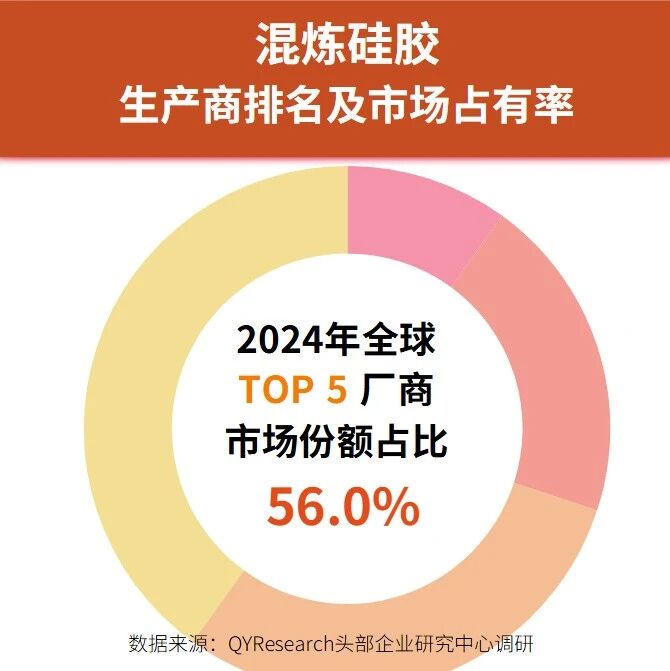
Core Viewpoint - The global mixing silicone rubber market is expected to grow steadily, driven by its superior properties and increasing demand in various industries such as automotive, electronics, and healthcare. The market is projected to reach USD 8.04 billion by 2031, with a compound annual growth rate (CAGR) of 6.8% from 2025 to 2031 [3][8]. Market Overview - Mixing silicone rubber is a high-performance elastomer material made from organic silicone polymers combined with fillers, crosslinking agents, and additives. It exhibits excellent resistance to extreme temperatures, weathering, electrical insulation, and biocompatibility, making it suitable for applications in automotive parts, consumer electronics, medical devices, electrical insulation, and household appliances [2]. - The supply chain is clearly defined, with upstream suppliers providing organic silicone monomers, fillers, catalysts, and additives, while downstream users include automotive manufacturers, electronics producers, medical device companies, and consumer goods manufacturers [2]. Market Growth Drivers - The demand for high-performance mixing silicone rubber is driven by the automotive industry (high-temperature components and seals for electric vehicles), consumer electronics (smart wearables and mobile accessories), and healthcare (catheters, seals, and implant materials) [8]. - The increasing reliance on durable materials in electric vehicles and electronic industries further boosts the demand for mixing silicone rubber [8]. Competitive Landscape - The market is characterized by a fragmented competitive landscape, with major multinational chemical companies and regional producers focusing on innovation in specialty grades and customized compounds to meet diverse end-user needs. The top five manufacturers hold approximately 56.0% of the market share as of 2024 [7][8]. Challenges and Barriers - Fluctuations in raw material prices, such as silicone rubber base materials and fillers, significantly impact production costs and profit margins [9]. - High technical barriers exist in producing high-performance mixing silicone rubber, making it difficult for small and medium-sized enterprises to enter the high-end market [10]. - Intense competition leads to price pressures, with product homogeneity potentially weakening profit margins [10]. Industry Opportunities - The demand for functional materials in industrial automation and high-performance equipment presents new application scenarios for mixing silicone rubber [11]. - Innovations in environmentally friendly and green formulations, driven by regulatory pressures and sustainability trends, offer manufacturers opportunities for differentiation [11]. Regional Insights - Rapid expansion in manufacturing, automotive, and electronics industries in regions like China, India, and Southeast Asia presents significant growth potential for mixing silicone rubber demand [13].
全球航空复合材料部件市场规模及产业链分析(附Top 10 厂商名单)
QYResearch· 2025-10-23 09:43
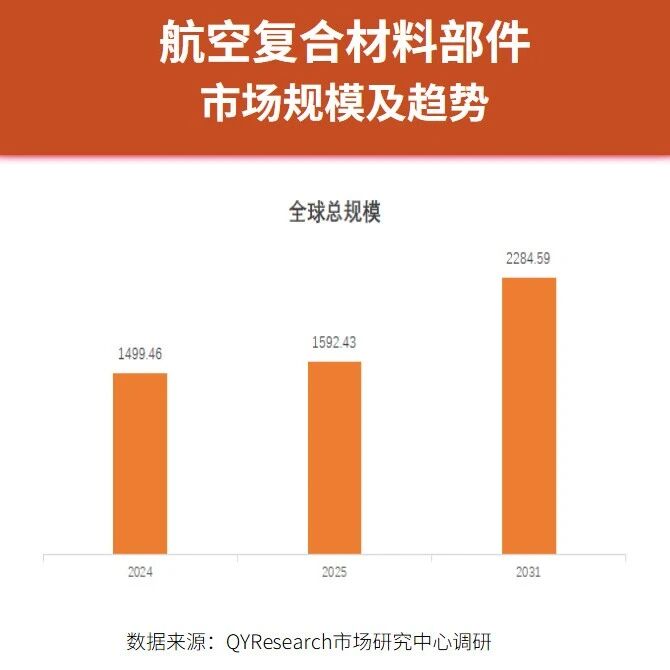
Core Viewpoint - The global aerospace composite parts market is experiencing rapid growth driven by the demand for lightweight aircraft, increasing commercial aircraft orders, and upgrades in military aviation equipment. The market is projected to reach $2.284 billion by 2031, with a compound annual growth rate (CAGR) of 6.2% over the next few years [3]. Market Overview - Aerospace composite parts are made from high-performance fiber-reinforced materials and matrix resins, featuring high specific strength and stiffness, which significantly reduce aircraft weight and improve aerodynamic performance [2]. - The market is influenced by the localization of supply chains due to domestic aircraft projects like C919, the rise of emerging aviation markets such as drones and eVTOL, and the growing demand for composite repair technologies in the aviation maintenance market [3]. Industry Trends - Key trends in the aerospace composite parts industry include material diversification, automation in manufacturing processes, and optimization of lifecycle costs. Thermoplastic composites and rapid prototyping technologies are becoming focal points for research and development [3][9]. - The industry is facing challenges such as high raw material costs, reliance on imported high-end manufacturing equipment, strict airworthiness certification standards, and competition from traditional metal materials in certain applications [3][9]. Industry Chain Analysis - The upstream segment consists of raw material and high-end equipment suppliers, including carbon fiber and epoxy resin manufacturers. This segment has the highest technical barriers, with major players like Toray and Hexcel dominating the market [7]. - The midstream segment involves the design, manufacturing, and integration of composite parts, requiring significant capital investment and collaboration with original equipment manufacturers (OEMs) [7]. - The downstream market includes aircraft manufacturers, airlines, and maintenance companies, with demand influenced by the health of the aviation industry and the increasing use of composites in aircraft [8]. Key Players - Major companies in the aerospace composite parts market include 3M, Hexcel Corporation, Spirit AeroSystems, and Toray Advanced Composites, among others [6][12]. Policy Environment - Various policies aim to enhance the aerospace manufacturing sector in China, focusing on high-quality development, digital transformation, and the promotion of domestic aircraft projects [10]. These policies emphasize the need for technological breakthroughs in core areas such as lightweight materials and precision manufacturing processes [10].
行业聚焦:全球激光焊接监控系统市场头部企业份额调研(附Top 10 厂商名单)
QYResearch· 2025-10-23 09:43
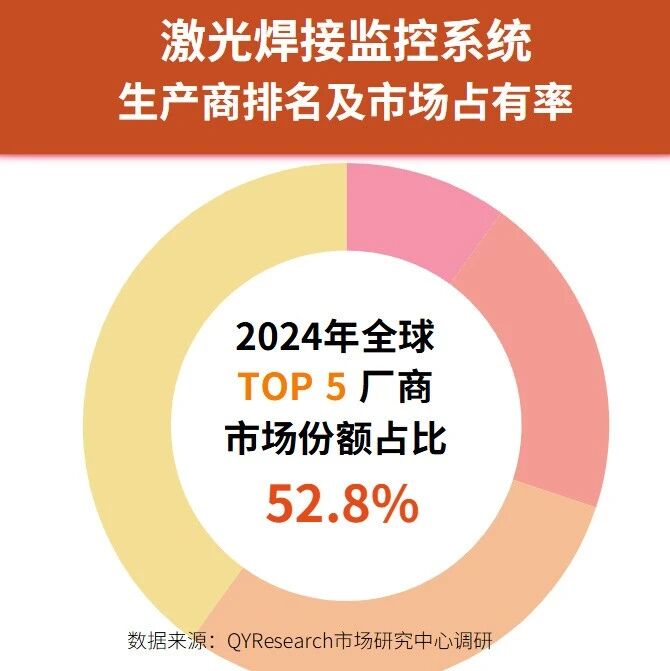
Core Viewpoint - The laser welding monitoring system is an intelligent device designed for real-time detection and control of laser welding quality, utilizing multi-sensor fusion and AI algorithms to ensure high precision and consistency in welding processes [2][3]. Market Development - The market for laser welding monitoring systems is experiencing rapid growth, driven by the demand for high precision and consistency in industries such as automotive, aerospace, power batteries, and medical devices [3][4]. - The future of this market is expected to follow three major trends: "intelligentization" through AI integration, "integration" of monitoring systems into laser equipment, and "domestic substitution" as local companies in China advance in sensor and industrial software technologies [3][4]. Driving Factors - The demand for electric vehicles and power batteries is a significant driver, as laser welding is favored for its high precision and speed in manufacturing battery components [4]. - The need to reduce costs and improve efficiency is pushing traditional manual inspection methods out of favor, with laser welding monitoring systems providing 100% real-time, objective inspections [4]. - The system's ability to detect minor trends, such as laser power decline or lens contamination, helps prevent defects and production downtime [4]. Market Size and Growth - According to QYResearch, the global market for laser welding monitoring systems is projected to reach USD 320 million by 2031, with a compound annual growth rate (CAGR) of 12.73% over the coming years [7]. Key Manufacturers - Major manufacturers in the global laser welding monitoring system market include Coherent, IPG Photonics, Trumpf, and others, with the top five companies holding approximately 52.8% of the market share [8][19]. Value Chain - The value chain of laser welding monitoring systems is complex, encompassing upstream components like optical elements and sensors, midstream system integration, and downstream applications in various industries [9][10][13][14]. Competitive Landscape - The competitive landscape is characterized by international leaders with advanced technology, local manufacturers rapidly catching up, and specialized companies focusing on niche technologies [19][20]. - The focus of competition is expected to shift towards AI integration, system integration levels, and breakthroughs in domestic core components [21].
行业聚焦:全球非PVC输液膜材市场头部企业份额调研(附Top 10 厂商名单)
QYResearch· 2025-10-22 08:34
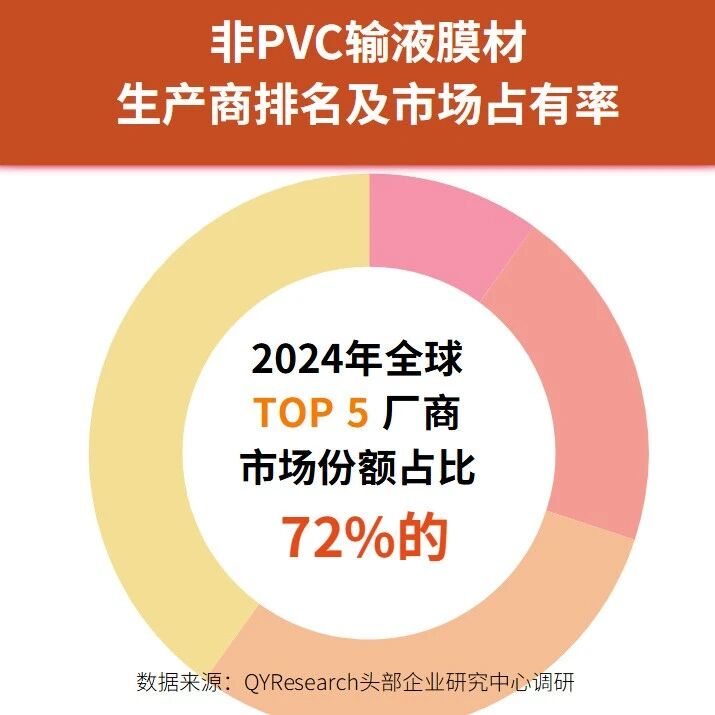
Core Viewpoint - The global non-PVC infusion film material market is projected to reach USD 460 million by 2031, with a compound annual growth rate (CAGR) of 3.8% in the coming years [1]. Market Overview - The non-PVC infusion film material is a polymer film used for infusion packaging, characterized by good chemical stability, breathability, and water resistance, effectively preventing drug adsorption and degradation [1]. - The market is dominated by three-layer films, which account for approximately 76.4% of the market share [9]. - The largest downstream market for non-PVC infusion film materials is the 250ml infusion bag, representing about 49.9% of the demand [11]. Key Players - Major global manufacturers of non-PVC infusion film materials include Baxter, Renolit Group, Fresenius, PolyCine, Sealed Air, and others. The top five manufacturers hold around 72% of the market share as of 2024 [7]. Driving Factors - Increased safety demands and enhanced medical standards are driving the shift from traditional PVC infusion bags to non-PVC materials, which reduce the risk of harmful substance migration [14]. - Regulatory policies limiting or phasing out PVC use in healthcare are creating significant market opportunities for non-PVC materials [14]. - Emerging markets, particularly in the Asia-Pacific region, are expanding their healthcare infrastructure, leading to increased demand for advanced non-PVC packaging technologies [14]. Challenges - The production costs and prices of non-PVC infusion film materials are generally higher than traditional PVC materials, posing a barrier to widespread adoption, especially in cost-sensitive regions [16]. - The market is highly concentrated, with the top five manufacturers holding about 70% of the market share, creating entry barriers for new players [16]. - Uncertainties in the supply chain and trade environment, including fluctuating raw material prices and geopolitical tensions, pose challenges to the stability of the non-PVC film material supply chain [17].
行业聚焦:全球高尔夫拾球机器人市场头部企业份额调研(附Top 5 厂商名单)
QYResearch· 2025-10-22 08:34
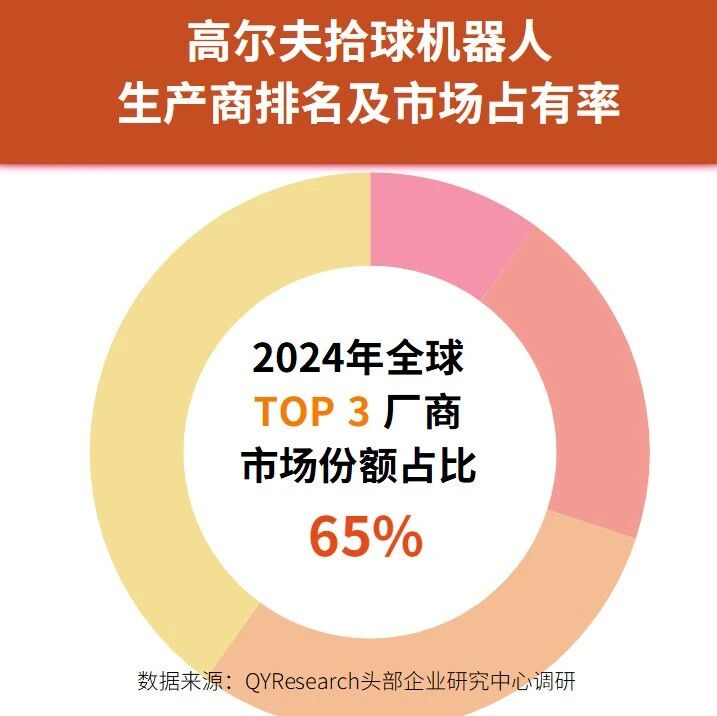
Core Insights - The global golf ball picking robot market is projected to reach $170 million by 2031, with a compound annual growth rate (CAGR) of 11.6% over the coming years [3]. Market Overview - Golf ball picking robots are designed for golf courses to automate the collection of scattered golf balls, enhancing efficiency and reducing labor costs [2]. - The market is characterized by a growing demand for automation solutions in golf course maintenance due to rising labor costs and a shortage of workers [19]. Market Leaders - The top six manufacturers in the global golf ball picking robot market and their market shares for 2024 are as follows: - Korechi: 25% - Range Servant: 22% - Wayrobo: 18% - Relox Robotics: 12% - GroundTech: 10% - Steele Robotics: 8% - Others: 5% [8]. Company Profiles - **Korechi**: Recognized as a market leader, Korechi focuses on outdoor automation solutions, with its flagship product, GolfRoam, known for its advanced navigation technology and efficiency in ball collection [9]. - **Range Servant**: Known for its durable and efficient robots, Range Servant emphasizes low maintenance costs and long lifespan, catering to high-end golf clubs and large practice facilities [11]. - **Wayrobo**: An emerging player, Wayrobo integrates advanced sensors and AI algorithms into its robots, aiming to enhance operational efficiency and expand functionalities beyond ball collection [13][14]. Industry Chain Analysis - The upstream of the golf ball picking robot industry consists of core component suppliers, including perception systems, energy systems, and motion control systems, which are crucial for product performance [15]. - The downstream customers primarily include renowned golf courses and large practice facilities that demand reliable and efficient automation solutions [15]. Market Development Trends - **Technological Integration and Smart Upgrades**: The industry is evolving towards high levels of automation, integrating computer vision and AI for improved functionality [16]. - **Battery and Green Power Innovations**: There is a trend towards higher energy density batteries and solar-assisted charging systems to enhance operational time and meet environmental standards [17]. - **Service-Oriented Business Models**: The "Robot as a Service" (RaaS) model is gaining traction, allowing golf courses to pay based on usage, thus lowering initial investment barriers [18]. Market Opportunities - The rising labor costs and the rigid demand for automation solutions are driving the market as golf courses seek to reduce reliance on manual labor [19]. - The maturity of technology and decreasing costs of core components are expanding the market to medium and small golf courses [20]. - The potential for data collection and analysis through robots is opening new revenue streams and enhancing customer engagement [21]. Market Barriers - The high initial investment and long return on investment periods pose challenges for many small and medium-sized golf courses [22]. - Technical reliability and adaptability in complex golf course environments remain significant hurdles for widespread adoption [23]. - Traditional industry mindsets and operational model transitions create resistance to adopting new technologies [24].