QYResearch

Search documents
诺氟沙星行业洞察:全球市场规模、产业链、发展趋势和进入壁垒
QYResearch· 2025-10-30 02:40
Core Viewpoint - Norfloxacin is a synthetic antibacterial compound belonging to the fluoroquinolone class, widely used in both human and veterinary medicine for its broad-spectrum antibacterial properties [1][2][3]. Market Overview - The global market for Norfloxacin is projected to reach USD 456 million in 2024, with an expected increase to USD 475 million in 2025, reflecting a compound annual growth rate (CAGR) of 4.5% over the next six years [5]. Clinical Applications - In human medicine, Norfloxacin is primarily used to treat infections caused by sensitive bacteria, particularly Gram-negative bacteria such as Escherichia coli and Pseudomonas aeruginosa, commonly associated with urinary tract infections [2]. - It is also effective against gastrointestinal infections and can be administered orally or via injection, achieving high concentrations in urine [2]. Veterinary Applications - Norfloxacin is utilized in veterinary medicine to prevent and treat bacterial diseases in livestock, such as chicken and pig infections, by incorporating it into animal feed or drinking water [3]. Formulation Types - **Oral Formulations**: The most widely used form, including tablets and capsules, effective for treating urinary and gastrointestinal infections [4]. - **Topical Formulations**: Includes creams and gels for local infections, requiring high purity and low impurity levels [4]. - **Injectable Formulations**: Used for severe infections requiring rapid action, though this form has a smaller market share due to safety concerns [4]. Industry Chain - The upstream of the Norfloxacin industry chain consists of key starting materials and intermediates, while the midstream involves manufacturers of the active pharmaceutical ingredient (API) who must comply with stringent quality standards [6]. - The downstream includes formulation companies and distribution channels, with a significant presence in countries like China and India [6]. Industry Policies - Regulatory scrutiny on fluoroquinolone drugs has increased, with recommendations to limit their use to reduce adverse effects, impacting prescription patterns and market dynamics [7]. Development Trends - Short-term demand for Norfloxacin is driven by generic drug needs and regional epidemiology, while long-term strategies focus on quality compliance and cost reduction through process optimization [8]. Entry Barriers - The market faces challenges such as regulatory risks, environmental compliance costs, and intense competition among numerous small manufacturers, particularly in major API supply countries [9].

全球与中国非球面精密模压机市场现状及未来发展趋势
QYResearch· 2025-10-30 02:40
Core Viewpoint - The article discusses the advancements and market potential of aspherical precision molding machines, highlighting their high precision, low manufacturing costs, and suitability for mass production in various high-end optical applications [4][6][14]. Group 1: Advantages of Aspherical Precision Molding Machines - High forming precision is achieved through strict control of temperature and pressure, resulting in high dimensional accuracy and excellent surface quality [4][6]. - The molding process significantly reduces reliance on expensive equipment and skilled labor, allowing for efficient production in smaller workshops, thus lowering manufacturing costs [4][6]. - The machines are highly automated and capable of consistent mass production, making them ideal for producing precision aspherical optical components [4][6]. Group 2: Industry Development Status - Continuous technological advancements have improved processing precision, temperature control uniformity, and pressure stability, enabling sub-micron level optical component processing [6][8]. - Rapid demand growth is driven by applications in security, automotive lenses, smartphones, drones, AR/VR, and lidar, leading to an expanding market for aspherical molding machines [6][8]. - The industry is witnessing an increase in domestic manufacturers enhancing R&D capabilities, with local equipment gradually approaching the precision and reliability of imported models [6][8][15]. Group 3: Market Trends - The trend towards higher precision and ultra-precision processing is evident, with increasing demands for sub-micron and even nano-level optical components in various applications [8]. - There is a shift towards large-scale and automated production, integrating smart technologies to enhance efficiency and reduce labor dependency [8]. - The adaptability to new optical materials and composites is becoming crucial, with ongoing optimizations needed for temperature control and molding processes to accommodate diverse material types [8]. Group 4: Market Size and Growth - The global market for aspherical precision molding machines is projected to grow from $70.97 million in 2024 to $308.21 million by 2031, with a CAGR of 23.56% [14]. - The Chinese market is expected to account for 53.88% of the global market by 2024, growing to 59.79% by 2031, indicating rapid regional growth [14]. - The automotive lens sector holds a significant market share, with a projected CAGR of 16.63% in the coming years [14]. Group 5: Competitive Landscape - The industry is highly concentrated, with key players including Guangdong Jinding Optical Technology Co., Shibaura Machine, and others, with the leading firms holding a significant market share [15]. - The competitive landscape is expected to intensify as new entrants emerge, driven by technological innovation and market positioning strategies [15].

行业聚焦:全球生物基多元醇市场头部企业份额调研(附Top 10 厂商名单)
QYResearch· 2025-10-29 02:52
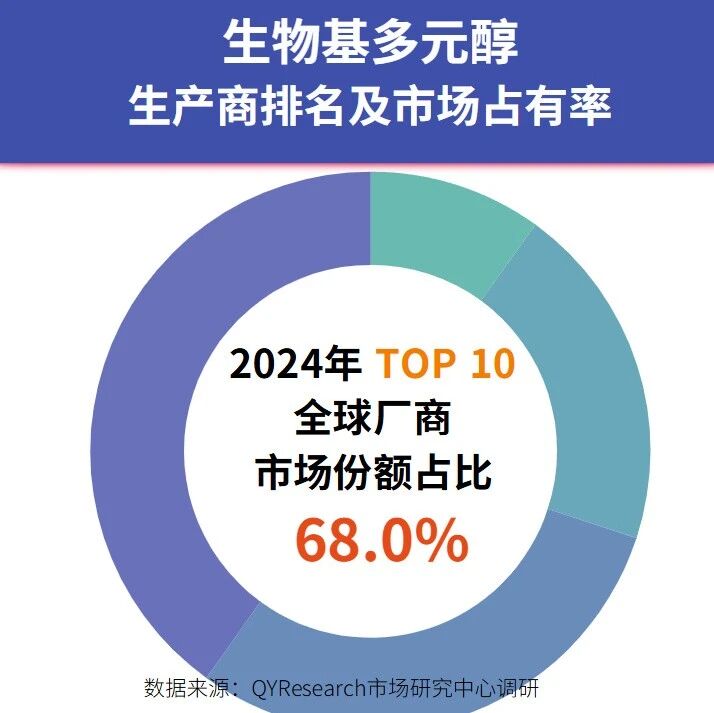
Core Viewpoint - The bio-based polyols market is projected to reach $2.2 billion by 2031, with a compound annual growth rate (CAGR) of 7.7% from 2025 to 2031, driven by sustainability and environmental concerns [3]. Market Overview - Bio-based polyols are derived from renewable natural resources like vegetable oils, offering advantages such as sustainability, low carbon footprint, and environmental friendliness compared to traditional petroleum-based polyols [1]. - The market is primarily divided into two categories: polyether polyols and polyester polyols, with polyether polyols dominating the market due to their superior reactivity and mechanical properties [1][10]. Raw Materials and Supply Chain - Key raw materials for bio-based polyols include soybean oil, castor oil, canola oil, and palm oil, sourced from major suppliers like ADM, IOI Group, and Wilmar, ensuring a stable supply chain [5]. - The average product gross margin for bio-based polyols typically ranges from 15% to 30% depending on product type and application [5]. Applications and Market Segmentation - The automotive sector is the largest application area for bio-based polyols, accounting for approximately 28.1% of the market share, followed by furniture, construction, and packaging industries [14]. - Polyether polyols represent about 78% of the market share, with castor oil polyols expected to hold around 38% of the market by 2024 due to their unique performance advantages [10]. Geographic Distribution - North America is the largest consumer market for bio-based polyols, holding a 42% share, supported by advanced technology and policy frameworks [16]. - The growth of the market is fueled by increasing global environmental awareness and the demand for sustainable materials, particularly in the automotive and construction sectors [16]. Market Drivers - The rising emphasis on reducing greenhouse gas emissions and achieving carbon neutrality is driving the adoption of bio-based polyols [17]. - Government policies promoting renewable chemicals and green materials are facilitating industry growth [17]. - Continuous demand for polyurethane foams in various sectors is propelling the bio-based polyols market [17]. Market Challenges - Production costs for bio-based polyols are generally higher than those for petroleum-based alternatives, limiting widespread adoption [19]. - Raw material price volatility due to climate change and crop yield fluctuations adds uncertainty to production costs [20]. - Performance consistency issues compared to traditional petroleum products may hinder their use in high-end applications [20]. - The supply chain and infrastructure for bio-based chemicals are still underdeveloped in some regions, affecting market expansion [21].

行业聚焦:全球热电制冷器模块市场头部企业份额调研(附Top 10 厂商名单)
QYResearch· 2025-10-29 02:52
Core Viewpoint - The thermoelectric cooler module industry is experiencing significant growth driven by advancements in semiconductor materials and increasing applications across various sectors such as consumer electronics, communication, automotive, and medical devices. The market is expected to see a compound annual growth rate (CAGR) of approximately 10% over the next five years, with a projected global shipment of over 205 million units in 2024 [4][6]. Industry Overview - The history of thermoelectric cooler modules dates back to the discovery of the Peltier effect in the 19th century, but commercialization only began in the mid-20th century with the development of semiconductor materials. Initially, these modules were used in military and aerospace applications, but they have since expanded into consumer electronics, medical devices, and industrial sectors [3]. - Thermoelectric cooler modules operate based on the Peltier effect, where an electric current passes through a thermocouple made of p-type and n-type semiconductor materials, resulting in one end absorbing heat (cold side) and the other releasing heat (hot side). This solid-state technology is compact, noiseless, highly reliable, and allows for precise temperature control [3]. Market Size and Growth - According to QYResearch, the global thermoelectric cooler module market is projected to reach $1.55 billion by 2031, with a CAGR of 8.6% in the coming years [4]. - The market is expected to see a shipment of over 205 million units in 2024, with a continued growth trajectory driven by the proliferation of technologies such as 5G, artificial intelligence, and the Internet of Things [4]. Key Players - Major players in the thermoelectric cooler module market include Ferrotec, KELK Ltd. (Komatsu), Coherent Corp, Tark Thermal Solutions, KYOCERA, and several others. The top five manufacturers are expected to hold over 50% of the market share in 2024, with Ferrotec leading at over 20% [6]. Product Segmentation - Single-stage thermoelectric cooler modules currently dominate the market, accounting for approximately 68.3% of the total market share [8]. Application Areas - The demand for thermoelectric cooler modules is rising across various sectors, including consumer electronics, communication, medical, automotive, industrial, and defense aerospace. The consumer electronics sector remains the largest market, expected to account for about 25% of the global market in 2024. The communication and automotive sectors are anticipated to experience higher growth rates during the forecast period [10]. Regional Insights - North America, Europe, and the Asia-Pacific region are the primary markets for thermoelectric cooler modules. North America benefits from strong demand in the electronics and medical technology sectors, while Europe focuses on environmental sustainability. The Asia-Pacific region, particularly China, Japan, and South Korea, is the fastest-growing market due to rapid advancements in electronics manufacturing and the electric vehicle industry [11].

行业聚焦:全球食品X射线检测设备市场头部企业份额调研(附Top 10 厂商名单)
QYResearch· 2025-10-29 02:52
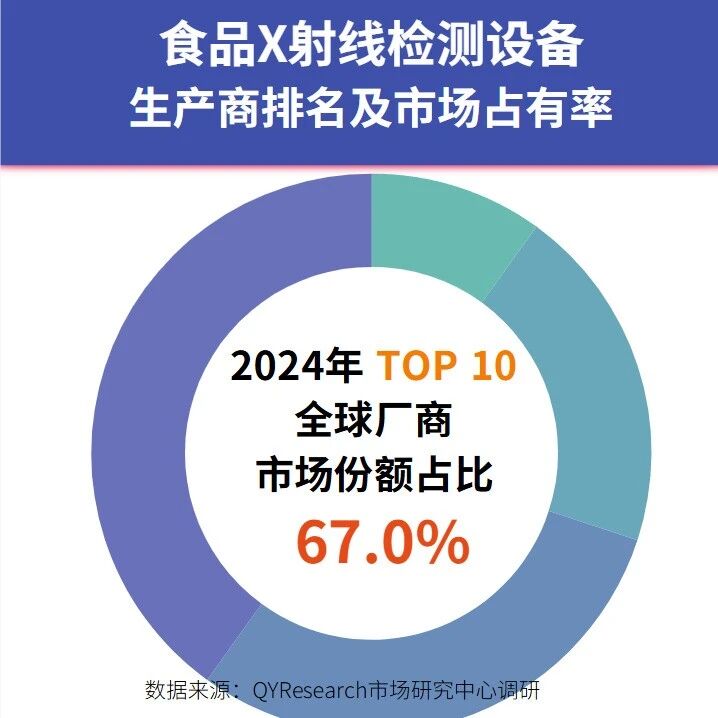
Core Viewpoint - The global food X-ray inspection equipment market is experiencing significant growth driven by increasing food safety regulations, consumer health awareness, and advancements in technology [2][3][5]. Market Overview - The global production of food X-ray inspection equipment is expected to reach 5,100 units in 2024, with an average price of $44,000 per unit [2]. - By 2031, the market size is projected to reach $400 million, with a compound annual growth rate (CAGR) of 6.9% [5]. - North America and Europe are mature markets for food X-ray inspection equipment, while the Asia-Pacific region, particularly China, India, Japan, and South Korea, is experiencing rapid growth [3][5]. Key Drivers - Increasing consumer concerns about food quality and safety are accelerating the adoption of X-ray inspection technology in the food industry [14]. - Retail giants like Walmart and Carrefour have incorporated X-ray inspection into their supplier standards, pushing upstream food companies to comply [14]. - Technological innovations have reduced equipment costs and operational complexity, facilitating market penetration [14]. - The global food processing automation rate is expected to rise from 41% in 2019 to 58% in 2024, increasing the demand for X-ray inspection machines as part of automated production lines [15]. Market Trends - The integration of dual-energy X-ray technology with artificial intelligence algorithms is enhancing detection accuracy to sub-millimeter levels [17]. - AI-driven IoT real-time monitoring systems are transforming quality management in production lines, allowing for predictive maintenance and rapid response to anomalies [17]. - Manufacturers are introducing modular and lightweight X-ray inspection solutions tailored for small and medium-sized food enterprises, promoting rapid market expansion in regions like China [17]. Major Players - Key manufacturers in the global food X-ray inspection equipment market include Anritsu Infivis, Mettler-Toledo, Ishida, and Thermo Fisher Scientific, with the top ten companies holding approximately 67% market share in 2024 [8][21].
中国电子条码秤市场现状研究分析与发展前景预测报告
QYResearch· 2025-10-29 02:52
Core Viewpoint - The electronic barcode scale market in China is experiencing a transitional phase, with a decline in sales revenue from $73.46 million in 2020 to an expected $63.50 million in 2024, primarily due to macroeconomic fluctuations and competition from alternative weighing devices [6][9]. Market Overview - The electronic barcode scale market in China is projected to have a compound annual growth rate (CAGR) of 1.75% from 2025 to 2031, indicating a shift towards maturity with limited growth potential [6]. - The market is divided into traditional button-type scales, which will account for approximately 66% of total revenue in 2024, and automatic identification scales, which are rapidly gaining market share [6][7]. Product Structure - Traditional button-type scales are widely used in small to medium-sized supermarkets and retail outlets due to their low cost and ease of use, but their revenue has been declining since 2020 [6]. - Automatic identification scales are expected to capture about 34% of the market by 2024, driven by features such as AI visual recognition and integrated label printing [7]. Competitive Landscape - Key players in the Chinese electronic barcode scale market include Mettler-Toledo, Top Electronic, Shanghai Dahua Electronic Scale Factory, Xiamen Hanprint Co., Ltd., and Teraoka Seiko Co., Ltd. [7]. - The top three manufacturers are projected to hold a market share of 40.83% in 2024, indicating a moderately concentrated market [7]. Customer Applications - The primary customers for electronic barcode scales are large chain supermarkets and small to medium-sized retail outlets, with large chains showing a higher demand for advanced automatic identification scales [8]. - The digital transformation in retail is pushing for the adoption of smart barcode scales, while traditional supermarkets are still reliant on basic models due to cost considerations [8]. Industry Drivers - The demand for fresh produce and the need for accurate pricing and labeling in supermarkets are significant drivers for the barcode scale market [11][12]. - The digital transformation in retail is reshaping the market, with retailers seeking smarter, interconnected solutions to enhance efficiency and customer engagement [14][15]. Industry Constraints - The offline supermarket sector is facing challenges from e-commerce and community group buying, leading to a slowdown in growth and reduced demand for barcode scales [17]. - Market saturation and homogeneous competition are increasing, as many small enterprises can enter the market with lower costs, leading to price competition and reduced profit margins [18]. Threat of Substitutes - The emergence of integrated weighing and cash register machines poses a significant threat to traditional barcode scales, as these devices streamline the checkout process and eliminate the need for physical labels [19].

行业聚焦:全球涡流位移传感器市场头部企业份额调研(附Top 10 厂商名单)
QYResearch· 2025-10-28 02:20
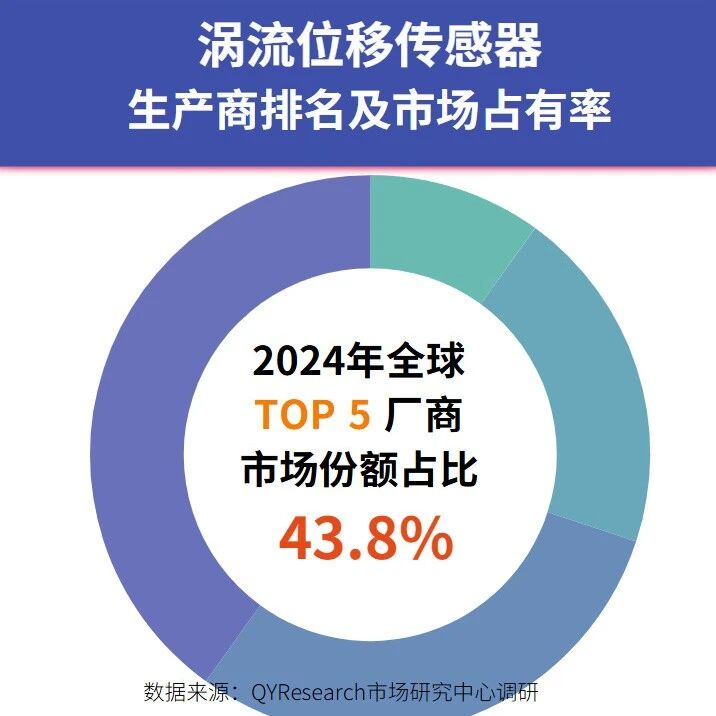
Core Viewpoint - The global eddy current displacement sensor market is projected to reach USD 950 million by 2031, with a compound annual growth rate (CAGR) of 4.4% in the coming years [2][4]. Market Overview - The global market for eddy current displacement sensors is expected to grow significantly, driven by increasing demand for high-precision, non-contact sensors in various industrial applications [2][10]. - Major manufacturers in the market include Baker Hughes, Micro-Epsilon, Bruel and Kjar, Emerson, Kaman, SHINKAWA, Rockwell Automation, Keyence, Lion Precision, and IFM, with the top five companies holding approximately 43.8% of the market share in 2024 [4][25]. Key Drivers - **Industrial Automation Demand Growth**: The rise of Industry 4.0 and smart manufacturing is leading to increased demand for high-precision sensors, which enhance production efficiency and reduce maintenance risks [10]. - **High Precision Measurement and Reliability Requirements**: Industries such as aerospace, energy, and automotive are demanding higher measurement accuracy and stability, which eddy current sensors can provide [11]. - **Industrial Equipment Condition Monitoring and Predictive Maintenance**: Companies are focusing on real-time monitoring to reduce downtime and maintenance costs, further driving demand for these sensors [12]. - **Emerging Industry Applications**: New sectors like renewable energy, rail transportation, and robotics are expanding the need for eddy current sensors [13]. - **Technological Advancements and Cost Reductions**: Improvements in manufacturing processes and materials are enhancing sensor performance while lowering production costs, increasing market penetration [14]. Key Challenges - **High Costs**: The high price of precision eddy current sensors may limit adoption among small and medium-sized enterprises [15]. - **High Environmental Adaptability Requirements**: Performance may be affected in extreme corrosive environments or strong electromagnetic interference, complicating application [17]. - **Competitive Pressure from Alternative Technologies**: Other non-contact measurement technologies, such as laser and capacitive sensors, pose a threat to market share [18]. - **Technical Complexity and Installation Requirements**: The need for specialized knowledge during installation and calibration can hinder adoption in lower-end applications [19]. - **Application Limitations**: These sensors are primarily suitable for conductive materials, which may restrict their use in certain industries [20]. Industry Development Opportunities - **Smart Manufacturing and Industry 4.0 Promotion**: The growth of smart manufacturing is creating significant opportunities for high-precision sensors [21]. - **Expansion in Renewable Energy and Sustainable Industries**: The demand for reliable monitoring in sectors like wind and nuclear energy is increasing [22]. - **Growth in Rail Transportation and High-End Equipment Manufacturing**: The need for precise measurement in these sectors is expected to drive long-term market growth [23]. - **Trends Towards Sensor Intelligence and Multifunctionality**: Integration with IoT and AI is opening new application scenarios for eddy current sensors [24].
血小板恒温振荡保存箱市场洞察:发展机遇及行业龙头企业介绍
QYResearch· 2025-10-28 02:20
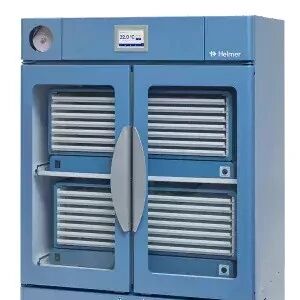
Core Viewpoint - The article discusses the importance and development factors of platelet constant temperature oscillating storage boxes, highlighting their role in ensuring the safety and effectiveness of clinical blood transfusions through advanced temperature control and oscillation technology [2][4]. Group 1: Definition and Importance - Platelet constant temperature oscillating storage boxes are medical devices that maintain a stable temperature environment to preserve platelet activity, ensuring safe and effective blood transfusions [2]. - These devices prevent platelet aggregation and sedimentation, maintaining uniform distribution and functional integrity, and are equipped with temperature sensors and alarm systems for real-time monitoring [2]. Group 2: Development Factors - The growth of platelet constant temperature oscillating storage boxes is driven by factors such as aging population, improved medical standards, increased surgical procedures, regulatory requirements, public health emergencies, and technological integration [4]. - The aging population, particularly in emerging economies like China, is leading to a rigid increase in clinical blood demand, especially for platelet transfusions during surgeries [5]. Group 3: Quality and Safety Requirements - Advances in medical technology have raised the performance requirements for storage boxes, necessitating precise temperature control and oscillation parameters to accommodate new storage solutions [7][8]. - The emphasis on green healthcare has led to the adoption of low-power motors and environmentally friendly refrigerants, enhancing sustainability and user-friendliness [8]. Group 4: Regulatory and Public Health Considerations - Stricter regulations on blood product management are pushing the development of high-precision and reliable storage boxes, requiring compliance with quality management standards [9]. - The COVID-19 pandemic highlighted vulnerabilities in the blood supply chain, prompting the need for larger, intelligent storage solutions to ensure adequate platelet reserves during emergencies [10]. Group 5: Future Trends - The future of platelet constant temperature oscillating storage boxes is expected to focus on smart and digital transformation, with over 70% of market products projected to integrate AI-driven predictive maintenance and real-time data analysis by 2027 [11]. - There is a strategic shift towards integrated solutions that encompass the entire blood management process, with expectations that this model will account for over 60% of market share by 2028 [12]. - The market for portable storage boxes is anticipated to grow significantly, driven by the increasing demand for emergency medical services and mobile blood banks [13]. Group 6: Industry Leaders - Qingdao Haier Biomedical is a leader in the field, providing innovative digital solutions for blood safety management, with a reported annual revenue of 2.284 billion yuan in 2024 [15]. - Haier's platelet constant temperature oscillating storage boxes are designed to meet stringent storage requirements, integrating IoT technology for enhanced monitoring and data traceability [15][16].

全球及中国制药中的生物制造行业研究及十五五规划分析报告
QYResearch· 2025-10-28 02:20
Core Viewpoint - The article discusses the evolution and current state of biomanufacturing in the pharmaceutical industry, highlighting the shift from traditional chemical synthesis to biologically driven innovations, emphasizing the importance of advanced technologies and collaborative networks in enhancing production efficiency and meeting market demands [1][4][5]. Group 1: Industry Characteristics - Biomanufacturing utilizes living biological systems to produce complex biological molecules for therapeutic use, adhering to strict regulatory standards to ensure product safety and efficacy [1]. - The industry is experiencing a dual-track evolution in R&D, focusing on both molecular innovation and process optimization, leading to a blurred line between drug design and manufacturing processes [4]. - Key technological advancements include the transition to continuous production, digitalization, and platform-based processes, which enhance production efficiency and reduce costs [5]. Group 2: Market Size and Growth - The global biomanufacturing market is projected to grow from approximately $518.56 billion in 2024 to $952.18 billion by 2031, with a CAGR of 9.39% from 2025 to 2031 [9]. - In China, the biomanufacturing market is expected to expand from about $42.08 billion in 2024 to $86.16 billion by 2031, with a CAGR of 11.14% during the same period [9]. Group 3: Competitive Landscape - The biomanufacturing sector is dominated by major players such as Roche, Merck, and Johnson & Johnson, with the top five companies holding approximately 37% of the global market share [10]. - There is a trend towards outsourcing manufacturing to Contract Development and Manufacturing Organizations (CDMOs) to enhance flexibility and focus on core R&D activities [6]. Group 4: Opportunities and Drivers - The emergence of new therapeutic modalities, such as gene therapy and mRNA platforms, is driving significant market demand and creating high-value manufacturing requirements [11]. - Government policies and public health priorities are fostering domestic manufacturing capabilities, providing opportunities for companies involved in vaccine and critical drug production [11]. Group 5: Supply Chain Dynamics - The upstream segment of biomanufacturing includes essential supplies like equipment and raw materials, with multinational corporations dominating this space [16]. - The midstream segment focuses on the R&D and production of biological drugs, with a notable shift towards digital factories and modular production capabilities [17]. - The downstream segment primarily serves healthcare providers and patients, with government procurement and cold chain logistics playing crucial roles in distribution [18].

行业聚焦:医疗器械SPD市场头部企业份额调研(附Top 10 厂商名单)
QYResearch· 2025-10-28 02:20
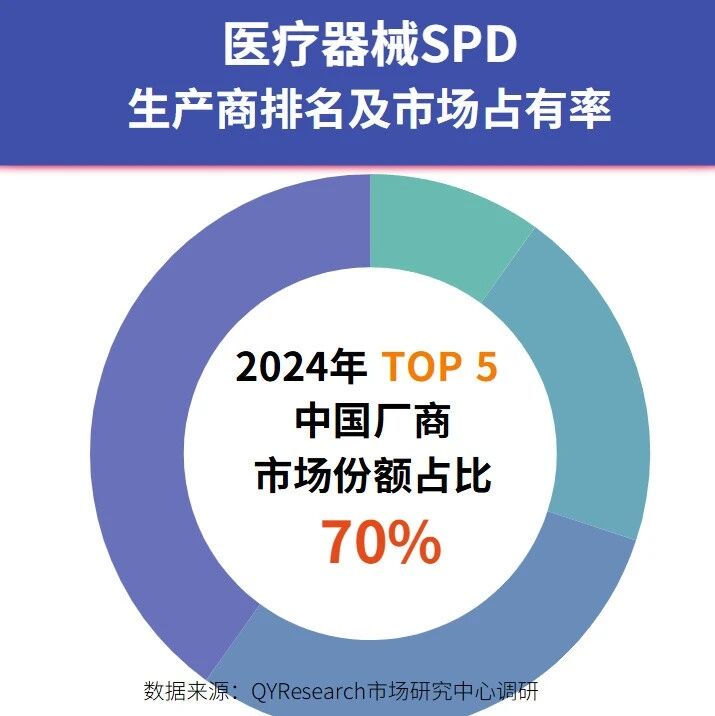
医疗器械 SPD 是指医院院内的"供给( Supply )、加工( Processing )、配送( Distribution )"三种核心工作流程的缩写,是一种通过精益 化、智能化和信息化的管理方式,以提高医疗机构医疗器械、耗材等物资的供应链效率和合理使用的全过程精细化管理体系。它利用条码识 别技术、信息系统和标准化建设,实现患者、临床科室、医学装备部门、供应商等数据信息的无缝对接,最终实现成本可控和规范化管理。 医疗器械SPD,中国市场总体规模 上游为药品及医疗器械生产商,据统计,全国医疗器械生产企业已经超过 3.5 万家。中游为医疗器械 SPD 平台商,主要参与者包括国药集 团、华润医药、塞力医疗、德荣医疗、上海医药等。下游主要是医疗机构和各级经销商,截至 2025 年 6 月,全国医疗器械经销商数量已超 过 66 万家。 行业发展趋势 据 QYResearch 调研团队最新报告"中国医疗器械 SPD 市场报告 2025-2031 "显示,预计 2031 年全球医疗器械 SPD 市场规模将达到 1630 亿 元,未来几年年复合增长率 CAGR 为 12.4% 。 根据 QYResearch 头部企业研究 ...