中关村储能产业技术联盟

Search documents
青海绿电直连方案:并网型项目自发自用电量≥60%,上网电量≤20%,合理配置储能
中关村储能产业技术联盟· 2025-07-16 08:10
Core Viewpoint - The Qinghai Provincial Energy Bureau has issued the "Implementation Plan for Green Power Direct Connection," aiming to promote the integration of renewable energy production and consumption, enhance the utilization of green energy, and meet the green energy needs of enterprises [6][8]. Summary by Sections Project Types and Scope - Four types of green power direct connection projects are to be promoted: 1. New loads that can be matched with renewable energy projects. 2. Existing loads that can develop green power direct connections after paying the renewable energy development fund, reducing output from self-supplied coal and gas power plants. 3. Export-oriented enterprises with rigid carbon reduction demands utilizing surrounding renewable resources for existing load direct connections. 4. Renewable energy projects that have not yet connected to the grid or are limited by renewable energy consumption can develop direct connections after completing necessary procedures [3][8]. Technical Requirements - Green power direct connection projects must clarify investment entities, optimize internal resource coordination, and adhere to the principle of "load determining source" for grid-connected projects. The annual self-generated electricity should account for at least 60% of total available generation and 30% of total electricity consumption, with a target of 35% by 2030. The proportion of grid-connected electricity should not exceed 20% [11][9][10]. System Flexibility Enhancement - Projects should enhance flexibility through reasonable energy storage configuration and load adjustment potential, minimizing system adjustment pressure. The maximum load peak-to-valley difference should be reasonably determined [2][13]. Key Work Tasks - Strengthening overall planning and project reserve, establishing a project reserve library, and accelerating the organization of demonstration projects that promote renewable energy consumption and meet enterprise needs [14][15]. Implementation Organization - Local energy departments are responsible for organizing the implementation of demonstration projects, ensuring quality and timely completion, and providing fair access to grid services for projects meeting connection conditions [15][16].


签约中车株洲所等40余合作伙伴!中汽新能在津召开“焕新启航、科创引领,打造央企一流电池产业平台”行动大会
中关村储能产业技术联盟· 2025-07-15 10:29
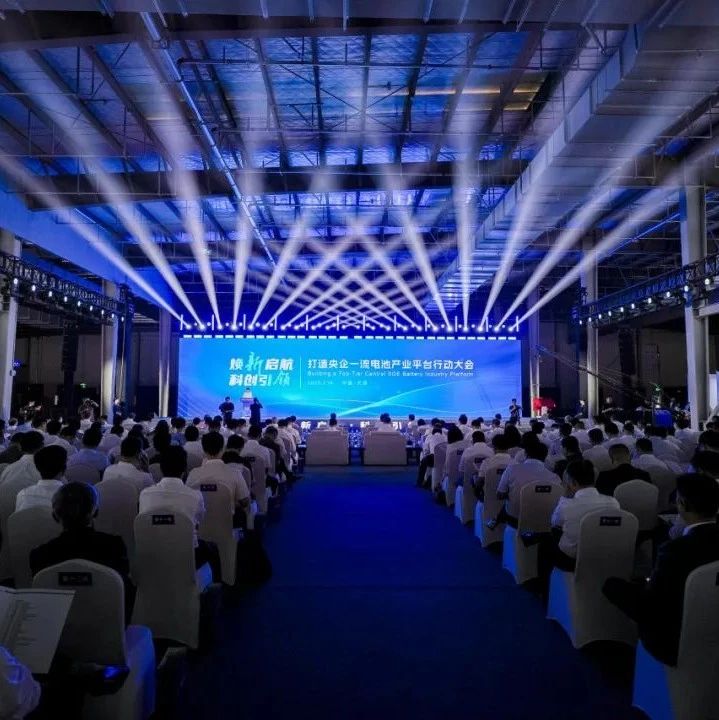
Core Viewpoint - The conference held on July 14 aimed to establish a first-class battery industry platform led by central enterprises, focusing on collaboration among various partners to build an integrated industrial ecosystem [1][10]. Group 1: Conference Highlights - The conference was attended by key officials including Tianjin municipal leaders and representatives from various institutions, emphasizing the importance of collaboration in the battery industry [1][11]. - A total of over 40 partnerships were signed to enhance the production, learning, research, and application ecosystem [1][10]. Group 2: Company Development and Strategy - Liu Yigong expressed gratitude towards various stakeholders and highlighted the need for China FAW to seize opportunities, accelerate innovation, and deepen cooperation to foster a new ecosystem for industry integration [5]. - The company aims to leverage technology to produce strategic and original results, reform to create a new model of professional integration, and build a talent base in the power battery industry [5]. Group 3: Technological and Collaborative Initiatives - The conference included the unveiling of the headquarters and innovation research institute of China Automotive New Energy, indicating a commitment to technological advancement [3][7]. - A technology committee was established, with experts receiving appointments to enhance the technological capabilities of the company [8].

罗马尼亚重磅政策:免除储能充电相关费用
中关村储能产业技术联盟· 2025-07-15 10:29
Core Viewpoint - Romania's energy regulatory authority has exempted energy storage resources from certain grid charging fees, aiming to eliminate double charging for stored energy, which has been a significant barrier to the development of storage technology [1][2]. Group 1: Regulatory Changes - The National Energy Regulatory Authority (ANRE) announced that energy storage resources will be exempt from transmission fees and green certificate fees when charging from the grid and discharging back [1]. - This exemption applies only to energy that is charged from the grid and then discharged back; self-consumed energy, including technical losses, will still incur grid-related fees [1]. - The regulation aims to send a clear signal to investors that Romania views energy storage not just as a technological option but as a pillar of energy transition [2]. Group 2: Importance of Storage Technology - Energy storage technology plays a crucial role in balancing energy systems and integrating renewable energy sources [1]. - The regulation addresses the long-standing issue of double charging, which has hindered the growth of storage technologies [1]. - The round-trip efficiency (RTE) of storage systems, such as lithium-ion batteries, which typically exceeds 90%, will become increasingly important for operators due to the remaining costs associated with self-consumed energy [1].

2025年上半年储能中标价格盘点
中关村储能产业技术联盟· 2025-07-15 10:29
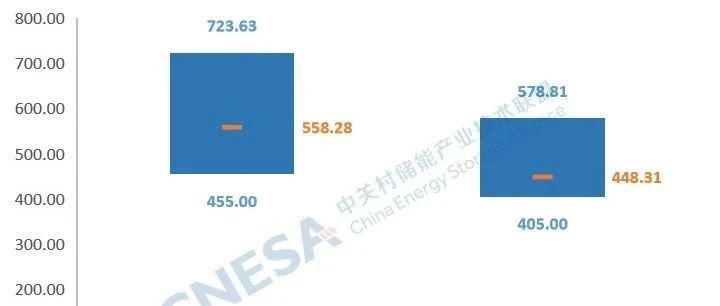
Group 1 - The average bidding price for 0.5C energy storage systems in the first half of 2025 was 558.28 yuan/kWh, a year-on-year decrease of 27%, with a significant month-on-month increase of 22% in June, reaching 638.59 yuan/kWh, which is a 10% increase compared to the beginning of the year [1][4][3] - The average bidding price for 0.5C energy storage EPC in the first half of 2025 was 984.95 yuan/kWh, a year-on-year decrease of 17%, with June's average at 916.43 yuan/kWh, down 21% year-on-year and 13% month-on-month [1][4][12] - The bidding price range for 0.5C energy storage systems narrowed significantly compared to the previous year, with a range of 455 yuan/kWh to 723.63 yuan/kWh [4][5] Group 2 - The average bidding price for 0.25C energy storage systems in the first half of 2025 was 448.31 yuan/kWh, a year-on-year decrease of 69%, with a price range of 405 yuan/kWh to 578.81 yuan/kWh [4][5] - The average bidding price for 0.25C energy storage EPC was 843.28 yuan/kWh, a year-on-year decrease of 15%, with a range of 456.25 yuan/kWh to 1,646.8 yuan/kWh [12][14] - The average bidding price for collective procurement of 0.5C energy storage systems was 545.00 yuan/kWh, a year-on-year decrease of 6%, with a price range of 460 yuan/kWh to 710 yuan/kWh [9][11]
存量机制电价0.3078元/kWh,增量机制电量≤80%,执行12年!甘肃“136号文”征求意见
中关村储能产业技术联盟· 2025-07-15 10:29
Core Viewpoint - The article discusses the implementation plan for the market-oriented reform of renewable energy grid pricing in Gansu Province, aiming to promote high-quality development of renewable energy through market transactions and price mechanisms [1][17]. Summary by Sections Market Entry and Pricing Mechanism - All renewable energy projects in Gansu, including centralized and distributed solar and wind power, will have their grid electricity enter market transactions, with prices determined through market trading [1]. - Distributed solar projects can participate as independent market entities or aggregate to enter the market, while those not participating will default to the weighted average price of all renewable projects in the real-time market [1]. Existing Projects Pricing and Scale - For existing renewable projects that commenced operation before June 1, 2025, the mechanism's electricity scale is set at 154 billion kWh, with a mechanism price of 0.3078 yuan per kWh [2][3]. - The execution period for these projects will be determined based on the earlier of the remaining reasonable utilization hours or a 20-year full lifecycle [3]. New Projects Pricing and Scale - For new renewable projects starting after June 1, 2025, the annual scale of electricity included in the mechanism will depend on the national renewable energy consumption responsibility and user capacity [7]. - The mechanism price for these projects will be determined through competitive bidding, with a cap on the bid price [8]. Project Submission and Qualification - Projects must provide various documentation to qualify for the bidding process, including operational permits and project approvals [10][11]. - Distributed energy aggregators must be registered companies in Gansu and provide necessary documentation for their projects [12]. Mechanism Electricity Scale and Limits - The annual mechanism electricity scale will be clarified by the provincial development and reform commission and related departments by September 30 each year [13]. - To prevent irrational pricing, individual project submissions for mechanism electricity cannot exceed 80% of their expected total grid electricity [14].

重磅!首个省级容量电价出台,甘肃电网侧新型储能,电价标准330元/KW*年
中关村储能产业技术联盟· 2025-07-14 11:23
暂包括合规在运的公用煤电机组、 电网侧新型储能 ,均不含直流配套电源。 容量电价标准 市场初期 ,煤电机组、电网侧新型储能容量电价标准暂按每年每千瓦330元执行 ,执行 期限2年。 文 | 甘肃省发展和改革委员会 7月1 4日,甘肃省发展改革委发布《甘肃省关于建立发电侧容量电价机制的通知(征求意 见稿)》。 实施范围 容量电费按照月度外送电量(不含直流配套电源)和省内全体工商业用户月度用电量比例分 摊。 容量需求和有效容量核定 容量需求。 容量需求按当年系统净负荷曲线(省内用电负荷加外送电量减去风电、光伏 出力、可中断负荷容量,下同)的最大值所在时刻对应的省内用电负荷、外送容量需求 (不含祁韶配套电源的送电容量)、备用容量之和减去可中断负荷容量计算确定。 有效容量。 有效容量为煤电机组、电网侧新型储能、风电、光伏、水电等电源的有效容 量之和。煤电机组的有效容量根据煤电机组铭牌容量扣除厂用电后确定。 电网侧新型储 能的有效容量根据满功率放电时长/ 6×额定功率并扣除厂用电后后确定。 风电、光伏机组 的有效容量根据装机容量扣除厂用电后的7%、1%确定。水电机组的有效容量根据装机容 量扣除厂用电后,蓄水式按98%、 ...

东北能监局:爬坡问题趋频趋重,新能源不具备惯量支撑,新型储能仅占1%
中关村储能产业技术联盟· 2025-07-14 11:23
文 | 国家能源局东北监管局 东北能源监管局 综合施策推动解决电网爬坡能力不足问题 近日,东北能源监管局综合施策推动解决电网爬坡能力不足问题的文件发布。 近年来,随着东北区域新型电力系统加速构建,新能源装机容量快速攀升,系统频率控制 难度持续加大。 2 0 2 4年10月东北电网曾出现晚峰时段因新能源出力快速下降,叠加用电 负荷增长等因素, 4 0分钟爬坡需求达到近十年罕见的801万千瓦 ,在全力调用爬坡资源 的情况下,仍出现频率长时间波动问题。东北能源监管局对此高度重视,组织调度机构进 行深入研究,剖析问题根源,统筹谋划部署,立即开展火电机组调节速率提升专项整治, 切实采取有效措施提升系统爬坡能力水平,保障东北电网安全稳定运行。 一、突出问题导向,加强分析研判 东北能源监管局组织区域调度机构周密复盘事件经过、深入分析事件原因,开展电网爬坡 需求和全网火电爬坡性能实测研究,并对转型期系统爬坡能力监管工作进行了思考谋划。 一是 新能源快速发展,爬坡需求增长明显。 近几年,东北电网爬坡需求仍将保持快速增 长。 预计2 0 3 0年,东北电网新能源装机2.5亿千瓦,占比达5 8%;最大用电负荷1 . 1 5亿千 瓦 ...
贵州200MW/400MWh储能电站招标
中关村储能产业技术联盟· 2025-07-14 11:23
Core Viewpoint - The article discusses the tender announcement for the construction of a new energy storage project in Tongren, which includes a 200MW/400MWh electrochemical independent energy storage station and associated infrastructure [1][2]. Project Construction Content - The project involves the establishment of one electrochemical independent energy storage station with a capacity of 200MW/400MWh, covering an area of approximately 46.9 acres. It will utilize containerized lithium iron phosphate batteries and a combined inverter-boosting station [2][4]. - Additional infrastructure includes the construction of a 110kV energy storage boosting station, approximately 4.5 kilometers of new 110kV transmission lines, 14 new towers, and various cable installations [2][4]. Tender Details - The tender will cover construction and important equipment and materials related to the project, with the expected tender date set for July 25, 2025 [3][4]. - The estimated investment for the project is 415.8 million yuan, funded through bank loans and corporate self-financing [4]. Administrative Oversight - The project will be supervised by the Tongren Municipal Development and Reform Commission, specifically the Energy Project Management Department [4].

5.2GWh!澳大利亚两大储能项目提交审批
中关村储能产业技术联盟· 2025-07-14 11:23
Core Viewpoint - Two large-scale battery storage projects in Australia, totaling 5.2 GWh, have been submitted for approval under the Environment Protection and Biodiversity Conservation Act, aimed at enhancing the stability of the local renewable energy grid [1]. Group 1: Canyonleigh Battery Storage Project - The Canyonleigh project, developed by Spanish sustainable energy developer X-Elio, has a capacity of 300 MW / 1200 MWh and is located in the Southern Highlands of New South Wales [2]. - The project site is adjacent to the Willavale Park renewable energy project, which includes a 300 MW / 600 MWh battery storage system and a 72 MW peak photovoltaic power station, creating a synergistic "storage + photovoltaic" layout [2]. - The total area of the Canyonleigh project is approximately 48 hectares, with the storage system occupying 13 hectares, utilizing lithium-ion batteries. The construction and commissioning period is expected to be 12 to 18 months, with a design operational lifespan of 20 to 30 years [3]. Group 2: Kiar Battery Storage Project - The Kiar project, led by independent renewable energy consultancy BID Energy, has a capacity of 1000 MW / 4000 MWh and is located about 100 kilometers north of Sydney in the Central Coast region of New South Wales [4]. - The project will connect to the National Electricity Market via a 330 kV line operated by Transgrid, leveraging existing infrastructure to reduce grid connection costs [4]. - The project will occupy approximately 110 hectares, with a design operational lifespan of 25 years. The construction period is estimated to be 18 to 24 months, with plans for commissioning by the end of 2027 or early 2028 [4]. Group 3: Environmental Approval Process - Both projects must undergo environmental impact assessments as per the Australian Environment Protection and Biodiversity Conservation Act. If deemed to have no significant ecological impact, they will receive development approval; otherwise, further scrutiny will be required for any major environmental risks [5]. Group 4: Market Context - The Australian electricity market is undergoing significant reforms, which are expected to benefit battery storage initiatives. Australian battery manufacturers are also entering the U.S. storage market, targeting a total of 5 GWh [6].

台湾首家超级电池工厂发生火灾
中关村储能产业技术联盟· 2025-07-14 03:54
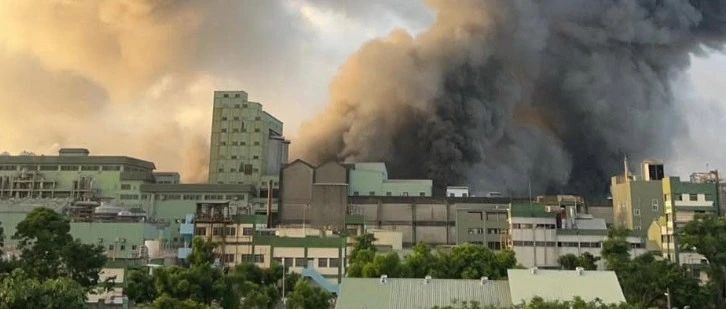
Core Points - A fire broke out at the San Yuan Energy Company in Kaohsiung's Xiaogang District, resulting in injuries to 12 employees and 3 firefighters [1][7] - The company is Taiwan's first super battery factory, producing high-capacity nickel ternary batteries with an annual capacity of 1.8 GW, sufficient for 24,000 electric vehicles [5] Group 1 - The fire started early in the morning, with significant smoke and explosions reported [1] - The local fire department deployed 46 rescue vehicles and 91 personnel to the scene, utilizing robots for firefighting efforts [1] - The cause of the fire and the extent of property damage are still under investigation [7] Group 2 - The San Yuan Energy Technology lithium battery plant is located near Kaohsiung International Airport, but the fire did not affect flight operations [3]