WitsView睿智显示

Search documents
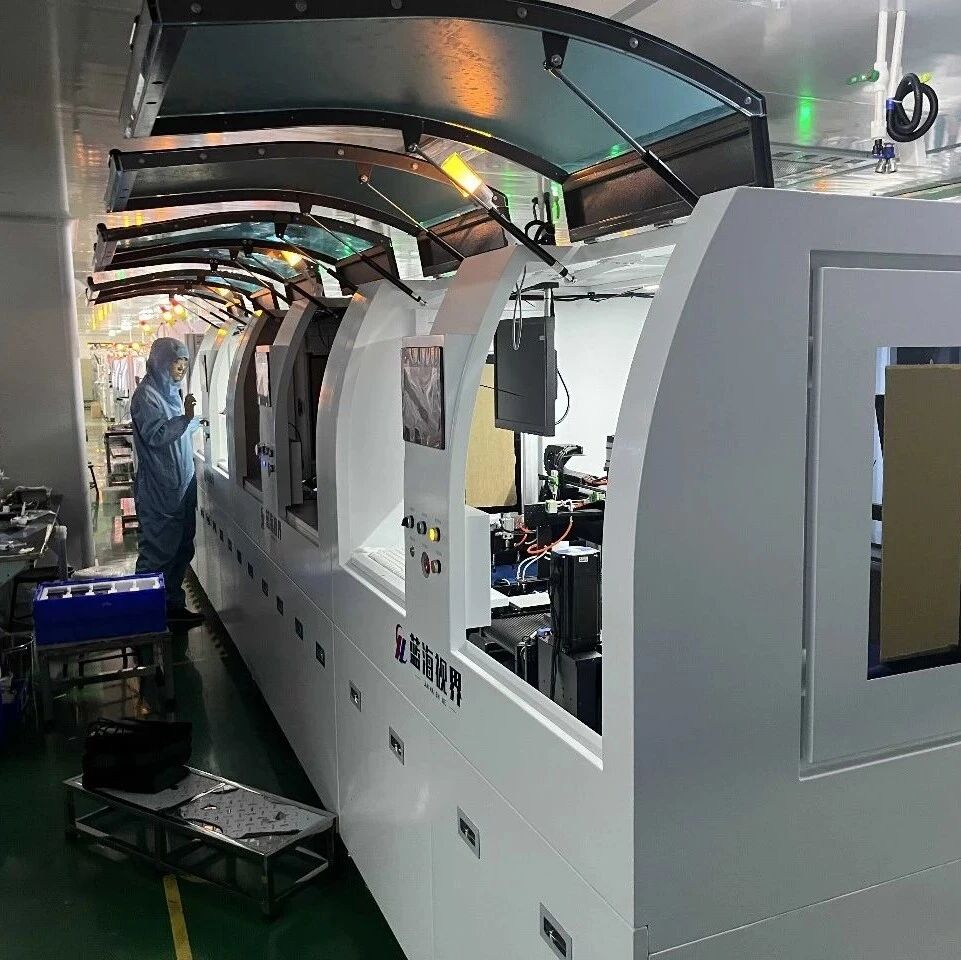
年产70万片,湖南柔性OLED屏项目预计11月完工
WitsView睿智显示· 2025-09-04 09:17
Core Viewpoint - Hunan Chuangpu Open Technology Co., Ltd. is advancing its Phase III project construction, expected to be completed by the end of November 2023, which includes new production lines for flexible OLED and electronic paper displays [2][3]. Company Overview - Chuangpu Open was established in 2020 and focuses on the new display industry, with main business activities including the R&D, manufacturing, and sales of TFT-LCD modules, flexible OLED displays, touch screens, backlight sources, and related electronic components [3]. - The company also provides industrial automation equipment and import-export trade services, with applications in mobile phones, smart wearables, automotive, smart home, and digital products [3]. Production Capacity and Financial Growth - Since its establishment in Xiangxiang, the production capacity of Chuangpu Open has expanded significantly, increasing from 8 production lines to over 200 lines, and annual output value has risen from 400 million to 3.8 billion yuan [6]. - The expected annual production capacity after the completion of the new project is 700,000 pieces for flexible OLED displays and 1.8 million pieces for electronic paper displays [3].

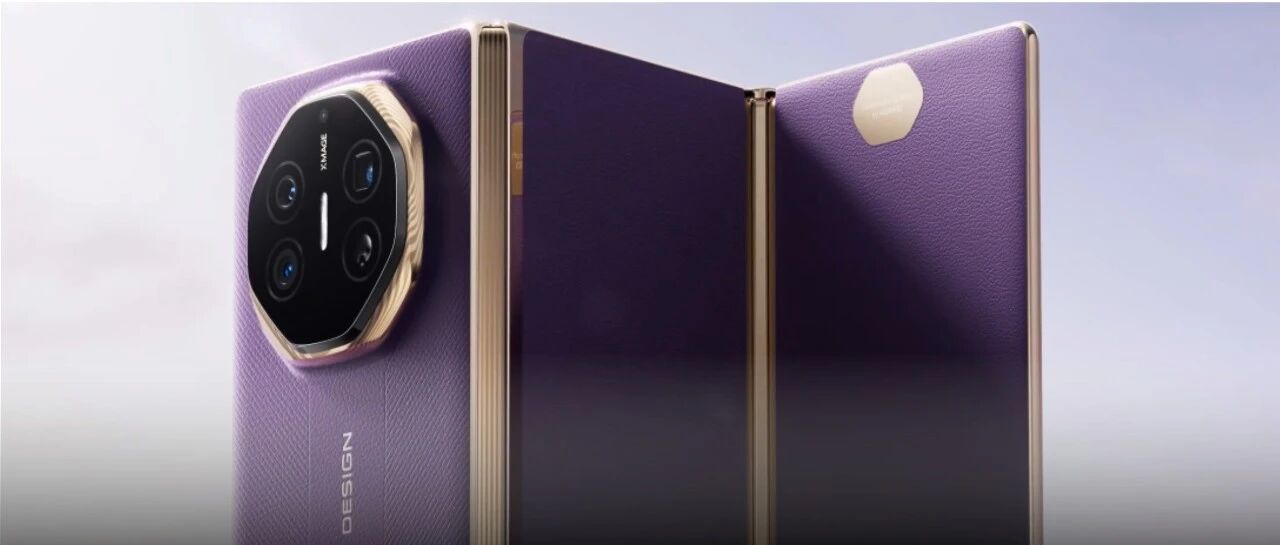
华为Mate XTs正式发布,三折叠屏幕时代已来?
WitsView睿智显示· 2025-09-04 09:17
Core Viewpoint - Huawei has launched its second foldable smartphone, the Mate XTs, which features significant performance improvements and advanced display technology, marking a notable advancement in the foldable phone market [2][3]. Summary by Sections Product Features - The Huawei Mate XTs is powered by the Kirin 9020 chip and runs on HarmonyOS 5, claiming a 36% overall performance enhancement [3]. - It features a 10.2-inch OLED foldable display with a resolution of 2232×3184, supporting various refresh rates and brightness adjustments, along with advanced power-saving technologies [3]. - The device is available in four color options and three storage configurations, with prices reduced by 2000 yuan compared to its predecessor [5]. Challenges in Foldable Technology - The transition from dual-foldable to tri-foldable smartphones presents significant technical challenges, particularly in hinge design, screen durability, and overall device weight [6][7]. - The complexity of the hinge mechanism increases with tri-foldable designs, requiring high precision and durability to ensure smooth operation [6]. - The need for larger flexible screens with enhanced durability poses additional challenges, particularly in managing increased thickness and weight when folded [7]. Market Trends and Alternatives - Despite the challenges, the tri-foldable design is seen as a clearer technological path compared to alternative display technologies like rollable screens, which have yet to achieve mass commercialization [9][10]. - Rollable screens face significant hurdles in terms of durability, mechanical complexity, and production costs, making tri-foldable phones a more viable option for manufacturers [12]. Design Variants - The current tri-foldable designs are primarily categorized into "Z-shape" and "G-shape" configurations, each with its own advantages and disadvantages regarding screen exposure and protection [13][19]. - The Z-shape design allows for an external display but risks damage to the exposed screen, while the G-shape design offers better protection at the cost of increased complexity and weight [16][19]. Supply Chain Developments - The rise of tri-foldable smartphones is supported by advancements in flexible OLED technology from panel manufacturers, with companies like BOE and TCL leading the way in developing new display solutions [20][21]. - Partnerships between manufacturers and panel suppliers are crucial for the successful production and commercialization of tri-foldable devices [20]. Conclusion - The introduction of tri-foldable smartphones is revitalizing the market, but challenges related to technology, cost, and user experience remain [24][25]. - The competition between Z-shape and G-shape designs will shape the future of the tri-foldable market, with ongoing developments in panel technology influencing overall feasibility and consumer adoption [25].
平板显示材料企业映日科技完成辅导备案
WitsView睿智显示· 2025-09-04 09:17
Core Viewpoint - Wuhu Yingri Technology Co., Ltd. has completed the counseling filing registration with the Anhui Securities Regulatory Bureau and plans to list on the Beijing Stock Exchange, indicating a significant step towards capital market access and growth potential in the high-performance sputtering target materials sector [2]. Company Overview - Established in 2015 and headquartered in Wuhu, Anhui, Yingri Technology specializes in high-performance sputtering target materials, including ITO rotary targets, metal/alloy targets, and high-purity copper, aluminum, molybdenum, and nickel-vanadium targets for semiconductor applications [2]. - The company went public on the New Third Board in August 2025 and has over 200 patents [4]. Financial Performance - In 2023, Yingri Technology reported revenue of 522 million yuan and a net profit of 63 million yuan [4]. - The company has established a cleanroom facility of 20,000 m², with an annual production capacity of 1,200 tons for ITO rotary targets and 500 tons for metal/alloy targets [4]. Production Capacity and Expansion Plans - Yingri Technology supplies major clients such as BOE, Tianma, Huaxing Optoelectronics, Longi, and Tongwei [4]. - In 2024, the company will initiate a 300 million yuan expansion project to build a new automated production line for 6,000 tons of large-size ITO rotary targets, expected to be operational in the first quarter of 2026, which will double its total production capacity [4].

总投资10亿,TFT-LCD光学膜项目签约南京
WitsView睿智显示· 2025-09-03 09:59
Core Viewpoint - The article highlights the signing of a new TFT-LCD optical film production project by Changbao New Materials in Lishui, Nanjing, with a total investment of 1 billion yuan and fixed asset investment of 800 million yuan, marking Nanjing's first project in the new display industry [2]. Company Overview - Changbao New Materials, established in 2014, is a Sino-Korean joint venture located in Suzhou Wujiang Economic and Technological Development Zone [5]. - The company specializes in the research, production, and sales of optical films for TFT-LCD displays, which are widely used in televisions, laptops, and tablets [5]. - Changbao New Materials is currently the only company in the market capable of producing optical films in various sizes and is one of only two suppliers globally of composite (laminated) prisms [5]. - The company's products are primarily sold in mainland China, Europe, America, and Southeast Asia, with major clients including LG, BOE, TCL, Skyworth, and Konka [5].

佳明首款Micro LED智能手表即将上市
WitsView睿智显示· 2025-09-03 09:59
Core Viewpoint - The upcoming release of Garmin's Fenix 8 Pro and Fenix 8 Pro Micro LED smartwatches is expected to drive advancements in Micro LED technology, positioning it as a strong competitor to AMOLED in the smartwatch market [4][10][15]. Summary by Sections Product Launch and Features - Garmin is set to launch the Fenix 8 Pro Micro LED smartwatch, which is anticipated to be the brightest smartwatch available, with a larger 51mm version expected to be priced above $1200, potentially nearing $2000 [4][6][10]. Micro LED Technology Advantages - Micro LED technology offers significant advantages over AMOLED, including higher brightness, lower power consumption, and improved resolution and contrast, addressing the limitations of AMOLED such as visibility in bright outdoor conditions and screen burn-in risks [10][11]. Industry Development and Challenges - Despite the promising features of Micro LED, the development of Micro LED smartwatches has faced challenges. Apple previously invested heavily in Micro LED technology for its Apple Watch but suspended the project due to high production costs and technical difficulties [11][15]. - Other brands, like TAG Heuer, are exploring Micro LED for luxury experiences, with production expected to begin in 2024 [11][12]. Supply Chain and Production - The upstream panel industry is actively working on Micro LED technology, with AU Optronics set to mass-produce Micro LED panels by the end of 2023. Samsung Display has also made advancements, increasing the brightness of Micro LED screens to 6000 nits [12][13]. - Companies like Rara Technology and Innolux are developing Micro LED panels with high resolution and energy efficiency, indicating a growing interest in this technology [13][12]. Market Outlook - The Micro LED smartwatch market is still in its early stages, but there is optimism for growth as brands begin to adopt this technology in high-end products, potentially leading to broader market acceptance and technological advancements [15].


三星即将量产超5万部“双折叠”手机?
WitsView睿智显示· 2025-09-03 09:59
Core Viewpoint - Samsung Electronics has decided to mass-produce over 50,000 units of a new "dual-fold" smartphone, marking its entry into the dual-fold smartphone market with a cautious approach due to the novelty of the product and potential limited early demand [2][4][5]. Summary by Sections Product Details - The new smartphone features an inward dual-fold design, with a screen size of 9.96 inches when unfolded and 6.49 inches when folded. The product is expected to be unveiled in October and officially launched in November [2][4]. Production Strategy - The production volume of 50,000 units is considered low compared to the 500,000 units planned for the Galaxy Fold in 2019. This limited production is intended to test the market for new form-factor smartphones [4][5]. Market Considerations - Analysts suggest that Samsung's cautious production strategy is influenced by the need to avoid competition with the recently launched Galaxy Z Fold 7, which has shown strong sales performance. The limited release aims to prevent cannibalization of existing product demand [5].
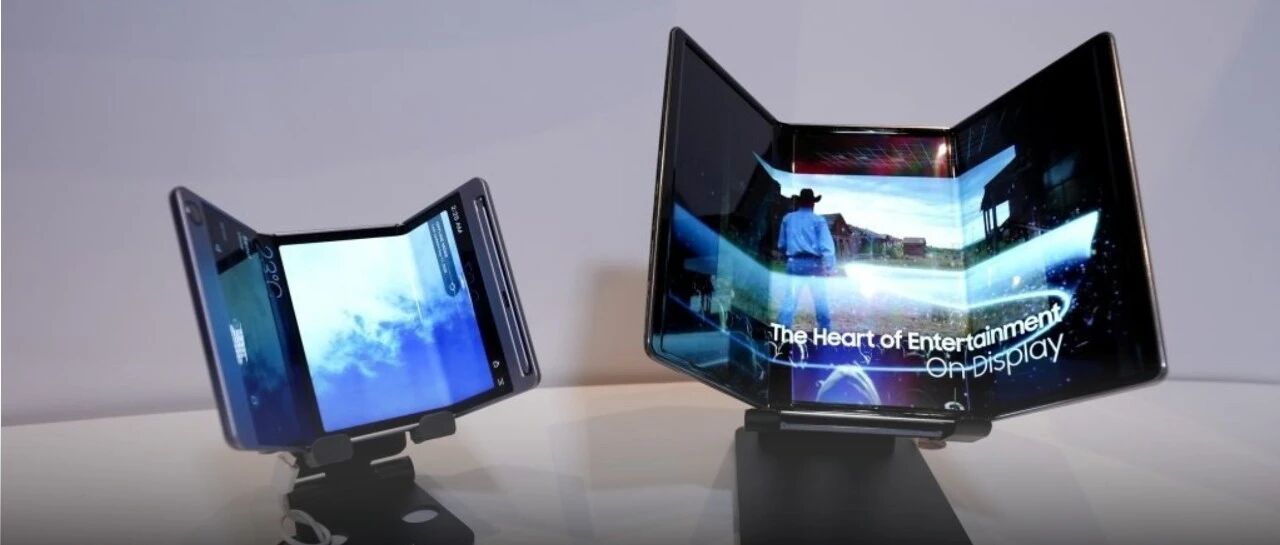
拟募资7.1亿,福莱新材投建OLED材料等项目
WitsView睿智显示· 2025-09-03 09:59
Core Viewpoint - The company, Fule New Materials, plans to raise up to 710 million yuan through a private placement of A-shares to fund expansion projects in label printing materials, electronic-grade functional materials, R&D center upgrades, and to supplement working capital [2]. Group 1: Fundraising and Project Allocation - The total investment for the projects is approximately 840.84 million yuan, with the raised funds allocated as follows: 243.2 million yuan for label printing materials expansion, 220.5 million yuan for electronic-grade functional materials upgrade, 36.3 million yuan for R&D center upgrades, and 210 million yuan for working capital [3]. - The electronic-grade functional materials project will be implemented in Jiaxing, Zhejiang, with an expected annual production capacity of about 37 million square meters upon completion [3][4]. Group 2: Project Details and Market Position - The electronic-grade functional materials market is dominated by international giants like 3M and Nitto Denko. The company aims to produce high-value materials such as OLED support films and folding protective films, leveraging its proprietary technologies to capture the domestic replacement market [4]. - The label printing materials expansion project is expected to add an annual production capacity of approximately 773 million square meters, including the purchase of coating machines and smart upgrades to existing production lines [4]. Group 3: R&D and Financial Performance - The R&D center upgrade will involve the establishment of a high-cleanliness laboratory and the acquisition of precision R&D equipment to enhance the development of high-end materials for OLED displays and flexible sensors [5]. - In the first half of 2025, the company reported a revenue of 1.334 billion yuan, a year-on-year increase of 15.4%, while the net profit attributable to shareholders decreased by 19.58% to 50.93 million yuan [5].


夏普再卖厂
WitsView睿智显示· 2025-09-02 05:51
Core Viewpoint - Sharp is actively pursuing asset divestiture under its asset-light strategy, including the sale of its Kameyama North Factory to Topia for 1.2 billion yen, expected to be completed by September 25 [1][2]. Group 1: Asset Sales - Sharp has signed a sales contract with Topia to sell the Kameyama North Factory's land and buildings for 1.2 billion yen, with an expected profit recognition of 484 million yen in the second quarter of fiscal year 2025 [1][2]. - The Kameyama North Factory previously produced smartphone sensor components but ceased operations in 2020; Topia plans to convert it into a trial production line for automotive components [2]. - Additionally, Sharp is negotiating the sale of its Kameyama No. 2 Factory, which produces small to medium-sized LCD panels, to Hon Hai, with plans to procure panels from Hon Hai post-sale [3]. Group 2: Financial Performance - Sharp has revised its consolidated revenue target for fiscal year 2025 from 1.85 trillion yen to 1.87 trillion yen, reflecting a year-on-year decrease of 13.4% [3]. - The consolidated operating profit target has been increased from 20 billion yen to 30 billion yen, representing a year-on-year increase of 9.7% [3]. - The consolidated net profit target has been adjusted from 10 billion yen to 32 billion yen, indicating a year-on-year decrease of 11.3% [3].
15亿元,湖北新增智能终端智造项目
WitsView睿智显示· 2025-09-02 05:51
Group 1 - The core viewpoint of the article is the collaboration between Huangshi Development Zone and Shenzhen Zhuochuang Intelligent Technology Co., Ltd. to establish a comprehensive smart terminal manufacturing and cross-border e-commerce headquarters project with a total investment of 1.5 billion yuan [1] - The project aims to create a full industrial chain base for smart terminals, including research and development, manufacturing, and sales, with an expected annual output value of no less than 3 billion yuan upon completion [1] - Shenzhen Jiayi Wealth Electronic Integration Co., Ltd. has also launched a terminal electronics project in Huangshi, with a total investment of 500 million yuan, focusing on the manufacturing of electronic components and smart terminal products [1]

超57亿,三星SDI完成偏光膜业务转让
WitsView睿智显示· 2025-09-02 05:51
Core Viewpoint - Samsung SDI has completed the transfer of its polarizer film business to Wuxi Hengxin Optoelectronic Materials Co., Ltd. for 1.121 trillion KRW (approximately 5.751 billion RMB) as part of its strategy to restructure non-core businesses and focus on electronic materials [1][2][3]. Group 1: Business Transfer Details - The transfer includes the sale of Samsung SDI's polarizer film manufacturing and sales operations located in Cheongju and Suwon, South Korea, as well as all shares of its subsidiary in Wuxi [2][3]. - The transaction was led by Noyen Capital, which focuses on investments in the optoelectronic display, third-generation semiconductors, new energy, and smart vehicle sectors [4]. Group 2: Market Context and Future Focus - The polarizer film market has faced challenges due to the rise of OLED and other emerging display technologies, prompting Samsung SDI to shift its focus towards developing next-generation materials for semiconductors, OLEDs, and batteries [3]. - In the second quarter of this year, Samsung SDI's electronic materials division reported sales of 218.2 billion KRW (approximately 1.119 billion RMB), reflecting a year-on-year growth of 2.4% [3]. Group 3: Acquirer Profile - Wuxi Hengxin Optoelectronic is a wholly-owned subsidiary of Hengmei Optoelectronic, which specializes in the research and manufacturing of polarizers, optical functional films, and optical compensation films for display materials [3]. - The company has established and put into operation four production lines for polarizers, including two ultra-wide 2.6-meter polarizer production lines [3].