量子位

Search documents
学生3年投稿6次被拒,于是吴恩达亲手搓了个评审Agent
量子位· 2025-11-25 05:31
Core Insights - The article discusses the development of an AI paper review system created by Andrew Ng in response to a student's repeated rejections in academic submissions, aiming to expedite the review process and provide actionable feedback [2][24]. Group 1: AI Paper Review System - The AI review system was trained on ICLR 2025 review data, achieving a correlation coefficient of 0.42 with human reviewers, which is comparable to the 0.41 correlation among human reviewers [4][14]. - The system allows users to select the conference or journal for submission, tailoring the review process to the specific style of that venue [9]. - Upon submission, the system converts the PDF to Markdown, extracts keywords, and searches arXiv for relevant research to summarize and provide a complete review with specific modification suggestions [11][12]. Group 2: Performance and Accuracy - The AI system scores papers on a scale of 1-10 across seven dimensions, including originality and the importance of the research question, with a final score calculated by a model [13][14]. - While the AI's scoring correlates well with human scores, human reviewers have a higher accuracy rate of 0.84 in predicting acceptance compared to the AI's 0.75 [14]. - The AI review system reflects the likelihood of a paper's acceptance to some extent, although it primarily references content from arXiv, which may introduce some inaccuracies [20][21]. Group 3: User Experience - Users have expressed that receiving a quick rejection from the AI is preferable to waiting months for human feedback, allowing for faster revisions and resubmissions [6][7]. - The system is currently available for researchers to try, potentially increasing their chances of acceptance [29].


荣耀500系列2699元起:人物能实况、路人能消除、照片还能自己“跳出来”
量子位· 2025-11-25 03:20
Core Viewpoint - Honor has launched the Honor 500 series, featuring two versions: Super Standard and Super Pro, with starting prices of 2699 yuan and 3599 yuan respectively [8]. Group 1: Product Features - The Honor 500 series introduces the industry's first front and rear Live portrait feature, supporting six film styles for enhanced atmosphere [2]. - A new feature called "Breaking the Frame" Live effect allows users to create a 3D-like effect by automatically recognizing subjects in photo collages [4]. - The series is equipped with an 8000mAh battery, setting a record for battery capacity in its price range, and supports 27W wired reverse charging [6][16]. Group 2: Performance and Gaming - The standard version uses the Snapdragon 8s Gen4 chip, while the Pro version features the Snapdragon 8 Supreme version, providing strong performance for its price point [9]. - The devices are optimized for high-load gaming, with the ability to run games like "Honor of Kings" and "Genshin Impact" at full frame rates without lag [11][12]. Group 3: Target Audience and Connectivity - Honor has implemented network optimizations specifically for students, including automatic network switching during power outages and campus network login without authentication [19]. - The design includes four color options and a thinner body at 7.75mm, enhancing the overall aesthetic and grip [21][23]. Group 4: Imaging Capabilities - The series maintains a 200-megapixel AI ultra-clear portrait foundation, with the Pro version adding a 50-megapixel dual-stabilized telephoto lens [25][26]. - The Live portrait feature allows for depth-of-field effects and beauty enhancements, making each frame closer to a finished product [29]. - The "Live passerby removal" function enhances image clarity by removing unwanted subjects from dynamic environments [32]. Group 5: Accessories and Launch - Alongside the Honor 500 series, several accessories were launched, including the Honor Watch X5 and Honor Earbuds S, with competitive pricing [38][40]. - The Honor 500 series is set to officially launch on November 27 [44].

Nano Banana新玩法无限套娃!“GPT-5都不会处理这种级别的递归”
量子位· 2025-11-25 03:20
Core Insights - The article discusses the innovative use of the "Nano Banana" AI tool, highlighting its recursive image generation capabilities and the excitement it has generated among users [1][8][26]. Group 1: Nano Banana and Its Features - Nano Banana has introduced a new recursive image generation feature that allows users to create complex images by layering prompts, leading to a unique "nested" visual experience [1][10]. - Users have reported impressive results, with many praising Nano Banana's understanding of specified backgrounds and perspectives in prompts [13][26]. - Despite its capabilities, the generated images often contain bugs and imperfections, particularly when users set the context to resemble old photographs, which introduces noise and low resolution [23][25]. Group 2: Market Impact and User Engagement - Following the release of Gemini 3, Gemini's market share increased from 23% to 30%, indicating a significant rise in user interest and engagement [28][29]. - The increase in market share suggests that new users may be attracted to Gemini due to its advanced features, although its user loyalty is lower compared to ChatGPT, which has an 82% loyalty rate [33][36]. - Prominent figures, such as Salesforce's CEO, have publicly expressed their preference for Gemini over ChatGPT, citing improvements in reasoning, speed, and overall performance [37].

Claude Opus 4.5发布!2小时工程测试超人类,前代Sonnet搞不定的活它轻松拿捏
量子位· 2025-11-25 01:17
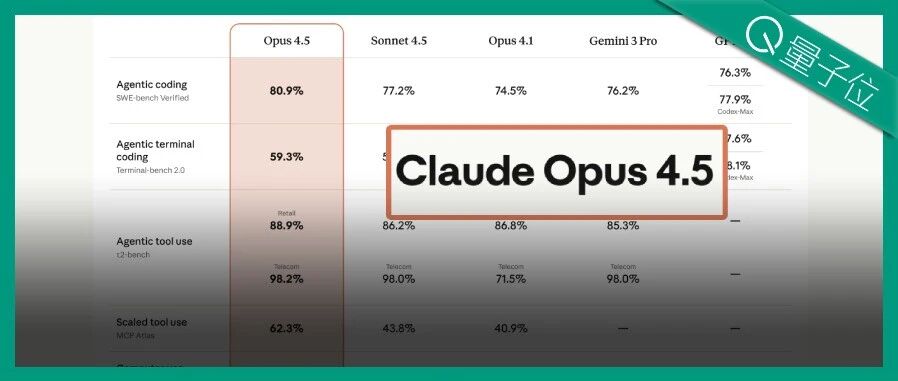
Core Insights - Claude Opus 4.5 has been released, showcasing significant advancements in coding, agent capabilities, and computer usage, outperforming all human candidates in a two-hour engineering task [1][16][10] Performance Metrics - In the SWE-bench Verified coding tests, Opus 4.5 achieved a score of 80.9%, surpassing Sonnet 4.5's 77.2% and Opus 4.1's 74.5% [2][19] - The model demonstrated a 10.6% improvement in high-difficulty coding challenges compared to Sonnet 4.5 [22] - In visual reasoning, Opus 4.5 scored 80.7%, outperforming Sonnet 4.5's 77.8% [19] Enhanced Capabilities - Opus 4.5 shows improved performance in deep research, PPT creation, and spreadsheet handling, with the ability to autonomously process complex scenarios and provide solutions without human guidance [6][14] - The model can efficiently manage multiple sub-agents, supporting the construction of complex multi-agent systems [38] Developer Platform Upgrades - The Claude API has introduced an "effort parameter," allowing developers to optimize for time and cost or maximize performance, resulting in a 76% reduction in token usage while maintaining high performance [32][36] - Claude Code has launched new features, including a Plan Mode for generating precise execution plans and the ability to run multiple sessions simultaneously [41][42] Accessibility and Usage - Opus 4.5 is available through apps, APIs, and major cloud platforms, with a pricing model of $5 per million tokens for input and $2.5 for output [12] - The usage limits for Max and Team Premium users have been increased, aligning Opus token usage with previous Sonnet models [43]
奥特曼谈OpenAI首款AI硬件:我想拿起它咬一口
量子位· 2025-11-25 01:17
Core Viewpoint - OpenAI's first AI hardware product is anticipated to be released within two years, with a design that aims to evoke a strong emotional response from users, described metaphorically as something they would want to "bite" or "lick" [2][7][27]. Group 1: Product Design and Philosophy - The collaboration between Sam Altman and Jony Ive is rooted in a shared vision regarding design, intelligence, and technology's role in human life [9][10]. - The initial phase of their partnership focused on exploring metaphysical themes rather than predefined product goals, emphasizing curiosity and creative exploration [16][17]. - The design process involved extensive research and the creation of detailed books on design history, which guided the development of the new hardware's form [18]. Group 2: Product Features and User Experience - The final product is expected to be striking in quality, with a design that feels both inevitable and obvious upon first sight [20][21]. - It will feature a simple and serene interface, contrasting with the complexity of modern devices, and will be powered by a reliable AI that filters information and understands context [22][23]. - The user experience is designed to be intuitive and effortless, allowing for immediate use without overwhelming the user [24][25]. Group 3: Market Context and Future Developments - OpenAI has recently partnered with Foxconn to produce AI hardware, indicating a significant step towards the realization of their hardware ambitions [27]. - The anticipated product may present both potential benefits and challenges, but its initial appeal is expected to be strong, capturing user interest at first glance [27].

波士顿动力前CTO加盟DeepMind,Gemini要做机器人界的安卓
量子位· 2025-11-24 09:30
Core Insights - Google is positioning Gemini as a potential universal operating system for robots, akin to Android, aiming to create a system that can adapt to various physical configurations [5][10][30] - The hiring of Aaron Saunders, former CTO of Boston Dynamics, signifies a strategic move to enhance hardware capabilities in conjunction with the Gemini software [2][12][21] Group 1: Gemini's Development and Vision - The release of Gemini 3 has shifted Google's approach from a cautious exploration of robotics to a more aggressive strategy, indicating a desire to build a versatile AI system [6][31] - Google aims to create a universal robot OS that can accommodate different body configurations, which is essential for the adaptability of AI in robotics [7][10] - The Gemini Robotics series, launched earlier this year, showcases Google's commitment to enhancing robots' multimodal understanding capabilities [22][23] Group 2: Strategic Hiring and Expertise - Aaron Saunders, who has extensive experience in robotics and led the development of key robots at Boston Dynamics, will now oversee hardware engineering at DeepMind [3][13][20] - His expertise in dynamics and control systems is expected to significantly contribute to the development of Gemini as a robust robotic platform [20][21] - The combination of Gemini's software advancements and Saunders' hardware experience positions Google to make significant strides in the robotics sector [21][30]


1米3宇树G1完美上篮!港科大解锁全球首个真实篮球机器人Demo
量子位· 2025-11-24 09:30
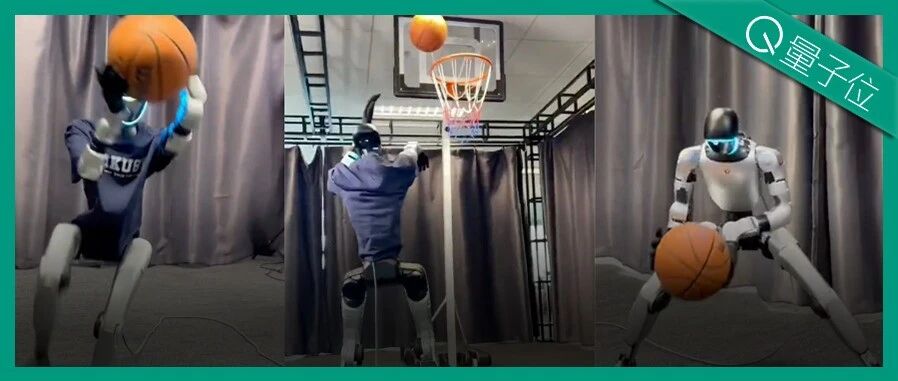
henry 发自 凹非寺 量子位 | 公众号 QbitAI 1米3的机器人小土豆,三步上篮也可以如此丝滑。 别误会,这台宇树G1暂时还不准备参加NBA选秀,但它刚解锁的 "现实世界打篮球" 技能,离上"村BA"首发应该不远了。 据悉,这是全球首个能在真实场景中完成篮球动作的机器人demo,来自香港科技大学的研究团队。 虽然团队还没公开完整的技术细节,但结合他们此前让机器人"打篮球"的工作,这次很可能是在之前研究的基础上,进一步改良而来。 接下来,让我们一窥究竟。 SkillMimic-v2 首先是被收录于 SIGGRAPH 2025 的 SkillMimic-V2: Learning Robust and Generalizable Interaction Skills from Sparse and Noisy Demonstrations 。 当前,通过动作捕捉等方式收集的数据往往存在以下缺陷: 稀疏性 (Sparse):演示数据仅覆盖了有限的技能变体,缺乏技能之间的过渡轨迹。 不连贯性 (Disconnected):不同的技能片段是独立的,缺乏自然的连接。 噪声 (Noisy):数据中包含物理上不可行的 ...
陶哲轩亲测:我用Gemini十分钟搞定了困扰学界多年的难题
量子位· 2025-11-24 07:30
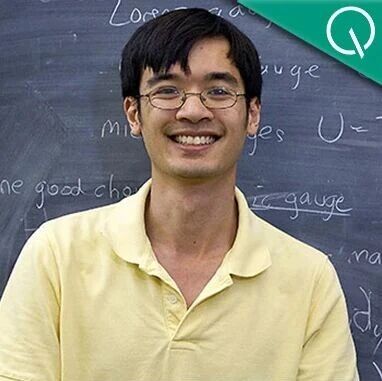
Core Viewpoint - The collaboration between mathematician Terence Tao and the AI model Gemini has successfully solved a long-standing mathematical problem in just ten minutes, showcasing the potential of AI in mathematical proofs [1][3][25]. Group 1: Problem Overview - The problem addressed is the 367 problem proposed by Paul Erdős, which involves the 2-full part of an integer n and the existence of a constant for sufficiently large n [12][14]. - The problem requires verification of the existence of a limit supremum under specific conditions [16]. Group 2: AI's Role in the Solution - Terence Tao utilized Gemini Deep Think to complete the proof, which took only ten minutes, demonstrating the efficiency of AI in mathematical reasoning [19][20]. - Following the AI's proof, Tao spent an additional thirty minutes converting the AI's p-adic algebraic proof into a more fundamental argument [21]. Group 3: Collaborative Efforts - Two days later, Boris Alexeev used the Harmonic Aristotle tool to formalize the proof, taking two to three hours to complete the process [24]. - The problem was ultimately resolved through the collaboration between Gemini and human mathematicians, highlighting the synergy between AI and human expertise [25]. Group 4: Future Implications - This instance is not the first time Tao has employed AI for mathematical work, indicating a growing trend of AI assisting in mathematical proofs [29]. - The advancements in AI's mathematical reasoning capabilities suggest that future mathematics will involve more experimental approaches rather than solely theoretical ones [30].
奥特曼承认谷歌威胁到OpenAI!即将推出新模型“Shallotpeat”
量子位· 2025-11-24 07:30
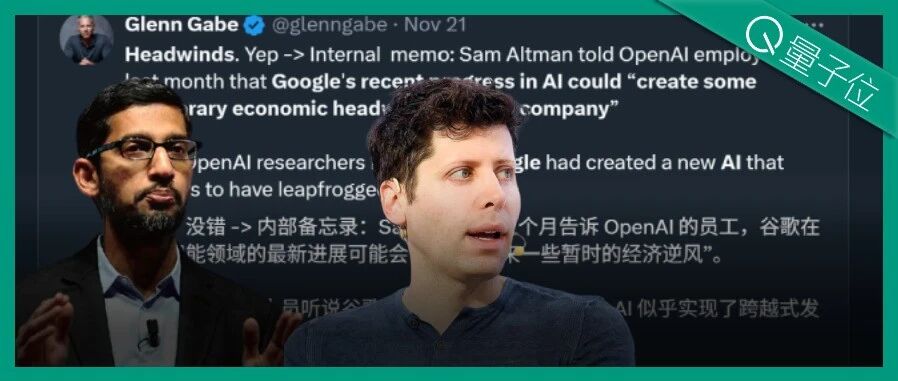
Core Insights - The competitive landscape in the AI sector is shifting, with Google gaining an edge over OpenAI due to advancements in their AI models, particularly Gemini 3 Pro and Nano Banana Pro [2][12][17] - OpenAI's CEO, Sam Altman, acknowledged internal concerns about Google's progress and its potential impact on OpenAI's financial performance [4][15][18] - OpenAI is facing significant financial pressures, with projected revenues of $13 billion in 2023 but anticipated costs exceeding $100 billion in the coming years [18][20] Group 1 - Google has successfully repositioned itself in the AI market, leveraging its extensive resources and infrastructure to surpass OpenAI [26][35] - The key to Google's success lies in its model pre-training capabilities, which have outperformed OpenAI's efforts in this area [27][28][33] - OpenAI is aware of its need to improve pre-training processes and plans to release a new model, "Shallotpeat," to address these challenges [32][30] Group 2 - Google's financial strength, with over $70 billion in free cash flow generated in the last four quarters, contrasts sharply with OpenAI's financial model, which relies heavily on external funding [19][20] - The AI competition is evolving from a focus on individual model breakthroughs to a comprehensive stack approach, where Google benefits from its integrated infrastructure and product ecosystem [34][39] - Google's ability to rapidly scale its services and integrate AI into its existing platforms provides it with a significant distribution advantage over competitors [37][39]
上线4天下载破百万,蚂蚁CTO:灵光要做AGI时代的“支付宝”
量子位· 2025-11-24 05:30
Core Insights - The article highlights the rapid success of the AI application "Lingguang," which achieved over one million downloads within four days and two million downloads shortly thereafter, surpassing other global AI products in growth rate [1][2] - Lingguang is positioned as a transformative product in the AGI era, aiming to be the next "Alipay" for AI applications, focusing on efficiency rather than entertainment [4][12] Group 1: Product Development and Strategy - Lingguang's development was influenced by the emergence of DeepSeek, which provided confidence to Ant Group in pursuing AGI initiatives [5][6] - The product is designed to be user-friendly, lowering barriers to access AI technology, similar to how QR code payments revolutionized the internet era [12] - The core capabilities of Lingguang include dialogue, flash applications, and visual recognition, all aimed at maximizing efficiency for users [15][18] Group 2: Market Positioning and Competition - Lingguang is not seen as a competitor to other AI applications like Qianwen but rather as a collaborative partner in the AGI space [21][28] - The AGI market is still in its early stages, with significant growth potential, making the launch of new AI applications timely [26] - Ant Group emphasizes a cooperative approach in the AGI landscape, focusing on shared growth rather than direct competition [28][29] Group 3: Future Vision and Goals - Ant Group aims to establish a representative product in the AGI era, similar to its previous successes with Alipay and other financial products [30][34] - The long-term vision includes creating a comprehensive ecosystem where Lingguang serves as a versatile assistant, AQ as a health manager, and other products contribute to a digital financial landscape [33][34] - The company believes that focusing on a larger vision and collaborative efforts will lead to success in the evolving AGI market [29][30]