量子位

Search documents
超越英伟达Describe Anything!中科院 & 字节联合提出「GAR」,为DeepSeek-OCR添砖加瓦
量子位· 2025-10-28 05:12
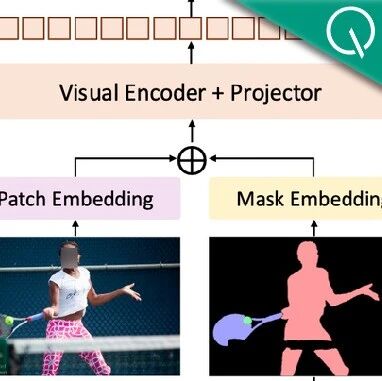
Core Insights - The article discusses the innovative approach "Vision as Context Compression" proposed by DeepSeek-OCR, focusing on using OCR capabilities to compress documents through images [1] - The collaboration between the Chinese Academy of Sciences and ByteDance introduces "Grasp Any Region" (GAR), which explores the potential of natural images as a means of text compression [2] - GAR's precise region captioning capability is highlighted as a potential pathway for constructing dense captions for natural images [4] Summary by Sections GAR Capabilities - GAR possesses three main abilities: accurately describing user-specified regions, modeling relationships between multiple regions, and performing complex combinatorial reasoning [5][7] - The model allows users to provide various visual prompts and instructions for precise understanding of specific regions [9][10] Importance of Region MLLMs - Region MLLMs differ from traditional MLLMs by enabling fine-grained, interactive understanding of image/video content [8] - The article emphasizes the challenge of evaluating full-image captions, while region captions can be objectively assessed based on color, texture, shape, and material [12] Trade-off Between Local and Global Information - The article discusses the dilemma faced by Region MLLMs in balancing local details and global context [15] - Examples are provided to illustrate how GAR outperforms other models like DAM in accurately identifying and describing specified regions [18][19] Model Design and Mechanism - GAR's design follows the principle of achieving fine-grained understanding while retaining global context [39] - The introduction of a lightweight prompt encoding mechanism and RoI-Aligned Feature Replay allows for high-fidelity feature extraction from specified regions [46][49] Data Pipeline and Training - The training process involves multiple stages to enhance recognition capabilities and support multi-region associative reasoning [57][59][61] - The creation of GAR-Bench aims to systematically evaluate the region-level understanding capabilities of multimodal large language models (MLLMs) [64] Performance Evaluation - GAR models demonstrate superior performance in various benchmark tests, achieving high scores in both single-region and multi-region understanding tasks [71][74] - The results indicate GAR's effectiveness in generating rich, accurate, and detailed local descriptions, establishing it as a state-of-the-art solution [77] Zero-shot Transfer to Video Tasks - GAR's capabilities extend to video tasks, showing strong performance in zero-shot settings, even surpassing models specifically trained for video [79] - The article concludes with the potential applications of GAR in training multimodal understanding models and enhancing complex text instruction adherence [80][81]

VAE再被补刀!清华快手SVG扩散模型亮相,训练提效6200%,生成提速3500%
量子位· 2025-10-28 05:12
Core Viewpoint - The article discusses the transition from Variational Autoencoders (VAE) to new models like SVG developed by Tsinghua University and Kuaishou, highlighting significant improvements in training efficiency and generation speed, as well as addressing the limitations of VAE in semantic entanglement [1][4][10]. Group 1: VAE Limitations and New Approaches - VAE is being abandoned due to its semantic entanglement issue, where adjusting one feature affects others, complicating the generation process [4][8]. - The SVG model achieves a 62-fold improvement in training efficiency and a 35-fold increase in generation speed compared to traditional methods [3][10]. - The RAE approach focuses solely on enhancing generation performance by reusing pre-trained encoders, while SVG aims for multi-task versatility by constructing a feature space that integrates semantics and details [11][12]. Group 2: SVG Model Details - SVG utilizes the DINOv3 pre-trained model for semantic extraction, effectively distinguishing features of different categories like cats and dogs, thus resolving semantic entanglement [14]. - A lightweight residual encoder is added to capture high-frequency details that DINOv3 may overlook, ensuring a comprehensive feature representation [14]. - The distribution alignment mechanism is crucial for maintaining the integrity of semantic structures while integrating detail features, as evidenced by a significant increase in FID values when this mechanism is removed [15][16]. Group 3: Performance Metrics - In experiments, SVG outperformed traditional VAE models in various metrics, achieving a FID score of 6.57 on the ImageNet dataset after 80 epochs, compared to 22.58 for the VAE-based SiT-XL [18]. - The model's efficiency is further demonstrated with a FID score dropping to 1.92 after 1400 epochs, nearing the performance of top-tier generative models [18]. - SVG's feature space is versatile, allowing for direct application in tasks like image classification and semantic segmentation without the need for fine-tuning, achieving an 81.8% Top-1 accuracy on ImageNet-1K [22].

华为世界模型来了!单卡30分钟生成272㎡场景
量子位· 2025-10-28 05:12
Core Viewpoint - The article discusses the launch of WordGrow, a world model developed by Huawei in collaboration with Shanghai Jiao Tong University and Huazhong University of Science and Technology, capable of generating large indoor scenes with high realism and coherent geometry [1][2]. Group 1: Technology Overview - WordGrow can generate an indoor scene of 1800 square meters (19x39 blocks) in just 30 minutes on a single A100 GPU, achieving a speed six times faster than similar technologies [16][17]. - The model employs three core technologies: precise data preprocessing, a 3D block completion mechanism, and a coarse-to-fine generation strategy [10][12][14]. - The model's geometric reconstruction metrics, MMD and COV, have reached state-of-the-art levels, with a FID score as low as 7.52, significantly outperforming mainstream methods like SynCity and BlockFusion [17]. Group 2: Technical Details - The first step involves data preprocessing from large datasets like 3D-FRONT, ensuring high-quality sample extraction and scene segmentation [10]. - The second step focuses on seamless integration of 3D structures, maintaining consistent visual styles and eliminating issues like texture misalignment [12]. - The final step enhances scene resolution and detail by refining the overall layout and filling in missing elements such as furniture and textures [12][14]. Group 3: Performance Metrics - Experimental results indicate that even when expanded to a 7x7 block ultra-large scene, the edge quality remains stable [15]. - The model's performance metrics show a significant improvement over competitors, with MMD values of 0.97 and EMD values indicating superior quality [15][16]. Group 4: Team Background - The research was conducted by Sikuang Li and Chen Yang from Shanghai Jiao Tong University during their internship at Huawei, with guidance from renowned AI expert Tian Qi [18][19]. - Tian Qi is recognized as the Chief Scientist of Huawei's Terminal BG and an esteemed member of international scientific communities [20].

人工智能年度榜单火热报名中!五大奖项,寻找AI+时代的先锋力量
量子位· 2025-10-28 05:12
Core Viewpoint - The article announces the launch of the "2025 Artificial Intelligence Annual Awards" to recognize outstanding contributions in the AI industry, encouraging participation from various enterprises and individuals [1][2]. Group 1: Award Categories - The awards will be evaluated across three main dimensions: Enterprises, Products, and Individuals, with five specific award categories [2][4]. - Categories include: - 2025 AI Leading Enterprises - 2025 AI Potential Startups - 2025 AI Outstanding Products - 2025 AI Outstanding Solutions - 2025 AI Focus Figures [5][6]. Group 2: Evaluation Criteria - **Leading Enterprises**: Must be registered in China or primarily serve the Chinese market, operate in AI or related industries, have mature products or services, and show significant breakthroughs in the past year [6]. - **Potential Startups**: Focus on innovative AI startups in China, requiring a viable business model and market recognition, with notable achievements in technology or product innovation in the last year [12]. - **Outstanding Products**: Evaluation based on business capabilities, technical capabilities, capital capabilities, and other comprehensive abilities [11]. - **Outstanding Solutions**: Focus on innovative applications of AI across various industries, requiring significant breakthroughs in technology or business models in the last year [18]. - **Focus Figures**: Individuals must have made significant contributions to AI technology or commercialization, demonstrating leadership and industry impact [23]. Group 3: Registration and Event Details - Registration for the awards is open until November 17, 2025, with results to be announced at the MEET2026 Intelligent Future Conference [22]. - The MEET2026 conference will gather leaders from technology, industry, and academia to discuss transformative changes in the AI sector [25][26].

两大数学奖项同时颁给王虹!北大三校友包揽“华人菲尔兹”
量子位· 2025-10-28 05:12
Core Viewpoint - The article highlights the significant achievements of mathematician Wang Hong, who received two prestigious awards: the 2025 Salem Prize and the ICCM Mathematics Award, marking a remarkable year for Chinese mathematicians [2][5][56]. Group 1: Awards and Recognition - Wang Hong was awarded the 2025 Salem Prize for her contributions to solving major open problems in harmonic analysis and geometric measure theory [17][29]. - The ICCM Mathematics Award was also given to Wang Hong, along with fellow Peking University alumni Deng Yu and Yuan Xinyi, recognizing their exceptional work in mathematics [5][30]. - The Salem Prize is considered a precursor to the Fields Medal, with a notable history of past winners going on to receive the Fields Medal [2]. Group 2: Wang Hong's Academic Journey - Wang Hong transitioned from studying Earth and Space Sciences at Peking University to pursuing mathematics, showcasing her passion for the field [10]. - She graduated from Peking University in 2011, furthered her studies at École Polytechnique and Paris 11 University, and completed her PhD at MIT in 2019 under renowned mathematician Larry Guth [11][13]. - Wang is currently an assistant professor at UCLA and a tenured professor at the Institut des Hautes Études Scientifiques (IHES), where she is the first female tenured professor in its history [15]. Group 3: Contributions to Mathematics - Wang Hong made significant advancements in several century-old mathematical problems, including the Kakeya set conjecture, which she proved in collaboration with Professor Joshua Zahl [20][28]. - She has also contributed to the Fourier restriction conjecture and the Falconer distance set conjecture, publishing two papers in top mathematical journals this year alone [23]. - Her groundbreaking work has positioned her as a leading candidate for the Fields Medal, especially following her recent accolades [29]. Group 4: Fellow Awardees - Deng Yu, another ICCM awardee, is a professor at the University of Chicago and has received numerous accolades, including the Putnam Fellow award and the IMO gold medal [32]. - Yuan Xinyi, also an ICCM awardee, is known for his work in Arakelov geometry and algebraic dynamics, having made significant contributions to various mathematical fields [45]. - All three awardees share a common background as alumni of Peking University's mathematics department, highlighting the institution's role in nurturing top mathematical talent [55].

全球开源大模型杭州霸榜被终结,上海Minimax M2发布即爆单,百万Tokens仅需8元人民币
量子位· 2025-10-28 01:18
Core Insights - The open-source model throne has shifted to Minimax M2, surpassing previous leaders DeepSeek and Qwen, which were based in Hangzhou, now replaced by the Shanghai-based Minimax [1] Performance and Features - Minimax M2 achieved a score of 61 in the Artificial Analysis test, ranking it as the top open-source model, just behind Claude 4.5 Sonnet [2] - The model is designed specifically for agents and programming, showcasing exceptional programming capabilities and agent performance [4] - Minimax M2 is economically efficient, with a reasoning speed twice that of Claude 3.5 Sonnet, while its API pricing is only 8% of Claude's [5][9] - The model's total parameter count is 230 billion, with only 10 billion active parameters, allowing for rapid execution [9][10] - It employs an interleaved thinking format, crucial for planning and verifying operations across multiple dialogues, enhancing agent reasoning [11] Comparative Analysis - In the overall performance ranking, M2 placed fifth in the Artificial Analysis test, securing the top position among open-source models [14] - The test utilized ten popular datasets, including MMLU Pro and LiveCodeBench, to evaluate model performance [15] - M2's pricing is set at $0.3 per million input tokens and $1.2 per million output tokens, representing only 8% of Claude 3.5 Sonnet's cost [16] Agent Capabilities - Minimax has deployed M2 on an agent platform for limited free use, showcasing various existing projects created with the model [32][35] - The platform allows users to create diverse web applications and even replicate classic games in a web environment [36][38] - Users have successfully developed projects like an online Go game platform, demonstrating M2's programming capabilities [40][43] Technical Insights - M2 utilizes a hybrid attention mechanism, combining full attention and sliding window attention, although initial plans to incorporate sliding window attention were abandoned due to performance concerns [45][46] - The choice of attention mechanism reflects Minimax's strategy to optimize performance for long-range dependency tasks [49][54]

Thinking Machine新研究刷屏!结合RL+微调优势,小模型训练更具性价比了
量子位· 2025-10-28 01:18
Core Insights - The article discusses the innovative research by Thinking Machine, focusing on a new training method for small language models called On-Policy Distillation, which enhances their understanding of specialized fields [1][4]. Summary by Sections Methodology - On-Policy Distillation combines the strengths of two traditional training methods: reinforcement learning (self-exploration) and supervised fine-tuning (direct answers), creating a more efficient training framework [3][8]. - This method allows AI to learn through practical problem-solving while receiving immediate guidance when it encounters difficulties, significantly improving training efficiency by 50-100 times [4][5]. Training Phases - The training process consists of three main phases: Pre-training (general capabilities), Mid-training (domain-specific knowledge), and Post-training (target behavior guidance) [9]. - The focus of the research is on the Post-training phase, where the model learns to perform specific tasks effectively [6][9]. Evaluation Metrics - The method employs Negative reverse KL divergence as a key evaluation metric, ensuring that the student model learns effectively by minimizing the divergence from the teacher model's expectations [12][15]. Experimental Results - Experiment 1 demonstrated that using On-Policy Distillation, a smaller model (8B) could achieve a performance score of 70% on a math benchmark with significantly lower computational costs compared to traditional methods [19][22]. - Experiment 2 showed that the method effectively mitigates "catastrophic forgetting" in AI models, allowing them to retain general capabilities while learning new knowledge [23][25]. Implications - The research indicates that On-Policy Distillation can empower resource-constrained individuals or small companies to train effective specialized models, enhancing accessibility in AI development [5][19]. - The findings suggest a promising avenue for achieving lifelong learning in AI systems, addressing the challenge of balancing new knowledge acquisition with the retention of existing skills [26].

微调已死!「共识机制」实现提示词自我进化,性能飙升
量子位· 2025-10-28 01:18
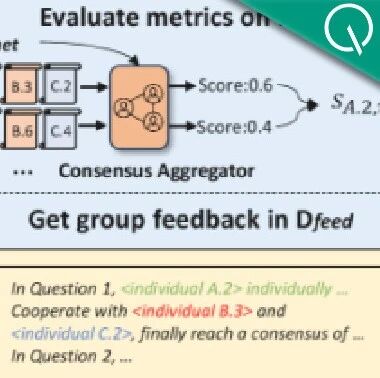
Core Viewpoint - The article discusses a paradigm shift in the artificial intelligence field from "model fine-tuning" to "context engineering," emphasizing the importance of using clearer instructions and richer knowledge in inputs to enhance AI system performance without high training costs or reliance on open-source model weights [1][2]. Group 1: Context Engineering - Context engineering is becoming the core paradigm for building high-performance, scalable, and self-improving AI systems [1]. - The shift towards context engineering is recognized as a significant trend, with the phrase "fine-tuning is dead" gaining traction in the AI community [2]. Group 2: Multi-Prompt Collaboration - Single prompts have limited expressive power and often fail to comprehensively articulate all requirements of complex tasks [4]. - Multi-prompt collaboration is a natural solution to address the limitations of single prompts, allowing for better handling of specific inputs [4][5]. Group 3: C-Evolve Algorithm - The C-Evolve algorithm, proposed by a team from West Lake University, utilizes a consensus mechanism to evolve a group of prompts rather than optimizing a single prompt [6]. - C-Evolve aims to extract consensus from multiple outputs to achieve optimal task performance, introducing a "consensus voting score" as an evolutionary metric [6][7]. Group 4: Evolutionary Process - The evolutionary process of C-Evolve consists of two phases: a preheating phase based on individual performance and a consensus evolution phase based on group collaboration [14][22]. - The preheating phase uses individual scores as fitness ratings, while the consensus phase evaluates groups based on their collective performance [16][22]. Group 5: Performance Improvement - C-Evolve has shown significant performance improvements across various tasks, including retrieval question answering, mathematical reasoning, and instruction compliance, applicable to both open-source and closed-source models [29][30]. - Experimental results indicate that C-Evolve outperforms previous methods, achieving notable gains in task performance metrics [30]. Group 6: Implications for AI Development - The consensus mechanism provides a new approach to prompt optimization, enhancing model adaptability in complex tasks and potentially unlocking greater capabilities of large language models [34]. - The article highlights the practical significance of designing better prompts to leverage the capabilities of established commercial LLMs like Claude and GPT [34].
比尔盖茨女儿也AI创业了!时尚电商,刚被塞了800万美元投资
量子位· 2025-10-27 08:26
Core Viewpoint - Phoebe Gates and Sophia Kianni's startup, Phia, has successfully raised $8 million in seed funding to innovate online shopping through AI technology, attracting notable investors from the entertainment industry [6][7][8]. Company Overview - Phia is an AI-driven shopping assistant launched in April 2023, designed to help users compare prices of new and second-hand items in real-time [12][14]. - The application has gained over 600,000 users within six months of its launch [13]. - Phia's database connects with top resale platforms, covering over 250 million items [20]. Funding and Growth - The $8 million funding will be utilized to build a world-class team in engineering, AI research, product development, and marketing [7]. - The company has quickly established a presence on over 40,000 shopping websites and has partnered with more than 5,000 brands [22]. Market Context - The global e-commerce sales are projected to grow from approximately $0.6 trillion in 2010 to about $6.4 trillion by 2025, indicating a tenfold increase [32]. - Despite the growth in online shopping, the technology and user experience have stagnated, leading to a demand for more efficient shopping solutions [30][35]. Founders' Background - Phoebe Gates and Sophia Kianni met as roommates at Stanford University and decided to address the common issue of shopping anxiety through their startup [41][47]. - Sophia Kianni has a notable background in climate activism and was appointed as a youth advisor to the UN at the age of 18 [63][66]. - Phoebe Gates, the youngest daughter of Bill Gates, aims to establish her own identity and success outside of her family's legacy [75][81].

零一万物高管新阵容亮相,李开复加码布局ToB 2.0
量子位· 2025-10-27 08:26
Core Viewpoint - The company is accelerating its ToB strategy implementation, transitioning from a product-oriented approach to a systematic operation model [1][14]. Leadership Changes - The company announced a new round of executive appointments, including co-founder Shen Pengfei, VP of AI Models and Professional User Products Zhao Binqiang, and VP of International Business and AI Consulting Ning Ning, forming a three-dimensional synergy in market and sales, model and technology, and international consulting [2][4][13]. - Shen Pengfei will oversee domestic ToB and ToG business expansion, leveraging his 26 years of IT and internet experience to drive AI solution delivery [5][6]. - Zhao Binqiang, with 17 years in internet algorithms and AI, will lead the core algorithm development and professional user product lines, contributing to the company's strategic ToB business [8][13]. - Ning Ning will focus on global business expansion and AI consulting, implementing AI strategies in key projects across multiple countries [10][11]. Strategic Framework - The "One Leader Project" is emphasized as essential for AI transformation, requiring direct involvement from the CEO to integrate AI into core processes [3][15]. - The company's self-developed "Wanzhi" enterprise model platform has been upgraded to version 2.0, supporting customized enterprise-level agents and multi-industry applications [17][21]. - The platform has been deployed across five major industries, with over 30 types of "super employee" AI agents, aiming to create a new foundation for enterprise AI operations [18][20]. Market Positioning - The strategic goal is to make AI capabilities replicable and scalable, achieving a closed-loop delivery system for enterprise-level AI [20][21]. - The company has established lighthouse projects with leading clients in China and launched an ecosystem partnership program to create multi-scenario solutions [22]. - Internationally, the collaboration with Kazakhstan on the AlemLLM language model exemplifies the company's commitment to AI cooperation along the Belt and Road Initiative [23]. Future Outlook - The company aims to leverage AI agents as a breakthrough point, promoting AI as a driver of enterprise transformation and extending its innovative capabilities to more countries and regions [24][25].