量子位

Search documents
14万!全球首款家务机器人开卖,OpenAI投资,萌脸翘臀会自己充电
量子位· 2025-10-29 05:11
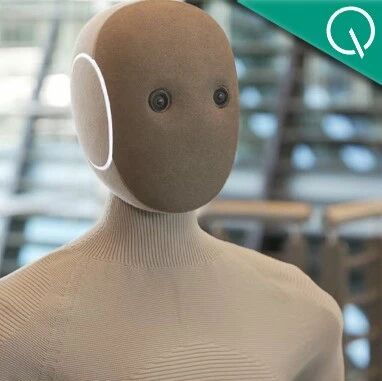
Core Points - The article introduces the NEO home robot launched by 1X Technologies, highlighting its potential to be the first household humanoid robot available for purchase [1][68]. - NEO is designed to autonomously perform various household chores, aiming to enhance users' quality of life by freeing up their time [18][32]. - The robot is equipped with advanced AI capabilities, allowing it to interact with users and learn from its environment [38][80]. Product Features - NEO is available in three colors and is priced at $20,000 or can be rented for $500 per month [10][11]. - It can perform tasks such as vacuuming, feeding pets, cleaning bathrooms, and watering plants, with the ability to set specific schedules for these chores [20][30]. - The robot has a height of 168 cm, weighs approximately 30 kg, and features 22 degrees of freedom, making it highly flexible and capable of handling various tasks [55][56]. Technology and Development - NEO utilizes the Redwood AI system for its operations and is designed to be user-friendly, starting in autonomous mode upon activation [18][19]. - The robot is built on a new hardware platform powered by NVIDIA's Jetson Thor, enhancing its performance in physical AI applications [56]. - 1X Technologies has received significant investment from OpenAI, which will aid in the development of AI models for the robot [80][81]. Market Strategy - The initial launch will focus on the U.S. market, with plans to expand globally by 2027, although currently, orders can only be placed from Hong Kong [68]. - The company aims to make humanoid robots accessible to consumers through ongoing product testing and optimization of manufacturing processes [84]. - NEO is positioned as a versatile home assistant, with the potential to evolve into a fully autonomous helper by 2026 [73][74].

黄仁勋台上最强GPU炸场,台下感叹“中国芯片爆发”,瞄准6G投资诺基亚
量子位· 2025-10-29 05:11
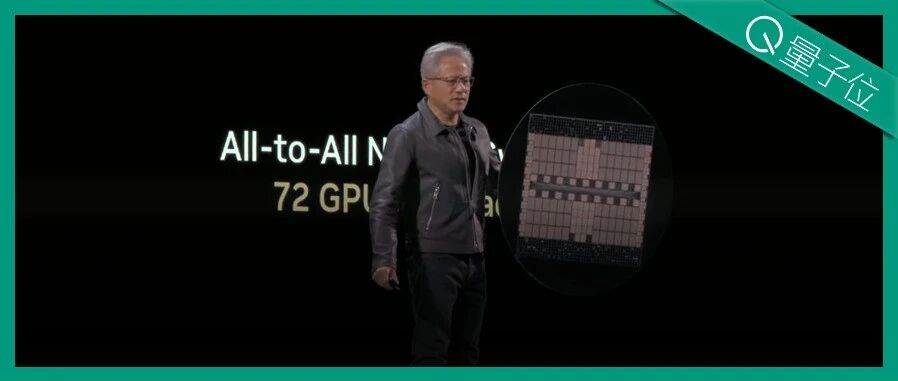
Core Viewpoint - The article highlights the significant advancements and strategic initiatives by NVIDIA in the fields of AI computing, quantum computing, and 6G communication, emphasizing the competitive landscape and potential challenges from rivals like AMD and Qualcomm [1][49]. Group 1: NVIDIA's New Chip Developments - NVIDIA introduced the Vera Rubin superchip, which boasts a computing power of 100 PFLOPs, marking a 100-fold increase over its previous AI computing model, DGX-1 [5][6]. - The Vera Rubin platform is designed with a new architecture, integrating a Vera CPU and two Rubin GPUs, with the first samples produced by TSMC [10][12]. - The upcoming Vera Rubin NVL144 platform is expected to deliver 3.6 Exaflops of FP4 inference power and 1.2 Exaflops of FP8 training power, representing a 3.3-fold improvement over the previous GB300 model [19]. Group 2: Strategic Collaborations and Investments - NVIDIA plans to collaborate with the U.S. Department of Energy to build seven new supercomputing clusters, including two new supercomputers based on the Vera Rubin platform [22]. - The company has invested $1 billion in Nokia to develop AI-native 6G communication platforms, which has positively impacted Nokia's stock price [45]. Group 3: Quantum Computing Initiatives - NVIDIA announced NVQLink, a new interconnect architecture that enables seamless integration between quantum processors (QPUs) and NVIDIA GPUs, facilitating high-speed data transfer essential for quantum error correction [29][31]. - The CUDA-Q platform was introduced to extend CUDA capabilities to support quantum GPU computing, allowing for collaboration between classical and quantum computing [33][43]. Group 4: Competitive Landscape - AMD has secured two supercomputer contracts worth $1 billion, with its Lux supercomputer expected to outperform existing systems in AI performance [50]. - Qualcomm is entering the data center market with new AI chips, AI200 and AI250, focusing on cost efficiency and enhanced memory processing capabilities [52]. - The article notes that despite NVIDIA's advancements, it faces competition from various players in the quantum computing and 6G sectors, including significant developments from Chinese companies [54][60]. Group 5: Market Reaction - Following the announcements, NVIDIA's stock price rose by 4.98%, reaching $201.03 per share, with a post-market price of $204.43, resulting in a market value increase of $315.4 billion [65][66].

天下苦VAE久矣:阿里高德提出像素空间生成模型训练范式, 彻底告别VAE依赖
量子位· 2025-10-29 02:39
Core Insights - The article discusses the rapid development of image generation technology based on diffusion models, highlighting the limitations of the Variational Autoencoder (VAE) and introducing the EPG framework as a solution [1][19]. Training Efficiency and Generation Quality - EPG demonstrates significant improvements in training efficiency and generation quality, achieving a FID of 2.04 and 2.35 on ImageNet-256 and ImageNet-512 datasets, respectively, with only 75 model forward computations [3][19]. - Compared to the mainstream VAE-based models like DiT and SiT, EPG requires significantly less pre-training and fine-tuning time, with 57 hours for pre-training and 139 hours for fine-tuning, versus 160 hours and 506 hours for DiT [7]. Consistency Model Training - EPG successfully trains a consistency model in pixel space without relying on VAE or pre-trained diffusion model weights, achieving a FID of 8.82 on ImageNet-256 [5][19]. Training Complexity and Costs - The VAE's training complexity arises from the need to balance compression rate and reconstruction quality, making it challenging [6]. - Fine-tuning costs are high when adapting to new domains, as poor performance of the pre-trained VAE necessitates retraining the entire model, increasing development time and costs [6]. Two-Stage Training Method - EPG employs a two-stage training method: self-supervised pre-training (SSL Pre-training) and end-to-end fine-tuning, decoupling representation learning from pixel reconstruction [8][19]. - The first stage focuses on extracting high-quality visual features from noisy images using a contrastive loss and representation consistency loss [9][19]. - The second stage involves directly fine-tuning the pre-trained encoder with a randomly initialized decoder, simplifying the training process [13][19]. Performance and Scalability - EPG's framework is similar to classic image classification tasks, significantly lowering the barriers for developing and applying downstream generation tasks [14][19]. - The inference performance of EPG-trained diffusion models is efficient, requiring only 75 forward computations to achieve optimal results, showcasing excellent scalability [18]. Conclusion - The introduction of the EPG framework provides a new, efficient, and VAE-independent approach to training pixel space generative models, achieving superior training efficiency and generation quality [19]. - EPG's "de-VAE" paradigm is expected to drive further exploration and application in generative AI, lowering development barriers and fostering innovation [19].

剪映前AI产品负责人创业多模态Agent,做懂上下文的007乙方,成立半月融资数百万美元
量子位· 2025-10-29 02:39
Core Viewpoint - The article discusses the entrepreneurial journey of Liao Qian, the former VP of Product at Shengshu Technology, who has founded a new company named Apex Context, focusing on creating a multi-modal AI agent for marketing scenarios. The company has already secured millions of dollars in funding within a short period after its establishment. Group 1: Company Overview - Apex Context was founded by Liao Qian after leaving his previous job at the end of August [2][10]. - The company aims to develop a multi-modal agent specifically for marketing applications, which is seen as a productive and quantifiable area for AI implementation [11][12]. - The name "Apex Context" reflects the company's vision of AI deeply understanding and responding to user context, enhancing the precision and relevance of generated content [4][5]. Group 2: Product Focus - The primary goal of Apex Context is to create an AI Video Agent that assists brands in visual expression, providing end-to-end capabilities from creative ideation to video production [18]. - The agent is designed to be user-friendly, requiring minimal input from users, and aims to understand vague ideas or uncertain requests to generate appropriate content [15][16]. - The company plans to expand its capabilities beyond marketing to include education, lifestyle, and entertainment in the long term [22]. Group 3: Market Positioning - Liao Qian believes that the next phase of competition will revolve around who can help individuals and brands express themselves more effectively [21]. - The current technological landscape, marked by advancements in AI, presents a unique opportunity for startups to innovate while larger companies are preoccupied with defending their core businesses [38][40]. - The company emphasizes its understanding of user needs and scenarios as a potential competitive advantage in the market [40].

OpenAI公开未来路线图!具体到28年3月AI研究员将完全自主,奥特曼承认“关于GPT-4o我们搞砸了”
量子位· 2025-10-29 02:39
Core Insights - OpenAI has undergone a significant organizational restructuring and has publicly shared its internal research goals and timelines, aiming for a fully autonomous AI researcher by March 2028 [2][15] - The company emphasizes transparency in its operations and acknowledges past mistakes, particularly regarding user feedback on sensitive content handling [4][6][8] - OpenAI's mission is to create powerful, user-friendly AI tools that can transform civilization, moving away from the notion of AI as a divine entity [10][12] Research Goals and Timelines - OpenAI plans to introduce an AI research intern level by September 2026, which will significantly accelerate researchers' work through extensive computation [15] - The ultimate goal is to achieve a fully automated AI researcher capable of completing large-scale research projects by March 2028 [15] - The company believes that deep learning systems could reach superintelligence within the next decade, with significant advancements in task completion times already observed [17] New Technologies and Methodologies - A new technique called "Chain of Thought Faithfulness" has been introduced, which allows models to express their internal reasoning without supervision, aiming for a more authentic representation of their thought processes [20][21][22] - This approach is part of a broader five-layer AI safety architecture that focuses on aligning AI values with human principles [23][24][26] Organizational Structure - OpenAI's new structure consists of a non-profit foundation that controls the for-profit OpenAI Group, with the foundation initially holding 26% of the group's equity [34][35] - The foundation's first major commitment is a $25 billion investment in AI-assisted medical research, alongside a focus on AI resilience [36][38] Infrastructure and Investment - OpenAI has committed over 30 GW of infrastructure development, with total financial obligations around $1.4 trillion, aiming to build a factory capable of generating 1 GW of computing power weekly [41] - The company is exploring robotics to assist in data center construction, with significant ongoing projects in Texas [42][43] User Engagement and Future Directions - OpenAI is aware of the potential for AI to cause job displacement and is focused on understanding the implications of automation on the workforce [45] - The company is committed to providing advanced AI capabilities to free-tier users, with a significant reduction in the cost of AI capabilities observed over the past few years [51][53] - OpenAI envisions a future where AI interfaces evolve beyond chatbots to more integrated, context-aware assistants [59]

高通新款云端芯片公开!借推理抢英伟达蛋糕,市值一夜暴涨197.4亿美元
量子位· 2025-10-28 14:24
Core Viewpoint - Qualcomm has officially entered the data center market with the launch of two new AI chips, AI200 and AI250, aiming to compete with Nvidia and AMD in the AI accelerator space [2][6][7]. Group 1: Product Launch and Features - Qualcomm's AI200 and AI250 are designed as rack-level inference accelerators and systems, focusing on the inference phase of AI models, with the lowest total cost of ownership (TCO), higher energy efficiency, and enhanced memory processing capabilities [8][11]. - The AI200 is expected to be commercially available by 2026 and can be sold as a standalone chip or as part of a complete rack server system [11]. - The AI250, planned for release in 2027, features a new near-memory computing architecture that claims to provide over 10 times effective memory bandwidth improvement while significantly reducing power consumption [13]. - Both products support enterprise-level features such as direct liquid cooling, PCIe and Ethernet expansion, and confidential computing, targeting high-density rack scenarios [13]. Group 2: Market Context and Competitive Landscape - Qualcomm's entry into the data center market comes after a six-year gap since its last data center product, the AI100, which was primarily aimed at edge and lightweight inference [5][15]. - The global data center investment is projected to reach $6.7 trillion by 2030, indicating a lucrative market opportunity [20]. - Currently, Nvidia dominates the market with over 90% share, while AMD holds a smaller portion, leaving room for competitors like Qualcomm to capture market share [21]. Group 3: Strategic Positioning and Future Plans - Qualcomm has a history of technology accumulation in mobile chips, which has been leveraged in the development of the AI200 and AI250, utilizing advancements in its Hexagon neural processing unit (NPU) [17]. - The company plans to advance its data center product roadmap at a pace of one generation per year, continuously improving AI inference performance, energy efficiency, and overall TCO competitiveness [14]. - Qualcomm has already secured an order from Saudi AI startup Humain for deploying rack-level computing systems based on AI200/AI250, with a total power of up to 200 megawatts starting in 2026 [23].


刚刚,OpenAI股改完成,非营利主体更名
量子位· 2025-10-28 14:24
Core Viewpoint - OpenAI has completed a capital structure restructuring, paving the way for its potential IPO and the successful receipt of a $22.5 billion investment from SoftBank [2][4]. Group 1: Capital Structure and Ownership - OpenAI's nonprofit entity has been renamed to OpenAI Foundation, which retains a 26% stake in the for-profit entity, currently valued at approximately $130 billion [4]. - Employees and investors hold 47% of the shares, while Microsoft owns 32.5% of the for-profit entity [5][6]. - Following the restructuring, OpenAI Foundation will receive additional ownership as the for-profit entity reaches valuation milestones [13]. Group 2: Mission and Funding Initiatives - OpenAI's mission remains to ensure that artificial general intelligence (AGI) benefits all of humanity, a commitment that has persisted since its founding in 2015 [10][11]. - The OpenAI Foundation plans to invest $25 billion in two key areas: health and disease cures, and AI resilience technology solutions [14][15]. - The foundation will utilize funds from a $50 million "human-centered AI fund" and recommendations from a nonprofit committee to support these initiatives [16]. Group 3: Market Reaction and Future Engagement - Microsoft shares rose by 3.5% in pre-market trading following the announcement [7]. - OpenAI's leadership, including Sam Altman and Chief Scientist Jakub Pachocki, will host a live session to discuss the future of OpenAI [24].

高维时序预测的ImageNet时刻!首个高维时序预测基准发布,模型领跑多数据集SOTA
量子位· 2025-10-28 08:04
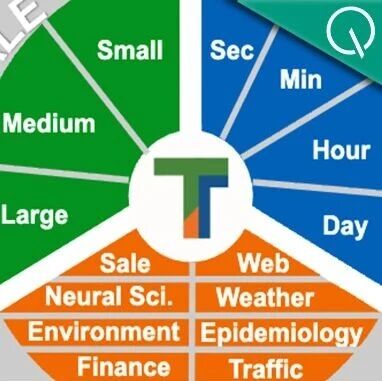
Core Insights - The article discusses the introduction of Time-HD, the first large-scale benchmark specifically designed for high-dimensional time series forecasting, addressing the limitations of existing models in handling high-dimensional data [2][11][42] Group 1: High-Dimensional Time Series Forecasting - The transition to high-dimensional time series data is evident across various fields, including finance and smart city traffic networks, indicating a shift towards complex systems with thousands of variables [6][12] - Current mainstream time series forecasting models are primarily focused on low-dimensional datasets, which limits their efficiency and performance in high-dimensional contexts [7][8] - Time-HD includes 16 datasets with variable counts ranging from 1,161 to 20,000, significantly surpassing traditional benchmarks that typically contain only 7 to 862 channels [12][14] Group 2: Features of Time-HD - Time-HD encompasses diverse sources, including both simulated and real-world datasets, enhancing its applicability for evaluating model generalization in practical scenarios [14] - The benchmark offers datasets of varying scales, with four large-scale (GB-level), eight medium-scale (hundreds of MB), and four small-scale (tens of MB) datasets, facilitating resource-efficient model evaluation [16] - It covers multiple sampling frequencies, reflecting real-world applications, and employs corresponding prediction lengths rather than fixed steps, aligning with actual forecasting needs [17][18] Group 3: U-Cast Model - The U-Cast architecture is introduced to tackle challenges posed by the surge in variables, utilizing a hierarchical latent query network to efficiently extract and compress key information from high-dimensional data [22] - U-Cast demonstrates a 15% reduction in mean squared error (MSE) across multiple datasets compared to existing models, while also achieving faster training speeds and lower memory usage [36][37] - The model incorporates full-rank regularization to mitigate redundancy in high-dimensional time series, promoting the learning of independent and structured feature representations [30][41] Group 4: Impact and Future Directions - The release of Time-HD and the open-source Time-HD-Lib framework, along with the U-Cast method, sets a new benchmark for high-dimensional time series forecasting, providing a robust baseline for future research [42][43] - The advancements in high-dimensional time series forecasting are expected to spur a new wave of innovation, paving the way for more extensive and realistic forecasting applications [44]
哈佛女生AI电商创业,19岁华人,刚获投百万美元
量子位· 2025-10-28 08:04
Core Insights - Christine Zhang, a 19-year-old Chinese-American, has dropped out of Harvard to start a company named Veil, which has successfully raised $1 million in seed funding [2][16]. - Veil is an intelligent optimization platform designed specifically for e-commerce sellers, helping them make their product descriptions more understandable to AI, thereby increasing visibility in AI search results [6][14]. Company Overview - Veil focuses on optimizing e-commerce product listings to enhance AI visibility through techniques like Generative Engine Optimization (GEO) and Answer Engine Optimization (AEO) [8][34]. - The platform analyzes product details and provides actionable solutions, such as adding structured FAQs, keyword placement, and structured data to improve AI recognition [9][10][12]. - After implementing Veil's optimization strategies, clients have reported an average AI visibility increase of approximately 67% within 1 to 2 weeks [14][16]. Market Trends - The rise of AI as a new traffic source is evident, with AI referrals to top websites increasing by 357% year-over-year, indicating a shift in how consumers interact with e-commerce [22][23]. - Traditional search engine optimization (SEO) is evolving into GEO, focusing on increasing the likelihood of being referenced by AI rather than just improving webpage rankings [34][36]. Entrepreneurial Landscape - The trend of young entrepreneurs dropping out of college to pursue startups is becoming more common, particularly in the AI sector, driven by the rapid pace of technological advancement and the fear of missing out on opportunities [76][80]. - The opportunity cost of attending college is perceived to be high, as young entrepreneurs weigh the potential financial gains of starting a business against the value of a college education [80][82]. Team Background - Veil was co-founded by Christine Zhang and Julia Hudson, who started the company from their university dormitory [44][76]. - Christine has a strong academic background, having developed a public health application during high school and co-founding a youth council that secured public funding [52][55].

量子位「MEET2026智能未来大会」已启动!年度AI榜单 & 趋势报告正在征集中
量子位· 2025-10-28 08:04
Core Viewpoint - The article emphasizes the transformative impact of artificial intelligence (AI) on various industries and society, marking the beginning of a new era where AI becomes an integral part of infrastructure and daily life [1][7]. Group 1: AI Integration and Evolution - Intelligent technology has deeply penetrated production and daily life, evolving from mere tools to intelligent partners that understand human needs [2]. - AI technology is no longer confined to specific fields but transcends industry, discipline, and scenario boundaries, creating new ecosystems and opportunities [3]. - Emerging technologies such as multi-modal, AR/VR, and spatial computing are blurring the lines between the digital and physical worlds [4]. Group 2: MEET2026 Conference Overview - The MEET2026 Intelligent Future Conference will focus on the theme "Coexistence Without Boundaries, Intelligence to Inspire the Future," inviting leaders from technology, industry, and academia to witness industry transformation [5][7]. - This year marks the seventh edition of the MEET Intelligent Future Conference, which attracts thousands of technology professionals and millions of online viewers, establishing itself as an annual barometer for the intelligent technology industry [9][12]. - The conference will feature prominent figures such as Dr. Kai-Fu Lee and Professor Zhang Yaqin, along with leaders from major tech companies like Baidu, Alibaba, Tencent, and Huawei [9]. Group 3: AI Trends and Awards - The "Artificial Intelligence Annual List" initiated by Quantum Bit has become one of the most influential lists in the AI industry, aiming to recognize those who lead change and explore new frontiers [16]. - This year's awards will evaluate companies, products, and individuals across three dimensions, with results to be announced at the MEET2026 conference [17][18]. - The "2025 Annual AI Top Ten Trends Report" will also be released at the conference, highlighting significant AI trends and their potential impact [23][24].