量子位

Search documents
国足缺席世界杯,但中国大模型们集体参赛
量子位· 2025-12-28 03:06
Core Viewpoint - The article discusses the upcoming AlphaGoal Prediction Cup, an AI competition organized by Lenovo, where Chinese large models will compete in predicting football match outcomes, marking a significant shift from traditional AI applications to real-world engagement [4][25][34]. Group 1: Event Overview - The AlphaGoal Prediction Cup will feature eight major Chinese AI models competing against each other and against AI agents created by fans and developers [6][10]. - This event is described as a historic first for public participation in AI predictions, potentially transforming the experience of football from mere observation to active involvement [8][27]. Group 2: Participating Models - The eight participating models include notable players such as Baidu's Wenxin Yiyan, Tencent's Hunyuan, and SenseTime, each with unique strengths in data processing and prediction capabilities [14][15]. - The competition aims to challenge these models to predict match outcomes using a variety of data points, including player statistics, historical match data, and even social media sentiment [22][17]. Group 3: Significance of the Event - The AlphaGoal Prediction Cup is positioned as a pivotal moment for AI, moving beyond traditional testing environments to engage with the complexities of the real world, akin to previous landmark human-AI competitions [29][34]. - The event is expected to demonstrate AI's ability to understand causality and not just correlation, marking a step towards general artificial intelligence [35][34]. Group 4: Lenovo's Role - Lenovo, as the organizer and official technology partner of FIFA, is facilitating this competition to connect AI models with real-world applications, positioning itself as an ecosystem organizer rather than just a hardware provider [38][39]. - The Lenovo Tianxi AI platform, with over 280 million monthly active users, serves as a crucial interface for these AI models to reach and engage with a broad audience [40][41].



AI在2025年捧出50+新亿万富翁,有人才22岁
量子位· 2025-12-27 09:00
Core Insights - The AI industry has created over 50 new billionaires in 2025, highlighting the rapid wealth generation within this sector [2][6] - Significant investments in AI have surged, with over $2023 billion allocated this year, marking a 16% increase in funding to startups compared to 2024 [10][47] - The wealth of established tech leaders has also increased dramatically, with Elon Musk's net worth rising nearly 50% to $645 billion, and Google founders seeing close to 60% growth in their wealth [6][37] Investment Trends - In 2025, investment in AI is projected to reach nearly $2023 billion, accounting for half of the total venture capital funding, with a year-on-year growth of over 75% [47] - The foundational model and AI infrastructure sectors are the primary focus for this influx of capital, with foundational models alone attracting $800 billion, doubling from the previous year [49][51] - Major companies like Amazon and Google are significantly increasing their capital expenditures for AI infrastructure, with Amazon planning $100 billion and Google $75 billion [51][54] Billionaire Emergence - SurgeAI's CEO Edwin Chen leads the new billionaire list with a net worth of $18 billion, while DeepSeekR1's founder Liang Wenfeng has reached $11.5 billion [5][13] - Anthropic, the parent company of AI model Claude, has raised $16.5 billion this year, significantly increasing its valuation from $61.5 billion to $183 billion [15][17] - Young entrepreneurs in the AI sector are also making headlines, with several in their 20s becoming billionaires through successful startups [25][29] Market Dynamics - The demand for data centers is expected to drive $61 billion in investments by 2025, indicating a robust market for companies providing AI infrastructure [18][51] - The AI data sector is generating substantial wealth, with new billionaires emerging from companies focused on data annotation and AI coding [19][29] - The overall wealth of the top 10 tech founders in the U.S. has increased to over $25 trillion, up $600 billion from the beginning of the year, showcasing the financial impact of the AI boom [36][37]


文生图安全防线形同虚设?AAAI2026:现有防御策略存在普遍盲区
量子位· 2025-12-27 09:00
Core Insights - The article discusses the emergence of Text-to-Image (T2I) models as universal content production tools, highlighting their vulnerabilities in generating harmful or non-compliant images when faced with high-risk prompts [1] - The T2I-RiskyPrompt framework developed by Tianjin University establishes a comprehensive safety benchmark that includes 6 major risk categories and 14 subcategories, encompassing 6,432 high-risk prompts [1][2] Group 1: Risk Framework Construction - The T2I-RiskyPrompt framework is based on the safety policies of seven platforms, including OpenAI and Google, which were analyzed to create a more detailed risk system [2] - The risk framework consists of six major categories: pornography, violence, illegal activities, political sensitivity, disturbing content, and copyright infringement, with specific subcategories for each [3][5] Group 2: Data Collection and Annotation Process - T2I-RiskyPrompt employs a rigorous six-stage process for collecting and annotating risk prompts, ensuring semantic clarity, diversity, and effectiveness [6][8] - The process includes multi-source risk prompt collection, semantic enhancement using models like GPT-4o, and manual verification to ensure accuracy [8] Group 3: Risk Image Evaluation Methodology - The framework introduces a novel image detection method based on risk reasons, allowing for more precise identification of risks in generated images [10] - The average accuracy of models improved significantly when risk reason elements were included, with InternVL2.5-4B's accuracy rising from 0.645 to 0.848 [10] Group 4: Experimental Findings - The experiments reveal that stronger T2I models do not necessarily reduce risk trigger rates; in fact, they may increase them due to enhanced understanding and execution of hidden dangerous intents [14] - The evaluation of eight mainstream T2I models showed that risk trigger rates increased in several subcategories as model capabilities improved [14][15] Group 5: Defense Strategies and Limitations - Various defense strategies were assessed, indicating that current defenses are still in a phase of local optimization and struggle to address cross-modal and semantic evasion risks [16][17] - The study found that while fine-tuning methods can reduce risk rates, they often compromise image quality, and existing visual filters are inadequate for complex semantic categories like copyright infringement [20][21] Group 6: Vulnerabilities to Evasion Attacks - The article highlights the effectiveness of evasion attacks that can bypass existing filtering systems, revealing the weaknesses in current defenses against semantic evasion [23][25] - The evaluation of various attack methods demonstrated that all filtering systems showed significant failures when confronted with these attacks [24][25] Group 7: Conclusion and Future Implications - T2I-RiskyPrompt establishes a structured risk framework and high-quality risk prompt dataset, making it a valuable resource for future safety-related tasks in generative models [26] - The framework's comprehensive categories and annotations provide significant potential for automated risk image assessments, particularly in areas like copyright and political figure protection [27]

量子位编辑作者招聘
量子位· 2025-12-27 07:08
Core Viewpoint - The article emphasizes the ongoing AI boom and invites individuals to join the company "Quantum Bit," which focuses on tracking AI advancements and has established itself as a leading content platform in the industry [1]. Group 1: Job Opportunities - The company is hiring for three main directions: AI Industry, AI Finance, and AI Product, with positions available for both experienced professionals and fresh graduates [2][4]. - Positions are open for various levels, including editors, lead writers, and chief editors, with a focus on matching roles to individual capabilities [6]. Group 2: Job Responsibilities - **AI Industry Direction**: Responsibilities include tracking innovations in infrastructure, such as chips, AI infrastructure, and cloud computing, as well as interpreting technical reports from conferences [6][7]. - **AI Finance Direction**: Focuses on venture capital, financial reports, and capital movements within the AI industry, requiring strong analytical skills and a passion for interviews [11]. - **AI Product Direction**: Involves monitoring AI applications and hardware developments, producing in-depth evaluations of AI products, and engaging with industry experts [11]. Group 3: Benefits and Growth - Employees will have the opportunity to engage with cutting-edge AI technologies, enhance their work efficiency through new tools, and build personal influence in the AI field [6]. - The company offers competitive salaries, comprehensive benefits including social insurance, meal allowances, and performance bonuses, fostering a dynamic and open work environment [6][11]. Group 4: Company Growth Metrics - By 2025, Quantum Bit aims to have over 2.4 million subscribers on WeChat and more than 7 million users across all platforms, with a daily reading volume exceeding 2 million [12].

大模型第一股热闹正酣,“局外人”阶跃星辰发了一个小更新
量子位· 2025-12-27 07:08
Core Viewpoint - The article discusses the competitive landscape of domestic large models, highlighting the recent developments of Jieyue Xingchen and its new model NextStep-1.1, while contrasting it with the more aggressive advancements of its competitors like Kimi and DeepSeek [1][2][38]. Group 1: NextStep-1.1 Model Development - Jieyue Xingchen has released the NextStep-1.1 model, which addresses previous visualization failures and significantly improves image quality through enhanced training and reinforcement learning [3][6][7]. - The updates in NextStep-1.1 include improved visual fidelity and reduced visual artifacts, as well as resolving numerical instability issues inherent in the previous version [23][24][37]. - The model architecture consists of 14 billion parameters and utilizes a lightweight flow matching head for autoregressive modeling of continuous image tokens, aiming to replace traditional heavy diffusion models [28][29]. Group 2: Competitive Landscape - The competitive environment has intensified, with companies like Kimi and MiniMax making significant strides, including IPO preparations and the release of new models [41][42]. - The article notes that the "six little dragons" of large model startups are dwindling, with only a few players like Jieyue Xingchen, Kimi, and MiniMax remaining committed to self-developed general large models [46][47]. - The ongoing competition is characterized by a shift towards coding, agent development, and multimodal capabilities, with open-source ecosystems becoming a key strategy [44].

鸿蒙押注新未来:用AI重写数字世界交互逻辑
量子位· 2025-12-27 07:08
Core Viewpoint - The year 2025 is anticipated to be a pivotal moment for the explosion of terminal AI, marking a significant transition in the industry akin to the shift from feature phones to smartphones. This transition represents a fundamental restructuring of business models and interaction logic, moving from a passive service model centered around apps to an active service model centered around AI agents [1]. Group 1: Industry Transition - The challenge of reconstructing the connection between humans and devices is a common issue faced by all manufacturers in this transition [2]. - There are two main factions in the industry: one that seeks to improve existing app ecosystems and another that advocates for a fundamental restructuring at the operating system level [3]. - Huawei, as a representative of the "reconstruction faction," has anchored its strategy at the foundational level, aiming to integrate AI capabilities into the native genes of the operating system [4]. Group 2: AI Terminal Classification - Huawei's terminal intelligence classification standard, developed in collaboration with Tsinghua University, categorizes AI terminals into levels L1 to L5, emphasizing the need for terminals to evolve beyond mere tools to achieve autonomous planning capabilities at L3 [5][10]. - Most current products remain trapped in outdated architectures, failing to progress beyond L1 and L2 stages, which are characterized by human-led, AI-assisted functionalities [8][16]. Group 3: Path Dependency in AI Applications - The industry exhibits three typical path dependencies that hinder true generational leaps in AI applications: 1. Major model vendors focus on B to C products, leading to "floating intelligence" that lacks integration with device-level operations [9]. 2. Internet giants with super apps tend to create "segmented intelligence," confining AI capabilities within their ecosystems and exacerbating data silos [11][13]. 3. Traditional terminal manufacturers adopt a "patchwork intelligence" approach, integrating AI features in a fragmented manner without a cohesive system-level strategy [14][15]. Group 4: System-Level Reconstruction - Huawei's HarmonyOS is pursuing a challenging path of system-level reconstruction, breaking down the rigid boundaries between applications and systems [21][22]. - The foundation of this reconstruction is the Harmony Intelligent Agent Framework (HMAF), which establishes a unique intent framework and user data map, transforming the operating system into a proactive service provider [25]. Group 5: User Experience Transformation - The bottom-level reconstruction allows for a shift from cumbersome operations to a dialogue-based interaction, where the system can autonomously identify user intentions and execute tasks seamlessly [27][28]. - This transformation enables a proactive response from services, exemplified by the Shenzhen Airlines intelligent agent that can handle complex booking processes through simple voice commands [29]. Group 6: Developer Ecosystem and Flow Distribution - HarmonyOS provides a platform for developers to create intelligent agents that can be easily integrated across various devices, enhancing the overall user experience [31][32]. - The new service distribution mechanism shifts the focus from app downloads to real-time user needs, allowing smaller developers to gain visibility and opportunities in the market [37]. Group 7: Market Growth and Developer Opportunities - Currently, over 32 million devices equipped with HarmonyOS 5/6 have been deployed, creating a robust foundation for the new flow of services [38][40]. - As the L3 intelligent experience is realized and the intent-service commercial loop is established, the Harmony AI ecosystem is entering a phase of substantial benefit release, presenting a prime opportunity for developers to engage with the next generation of service distribution [41][42].

别再吹AI搞科研了!新评测泼冷水:顶尖模型离「合格科学家」还差得远
量子位· 2025-12-27 07:08
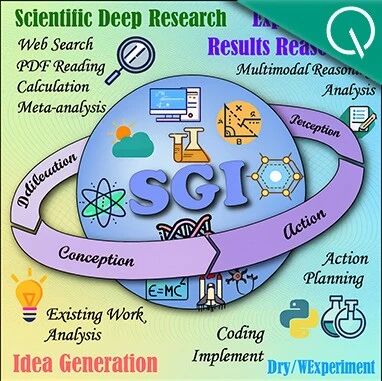
Core Insights - The article discusses the current limitations of AI's "Scientific General Intelligence" (SGI) and introduces the SGI-Bench, a comprehensive evaluation framework designed to assess AI's capabilities in scientific research [1][5][51] Group 1: SGI Definition and Framework - SGI emphasizes multi-disciplinary, long-chain, cross-modal, and rigorously verifiable capabilities, which current benchmarks fail to capture [1] - The Shanghai Artificial Intelligence Laboratory has developed the Practice Inquiry Model (PIM) to break down scientific inquiry into four cyclical stages: Deliberation, Conception, Action, and Perception [1][3] - SGI-Bench aligns tasks with the workflow of scientists, utilizing input from multi-disciplinary experts and graduate students to create over 1,000 evaluation samples across ten disciplines [5][6] Group 2: Evaluation Results and Insights - The first round of SGI-Bench results shows that the closed-source model Gemini-3-Pro achieved an SGI-Score of 33.83 out of 100, indicating significant room for improvement in AI's research capabilities [3][9] - In the Deliberation phase, the accuracy of scientific deep research steps ranged from 50% to 65%, but errors in long-chain steps led to frequent incorrect conclusions [9][13] - The Conception phase demonstrated that while idea generation novelty was acceptable, feasibility was low, with models like GPT-5 scoring 76.08 in novelty but only 18.87 in feasibility [20][26] Group 3: Action and Execution Challenges - The Action phase highlighted that running experiments does not equate to scientific correctness, with models often failing to produce executable and accurate scientific code [24][30] - The best performance in strict passing rates for models was only 36.64%, indicating a gap between being able to run code and achieving scientific accuracy [30][31] - Common issues included missing data acquisition plans and unclear step dependencies, leading to breakdowns in the execution loop from idea to blueprint to execution [26][30] Group 4: Perception and Reasoning - In the Perception phase, the best closed-source models achieved an answer accuracy of approximately 41.9% and reasoning effectiveness of about 71.3%, indicating challenges in fully correct reasoning chains [37][43] - Causal reasoning was relatively stable, while comparative reasoning proved to be the most difficult, particularly in cross-sample fine-grained comparisons [43] Group 5: Future Directions and Customization - SGI-Bench results provide a roadmap for enhancing AI's autonomous research capabilities, focusing on improving multi-modal reasoning, deep research accuracy, and creative generation feasibility [51][52] - The SGIEvalAgent system allows for customizable evaluations based on user-defined intents, enhancing the accessibility and adaptability of AI assessments [44][46][48]
别再吹AI搞科研了!新评测泼冷水:顶尖模型离「合格科学家」还差得远
量子位· 2025-12-27 04:59
Core Insights - The article discusses the current limitations of AI's "Scientific General Intelligence" (SGI) and introduces the SGI-Bench, a comprehensive evaluation framework designed to assess AI capabilities in scientific research [1][5][51]. SGI Framework - SGI emphasizes multi-disciplinary, long-chain, cross-modal, and rigorously verifiable capabilities, which are currently not adequately represented by existing benchmarks that focus on fragmented abilities [1]. - The Shanghai Artificial Intelligence Laboratory has developed a Practical Inquiry Model (PIM) that breaks down scientific inquiry into four cyclical stages: Deliberation, Conception, Action, and Perception, aligning these with AI capabilities [1][3]. SGI-Bench Evaluation - SGI-Bench is constructed with tasks aligned to a scientist's workflow, utilizing input from multi-disciplinary experts and graduate students to create over 1,000 evaluation samples across ten disciplines [5][6]. - The first round of results shows that the closed-source model Gemini-3-Pro achieved an SGI-Score of 33.83 out of 100, indicating significant room for improvement in AI's research capabilities [3][9]. Key Findings 1. **Deliberation**: The accuracy of deep scientific research steps is between 50% and 65%, but errors in long-chain steps lead to frequent incorrect conclusions, with strict matching accuracy only at 10% to 20% [9][13]. 2. **Conception**: The novelty of idea generation is acceptable, but feasibility is low, with models like GPT-5 showing a novelty score of 76.08 and feasibility of only 18.87 [20][26]. 3. **Action**: The ability to execute experiments is highlighted, with a smooth execution rate above 90%, but a significant gap exists between running code and achieving scientific correctness [30][31]. 4. **Perception**: The best closed-source models achieved an answer accuracy of approximately 41.9% and reasoning effectiveness of about 71.3%, indicating challenges in fully correct reasoning chains [37][43]. Future Directions - SGI-Bench results suggest directions for enhancing AI's autonomous research capabilities, including improving multi-modal reasoning, deep research accuracy, creative generation feasibility, and code generation stability [51][52].
AI创业版黄仁勋:37岁华人0融资5年干到240亿,谷歌OpenAI都是客户
量子位· 2025-12-27 04:59
Core Viewpoint - The article highlights the remarkable journey of Edwin Chen, a 37-year-old Chinese-American entrepreneur who founded Surge AI, a data annotation company valued at $24 billion without any external funding. His success is attributed to a unique approach to data annotation and a refusal to rely on venture capital, positioning the company as a significant player in the AI industry [2][24]. Group 1: Company Overview - Surge AI was founded in 2020 by Edwin Chen, who aimed to address the scarcity of high-quality annotated data essential for AI development [8][6]. - The company has achieved a valuation of $24 billion and is projected to generate $1.2 billion in revenue by 2024, surpassing competitors like Scale AI [23][24]. - Surge AI's business model is distinct as it does not accept venture capital, relying solely on the founder's savings and revenue from clients [9][11]. Group 2: Unique Approach to Data Annotation - Surge AI differentiates itself by employing highly educated annotators, including PhDs and professors, to ensure the quality of data annotation, which contrasts with the traditional model that often relies on low-cost labor [15][14]. - The company has developed a sophisticated internal matching system to assign tasks based on annotators' skills and historical performance, enhancing the quality of the output [16][19]. - Surge AI charges a premium for its services, often 50% above market rates, and has secured contracts with major clients like Google and Airbnb [23][24]. Group 3: Market Position and Challenges - Despite its success, Surge AI faces challenges from competitors who are well-funded and can engage in price wars, potentially threatening its market share [28][30]. - The company has lost some clients to competitors and must navigate the risk of clients switching to in-house solutions for data annotation [31][32]. - There is a looming concern about the future of data annotation as AI technology advances, potentially reducing the need for human-annotated data [31].

清华百川楼挂牌启用后,就地圆桌开聊AI医疗
量子位· 2025-12-27 04:59
Core Viewpoint - The discussion emphasizes the importance of not overly aligning AI medical initiatives with traditional medical practices, suggesting that innovation should not be constrained by conventional medical perspectives [1][62]. Group 1: Perspectives on AI in Healthcare - The roundtable featured three key perspectives: AI entrepreneurs, researchers, and healthcare practitioners, highlighting the complexity of integrating AI into the medical field [4][5]. - The future of AI in healthcare is seen as critical, with discussions extending beyond technology to include ethical considerations, decision-making authority, and clinical reasoning [9][10]. Group 2: Vision for AI in Medicine - AI in medicine is viewed as a complex system that reflects the challenges of achieving AGI (Artificial General Intelligence), with medical knowledge spanning multiple disciplines [13][14]. - The development of large medical models is essential, serving as a foundational infrastructure that integrates various types of medical data [16][17]. - AI has the potential to drive advancements in medical research by identifying complex patterns that traditional methods may overlook [19][20]. - The relationship between doctors and patients is expected to evolve, with patients becoming more informed and demanding higher standards from healthcare providers [21][22]. Group 3: AI Medical Benchmarks - The benchmarks for AI in healthcare must evolve to reflect the dynamic nature of AI technology, focusing on long-term health monitoring and adaptive treatment plans [30][31]. - In real medical scenarios, the effectiveness of AI is measured by its clinical reasoning capabilities, acceptance by healthcare professionals, and its impact on treatment outcomes [33][34]. Group 4: Unique Value Proposition of Baichuan Intelligence - Baichuan Intelligence aims to create a companion AI that engages in long-term decision-making rather than providing one-off answers, emphasizing the importance of patient and doctor engagement [37][40]. - The company collaborates with top hospitals while recognizing that professional endorsement does not guarantee product quality [39]. Group 5: Challenges and Recommendations for AI in Healthcare - The regulatory environment in healthcare poses significant challenges for AI innovation, necessitating careful navigation to maintain trust while integrating AI into decision-making processes [50][52]. - Young professionals entering the AI healthcare field are encouraged to find genuine interests and embrace interdisciplinary knowledge to foster innovation [54][56].