鑫椤锂电

Search documents
又一车企工厂停产!
鑫椤锂电· 2025-05-22 01:06
Group 1 - The core viewpoint of the article highlights that Hyundai Motor's production of electric vehicles at its Ulsan plant in South Korea will be suspended from May 27 to May 30 due to a significant decline in global demand for electric vehicles, particularly from major export markets like Europe, Canada, and the United States [1] - This marks the third suspension of electric vehicle production in South Korea this year, with previous suspensions occurring in February and April [1] - Hyundai Motor stated that despite the suspension in South Korea, its export operations to Europe and the United States will continue, ensuring that after-sales services remain unaffected [1] Group 2 - In 2024, Hyundai Motor reported a total revenue of 175.23 trillion KRW (approximately 909.27 billion RMB), representing a year-on-year growth of 7.7% [2] - The net profit for the same year was 13.23 trillion KRW (approximately 686.5 billion RMB), also showing a year-on-year increase of 7.8% [2] - However, the global cumulative sales for Hyundai Motor in 2024 reached 4.1418 million units, reflecting a year-on-year decline of 1.8% [2]


超40%全球份额!电解液溶剂龙头一体化布局为电池“造血”
鑫椤锂电· 2025-05-21 06:51
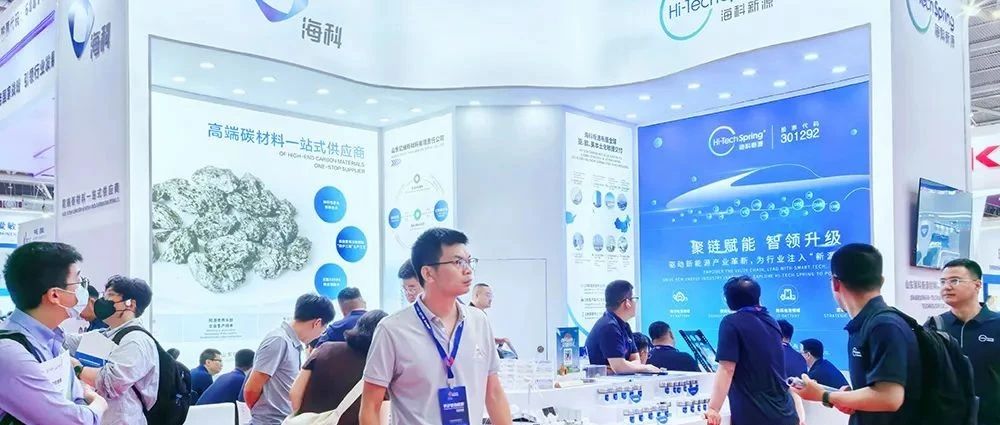
Core Viewpoint - Despite challenges, the global lithium battery market maintains a rapid growth rate of 20% to 30%, with the electrolyte sector entering a critical phase of capacity clearing between 2025 and 2027, leading to an improvement in supply-demand dynamics [1][7]. Industry Overview - The global shipment of lithium-ion battery electrolytes reached 1.662 million tons, a year-on-year increase of 26.7% driven by demand from energy storage batteries [4]. - However, the global electrolyte market size is projected to decline by 21.5% year-on-year in 2024, amounting to 40.98 billion yuan, continuing the downward trend from 2023 due to falling electrolyte prices [4]. Company Positioning - Haike New Source, established in 2002, is recognized as a leading manufacturer of electrolyte solvents, focusing on innovation in new energy battery materials and maintaining a strong market position through an integrated supply chain [7][8]. - The company has a solid foothold in the electrolyte solvent market, supplying five types of lithium battery carbonate solvents and achieving over 40% global market share in 2024, with a 30% sales growth compared to 2023 [8][10]. Product Development - Haike New Source is actively developing new products, including electrolyte additives and lithium salts, to enhance its competitive edge in the lithium battery electrolyte industry [10][12]. - The company emphasizes strict quality management and has received recognition as an excellent supplier from major clients like BYD and Tianci Materials [11]. Technological Innovation - The company invests 4% of its marketing revenue in R&D, employing over 110 research personnel and holding 128 core patents, contributing to its competitive advantage in the market [11][12]. - Haike New Source is focusing on developing high-voltage, high-safety, and green low-cost electrolyte materials, aligning with industry trends [13]. Global Expansion Strategy - With the domestic electrolyte solvent market becoming saturated, Haike New Source is targeting international markets, aiming for a 40% market share by 2025 [14][15]. - The company has established a global presence with eight subsidiaries across Asia, Europe, and North America, enhancing its market influence and product competitiveness [13][14]. Future Outlook - The company plans to accelerate the construction of its high-end battery material production base in Dongying, Shandong, and continue to innovate in product offerings to meet diverse market demands [16].
低成本,高曝光——鑫椤资讯2025年欧洲电池展览会展位招商
鑫椤锂电· 2025-05-21 06:51
Core Viewpoint - The article highlights the upcoming "2025 European Battery Exhibition" scheduled for June 3-5, 2025, in Stuttgart, Germany, emphasizing the importance of this event for the energy and electronics sectors in Europe [1][3]. Group 1: Event Overview - The exhibition aims to be a leading platform for the advanced battery industry in Europe, attracting participants from 53 countries, including battery manufacturers, technology developers, and procurement experts [3]. - The event serves as an international platform for technology exchange, market expansion, and business cooperation [3]. Group 2: Participation Opportunities - Due to high booth costs and travel expenses, many companies are hesitant to participate, prompting the introduction of a unique promotional opportunity for those with limited budgets and time constraints [3]. - The company offers booth sharing services to reduce participation costs while providing international exposure [4]. Group 3: Advertising and Promotion Services - The company will distribute a "2025 Lithium Battery Industry Chain White Paper" at the event, allowing brands to advertise alongside authoritative industry information [4]. - Promotional materials such as roll-up banners will be placed in prime locations to attract attention from attendees [4]. - Additional advertising opportunities include branded tote bags for distributing materials and direct mailing of promotional materials to potential customers [5][6]. Group 4: Company Background - Established in 2010, the company specializes in research and consulting in the carbon, lithium battery, and electric furnace steel industries, providing comprehensive services to various clients [8]. - The company has become a leading institution in lithium battery industry research in China and has previously participated in European battery exhibitions to support Chinese lithium battery companies [8].
三菱化学(中国):EAC2025展示电池材料创新力量
鑫椤锂电· 2025-05-21 06:51
Core Viewpoint - Mitsubishi Chemical (China) Management Co., Ltd. will showcase battery materials and solutions at EAC2025, highlighting advancements in lightweight and safety performance for electric vehicle applications [1][2]. Group 1: Battery Material Solutions - The carbon fiber SMC and glass fiber reinforced thermoplastic material GMT are designed to meet lightweight and safety performance requirements for battery housings [2]. - The PBT resin NOVADURAN™ is developed for connectors, offering flame retardancy and high voltage resistance [2]. - Sol-Rite™, an organic solvent-based electrolyte for lithium-ion batteries, primarily uses ethylene carbonate and lithium salt (LiPF6), enhancing battery performance for global electric vehicle applications [2]. Group 2: Anode Materials - Mitsubishi Chemical provides two types of anode materials: natural graphite-based (MPG) with excellent fast charging and discharging characteristics, and synthetic graphite-based (ICG) known for high capacity and longevity [2]. Group 3: Event Details - The conference will be held on July 8-9, 2025, in Shanghai, China, organized by Xinluo Information [2].
超1.5亿欧元!世索科宣布签约
鑫椤锂电· 2025-05-21 06:51
Core Insights - The article highlights the strategic agreements signed by Solvay with multiple automotive manufacturers and battery producers, valued at over €150 million, to supply battery-grade Solef® PVDF [1][2] - The agreements are set to be completed in Q1 2025, reinforcing Solvay's position in the rapidly growing battery materials market [2] Group 1: Market Position and Product Significance - Solef® PVDF is a thermoplastic fluoropolymer that enhances electrode-separator adhesion and bonding performance, significantly improving battery durability, efficiency, and safety [2] - The product is widely used in electric and hybrid vehicles, indicating its critical role in the automotive industry's transition to electrification [2] Group 2: Production Capacity and Investment - Solvay has initiated the construction of North America's largest PVDF production facility in Augusta, Georgia, with a funding of $178 million from the U.S. Department of Energy [2] - The facility is expected to meet 45% of the U.S. market's PVDF demand by 2030, with an annual production capacity sufficient for over 5 million electric vehicle batteries [2] - The plant will be operated in partnership with Orbia, aiming to create over 600 local jobs and establish a localized battery supply chain [2] Group 3: Future Developments - The first production capacity is planned to be operational by 2026, coinciding with the completion of Solvay's PVDF expansion project at its Tavaux facility in France by the end of 2025 [2]
重磅!比亚迪发布两、三轮车专用磷酸铁锂电池
鑫椤锂电· 2025-05-21 06:51
Core Viewpoint - BYD has officially entered the low-speed electric vehicle battery market by launching lithium iron phosphate batteries specifically designed for two-wheeled and three-wheeled vehicles, which is expected to reshape the competitive landscape of the battery sector for electric bicycles and scooters [1][3]. Summary by Sections Product Launch - BYD held a global launch event for its small-capacity power batteries, introducing a range of lithium iron phosphate batteries for two-wheeled and three-wheeled vehicles, with a total of 32 models planned, of which 8 to 9 models are already available [2]. Product Advantages - The new batteries have three core advantages: 1. They are all based on lithium iron phosphate technology, utilizing automotive-grade cells, Battery Management Systems (BMS), and manufacturing processes, making them safer and more durable. 2. They come with a long warranty period, offering 5 years of coverage, including 3 years of replacement and 2 years of repair services. 3. The batteries support 2000 complete charge and discharge cycles, with a lifespan of 8 to 10 years under normal usage conditions [2]. Market Impact - With BYD's entry into the low-speed electric vehicle battery market, it is anticipated that the competition in the battery sector for electric bicycles and scooters will be significantly altered, particularly in comparison to traditional lead-acid batteries, which are less durable and safe [3]. Partnerships - BYD has established partnerships with several two-wheeled and three-wheeled electric vehicle brands, including Xinri, Huaihai (Zongshen), LIMA, Tailin, and Jinpeng, to provide battery solutions [2].

探秘CIBF2025:瑞固新材多元产品矩阵重塑硫化物电解质产业格局
鑫椤锂电· 2025-05-21 03:31
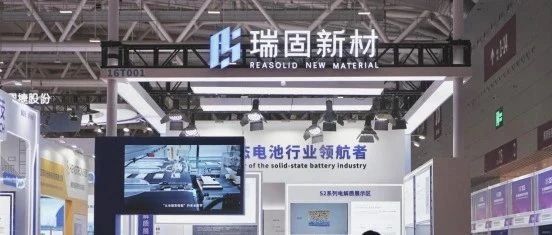
Core Viewpoint - The article emphasizes the significance of all-solid-state batteries as a core direction for next-generation battery technology due to their high safety, energy density, and wide temperature adaptability [1][2]. Group 1: Industry Challenges and Innovations - Major economies like China, Japan, and South Korea have incorporated solid-state battery technology into their national strategies, yet challenges such as poor air stability, high interfacial resistance, and complex mass production processes remain [2]. - The industry consensus suggests that the commercialization of sulfide technology requires breakthroughs in material modification, process innovation, and industry chain collaboration [2]. Group 2: Company Solutions and Product Development - Ruigu New Materials presented a "full-scenario solution" at the CIBF2025 exhibition, addressing the pain points of industrialization by developing a diverse product matrix that includes precursor materials, solid electrolyte materials, composite additives, and solid electrolyte membranes [3]. - The company focuses on two core development goals for sulfide solid electrolytes: high ionic conductivity and precise control of particle size, achieving a maximum ionic conductivity of 12 mS/cm in its S2 series products [4]. - Ruigu's S4 series solid electrolyte products exhibit unique material properties, such as flexibility and excellent compatibility between the anode, cathode, and electrolyte layers, enhancing performance during battery formation [5]. Group 3: Breakthroughs in Material Properties - The N series sulfide solid electrolytes developed by Ruigu demonstrate dual breakthroughs in water solubility and oxidation resistance, addressing the issue of hydrogen sulfide generation in traditional sulfide electrolytes [6]. - These materials can dissolve in water without performance degradation and show good performance in high-humidity applications, making them suitable for use as coating materials and functional additives [6]. Group 4: Production Capacity and Commercialization - Ruigu New Materials has overcome the mass production bottleneck of sulfide electrolytes, with a 100-ton production line expected to be operational by mid-June 2023 and a 1,000-ton line under construction [7]. - The company’s advancements in production technology are set to facilitate the transition of sulfide electrolytes from a bottleneck material to a commercially viable product [7]. Group 5: Market Trends and Future Outlook - The global solid-state battery race has entered a new phase of "technological breakthroughs" and "industrialization," with significant progress in material system innovation, cell structure design, and manufacturing process optimization in China [8]. - The anticipated production of 5.2 GWh of solid-state/semi-solid-state batteries in China by 2024 highlights the growing momentum in this sector, despite ongoing challenges in commercialization [8][9].
珩创纳米蝉联全球磷酸锰铁锂出货量第一 加速推进3万吨扩产计划
鑫椤锂电· 2025-05-21 01:06
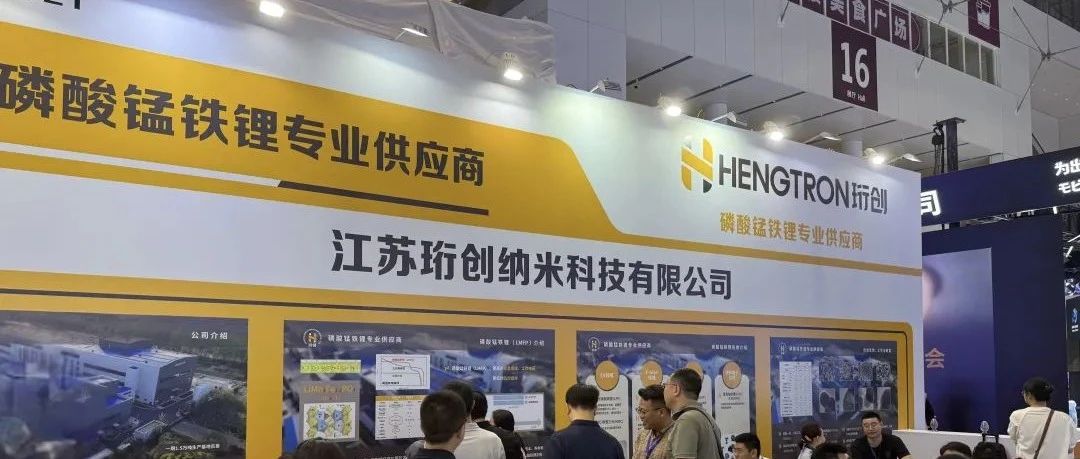
Core Viewpoint - Jiangsu Hanchuang Nano Technology Co., Ltd. (Hanchuang) has emerged as a leader in the lithium manganese iron phosphate (LMFP) market, achieving nearly 50% market share and becoming a key player in the industrialization of LMFP materials [3][4]. Group 1: Company Overview - Hanchuang has achieved the highest global shipment volume of LMFP for two consecutive years (2023-2024) [3]. - The company has completed three rounds of financing totaling nearly 500 million yuan, with a stable operation of 15,000 tons of production capacity and an accelerated expansion plan for 30,000 tons [3][4]. - The founding team consists of executives and R&D experts from leading global material companies, marking them as the longest-serving team in LMFP research and the first to achieve LMFP industrialization [3][4]. Group 2: Product and Technology - LMFP materials developed by Hanchuang are an upgraded version of lithium iron phosphate (LFP), offering a 15-20% increase in energy density compared to LFP, along with high safety, low cost per watt-hour, and excellent low-temperature performance [4]. - Hanchuang has developed a unique solid-liquid two-phase LMFP process that overcomes traditional performance bottlenecks, resulting in the lowest cost and optimal performance LMFP products in the industry [4]. - The company holds over 70 core patents related to LMFP, covering major markets including China, the US, Europe, and Japan, establishing a solid barrier for its technology commercialization [4]. Group 3: Industry Development - The development of LMFP has gone through four key stages: laboratory research (1997-2007), industrial exploration (2008-2014), policy fluctuation (2015-2019), and revival breakthrough (2020-present) [7]. - The market for LMFP is expected to grow significantly, becoming one of the most important cathode materials after LFP and ternary materials, according to Roland Berger's 2025 forecast [8]. Group 4: Market Applications and Collaborations - Hanchuang has established deep collaborations with leading battery manufacturers and is expected to achieve mass production applications in the electric vehicle (EV) sector within the year [11]. - Major companies such as CATL, BYD, and others are also launching LMFP products, indicating a growing trend in the adoption of LMFP technology across various applications [11].
宁德时代董事长曾毓群表示:未来三年重卡新能源渗透率将突破50%;电动重卡全生命周期成本优势突显
鑫椤锂电· 2025-05-21 00:54
Core Viewpoint - The article emphasizes the economic advantages of electric heavy-duty trucks over traditional fuel vehicles, highlighting the importance of battery technology and infrastructure in driving the transition to electric commercial vehicles [1][2][4]. Group 1: Economic Benefits of Electric Heavy-Duty Trucks - The economic viability of electric heavy-duty trucks is demonstrated by the cost savings per kilometer compared to fuel vehicles, with savings of 0.62 CNY per kilometer, leading to an annual profit increase of 60,000 CNY for trucks running 100,000 kilometers [1]. - The transition to electric heavy-duty trucks is expected to significantly reduce costs and carbon emissions, with a projected penetration rate of over 50% in the next three years [2]. Group 2: Battery Technology and Infrastructure - CATL has introduced a standard battery pack (75 battery) for heavy-duty trucks, with a current capacity of approximately 171 kWh, expected to increase to 200 kWh, and a lifespan of over 12 years and 6,000 cycles [5][7]. - The development of a nationwide battery swap network covering 15,000 kilometers is planned, which will enhance the operational efficiency of electric heavy-duty trucks [4]. Group 3: Industry Trends and Innovations - Various companies are launching new battery products tailored for commercial vehicles, with features such as rapid charging capabilities and improved energy density, which are crucial for the adoption of electric heavy-duty trucks [9][11]. - The introduction of innovative battery technologies, such as the CTB (Cell to Body) architecture, aims to optimize energy density and enhance the economic performance of electric heavy-duty trucks [11][12]. Group 4: Challenges and Future Outlook - The current lack of dense charging infrastructure poses challenges for the widespread adoption of electric heavy-duty trucks, but ongoing developments in battery technology and business models are expected to accelerate the transition [15][16]. - The industry consensus is shifting towards electric heavy-duty trucks, driven by the economic advantages and advancements in battery technology [16].


宁德时代董事长曾毓群表示:未来三年重卡新能源渗透率将突破50%;电动重卡全生命周期成本优势突显
鑫椤锂电· 2025-05-20 08:16
Core Viewpoint - The article emphasizes the economic advantages of electric heavy-duty trucks over traditional fuel vehicles, highlighting the potential for significant cost savings and environmental benefits through battery swapping and energy efficiency [1][2][4]. Group 1: Economic Benefits of Electric Heavy-Duty Trucks - The economic viability of battery-swapping heavy-duty trucks is demonstrated, with calculations showing that using the Qiji chassis battery-swapping truck can save 0.62 yuan per kilometer compared to diesel trucks, leading to an annual profit increase of 60,000 yuan [1]. - The current penetration rate of new energy in heavy-duty trucks is 10%, with CATL predicting it will exceed 50% in the next three years, indicating a significant market shift towards electrification [2]. Group 2: Battery Technology and Infrastructure - CATL has launched the 75 battery pack for heavy-duty trucks, which features a capacity of approximately 171 kWh, expected to increase to 200 kWh, and has a lifespan of over 12 years with 6,000 cycles [5][7]. - The battery-swapping stations are designed to be compatible with over 95% of mainstream models, allowing for a fully automated swapping process that takes just five minutes [5]. Group 3: Strategic Partnerships and Network Development - CATL's strategic partnership with Sinopec aims to upgrade 500 gas stations into comprehensive energy stations by 2025, with a long-term goal of 10,000 stations, enhancing the battery-swapping network across major transportation routes [4]. - The establishment of a nationwide battery-swapping network covering 80% of heavy-duty truck transport lines is planned, which will require substantial investment and support from financial institutions [4]. Group 4: Competitive Landscape and Innovations - Other companies, such as Yiwei Lithium Energy, are also launching new battery products for commercial vehicles, indicating a competitive push towards electrification in the heavy-duty truck market [9][11]. - Innovations in battery technology, such as the CTB (Cell to Body) architecture, are being developed to optimize energy density and charging speed, further enhancing the economic feasibility of electric heavy-duty trucks [11].