机器之心

Search documents
攻克长文档与多模态挑战,Paper2Video实现学术视频的自动化生产
机器之心· 2025-10-23 02:22
Core Insights - The article discusses the challenges and solutions in automating the generation of academic presentation videos, highlighting the need for a systematic benchmark and framework to improve efficiency and quality in this domain [4][43]. Group 1: Background and Challenges - Academic presentation videos are crucial for research communication but are currently labor-intensive, requiring hours for a few minutes of content, indicating a need for automation [4]. - Existing natural video generation models are inadequate for academic presentations due to unique challenges such as complex inputs from long documents and the need for synchronized multi-modal outputs [4][5]. Group 2: Paper2Video Benchmark - The Paper2Video benchmark was established using 101 academic papers and their corresponding presentation videos, focusing on four evaluation metrics: Meta Similarity, PresentArena, PresentQuiz, and IP Memory [7][10]. - The benchmark provides a reliable basis for evaluating the generation and assessment of multi-modal long-document inputs and outputs, laying the groundwork for automated academic video generation [10][11]. Group 3: Evaluation Metrics - The four evaluation metrics are designed to assess the quality of academic presentation videos from three core perspectives: human-like preference, information transmission, and academic impact [13][16]. - Meta Similarity measures the consistency of generated content with human-designed versions, while PresentArena evaluates the visual quality against human preferences [16][31]. Group 4: PaperTalker Framework - PaperTalker is introduced as the first multi-agent framework for generating academic presentation videos, processing long-dependency multi-modal tasks [17][18]. - The framework consists of four key modules: Slide Builder, Subtitle Builder, Cursor Builder, and Talker Builder, enabling controlled, personalized, and academically styled video generation [23][26]. Group 5: Experimental Results - PaperTalker outperformed other methods in all four evaluation dimensions, demonstrating superior similarity to human-made videos, better information coverage, and enhanced academic memory [32][41]. - The framework's efficiency is attributed to its modular design and the use of Beamer for slide generation, which significantly reduces token consumption and overall generation time [35][36]. Group 6: Contributions of Key Modules - The Cursor Builder module significantly enhances information location and understanding, as evidenced by improved accuracy in tasks involving visual cues [38]. - The Tree Search Visual Choice module plays a critical role in optimizing slide layout and design quality, demonstrating its importance in the overall effectiveness of the generated videos [40][41]. Group 7: Conclusion - The Paper2Video benchmark and PaperTalker framework provide a systematic approach to generating academic presentation videos, with experimental validation showing their advantages in information transmission, visual quality, and academic memory [43].


刚刚,谷歌重大突破!量子计算首次可验证,登《Nature》封面
机器之心· 2025-10-23 02:22
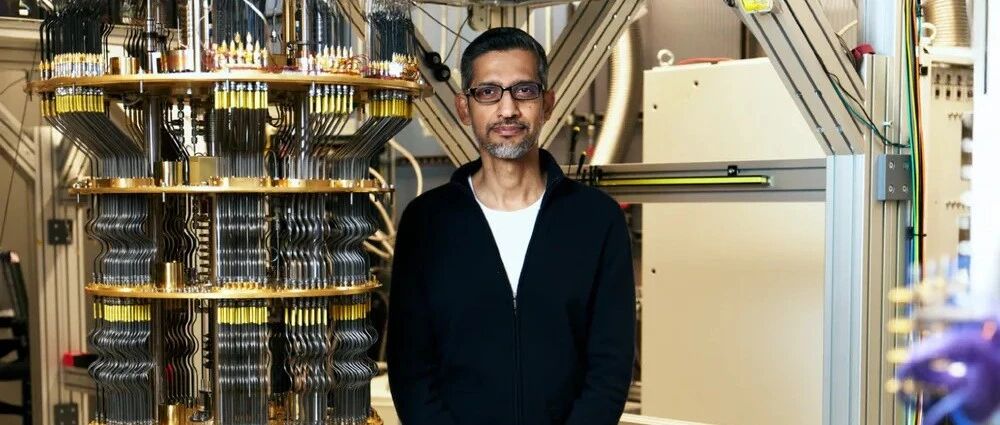
Core Viewpoint - Google's new Quantum Echoes algorithm demonstrates a significant advancement in quantum computing, achieving a speed 13,000 times faster than traditional supercomputers for solving atomic interaction problems, completing calculations in hours that would take the Frontier supercomputer approximately 3.2 years [1][2][5]. Group 1: Algorithm and Technology - The Quantum Echoes algorithm measures a quantum observable known as OTOC (out-of-time-order correlator), which describes how quantum dynamics become chaotic [4]. - This breakthrough is based on decades of technological accumulation and key advancements over the past six years, including the introduction of the Willow quantum chip [5][6]. - The algorithm's results are verifiable, meaning they can be repeated on other quantum computers, confirming the accuracy of the outcomes [14][15]. Group 2: Practical Applications - The new algorithm can utilize nuclear magnetic resonance to explain atomic interactions in molecules, paving the way for future applications in drug development and materials science [6][25]. - The research involved collaboration with institutions like UC Berkeley and Dartmouth College, highlighting the interdisciplinary nature of the work [5][6]. - The algorithm's ability to simulate quantum mechanical phenomena is crucial for understanding molecular structures, which is foundational in chemistry, biology, and materials science [25][26]. Group 3: Experimental Validation - In a verification experiment, Google ran the Quantum Echoes algorithm on the Willow chip to study two molecules, one with 15 atoms and another with 28 atoms, confirming that the quantum results aligned with traditional NMR results while providing additional insights [26]. - This experiment represents a significant step towards a new quantum scope, enabling the measurement of previously unobservable natural phenomena [26].

Meta AI大裁员,裁到了田渊栋?
机器之心· 2025-10-23 02:22
Core Viewpoint - Meta is undergoing significant internal restructuring, leading to the layoff of approximately 600 positions in its AI department, affecting teams such as FAIR, AI products, and infrastructure. This shift indicates a move away from open research towards a more competitive focus on "superintelligence" [1][3][10]. Group 1: Restructuring and Layoffs - Meta has confirmed the layoffs, stating the need to enhance the efficiency of AI product implementation [3]. - The layoffs are part of a broader reorganization initiated by CEO Mark Zuckerberg, aimed at reducing layers of management and accelerating decision-making [10]. - Employees in the FAIR department have sensed a shift in focus, with many attempting to join the newly formed team led by Alexandr Wang, while those unable to transition face potential layoffs [10][11]. Group 2: Impact on FAIR - The FAIR department, which has been a cornerstone of Meta's AI research since its inception in 2013, is experiencing a significant strategic shift. The focus is moving from open foundational research to integrating research outcomes into larger model operations [10][20]. - FAIR has been instrumental in developing key technologies, including the widely adopted PyTorch framework, which underpins Meta's AI products [19][20]. - The transition marks a departure from the principles of academic freedom and open publication that FAIR has historically championed, raising concerns about the future direction of the department [10][11]. Group 3: Future Directions - Despite the layoffs, Meta plans to continue recruiting top talent in AI, aiming to create a more agile and high-density team [13]. - The company remains optimistic about its ongoing projects, including model training and ambitious computational planning, as it seeks to establish a leadership position in the superintelligence race [14][22]. - The Llama series of models developed by FAIR has positioned Meta uniquely in the generative AI competition, emphasizing the importance of open-source strategies in its approach [22].


X上63万人围观的Traning-Free GRPO:把GRPO搬进上下文空间学习
机器之心· 2025-10-22 08:46
Core Viewpoint - The article discusses the introduction of Training-Free Group Relative Policy Optimization (GRPO), a method that allows for reinforcement learning (RL) without the need to update model parameters, making it more accessible and cost-effective for developers and smaller teams [4][20][28]. Summary by Sections GRPO Overview - GRPO has gained popularity in large model reinforcement learning, particularly for tasks like mathematical reasoning and multi-agent collaboration [2]. - The core mechanism of GRPO involves "multi-path parallelism + group advantage," which, while powerful, is costly in terms of model parameter optimization [3]. Training-Free GRPO - Tencent Youtu's recent paper proposes a solution to the high costs of parameter updates by moving the GRPO learning process into the context space, allowing for multiple answer paths to be generated and evaluated without changing model parameters [4][6]. - The method involves generating multiple rollout paths for the same problem, scoring them, and using the advantage signals to refine the model's preferences for high-quality solutions [4][10]. Experimental Results - In mathematical reasoning tasks, Training-Free GRPO can enhance performance using only 100 training samples at a cost of approximately $8 to $18 on a 671 billion parameter model [13][24]. - The method shows significant improvements in performance metrics, such as a 4.6% increase in Pass@1 in web search scenarios without updating model parameters [17][18]. Advantages of Training-Free GRPO - The approach retains the advantages of GRPO, including multi-path exploration and independent training/testing sets, while drastically reducing costs by eliminating the need for parameter updates [20][21]. - It allows for better generalization across different tasks without the complexity and maintenance costs associated with multiple specialized models [25]. Conclusion - Training-Free GRPO represents a shift in the understanding of reinforcement learning, demonstrating that effective RL can be achieved without traditional parameter updates, making it a viable option for developers with limited resources [26][28].

R-HORIZON:长程推理时代来临,复旦NLP&美团LongCat重磅发布LRMs能力边界探测新范式
机器之心· 2025-10-22 08:46
Core Insights - The article discusses the introduction of R-HORIZON, a benchmark for evaluating and enhancing the long-chain reasoning capabilities of large reasoning models (LRMs) [8][39] - It highlights the limitations of current training and evaluation paradigms, which primarily focus on isolated single-step problems, failing to address the complexities of real-world reasoning scenarios [4][5] Group 1: Background and Motivation - The transition from "single-step reasoning" to "long-chain decision-making" is emphasized as a critical evolution in AI reasoning capabilities [3] - Existing benchmarks like MATH500 and AIME focus on independent problems, which do not reflect the interconnected nature of real-world reasoning tasks [4] Group 2: R-HORIZON Benchmark - R-HORIZON is the first systematic method and benchmark for assessing and enhancing LRMs' long-chain reasoning abilities [8] - It employs a query composition method to transform isolated tasks into complex multi-step reasoning scenarios, allowing for a more accurate evaluation of model capabilities [11] Group 3: Key Findings - A significant performance drop was observed in top models when faced with long-chain reasoning tasks, indicating a "reasoning cliff" where even advanced models struggle [16] - The benchmark includes six representative datasets covering various reasoning tasks, such as mathematical reasoning and code generation [15] Group 4: Mechanisms and Bottlenecks - Three key bottlenecks were identified in current LRMs: limited effective reasoning length, localized reflection mechanisms, and imbalanced thinking budget allocation [20][23] - The analysis revealed that all models experienced significant performance declines as the number of interdependent problems increased, with larger models showing more resilience [21] Group 5: Training and Performance Improvement - R-HORIZON training demonstrated a dual performance enhancement, improving both long-chain task performance and single problem accuracy [30][33] - The training process led to more efficient reasoning lengths and better token budget allocation across multi-step problems, addressing previous imbalances [34][35] Group 6: Future Directions - The launch of R-HORIZON marks a paradigm shift in LRM research, focusing on the extent of reasoning capabilities rather than just problem-solving abilities [39] - The framework is open-sourced, inviting collaboration from global researchers to advance the development of next-generation reasoning models [40]

9998元抱回家!全球首款万元以下人形机器人来了,21自由度,能说会走,会尬舞
机器之心· 2025-10-22 08:46
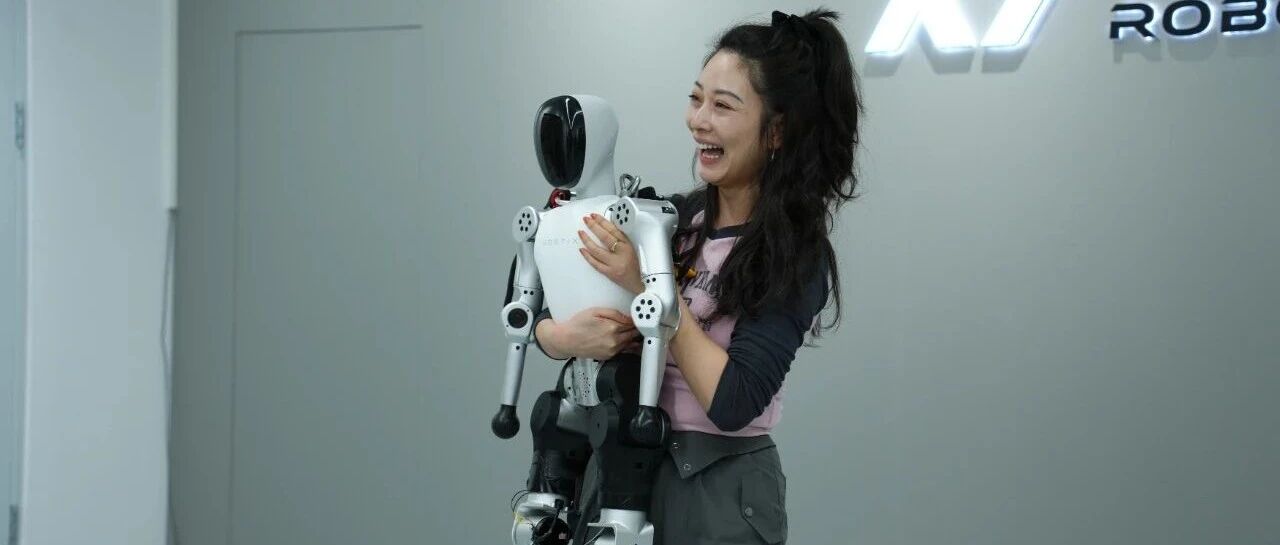
Core Viewpoint - The article highlights the launch of the Bumi robot by Songyan Power, marking a significant step in making humanoid robots accessible to consumers with a price point of 9998 yuan, which is lower than many high-end smartphones, thus entering the consumer-grade market for the first time [4][5][39]. Product Overview - The Bumi robot features 21 degrees of freedom (DOF), allowing for advanced movement capabilities, including walking, dancing, and interacting with users [20][36]. - Weighing only 12 kg and standing at 94 cm, Bumi is designed to be lightweight and safe for children, making it suitable for educational and entertainment purposes [16][17][34]. - The robot is equipped with a 48V battery system, providing a runtime of 1 to 2 hours, which is adequate for short-term applications [32][33]. Company Background - Songyan Power has rapidly gained attention in the humanoid robot industry, completing six rounds of financing within two years and becoming a key player in the market [7][39]. - The company first gained public recognition during the Beijing Yizhuang Half Marathon, where its N2 robot independently completed the race, showcasing its capabilities [8][9]. Technological Innovation - The company utilizes self-developed servo motors and advanced motion control algorithms to ensure precise and stable movements of the robots [41]. - Songyan Power has made significant advancements in deep reinforcement learning, allowing robots to learn and adapt through trial and error, enhancing their performance in complex tasks [43][45]. Market Strategy - The company focuses on smaller humanoid robots, which are more affordable and versatile compared to full-sized models, catering to various applications in education, entertainment, and exhibitions [40][46]. - The successful integration of domestic supply chains has enabled the company to reduce costs and enhance production capabilities, contributing to the competitive pricing of the Bumi robot [47][48].
不用强化学习也能推理,哈佛新采样算法竟能让基础模型比肩GRPO后训练版本
机器之心· 2025-10-22 08:46
机器之心报道 编辑:Panda 强化学习能力强大,几乎已经成为推理模型训练流程中的标配,也有不少研究者在探索强化学习可以为大模型带来哪些涌现行为。 现在,问题来了:要让大模型学会推理,强化学习是必需的吗? 近日,哈佛大学一篇论文探索了能否不使用任何额外训练,通过纯粹的采样让基础模型表现出推理能力。 论文标题:Reasoning with Sampling: Your Base Model is Smarter Than You Think 论文地址:https://www.arxiv.org/pdf/2510.14901 项目网站:https://aakaran.github.io/reasoning_with_sampling/ 他们的探索成功了,提出了一种利用基础模型自身似然度的简单迭代采样算法。 代码地址:https://github.com/aakaran/reasoning-with-sampling 他们还证明,在不同的基础模型上,该算法都能大幅提升推理能力。 也就是说: 直接从基础模型进行采样,可以实现与强化学习相媲美的单次推理能力! 更重要的是,该算法无需训练、无需数据集、无需验证器,从而可避 ...

Dexmal原力灵机开源Dexbotic,基于PyTorch的一站式VLA代码库
机器之心· 2025-10-22 06:32
Core Insights - Dexbotic is an open-source visual-language-action (VLA) model toolkit developed by Dexmal, aimed at researchers in the field of embodied intelligence, featuring a modular architecture with three core components: Data, Experiment, and Model [3][7][9]. Group 1: Need for a Unified VLA Development Platform - The VLA models serve as a crucial technology hub connecting perception, cognition, and action, but face challenges such as severe decentralization in research, cumbersome development processes, and fairness issues in algorithm comparison [5][7]. - The introduction of Dexbotic addresses these pain points by providing a standardized, modular, and high-performance research infrastructure, moving the field from "reinventing the wheel" to "collaborative innovation" [7][9]. Group 2: Dexbotic Architecture - The overall architecture of Dexbotic consists of three main layers: Data Layer, Model Layer, and Experiment Layer, with the Data Layer optimizing storage and integrating multi-source data [9][11]. - The Model Layer includes the foundational model DexboticVLM, which supports various VLA strategies and allows users to customize new VLA models easily [9][11]. - The Experiment Layer introduces an innovative script mechanism for conducting experiments, enabling users to modify configurations with minimal changes while ensuring system stability [11][12]. Group 3: Key Features - Dexbotic offers a unified modular VLA framework compatible with mainstream large language models, integrating embodied operation and navigation functionalities [13]. - High-performance pre-trained models are available for major VLA algorithms, significantly enhancing performance in various simulation environments and real-world tasks [13]. - The experimental framework is designed for flexibility and extensibility, allowing users to easily modify configurations and switch models or tasks [13][14]. Group 4: Open Source Hardware - Dexmal has launched its first open-source hardware product, Dexbotic Open Source - W1 (DOS-W1), featuring a fully open design that lowers barriers for use and maintenance [16][17]. - The hardware design includes modular components and ergonomic features to enhance user comfort and data collection efficiency [17]. Group 5: Future Outlook - Dexmal plans to expand its offerings with more advanced VLM base models and open-source hardware, integrating simulation-to-real-world transfer learning tools and establishing a community-driven model contribution mechanism [19]. - Collaboration with RoboChallenge aims to create a comprehensive technical loop for development, training, inference, and evaluation, ensuring transparency and fairness in performance validation [20].

HumanSense:探索多模态推理边界,打造「察言观色会共情」的全模态交互伙伴
机器之心· 2025-10-22 06:32
Core Insights - The article discusses the development of HumanSense, a multimodal model aimed at enhancing AI's ability to understand and interact with humans empathetically, moving beyond mere task completion to emotional companionship [2][3][22]. Multimodal Model Development - HumanSense is designed to evaluate and improve AI's understanding of human interactions through a comprehensive benchmark that includes 15 progressively challenging tasks based on real-world data [4][12]. - The model incorporates visual, auditory, and textual inputs, demonstrating that audio significantly enhances performance in high-level tasks compared to visual-only models [10][14]. Evaluation and Performance - HumanSense Benchmark reveals that even top models like GPT-4o show a performance gap of nearly 30% compared to human-level understanding, indicating the need for further development in AI's empathetic responses [4][10]. - The average accuracy of human participants in the benchmark was 87.5%, while the best-performing model, Qwen2.5-Omni-7B, achieved 57.8% [9][10]. Cognitive Ladder Framework - The framework consists of four cognitive levels: perception (L1), understanding (L2), reasoning (L3), and feedback (L4), each assessing different aspects of interaction capabilities [12][18]. - The model's ability to process and respond appropriately in complex interactions is evaluated through these layers, emphasizing the importance of integrating multimodal inputs for deeper understanding [12][20]. Training Methodology - A multi-stage reinforcement learning approach is proposed, where the model learns to integrate visual and auditory cues progressively, enhancing its reasoning capabilities [21][20]. - The training phases focus on visual perception first, followed by auditory cues, culminating in a comprehensive understanding of multimodal contexts [21][20]. Future Applications - The advancements in HumanSense aim to transform AI from a mere tool into a companion capable of emotional support and nuanced interactions, potentially revolutionizing user experiences in various applications [23][25]. - Ongoing projects like Ditto-talkinghead and VersaAnimator are being developed to enable real-time, emotionally expressive interactions, further bridging the gap between AI and human-like companionship [25][27][29].

SIGGRAPH Asia 2025|电影级运镜一键克隆!港中文&快手可灵团队发布CamCloneMaster
机器之心· 2025-10-22 06:32
本文第一作者罗亚文,香港中文大学 MMLab 博士一年级在读,研究方向为视频生成,导师为薛天帆教授。个人主页: https://luo0207.github.io/yawenluo/ 作为视频创作者,你是否曾梦想复刻《盗梦空间》里颠覆物理的旋转镜头,或是重现《泰坦尼克号》船头经典的追踪运镜? 在 AI 视频生成中,这些依赖精确相机运动的创意,实现起来却往往异常困难。 一个直接的想法是先用相机位姿估计模型从参考视频中提取相机参数,然后使用相机参数作为控制条件引导视频生成过程。 然而,这条看似容易的路径,实则充满了陷阱:现实场景中的动态物体和复杂遮挡关系,常常导致模型估算出的相机参数出现偏差或错误,让生成的运镜效果与 预期大相径庭。 为了解决这一痛点, 香港中文大学与快手可灵团队联合提出了一种全新的运镜可控的视频生成框架 CamCloneMaster 。它引入了一种「参考即用」的新范式,用 户只需提供一段参考视频,模型就能直接「克隆」其相机运动并应用于新内容,从根本上告别了对相机参数的依赖。 该工作被计算机图形学顶级会议 SIGGRAPH Asia 2025 接收,其训练、测试代码和高质量渲染数据集 CamClo ...