具身智能之心

Search documents
征和工业:灵巧手的“阿喀琉斯之踵” | 微链技术如何破解传动系统的“不可能三角”
具身智能之心· 2025-10-27 04:00
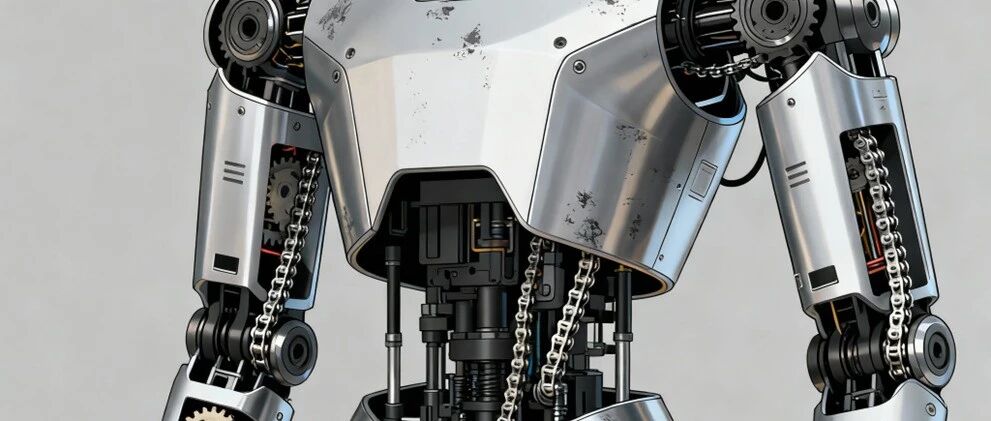
传动系统 微链优势 导 语 类人机器人技术的兴起代表着自动化领域最有前景的前沿之一,其应用涵盖制造业、医疗保 健、服务业和人类辅助。 随着企业和行业寻求整合更先进的机器人解决方案,驱动机器人肢体的传动系统已成为关键 的差异化因素。 在各种可用的驱动技术中,微链系统正在成为一种重要解决方案,解决了现代灵巧机器人 手、臂、腿所面临的根本挑战。 装配微链驱动系统的类人机器人 展示精密的机械结构(机器人结构构想图) 01 REPORT 多元矛盾集成与市场痛点 传统驱动系统的不足之处 当今企业既要求能执行灵巧操作,又希望保持高可靠性、成本效益和运营效率,即"可靠性-性能- 成本"不可能三角。传统灵巧手驱动系统面临几个关键限制,影响了其实际性能和商业可行性。 可靠性——"停机一小时,损失十万元": 制造业产线上,灵巧手故障会令整条产线停摆。某汽车零部件工厂主管指出:"产线每小时产值 12万元,灵巧手停机两小时,直接损失就是24万元,还不算后续的延期赔偿。"企业真正需要的 是百万次以上的循环寿命。 一致性——批量生产和AI训练的前提 : 灵巧手商业价值在于泛化性,但现实中同批次产品性能差异较大,导致大规模部署、AI模型训练 ...

智源&悉尼大学等出品!RoboGhost:文本到动作控制,幽灵般无形驱动人形机器人
具身智能之心· 2025-10-27 00:02
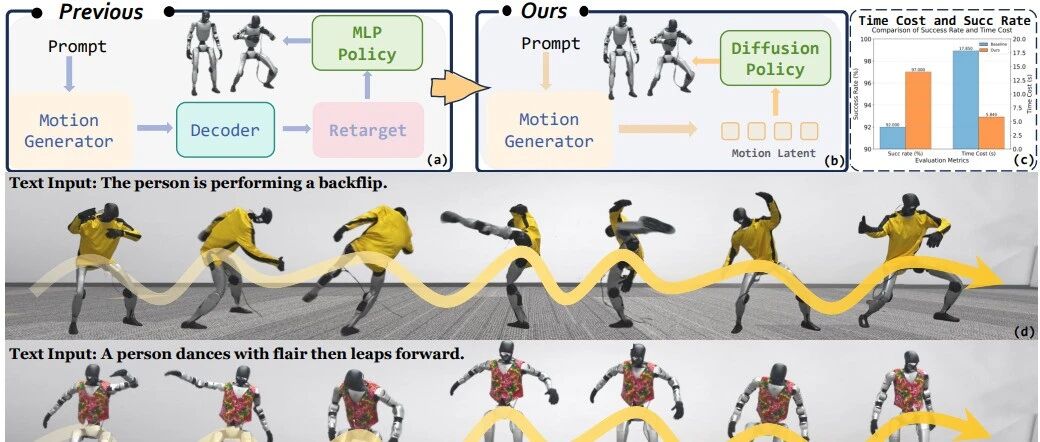
Core Insights - The article discusses the development of RoboGhost, an innovative humanoid control system that eliminates the need for motion retargeting, allowing for direct action generation from language input [6][8][14]. Group 1: Research Pain Points - The transition from 3D digital humans to humanoid robots faces challenges due to the cumbersome and unreliable multi-stage processes involved in language-driven motion generation [6][7]. - Existing methods lead to cumulative errors, high latency, and weak coupling between semantics and control, necessitating a more direct path from language to action [7]. Group 2: Technical Breakthrough - RoboGhost proposes a retargeting-free approach that directly establishes humanoid robot strategies based on language-driven motion latent representations, treating the task as a generative one rather than a simple mapping [8][10]. - The system utilizes a continuous autoregressive motion generator to ensure long-term motion consistency while balancing stability and diversity in generated actions [8][14]. Group 3: Methodology - The training process consists of two phases: action generation and strategy training, with the former using a continuous autoregressive architecture and the latter employing a mixture-of-experts (MoE) framework to enhance generalization [11][13]. - The strategy training incorporates a diffusion model that uses motion latent representations as conditions to guide the denoising process, allowing for direct executable action generation [11][14]. Group 4: Experimental Results - Comprehensive experiments demonstrated that RoboGhost significantly improves action generation quality, success rates, deployment time, and tracking errors compared to baseline methods [14][15]. - The results indicate that the diffusion-based strategy outperforms traditional multilayer perceptron strategies in terms of tracking performance and robustness, even when tested on unseen motion subsets [18][19].
很多初学者想要的具身科研平台来了,为具身领域打造,高性价比
具身智能之心· 2025-10-27 00:02
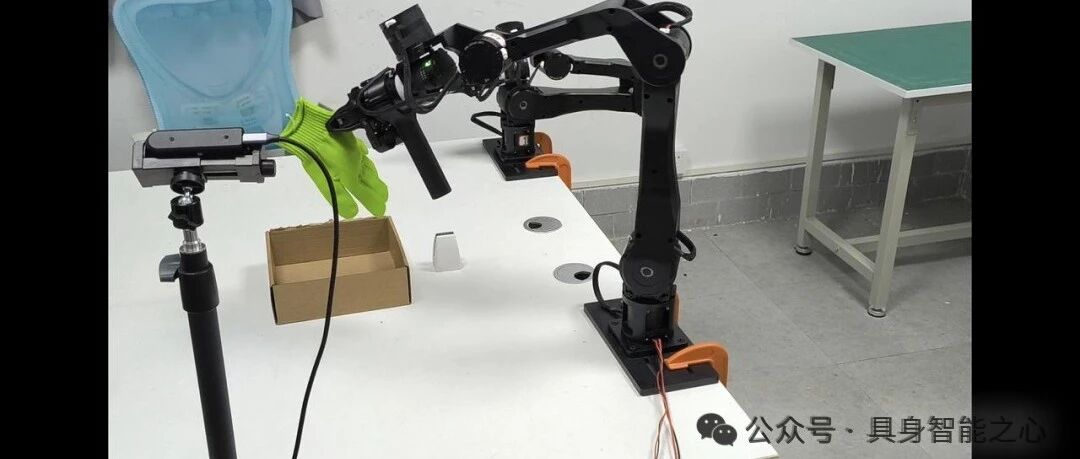
Core Viewpoint - Imeta-Y1 is a lightweight, cost-effective robotic arm designed specifically for beginners and researchers in the field of embodied intelligence, enabling low-cost and efficient algorithm validation and project development [2][5]. Group 1: Product Features - The robotic arm offers a complete open-source toolchain and code examples, facilitating a seamless process from data collection to model deployment [3][17]. - It supports dual-language interfaces in Python and C++, allowing users to quickly get started regardless of their programming background [3][18]. - Compatibility with ROS1 and ROS2 is provided, along with URDF models for smooth transitions between simulation and real-world applications [3][19]. - The arm features high-precision motion control, low power consumption, and an open hardware architecture, supporting seamless integration from simulation to real machine [5][6]. Group 2: Technical Specifications - The robotic arm has a weight of 4.2 kg, a rated load of 3 kg, and 6 degrees of freedom, with a working radius of 612.5 mm and a repeat positioning accuracy of ±0.1 mm [8][19]. - It operates at a supply voltage of 24V and communicates via CAN, with external interfaces for power and CAN connections [8][19]. - The arm's joint motion range and maximum speeds are specified, ensuring versatility in various applications [8][19]. Group 3: Development and Support - A comprehensive open-source SDK is provided, including drivers, API interfaces, sample code, and documentation, supporting rapid application development [26][29]. - The product supports multi-modal data fusion, compatible with mainstream frameworks like TensorFlow and PyTorch, enabling end-to-end implementation of intelligent algorithms [29][32]. - The company offers 24-hour quick response for after-sales support, ensuring users receive timely assistance [3][19]. Group 4: Testing and Reliability - Rigorous hardware testing processes, including precision calibration, durability, load performance, and stability verification, ensure the robotic arm's reliability and safety across various application scenarios [35][39].
HuggingFace联合牛津大学新教程开源SOTA资源库!
具身智能之心· 2025-10-27 00:02
Core Viewpoint - The article emphasizes the significant advancements in robotics, particularly in robot learning, driven by the development of large models and multi-modal AI technologies, which have transformed traditional robotics into a more learning-based paradigm [3][4]. Group 1: Introduction to Robot Learning - The article introduces a comprehensive tutorial on modern robot learning, covering foundational principles of reinforcement learning and imitation learning, leading to the development of general-purpose, language-conditioned models [4][12]. - HuggingFace and Oxford University researchers have created a valuable resource for newcomers to the field, providing an accessible guide to robot learning [3][4]. Group 2: Classic Robotics - Classic robotics relies on explicit modeling through kinematics and control planning, while learning-based methods utilize deep reinforcement learning and expert demonstration for implicit modeling [15]. - Traditional robotic systems follow a modular pipeline, including perception, state estimation, planning, and control [16]. Group 3: Learning-Based Robotics - Learning-based robotics integrates perception and control more closely, adapts to tasks and entities, and reduces the need for expert modeling [26]. - The tutorial highlights the challenges of safety and efficiency in real-world applications, particularly during the initial training phases, and discusses advanced techniques like simulation training and domain randomization to mitigate risks [34][35]. Group 4: Reinforcement Learning - Reinforcement learning allows robots to autonomously learn optimal behavior strategies through trial and error, showcasing significant potential in various scenarios [28]. - The tutorial discusses the complexity of integrating multiple system components and the limitations of traditional physics-based models, which often oversimplify real-world phenomena [30]. Group 5: Imitation Learning - Imitation learning offers a more direct learning path for robots by replicating expert actions through behavior cloning, avoiding complex reward function designs [41]. - The tutorial addresses challenges such as compound errors and handling multi-modal behaviors in expert demonstrations [41][42]. Group 6: Advanced Techniques in Imitation Learning - The article introduces advanced imitation learning methods based on generative models, such as Action Chunking with Transformers (ACT) and Diffusion Policy, which effectively model multi-modal data [43][45]. - Diffusion Policy demonstrates strong performance in various tasks with minimal demonstration data, requiring only 50-150 demonstrations for training [45]. Group 7: General Robot Policies - The tutorial envisions the development of general robot policies capable of operating across tasks and devices, inspired by large-scale open robot datasets and powerful visual-language models [52][53]. - Two cutting-edge visual-language-action (VLA) models, π₀ and SmolVLA, are highlighted for their ability to understand visual and language instructions and generate precise control commands [53][56]. Group 8: Model Efficiency - SmolVLA represents a trend towards model miniaturization and open-sourcing, achieving high performance with significantly reduced parameter counts and memory consumption compared to π₀ [56][58].
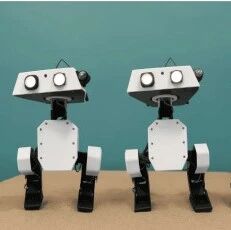
盲人复明!马斯克Neuralink联创实现人工视觉里程碑
具身智能之心· 2025-10-27 00:02
盲人复明 ,太了不起了。 编辑丨 量子位 点击下方 卡片 ,关注" 具身智能之心 "公众号 >> 点击进入→ 具身 智能之心 技术交流群 更多干货,欢迎加入国内首个具身智能全栈学习社区 : 具身智能之心知识星球 (戳我) , 这里包含所有你想要的。 这可能是2025年最低调但又最闪亮的科技进展了。 Nature最新刊登了新研究进展,人工视觉技术刚刚帮助一位70岁奶奶重获光明。 在失明之前,我是个狂热的书虫,我想把它找回来。 70岁的Sheila Irvine (希拉 · 欧文) 最大的愿望是能够再次阅读,而就在最近她的愿望成真了。 原因来自于一项世界首创的人工视觉研究 PRIMA 。 其背后带队的还是当年和马斯克一起创办Neuralink的联合创始人,现在自己创业,做的还是 视网膜植入物 。 厚度只有一根头发丝大小,却能够让 80% 的患者视力得到显著改善,并且能够顺利阅读字母、数字和单词。 对此,论文主要作者Frank Holz表示: 该研究首次证明人工视觉可以恢复患者的功能性中央视力,为失明者带来了希望。 而对于患者本身及其家人,或许这将是人至暮年,一次宝贵的再次见面的机会: 失明15年,终于重获光明的她 ...

具身智能之心招募产品领域的大佬一起合作了~
具身智能之心· 2025-10-26 12:00
通过线上形式授课,兼职形式; 制作高质量教学材料(课件、案例、实操指导等) 我们期望您具备1年以上embodied ai领域的产品设计、需求管理经验。 二、产品方向企业咨询专家 具身产品经理招募来啦! 具身智能之心诚邀各位具身领域的产品大佬加入我们的课程讲师团队与企业咨询专家库,共同推动 具身智能技术的普及与应用,赋能行业创新与转型。 「具身智能之心」是垂直聚焦于具身智能领域的专业内容平台与社区,致力于构建最全面的具身智 能知识体系和连接产学研用各方资源,推动技术创新与产业落地和培育具身智能领域专业人才。 我们正在寻找 一、具身产品课程讲师 您将负责:设计与开发具身产品经理相关课程; 您将负责:为企业客户提供具身智能技术应用与产品化的专业咨询,协助企业制定具身智能战略与 实施方案。 参与咨询项目,解决客户在技术选型、产品设计、团队建设中的实际问题。 我们期望您:具备丰富的具身智能项目实践经验,深刻理解行业需求与技术趋势,有咨询经验或企 业服务经验者优先。 加入我们的价值 专业影响力提升,与顶尖专家交流合作,合作模式灵活,时间安排灵活(线上线下多种工作方 式)。 除此之外,还提供具有竞争力的报酬机制,连接学术界 ...
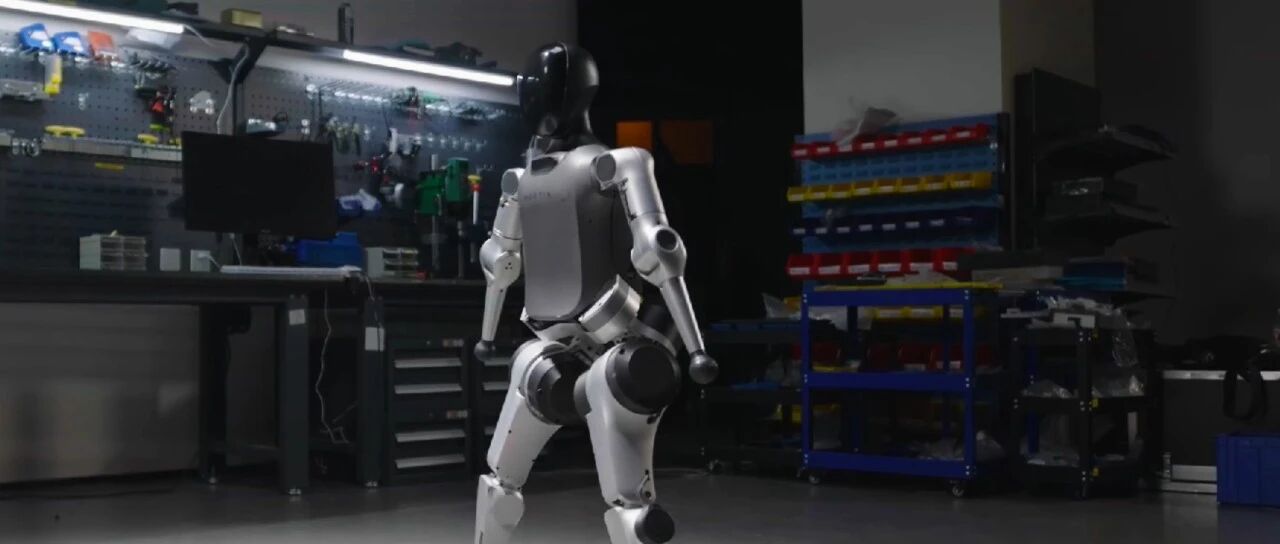
汇报一下ICCV全部奖项,恭喜朱俊彦团队获最佳论文
具身智能之心· 2025-10-26 04:02
Core Insights - The article highlights the significant presence of Chinese authors at ICCV 2025, accounting for 50% of the submissions, showcasing China's growing influence in the field of computer vision [1]. Awards and Recognitions - The Best Paper Award (Marr Prize) was awarded to a study titled "Generating Physically Stable and Buildable Brick Structures from Text," which introduced BRICKGPT, a model that generates stable brick structures based on textual prompts [4][24]. - The Best Student Paper Award went to "FlowEdit: Inversion-Free Text-Based Editing Using Pre-Trained Flow Models," which presents a method for editing images without the need for inversion [6][38]. - Honorary mentions for Best Paper included "Spatially-Varying Autofocus," which innovatively allows cameras to focus on different depths simultaneously [7][42]. - Honorary mentions for Best Student Paper included "RayZer: A Self-supervised Large View Synthesis Model," which autonomously reconstructs camera parameters and generates new perspectives from uncalibrated images [9][47]. Notable Research Contributions - The BRICKGPT model was trained on a dataset of over 47,000 brick structures, demonstrating its ability to generate aesthetically pleasing and stable designs that can be assembled manually or by robotic arms [24][26]. - FlowEdit utilizes a differential equation to map source and target distributions directly, achieving advanced results without the need for model-specific dependencies [39][40]. - The "Fast R-CNN" method, awarded the Helmholtz Prize, significantly improved training and testing speeds while enhancing detection accuracy in object recognition tasks [10][54]. - The research on modified activation functions, which led to a new parameterized ReLU, achieved a top-5 test error of 4.94% on the ImageNet dataset, surpassing human-level performance [58][60]. Awarded Teams and Individuals - The SMPL Body Model Team developed a highly accurate 3D human model based on extensive data from 3D scans, enhancing compatibility with mainstream rendering pipelines [62][66]. - The VQA Team created a dataset for visual question answering, containing approximately 250,000 images and 7.6 million questions, facilitating deeper understanding and reasoning about image content [68][69]. - Distinguished researchers David Forsyth and Michal Irani received the Outstanding Researcher Award for their contributions to computer vision and machine learning [72][75]. - Rama Chellappa was honored with the Azriel Rosenfeld Lifetime Achievement Award for his extensive work in computer vision and pattern recognition [78].

World-in-World:约翰霍普金斯 × 北大联合提出闭环下的具身世界模型评估框架!
具身智能之心· 2025-10-26 04:02
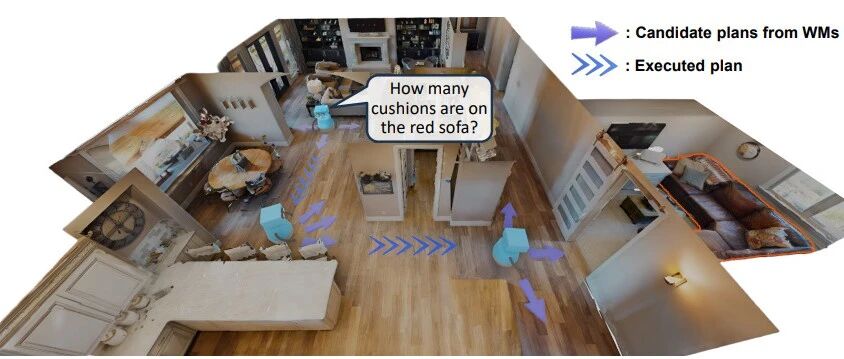
Core Insights - The article emphasizes the need to redefine the evaluation of world models in embodied intelligence, focusing on their practical utility rather than just visual quality [2][23] - The introduction of the "World-in-World" platform aims to test world models in real embodied tasks through a closed-loop interaction system, addressing the gap between visual quality and task effectiveness [3][23] Evaluation Redefinition - Current evaluation systems prioritize visual clarity and scene rationality, often rewarding models that produce high-quality visuals without assessing their decision-making capabilities in real tasks [2][23] - The article highlights the importance of aligning actions and predictions in embodied tasks, where the model must accurately predict scene changes based on the agent's movements [2][3] World-in-World Platform Design - The platform creates a closed-loop system where the agent, world model, and environment interact in a cycle of observation, decision-making, execution, and re-observation [3][6] - A unified action API is established to standardize input across different world models, ensuring consistent interpretation of action intentions [6][12] Task Evaluation - Four types of real-world embodied tasks are selected for comprehensive testing, each with defined scenarios, objectives, and scoring criteria [10][14] - The platform incorporates post-training techniques to fine-tune models using task-specific data, enhancing their adaptability to real-world tasks [12][23] Experimental Findings - Experiments with 12 mainstream world models reveal that task data fine-tuning is more effective than simply using larger pre-trained models, demonstrating significant improvements in success rates [17][20] - The article notes that models with high visual quality do not necessarily perform better in practical tasks, emphasizing the importance of controllability over visual appeal [18][23] Recommendations for Future Development - The article suggests focusing on improving controllability, utilizing task data for low-cost enhancements, and addressing the shortcomings in physical modeling for operational tasks [23][22]
从世界模型到VLA再到强化,具身大小脑算法原来是这样的!
具身智能之心· 2025-10-26 04:02
Core Insights - The article discusses the evolution and current state of embodied intelligence, focusing on the roles of the brain and cerebellum in robotics, where the brain handles perception and planning, while the cerebellum is responsible for execution [3][10]. Technical Evolution - The development of embodied intelligence has progressed through several stages, starting from grasp pose detection, moving to behavior cloning, and now advancing to diffusion policy and VLA models [7][10]. - The first stage focused on static object grasping with limited decision-making capabilities [7]. - The second stage introduced behavior cloning, allowing robots to learn from expert demonstrations but faced challenges in generalization and error accumulation [8]. - The third stage, marked by the introduction of diffusion policy, improved stability and generalization by modeling action sequences [8]. - The fourth stage, emerging in 2025, explores the integration of VLA models with reinforcement learning and world models to enhance robots' predictive and interactive capabilities [9][10]. Current Trends and Applications - The integration of VLA with reinforcement learning enhances robots' trial-and-error learning and self-improvement abilities, while the combination with world models allows for future prediction and better planning [10]. - The article highlights the growing demand for embodied intelligence applications across various sectors, including industrial, home, restaurant, and medical rehabilitation, leading to increased job opportunities and research interest in the field [10]. Educational Initiatives - The article outlines a structured learning program aimed at equipping individuals with comprehensive knowledge of embodied intelligence algorithms, including practical applications and real-world projects [11][14]. - The course targets individuals with a foundational understanding of embodied intelligence and aims to bridge the gap between theoretical knowledge and practical deployment [18][24].
国内具身创业公司的机器人,让老外直接破防了!
具身智能之心· 2025-10-24 16:03
Core Viewpoint - The article highlights the advancements and competitive pricing of domestic robotics companies, showcasing their ability to produce high-performance robots at lower costs, which has garnered international attention and admiration [1][3][5]. Group 1: Domestic Robotics Innovations - The Bumi humanoid robot from Songyan Power is priced at 9998 yuan, making it the world's first high-performance robot under 10,000 yuan, demonstrating that price barriers are diminishing due to advancements in supply chains and technology [1]. - The Steel Coin L1 robotic dog from Zhishen Technology won the IROS25 competition, featuring a peak torque of 48 N·m, showcasing its superior performance in extreme environments [3]. - Yushu's recently released H2 bionic humanoid robot, standing 180 cm tall and weighing 70 kg, has attracted significant attention for its agile movements [5]. Group 2: Community and Knowledge Sharing - The article promotes a community platform for embodied intelligence, which has been established to facilitate knowledge sharing across various sectors, including technology routes, live discussions, and job opportunities [7][8]. - The community offers a comprehensive technical roadmap for beginners, helping them navigate the complexities of the field [10]. - For those already engaged in research, valuable industry frameworks and project proposals are provided to enhance their work [12]. Group 3: Resources and Networking - The community has established a job referral mechanism with multiple robotics companies, allowing members to connect with potential employers [13]. - Members can access a wealth of resources, including open-source projects, datasets, and learning paths tailored to various aspects of embodied intelligence [17][26]. - The platform also features a compilation of notable robotics companies and research labs, facilitating networking and collaboration opportunities [20][21].