具身智能之心

Search documents
具身智能之心1v1论文辅导来啦~
具身智能之心· 2025-10-10 03:14
Core Viewpoint - The article promotes a comprehensive thesis guidance service that addresses various challenges faced by students in research and writing, particularly in advanced fields like multimodal models and robotics. Group 1: Thesis Guidance Service - The service offers one-on-one customized guidance in cutting-edge research areas such as multimodal large models, visual-language navigation, and embodied intelligence [1][2]. - It provides a full-process support system from topic selection to experimental design, coding, writing, and submission strategies, aimed at producing high-quality research outcomes quickly [2]. - The guidance is provided by a team of experienced mentors from prestigious institutions like CMU, Stanford, and MIT, with expertise in top-tier conferences [1][3]. Group 2: Dual Perspective Approach - The service emphasizes both academic publication and practical application, focusing on the real-world value of research, such as improving the robustness of robotic grasping and optimizing navigation in real-time [3]. - Students consulting in the top 10 can receive free matching with dedicated mentors for in-depth analysis and tailored publication advice [4].

Figure AI正式发布新款人形机器人,都带来了哪些令人眼前一亮的设计?
具身智能之心· 2025-10-10 03:14
以下文章来源于机器觉醒时代 ,作者机械偃甲 机器觉醒时代 . 聚焦具身智能机器人赛道,专注追踪和洞察下一个时代风口 —— 硅基智能!从技术突破到产品落地, 从行业动态到未来图景,这里有你想了解的所有前沿干货。 点击下方 卡片 ,关注" 具身智能之心 "公众号 编辑丨机器觉醒时代 >> 点击进入→ 具身智能之心 技术交流群 更多干货,欢迎加入国内首个具身智能全栈学习社区 : 具身智能之心知识星球 (戳我) , 这里包含所有 你想要的。 2022年5月,连续创业者 Brett Adcock 在硅谷创立人形机器人公司Figure。 2025年9月16日,Figure宣布完成C轮融资,本轮融资规模超10亿美元,企业投后估值同步攀升至 390 亿美元,此轮融资将主要用于加速通用人形机器人在现实场景中的大规模落地应用。 从成立到完成 C轮融资仅用三年时间,完成C轮融资后,企业估值达到390亿美元,使其成为当前全 球估值最高的人形机器人独角兽公司。 2025年10月9日,Figure发布第三代人形机器人Figure 03。该机器人身高约1.68米,体重60kg,最长 续航时间为5小时,有效负载20kg,移动速度达1.2米/ ...

Qwen要做机器人了:林俊旸官宣成立具身智能团队
具身智能之心· 2025-10-10 00:02
Core Insights - Qwen, an open-source model leader, is transitioning into robotics by forming a dedicated team for embodied intelligence, indicating a shift from virtual to physical applications [2][10] - The establishment of this team aligns with Alibaba Cloud's broader strategy to support the embodied intelligence sector, which is gaining traction among global tech giants [10][12] Summary by Sections Qwen's Transition to Robotics - Qwen has officially announced the formation of a small robotics and embodied intelligence team, aiming to leverage multi-modal foundational models for long-term reasoning and real-world applications [2][10] - This move is expected to enhance the model's capabilities in real-world scenarios, addressing complexities such as feedback and uncertainty [10] Market Dynamics and Investment Trends - Recent investments in the robotics sector, such as the nearly 1 billion yuan A+ round funding for a variable robot company led by Alibaba Cloud, highlight the growing interest in embodied intelligence [7][10] - The global robotics market is projected to reach $7 trillion by 2050, attracting significant capital from various sources, including government funds [14] Competitive Landscape - Major players like NVIDIA and SoftBank are making substantial investments in robotics, with NVIDIA's CEO highlighting the potential for AI and robotics to drive long-term growth worth trillions [11][12] - SoftBank's acquisition of ABB's robotics business for $5.4 billion signifies a strategic move to integrate artificial superintelligence with robotics [12][13] Technological Advancements - Qwen's recent model updates, such as Qwen3-VL, focus on fine-grained visual understanding and 3D perception, providing a robust foundation for embodied intelligence applications [8][10] - The integration of generative AI with robotics is expected to fundamentally change human-machine interaction, marking a significant evolution in the field [10]

不是玄学!港科大清华等联手:撕开推理黑箱,RL让AI像人思考
具身智能之心· 2025-10-10 00:02
Core Insights - The article discusses the recent research by teams from Hong Kong University of Science and Technology, University of Waterloo, and Tsinghua University, which reveals that large language models (LLMs) learn reasoning in a human-like manner by separating high-level strategy planning from low-level execution [3][10][12]. Group 1: Reinforcement Learning and LLMs - Reinforcement Learning (RL) enhances the reasoning capabilities of LLMs, although the underlying mechanisms have not been clearly understood until now [2][5]. - The research highlights the importance of RL in enabling models to exhibit reflective behaviors during interactions with the RL environment [7][10]. - Two significant experimental clues are identified: "length scaling effect" and "aha moment," indicating that LLMs can learn to use more thinking time to solve reasoning tasks [8][9][10]. Group 2: Learning Dynamics - The study outlines a two-phase learning dynamic in LLMs during RL training: the first phase focuses on consolidating basic execution skills, while the second phase shifts towards exploring high-level planning strategies [14][22]. - In the first phase, the model's focus is on mastering low-level operations, which is marked by a decrease in the uncertainty of execution tokens [23][24]. - The second phase involves the model actively expanding its strategy planning library, which correlates with improved reasoning accuracy and longer solution chains [28][30]. Group 3: HICRA Algorithm - The research introduces a new algorithm called HICRA (Hierarchy-Aware Credit Assignment), which emphasizes the learning of planning tokens over execution tokens to enhance reasoning capabilities [18][42]. - HICRA consistently outperforms mainstream methods like GRPO, particularly when the model has a solid foundation in execution skills [20][45]. - Experimental results show that HICRA leads to significant improvements in various reasoning benchmarks compared to GRPO, indicating its effectiveness in optimizing planning tokens [46][47]. Group 4: Insights on Token Dynamics - The study reveals that the observed phenomena, such as "aha moments" and "length scaling," are not random but are indicative of a structured learning process [33][35]. - The overall token-level entropy decreases as the model becomes more predictable in executing low-level tasks, while the semantic entropy of planning tokens increases, reflecting the model's exploration of new strategies [39][40]. - The findings suggest that the key to enhancing reasoning capabilities lies in improving planning abilities rather than merely optimizing execution details [20][41].

DemoGrasp:一次演示是怎么实现灵巧手通用抓取的?
具身智能之心· 2025-10-10 00:02
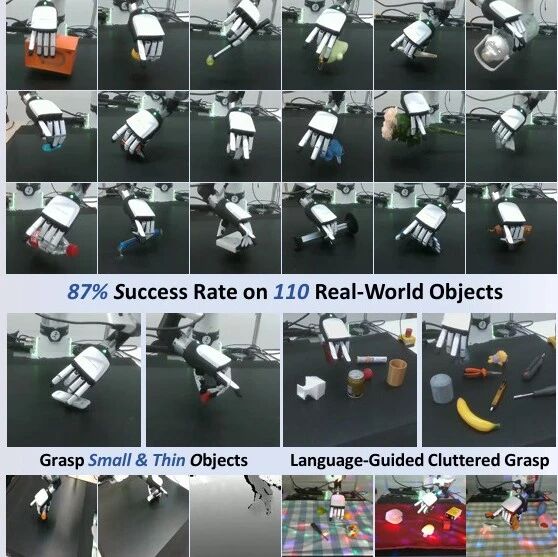
Core Insights - The article discusses DemoGrasp, a novel method for universal dexterous grasping that allows robots to learn grasping strategies from a single demonstration [2][3][6]. Group 1: Methodology - DemoGrasp utilizes a simple and efficient reinforcement learning framework that enables any dexterous hand to learn universal grasping strategies by collecting just one successful grasping demonstration [6]. - The method involves editing the trajectory of robot actions to adapt to new objects and poses, determining grasping positions and methods through adjustments in wrist and hand joint angles [2][3]. Group 2: Performance and Validation - In simulation experiments, DemoGrasp achieved a success rate of 95% when using the Shadow hand to manipulate objects from the DexGraspNet dataset, outperforming existing methods [2]. - The method demonstrated excellent transferability, achieving an average success rate of 84.6% on six unseen object datasets, despite being trained on only 175 objects [2]. Group 3: Applications and Capabilities - The strategy successfully grasped 110 previously unseen real-world objects, including small and thin items, and is adaptable to variations in spatial positioning, background, and lighting [3]. - DemoGrasp supports both RGB and depth input types and can be extended to language-guided grasping tasks in cluttered environments [3].
DexCanvas:具身数据的规模、真实、力觉真的突破不了三缺一吗?
具身智能之心· 2025-10-10 00:02
Core Viewpoint - The article discusses the challenges and advancements in dexterous manipulation in robotics, highlighting the need for high-quality, multi-modal data to improve robotic grasping capabilities and the introduction of the DexCanvas dataset as a solution [1][15]. Group 1: Challenges in Dexterous Manipulation - Dexterous manipulation remains a significant challenge due to the need for precise control, high-dimensional motion planning, and real-time adaptation to dynamic environments [2][11]. - Existing hardware for dexterous manipulation is categorized into two types: two-finger grippers and multi-finger humanoid hands, with the latter being more suitable for complex tasks due to their higher degrees of freedom [2][3]. - Current learning methods for dexterous manipulation include imitation learning and reinforcement learning, each with its own advantages and limitations regarding data requirements and training complexity [4][9]. Group 2: Data Collection and Quality Issues - Data collection for dexterous manipulation is expensive and often lacks tactile and force information, with existing datasets being insufficient for large-scale pre-training [9][10]. - The article emphasizes the trade-off in data collection, where achieving scale, realism, and tactile feedback simultaneously is challenging [6][7]. - The DexCanvas dataset addresses the lack of force and tactile information in existing datasets, providing a comprehensive solution for high-quality data collection [17][21]. Group 3: DexCanvas Dataset Introduction - DexCanvas is a large-scale dataset launched by Lingqiao Intelligent Technology, designed to bridge the gap between cognitive and physical intelligence in robotics [15][16]. - The dataset includes complete multi-finger force/contact annotations optimized for systems with over 20 degrees of freedom, significantly enhancing data quality [17][21]. - DexCanvas offers a structured framework for data collection based on 22 types of human hand operation modes, integrating over 1,000 hours of real human demonstration data and 100,000 hours of physically simulated data [21][22]. Group 4: Data Generation and Enhancement - The dataset generation process involves capturing human demonstrations with high precision and using physical simulation to recover missing force control data [25][27]. - DexCanvas expands the dataset by altering object properties and initial conditions, resulting in a significant increase in data volume while maintaining force control information [28][29]. - Unlike pure simulation, DexCanvas is based on real human demonstrations, allowing for better generalization across different robotic platforms and tasks [30]. Group 5: Industry Impact and Future Prospects - The introduction of DexCanvas is expected to accelerate advancements in the field of robotics by providing essential data for physical interaction, which has been lacking in existing datasets [32]. - The article expresses anticipation for the open-sourcing of the dataset to further enhance research and development in related areas [32].
Qwen终于要做机器人了:林俊旸官宣成立具身团队!
具身智能之心· 2025-10-09 06:39
Core Insights - Qwen, a leading open-source model, is transitioning into robotics by forming a dedicated team for embodied intelligence, indicating a shift from virtual to physical applications [1][7] - The establishment of this team aligns with Alibaba Cloud's broader strategy to support the embodied intelligence sector, which is gaining traction among global tech giants [7][11] Group 1: Qwen's Development and Market Position - Qwen's internal team formation for robotics is a significant step towards applying their models in real-world scenarios, enhancing their capabilities in perception, planning, and execution [7] - The Qwen series models, particularly Qwen-VL, are being widely adopted by over 30 companies for their strengths in spatial understanding and long-context memory, making them a preferred foundational model in the embodied intelligence field [5][7] - The recent launch of Qwen3-VL has optimized capabilities for fine-grained visual understanding and 3D perception, further solidifying its role in supporting embodied intelligence applications [5][7] Group 2: Industry Trends and Investments - The robotics sector is experiencing significant investment, with SoftBank's recent $5.4 billion acquisition of ABB's robotics business highlighting strategic moves in the "physical AI" domain [9][10] - Citigroup projects that the global robotics market could reach $7 trillion by 2050, attracting substantial capital from various sources, including government funds [11] - The integration of generative AI with robotics is expected to fundamentally change human-machine interaction, with major companies like NVIDIA identifying this as a core growth opportunity [8][11]

新手如何挑选自己的第一套具身科研平台?
具身智能之心· 2025-10-09 04:00
Core Viewpoint - Imeta-Y1 is a lightweight, cost-effective robotic arm designed specifically for beginners and researchers in the field of embodied intelligence, enabling low-cost and efficient algorithm validation and project development [2][5]. Group 1: Product Features - The robotic arm offers a complete open-source toolchain and code examples, facilitating a seamless process from data collection to model deployment [3][17]. - It supports dual-language interfaces in Python and C++, allowing users to quickly get started regardless of their programming background [3][18]. - Compatibility with ROS1 and ROS2 is provided, along with URDF models for smooth transitions between simulation and real-world applications [3][19]. - The arm features high-precision motion control, low power consumption, and an open hardware architecture, supporting seamless integration from simulation to real machine [5][6]. Group 2: Technical Specifications - The robotic arm has a weight of 4.2 kg, a rated load of 3 kg, and 6 degrees of freedom, with a working radius of 612.5 mm and a repeatability precision of ±0.1 mm [8][19]. - It operates at a supply voltage of 24V and communicates via CAN, with external interfaces for power and CAN connections [8][19]. - The arm's joint motion range and maximum speeds are specified, ensuring versatility in various applications [8][19]. Group 3: Development and Support - The company provides a comprehensive open-source SDK, including drivers, API interfaces, example codes, and documentation, supporting rapid application development [26][29]. - A full-process toolchain is available for data collection, model training, and inference deployment, compatible with mainstream frameworks like TensorFlow and PyTorch [29][32]. - The company ensures timely after-sales support, with a 24-hour response guarantee for any issues encountered by users [3][19][44].
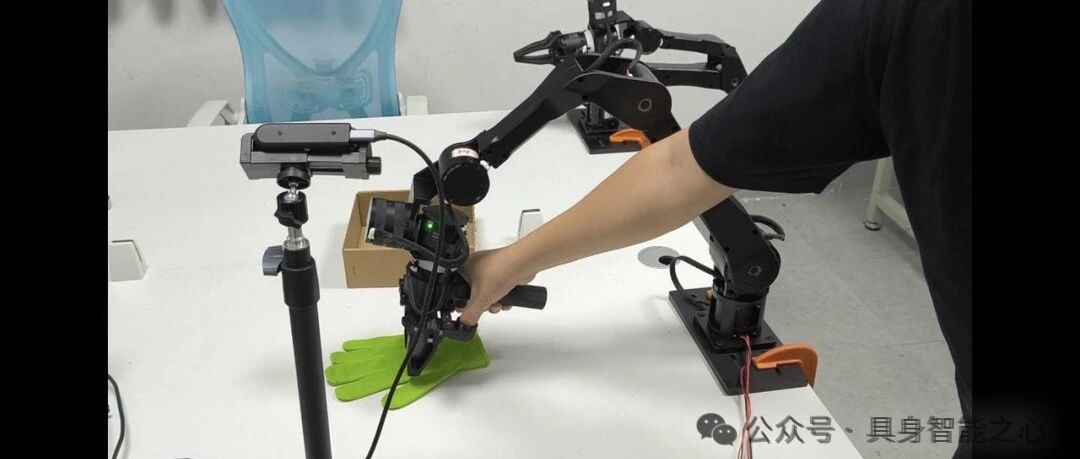
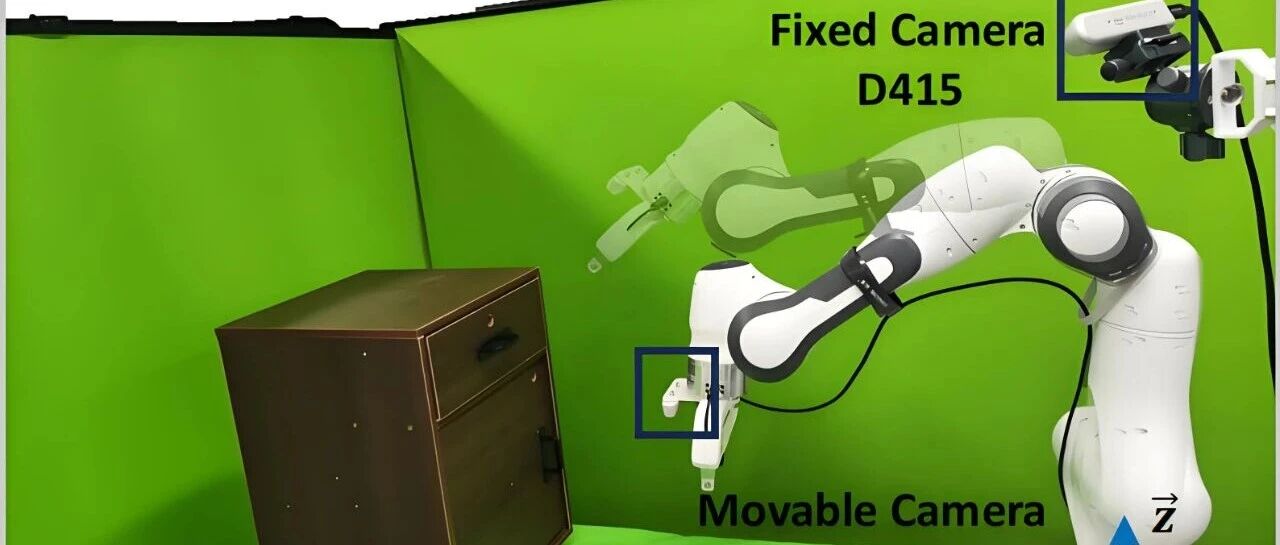
中科院自动化!EmbodiedCoder:生成模型的参数化具身移动操作
具身智能之心· 2025-10-09 00:04
点击下方 卡片 ,关注" 具身智能 之心 "公众号 作者丨 Zefu Lin等 编辑丨具身智能之心 本文只做学术分享,如有侵权,联系删文 >> 点击进入→ 具身智能之心 技术交流群 更多干货,欢迎加入国内首个具身智能全栈学习社区 : 具身智能之心知识星球 (戳我) , 这里包含所有你想要的。 一、研究背景 在机器人领域,让机器人在复杂、非结构化环境中像人类一样熟练完成多样化任务,是长期核心目标。近年来,视觉-语言-动作(VLA)模型通过端到端映射感官 输入与自然语言指令到机器人动作,推动了这一目标的落地,但仍存在显著局限: 为解决这些问题,研究人员提出分层策略,利用视觉-语言模型(VLM)将任务分解为子任务,并调用预定义操纵原语(如导航、抓取)。但这类方法受限于原语 库,无法处理开门、拉抽屉等需要精细交互的真实场景任务——这类任务难以被有限的预定义原语覆盖。 此前基于代码生成的尝试也存在不足:早期方法仅适用于简单几何任务;部分方法依赖学习模型处理物理约束,降低对新场景的适应性;还有方法无法处理接触密 集型操纵,或仅聚焦于故障检测而非扩展操纵能力。针对移动机器人,还需解决环境信息留存、非视野内物体规划等更复杂的 ...
从机械臂到人形,跨构型VLA如何破局?
具身智能之心· 2025-10-09 00:04
Core Insights - The article discusses two significant advancements in the field of embodied intelligence and VLA (Vision-Language Action) models, highlighting their potential to overcome existing challenges in the domain [3][7]. Group 1: VLA-Adapter - VLA-Adapter aims to improve the direct mapping from VLM (Vision-Language Model) features to action space without heavily relying on robotic data. The research team found that increasing the parameter count and introducing pre-trained robotic data did not significantly enhance model performance on general benchmarks [3]. - The new mapping scheme proposed by the team allows the model to achieve superior performance even at a 0.5 billion parameter scale, reducing training costs and lowering the entry barrier for VLA models [3]. Group 2: TrajBooster - TrajBooster is the first full-body humanoid operation VLA solution that addresses data scarcity issues for training VLA models in bipedal humanoid tasks. The scarcity arises from the high cost of remote operation data and the challenges of using existing heterogeneous robot data for training [7]. - By focusing on trajectory-centered methods, TrajBooster efficiently utilizes cross-body data, achieving full-body operation in bipedal robots with just 10 minutes of real machine remote operation data for fine-tuning [7]. Group 3: Contributors - Wang Yihao, a fourth-year PhD student at Beijing University of Posts and Telecommunications, is involved in the VLA-Adapter project and has contributed significantly to the field of embodied intelligence and VLA models [13]. - Liu Jiacheng, a second-year PhD student at Zhejiang University and West Lake University, leads the TrajBooster project, which is the only fully open-source work covering humanoid data collection, cross-body data enhancement, VLA model training, and hardware deployment [13].