具身智能之心

Search documents
TrajBooster:首个全身人行操作VLA方案,跨构型解决数据难题(代码全开源)
具身智能之心· 2025-09-18 00:03
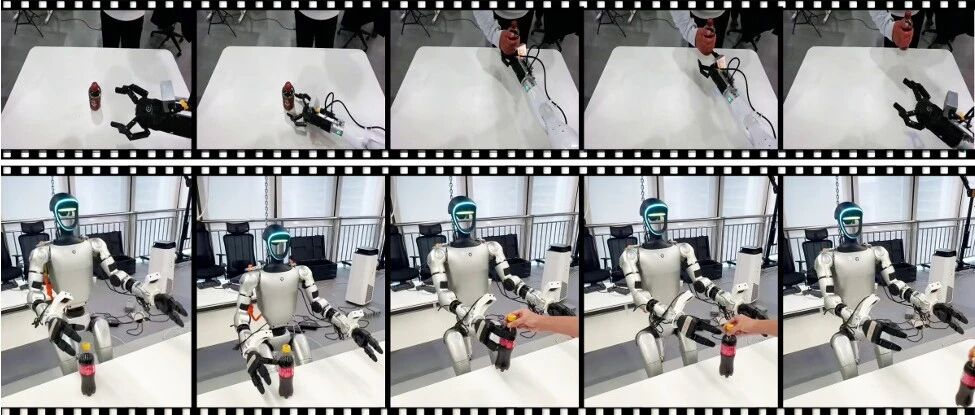
Core Insights - The article discusses the TrajBooster framework, which aims to enhance the capabilities of humanoid robots by utilizing a trajectory-centric learning approach, enabling them to perform complex household tasks with minimal training data [2][40]. Group 1: Research Background and Challenges - The development of humanoid robots faces two main challenges: the unique difficulties of maintaining dynamic balance while performing upper body tasks, and the scarcity of high-quality training data necessary for effective VLA model training [3][4]. - Existing methods rely on expensive equipment and expert operators, resulting in limited data sets that do not adequately cover the diverse action spaces required for humanoid robots [4]. Group 2: TrajBooster Framework - TrajBooster utilizes a three-step process: real trajectory extraction, simulation redirection, and dual-stage fine-tuning, allowing for the conversion of extensive wheeled robot data into effective training resources for bipedal robots [5][40]. - The framework significantly reduces the dependency on costly data from similar robot types, enabling zero-shot skill transfer and improving the robustness and generalization of the VLA models [2][5]. Group 3: Methodology - The framework begins with extracting real trajectories from the Agibot-World Beta dataset, which contains over 1 million real robot trajectories, and then maps this data to the Unitree G1 robot's operational space [7][9]. - A hierarchical composite model is employed to decouple control into upper and lower body systems, enhancing the efficiency of whole-body manipulation [11][12]. Group 4: Experimental Results - TrajBooster demonstrated superior performance in various tasks, achieving the lowest position error (2.851 cm) and rotation error (6.231 degrees) in mobile scenarios, validating the advantages of hierarchical training and coordinated online DAgger [27]. - The framework's ability to adapt to unseen tasks was evidenced by its success in a "water transfer" task, which was not included in the training data, showcasing improved generalization capabilities [39][40]. Group 5: Limitations and Future Directions - The current implementation is limited by the precision of the Unitree Dex-3 hand, which only supports simple grasping tasks; future work will focus on integrating dexterous hands with tactile sensing for more complex manipulations [41]. - There is a need to address the visual input discrepancies and expand the framework to include mobile manipulation data, as the current research is primarily focused on static tasks [43][44].

3D/4D World Model(WM)近期发展的总结和思考
具身智能之心· 2025-09-18 00:03
Core Viewpoint - The article discusses the current state and future directions of embodied intelligence, particularly focusing on the development and optimization of 3D/4D world models, emphasizing the importance of data collection and utilization in training effective models [3][4]. Group 1: Current Research Focus - The majority of work in the first three quarters of the year has centered on data collection and utilization, specifically how to efficiently use video example data to train robust foundational models [3]. - There is a growing concern regarding the clarity and reliability of data collection methods, prompting a reevaluation of the approaches to data analysis and the development of 3D/4D world models [3][4]. Group 2: Approaches to 3D/4D World Models - Two main research approaches have emerged in the development of 3D/4D world models: implicit and explicit methods, each revealing limitations that have yet to be effectively addressed [4][7]. - Current research on explicit world models remains focused on static 3D scenes, with methods for constructing and enriching these scenes being well-established and ready for practical application [5]. Group 3: Challenges and Limitations - The existing methods for 3D geometry modeling, such as 3DGS, face challenges in surface optimization, leading to rough results despite attempts to improve through structured modifications [8]. - Issues related to lighting and surface quality in 3D reconstruction are being gradually optimized, but the overall design still faces significant hurdles, particularly in cross-physics simulator deployment [9]. Group 4: Future Directions - The article anticipates that future work will increasingly integrate physical knowledge into 3D/4D models, aiming to enhance the direct physical understanding and reasoning capabilities of models [15]. - There is an expectation for the emergence of new research that combines simulation and video generation to address existing gaps in the understanding of physical interactions and motion [14][15].

清华联手理想提出LightVLA:剪掉冗余token,推理速度提升38%!
具身智能之心· 2025-09-18 00:03
Core Insights - The article discusses the development of the LightVLA framework, which aims to enhance the efficiency and performance of Vision-Language-Action (VLA) models in robotics by addressing the computational redundancy associated with visual tokens [2][3]. Research Background and Core Challenges - VLA models are essential for embodied intelligence, converting visual information and language instructions into executable robot actions. However, they face a significant bottleneck due to the computational complexity that increases quadratically with the number of visual tokens [2]. - Existing optimization methods often compromise performance for efficiency, leading to the loss of critical semantic information [3]. Existing Optimization Limitations - Trade-off between efficiency and performance: Many token pruning methods sacrifice performance by retaining a fixed number of tokens [3]. - Incompatibility of pruning schemes: Current visual-language model pruning methods focus on global semantics, which does not translate well to VLA models that require local semantic attention [3]. - Poor deployment compatibility: Pruning methods based on attention scores are not adaptable to mainstream inference frameworks, limiting their practical application [3]. LightVLA Framework Design - LightVLA allows the model to autonomously learn to select task-relevant visual tokens through fine-tuning, rather than relying on manually set pruning ratios [4]. - The framework consists of three modules: visual encoder, LLM backbone, and action head, focusing solely on visual token pruning while retaining the [CLS] token for global information [4]. Core Methodology: Three-Stage Pruning Process 1. **Query Generation**: Task-oriented queries are generated to identify relevant visual tokens without introducing additional parameters [6]. 2. **Token Scoring**: Each visual token is scored based on its relevance to the task, with higher scores indicating stronger associations [10]. 3. **Token Selection**: A modified Gumbel-softmax approach is used for differentiable selection, allowing for end-to-end training of the pruning process [12]. Experimental Validation and Results Analysis - LightVLA demonstrated superior performance across various tasks in the LIBERO benchmark dataset, achieving an average success rate of 97.4%, which is a 2.9% improvement over the baseline model OpenVLA-OFT [16]. - The framework significantly reduces computational costs, achieving a 59.1% reduction in FLOPs and a 38.2% decrease in latency while maintaining high performance [18]. Ablation Studies and Qualitative Validation - The effectiveness of key design choices was confirmed through ablation studies, showing that the pruning process is task-oriented and dynamically adapts to the requirements of different tasks [20][24]. - LightVLA's pruning strategy focuses on retaining critical tokens related to the task while discarding redundant background tokens [24]. Comparison with MoE - LightVLA differs fundamentally from the Mixture of Experts (MoE) approach, as it prioritizes task performance by selecting visually relevant tokens, whereas MoE focuses on balancing expert load without emphasizing semantic relevance [28].
具身智能之心企业合作邀请函
具身智能之心· 2025-09-17 03:14
Group 1 - The company is a prominent media platform in the field of embodied intelligence, focusing on excellent creation and promotion [1] - In the past year, the company has signed long-term cooperation agreements with multiple embodied intelligence companies, covering areas such as product promotion, brand promotion, hardware agency, joint operations, and educational product development [1] - The company aims to expand its team and establish connections with more outstanding companies to promote rapid development in the embodied intelligence sector [1] Group 2 - The company expresses a desire for further collaboration and invites companies or teams with relevant business needs to reach out [2] - Contact information is provided for further communication [3]
前理想汽车 CTO 具身领域创业,过硬的量产实力是硬通货
具身智能之心· 2025-09-17 03:14
编辑丨具身智能之心 点击下方 卡片 ,关注" 具身智能 之心 "公众号 本文只做学术分享,如有侵权,联系删文 >> 点击进入→ 具身智能之心 技术交流群 更多干货,欢迎加入国内首个具身智能全栈学习社区 : 具身智能之心知识星球 (戳我) , 这里包含所有你想要 的。 元璟资本投资合伙人、前理想汽车CTO王凯已投入具身智能创业。与此同时,某头部自驾技术高管 也即将参与。 成立数月便受到各类投资机构的青睐,红杉资本、蓝驰资本等多家累计进行了5000w美元的投资。 「具身智能之心」 立减 新人立减券 * 50 2025/09/20 23:00 后失效 CJ知识量班 长按扫码领取优惠 ▶ 除了目前比较火热的具身智能赛道,创始人的量产能力是资本非常看好的。2020年王凯加入理想汽 车,负责智能驾驶相关的研究,涉及座舱、自驾、操作系统和平台等内容。他推动了地平线芯片的 方案量产。2022年离开理想,加入元璟资本担任投资合伙人。 另外一位自驾高管参与某头部新势力的端到端与vla量产工作,当下具身领域确实需要量产能力强的 大牛参与,推动商业化进程。 更多内容欢迎加入我们的具身社区:具身智能之心知识星球,第一时间了解行业动态。 ...

VLA-Adapter:以0.5B参数实现机器人智能新高度,还无需预训练
具身智能之心· 2025-09-17 03:14
Core Viewpoint - The VLA-Adapter model, developed by leading institutions, represents a revolutionary breakthrough in the Vision-Language-Action (VLA) model for robotics, offering a lightweight design with 500 million parameters while achieving performance comparable to larger models, thus lowering the barriers for training and deployment in robotic applications [4][11][30]. Summary by Sections Introduction to VLA-Adapter - The VLA-Adapter model has been jointly developed by top institutions and is designed to enhance the efficiency and intelligence of robots in understanding environments and executing tasks [4][11]. Challenges in VLA Models - Traditional VLA models face challenges such as reliance on large-scale pre-trained models and high computational costs, which hinder practical applications [3][11]. VLA-Adapter's Innovations - VLA-Adapter introduces a new bridging paradigm that efficiently transmits multimodal information to the action space, significantly reducing model size and training costs [11][12]. - The model utilizes a lightweight backbone network with only 0.5 billion parameters, achieving performance comparable to 7 billion parameter models without requiring extensive pre-training on robotic datasets [11][12]. Key Technologies - The innovative Bridge Attention mechanism is crucial for VLA-Adapter's success, allowing efficient connection between visual-language representations and action generation [12][14]. - The model's training efficiency is highlighted by its ability to complete training in just 8 hours on a single consumer-grade GPU, compared to traditional models that may take days or weeks [15][19]. Experimental Validation - VLA-Adapter has demonstrated superior performance in various robotic tasks, achieving an average success rate of 97.3% in the LIBERO benchmark, outperforming several baseline models [19][20]. - In zero-shot generalization tasks, VLA-Adapter achieved an average task completion length of 4.42, indicating strong adaptability to unseen environments [21][22]. Real-World Applications - The model has shown robust performance in real-world tasks, including complex operations with a 6-DOF robot, demonstrating its potential for diverse applications in industrial automation, smart homes, and medical assistance [23][28]. Future Potential - VLA-Adapter's lightweight design and high efficiency position it as a promising solution for real-time applications, facilitating the development and deployment of VLA models by smaller research institutions and companies [28][30].
星动纪元招聘!具身多模态、强化学习等多个方向
具身智能之心· 2025-09-17 00:02
Core Viewpoint - The article outlines various job descriptions and requirements for positions related to multi-modal reinforcement learning, data processing, and embodied intelligence, emphasizing the need for advanced skills in AI and machine learning technologies [6][14][15]. Group 1: Job Descriptions - Responsibilities include research, design, and implementation of cutting-edge multi-modal reinforcement learning algorithms to address complex real-world problems [6]. - Involvement in the collection, processing, cleaning, and analysis of multi-modal data to create high-quality training datasets [14]. - Development and optimization of multi-modal models, including training, fine-tuning, and enhancing performance across different tasks [6][15]. Group 2: Job Requirements - Candidates should possess a master's degree or higher in computer science, artificial intelligence, or robotics, with at least one year of research experience in computer vision or embodied intelligence [13]. - Proficiency in programming languages such as Python and deep learning frameworks like PyTorch is essential, along with strong engineering implementation skills [13]. - Experience in publishing papers at top academic conferences (e.g., CVPR, NeurIPS) and contributions to open-source projects are preferred [13][19]. Group 3: Additional Qualifications - Familiarity with multi-modal data cleaning, labeling, and loading, as well as understanding data optimization techniques is required [14]. - Candidates should have experience with large language models and multi-modal models, including knowledge of their capabilities and applicable scenarios [14]. - High standards for data quality and attention to detail are necessary, along with proficiency in data processing tools like Pandas and NumPy [14].

一个P7,从自驾到具身的转行建议......
具身智能之心· 2025-09-17 00:02
Core Viewpoint - The article discusses the transition from autonomous driving to embodied intelligence, highlighting similarities in challenges such as data scarcity, algorithm maturity, and deployment strategies [1][6]. Data - The lack of data leads to considerations of real-to-sim and sim-to-real approaches, with suggestions for self-collection methods where robots gather and filter their own data [2]. Algorithms - For commercialization, it is advised to prioritize proven technologies while waiting for newer technologies to mature, emphasizing the use of reinforcement learning methods when applicable [3][4]. Deployment Strategies - Concerns about deployment are minimal, as the industry is adept at lightweight solutions, with expectations for future advancements in data and algorithms [5]. Differences from Autonomous Driving - Unlike autonomous driving, embodied intelligence heavily relies on the physical body, with a greater risk of damage during deployment, necessitating robust safety measures [6]. Career Transition - Transitioning to embodied intelligence is easier for those with relevant experience in autonomous driving or traditional robotics, while newcomers should have a structured learning approach [8]. Community and Resources - The "Embodied Intelligence Knowledge Planet" community offers a comprehensive platform for learning and sharing, with nearly 2000 members and plans to expand to 10,000, providing resources for data collection, algorithm deployment, and job opportunities [10][18]. Research Directions - The community has compiled over 30 technical routes for research, facilitating access to benchmarks and learning pathways for both beginners and advanced practitioners [11][12]. Industry Insights - The community connects members with industry leaders and provides insights into job opportunities, academic advancements, and practical applications in embodied intelligence [18][21]. Resource Compilation - A variety of resources, including open-source projects, datasets, and technical learning routes, are available to support research and development in embodied intelligence [31][37]. Networking Opportunities - Members can engage in discussions, ask questions, and share solutions, fostering a collaborative environment for tackling challenges in the field [78].

宇树开源了UnifoLM-WMA-0: 一个跨实体的世界模型+Action的框架
具身智能之心· 2025-09-16 03:29
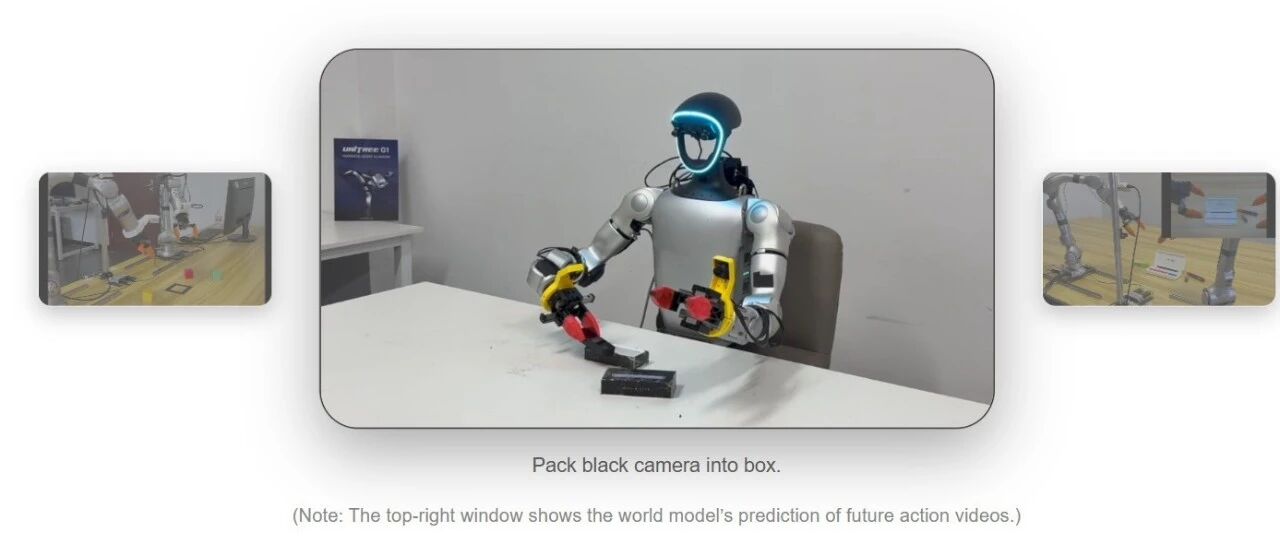
Core Insights - The article discusses the launch of UnifoLM-WMA-0, an open-source world model-action architecture developed by Yushu Technology, designed for general robot learning across various robotic entities [2][7]. Group 1: Architecture Overview - UnifoLM-WMA-0 integrates a world model that operates in two modes: decision-making mode, which predicts future physical interactions to assist in action generation, and simulation mode, which generates high-fidelity environmental feedback based on robot actions [7]. - The architecture's core component is a world model that enables robots to understand physical interactions with their environment, providing a simulation engine for generating synthetic data and enhancing decision-making performance [2][7]. Group 2: Model Training and Data - The model has been fine-tuned on the Open-X dataset to adapt its video generation capabilities for robotic operation scenarios, using images and text instructions as inputs to generate videos of future interactions [11]. - UnifoLM-WMA-0 has been trained on five open-source datasets from Unitree, demonstrating interactive controllable generation based on current images and future robot actions [11][13]. Group 3: Available Resources - The article provides links to the complete datasets and models available on the official website, including various configurations of UnifoLM-WMA-0 fine-tuned for different tasks [13][14]. - Specific datasets linked to Unitree robots are also listed, showcasing the diversity of training scenarios available for the model [14].
那些敢于破风的具身技术一号位们......
具身智能之心· 2025-09-16 00:03
Core Viewpoint - The article emphasizes the rapid development and commercialization of embodied intelligence, highlighting key figures and companies driving innovation in this field globally [2]. Group 1: Key Figures in Embodied Intelligence - Wang Xingxing, CEO and CTO of Yushu Technology, has over 10 years of experience in quadruped robot development, leading the launch of multiple products and holding over 100 related patents [4]. - Zhao Xing, an assistant professor at Tsinghua University, has made significant contributions to embodied intelligence and multimodal learning, including the development of the first mass-produced autonomous driving large model [6]. - Xu Huazhe, also an assistant professor at Tsinghua University, focuses on visual deep reinforcement learning and has published over 60 papers in top journals and conferences [9][10]. - Wang He, founder of Galaxy General, specializes in embodied intelligence and 3D vision, leading the development of a versatile wheeled robot [12][13]. - Luo Jianlan, chief scientist at Zhiyuan Robotics, has developed a system achieving 100% success in real-world reinforcement learning tasks [16][18]. - Wang Hao, co-founder and CTO of Zihuan Robotics, led the development of the world's largest parameter scale embodied intelligence model, WALL-A [20][21]. Group 2: Companies in Embodied Intelligence - Yushu Technology focuses on high-performance humanoid robot hardware, utilizing advanced motor drives and motion control solutions [46]. - Galaxy General aims to create versatile humanoid robots, with significant data accumulation for simulation and real-world applications [12][13]. - Zhiyuan Robotics is dedicated to solving challenges in reinforcement learning for precise robotic assembly tasks [16][18]. - Zihuan Robotics is working on integrating large models with embodied intelligence, emphasizing cost-effective solutions for advanced capabilities [20][21]. - Physical Intelligence, co-founded by Sergey Levine, has raised significant funding to develop advanced AI models for various robotic applications [36]. Group 3: Trends and Future Directions - The industry is witnessing a shift towards flexible, adaptive, and highly interactive embodied intelligence systems, driven by diverse technological paths [46]. - Companies are focusing on local needs and practical applications, aiming to create systems that are more aligned with everyday life [46]. - The collaboration between academia and industry is crucial for advancing embodied intelligence technologies and achieving commercial viability [46].