具身智能之心

Search documents
机器人入职洗衣房,开始打工挣钱!苹果前AI高管打造
具身智能之心· 2025-09-16 00:03
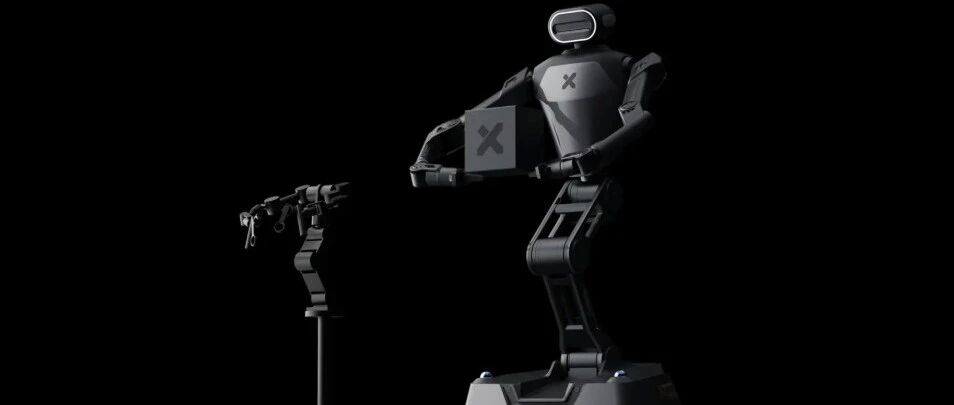
Core Insights - The article discusses the launch of Isaacs, a laundry folding robot developed by Weave Robotic, which is the first of its kind to operate in a paid laundry facility, Tumble Laundry [4][5]. Group 1: Company Overview - Weave Robotic was founded by former Apple team members, Evan Winelan and Kaan Dogrusoz, who have significant experience in AI and product development [16][17][21]. - The company has successfully completed three rounds of financing before the official product launch, indicating strong investor confidence [5]. Group 2: Technology and Functionality - Isaacs is designed to perform not only laundry folding but also to organize and store clothes, ensuring a tidy workspace [6][8]. - The robot utilizes a proprietary visual-language-action (VLA) model for precise identification of clothing types and folding techniques, achieving 70% autonomous folding capability with human assistance only when necessary [20]. - Isaacs is built with a high-performance network stack that allows for remote human intervention in complex scenarios, enhancing its operational efficiency [20]. Group 3: Future Prospects - The robot is intended to evolve beyond laundry folding to include capabilities such as organizing miscellaneous items and home security, addressing diverse household needs [14]. - The design incorporates privacy features, such as automatically folding its camera when idle, to protect user privacy [15].

具身VLA后训练:TeleAI提出潜空间引导的VLA跨本体泛化方法
具身智能之心· 2025-09-16 00:03
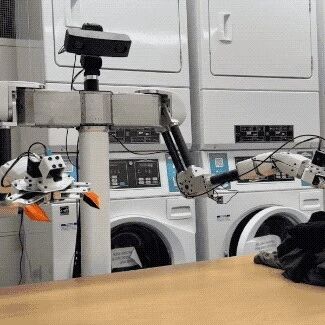
Core Insights - The article discusses the challenges and solutions related to the Vision-Language-Action (VLA) models in the context of cross-embodiment adaptation, highlighting the limitations of existing models and the introduction of a new framework called "Align then Steer" (ATE) to enhance performance in post-training scenarios [1][2][10]. Group 1: Challenges in VLA Models - Current VLA models require extensive target domain data for post-training, often needing dozens to hundreds of hours, leading to significant mismatches in action distributions between pre-training and post-training phases [1][10]. - The marginal returns of simply stacking data during post-training diminish rapidly, making it ineffective for fitting the action distribution of target scenarios [1][11]. Group 2: ATE Framework Introduction - The ATE framework proposed by the TeleAI team aims to align action distributions in latent space, allowing for efficient adaptation of VLA models without altering their core architecture [2][10]. - ATE transitions the focus from adjusting model architecture to adjusting distributions, significantly reducing data requirements for cross-embodiment adaptation [2][15]. Group 3: ATE Framework Mechanism - The ATE framework consists of two main phases: aligning action distributions in latent space and guiding the post-training strategy updates using a classifier [14][19]. - In the alignment phase, two small Variational Autoencoders (VAEs) are constructed to embed action data into a unified latent space, ensuring that the adapted actions closely follow the pre-trained distribution [18][19]. - The guiding phase integrates a classifier guidance function to measure the difference between generated actions and target distributions, effectively steering the model outputs towards the desired action distribution [21][22]. Group 4: Experimental Results - The ATE algorithm demonstrated an average increase of 9.8% in multi-task success rates in simulation evaluations compared to direct post-training, with a maximum success rate gain of 32% in real-world scenarios [23][24]. - The framework showed robust performance under various conditions, including lighting changes and external disturbances, maintaining task-related focus and recovery capabilities [29][30]. Group 5: Conclusion and Future Directions - The ATE framework provides a viable solution to the challenges of data scarcity and cross-embodiment adaptation in VLA models, allowing for efficient and robust training without the need for extensive data collection or full model retraining [30]. - This framework can serve as a plug-and-play module compatible with various mainstream VLA models, enhancing their post-training cross-embodiment generalization capabilities [30].
真的花了好久才汇总的大模型技术路线......
具身智能之心· 2025-09-16 00:03
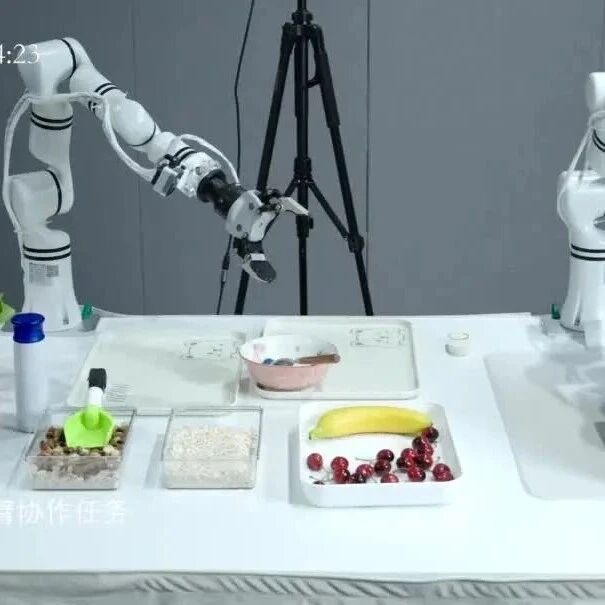
Core Insights - The article emphasizes the transformative impact of large models on various industries, highlighting their role in enhancing productivity and driving innovation in fields such as autonomous driving, embodied intelligence, and generative AI [2][4]. Group 1: Large Model Technology Trends - The large model industry is undergoing significant changes characterized by technological democratization, vertical application, and open-source ecosystems [2]. - There is a growing demand for talent skilled in technologies like RAG (Retrieval-Augmented Generation) and AI Agents, which are becoming core competencies for AI practitioners [2][4]. - The article introduces a comprehensive learning community focused on large models, offering resources such as videos, articles, learning paths, and job exchange opportunities [2][4]. Group 2: Learning Pathways - The community provides detailed learning pathways for various aspects of large models, including RAG, AI Agents, and multimodal models [4][5]. - Specific learning routes include Graph RAG, Knowledge-Oriented RAG, and Reasoning RAG, among others, aimed at both beginners and advanced learners [4][5]. - The pathways are designed to facilitate systematic learning and networking among peers in the field [5]. Group 3: Community Benefits - Joining the community offers benefits such as access to the latest academic advancements, industrial applications, and job opportunities in the large model sector [7][9]. - The community aims to create a collaborative environment for knowledge sharing and professional networking [7][9]. - There are plans for live sessions with industry leaders to further enrich the community's offerings [65][66].

卷VLA,提供一些参考方向......
具身智能之心· 2025-09-15 10:00
Core Insights - The Vision-Language-Action (VLA) model represents a new paradigm in embodied intelligence, enabling robots to generate executable actions from language instructions and visual signals, thus enhancing their adaptability to complex environments [1][3]. - VLA breaks the traditional single-task limitations, allowing robots to make autonomous decisions in diverse scenarios, which is applicable in manufacturing, logistics, and home services [3]. - The VLA model has become a research hotspot, driving collaboration between academia and industry, with various cutting-edge projects like pi0, RT-2, OpenVLA, QUAR-VLA, and HumanVLA emerging [3][5]. Industry Development - The embodied intelligence sector is experiencing robust growth, with teams like Unitree, Zhiyuan, Xinghaitu, Galaxy General, and Zhujidongli transitioning from laboratories to commercialization [5]. - Major tech companies such as Huawei, JD.com, and Tencent are actively investing in this field, alongside international firms like Tesla and Figure AI [5]. Educational Initiatives - A specialized VLA research guidance course has been launched to assist students in quickly entering or transitioning into the VLA research area, addressing the complexity of the related systems and frameworks [5]. - The course focuses on the perception-cognition-action loop, providing a comprehensive understanding of VLA's theoretical foundations and practical applications [7][8]. Course Structure and Outcomes - The curriculum covers the entire research process, from theoretical foundations to experimental design and paper writing, ensuring students develop independent research capabilities [15]. - Students will learn to identify research opportunities, analyze unresolved challenges in the field, and receive personalized guidance tailored to their backgrounds and interests [15]. - The course aims to help students produce a complete research idea and a preliminary experimental validation, culminating in a draft of a high-quality academic paper [15][18].

合伙人招募,和具身智能之心一起共建平台和社区吧~
具身智能之心· 2025-09-15 05:00
Core Insights - The article emphasizes the rapid growth and demand in the field of embodied intelligence, highlighting the need for collaboration and contribution to the industry [1] - The company aims to establish itself as a valuable platform rather than just a media entity, inviting influential figures in the field to collaborate on various projects [1] Collaboration Areas - **Open Source Projects**: The company seeks to build globally impactful open source projects in collaboration with others in the field [2] - **Consulting Services**: The company aims to provide consulting for both B2B and B2C sectors in areas such as embodied data, ontology, algorithms, and deployment to facilitate industry upgrades and talent development [3] - **Course Development**: The company plans to develop courses that benefit beginners and promote industry advancement, including training for individuals, corporate training, and academic curriculum development [5] - **Hardware Development**: The company intends to create affordable and user-friendly research platforms for developers and beginners in the field [6] Job Requirements - The company is looking for individuals with relevant engineering experience or those holding a PhD or higher, with opportunities for both full-time and part-time positions [7] Compensation and Resources - The company offers competitive industry compensation and access to industry resources for collaborators [8] Contact Information - Interested individuals are encouraged to reach out via WeChat for further inquiries [9]
具身智能开源周:上海AI实验室加速助力机器人训练及应用
具身智能之心· 2025-09-15 00:04
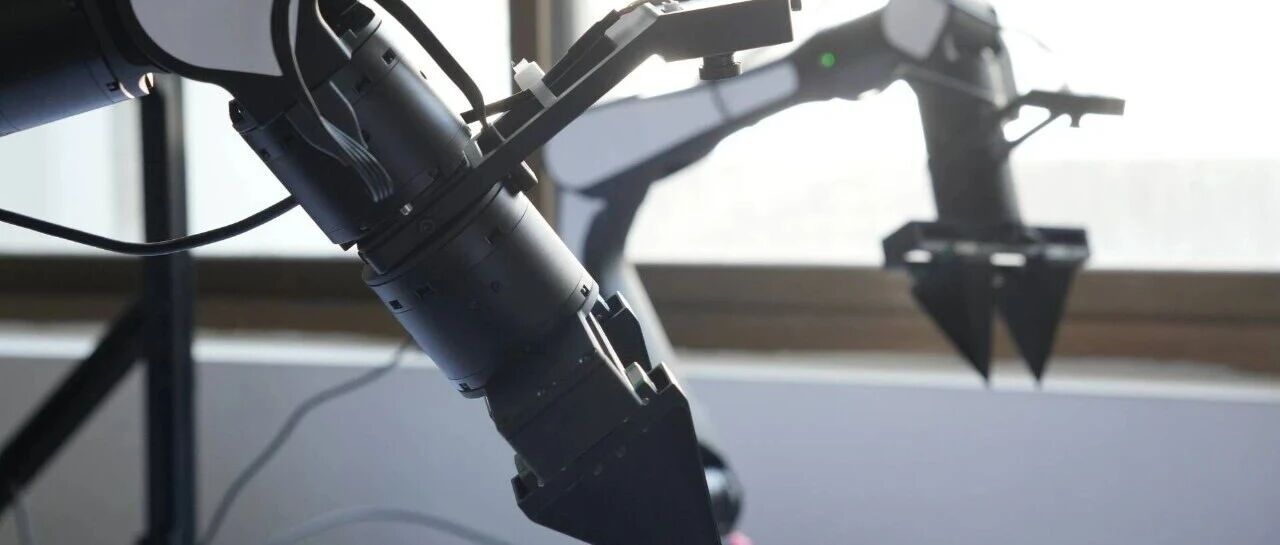
Core Insights - The article discusses the advancements in embodied intelligence technology led by the Shanghai AI Laboratory, particularly focusing on the open-source release of the Intern-Robotics engine, which aims to transition from fragmented development to full-stack production in the field of embodied intelligence [3]. Group 1: Technological Developments - The Shanghai AI Laboratory has launched the Intern-Robotics engine, which includes simulation, data, and training engines, achieving over 140,000 downloads of related models and datasets [3]. - A series of technical advancements have been introduced based on Intern-Robotics, covering navigation, operation, humanoid robot motion models, and datasets, with open-source releases starting from September 14, 2025 [3][4]. Group 2: Navigation Models - The InternVLA N1 navigation model integrates long-range spatial reasoning and agile execution, achieving international leading scores in six mainstream benchmark tests and demonstrating zero-shot generalization across scenes and entities at a continuous reasoning efficiency of 60Hz [6]. Group 3: Operation Models - The InternVLA M1 operation model creates a complete feedback loop covering "perception-planning-action," enhancing spatial reasoning and planning capabilities through a two-stage training strategy [11]. - The InternVLA A1 model focuses on high-dynamic scene multi-robot collaboration, showing superior performance in real-world evaluations compared to existing models [12]. Group 4: Reinforcement Learning - The VLAC model enhances reinforcement learning efficiency in real-world scenarios by providing continuous and reliable supervision signals, effectively distinguishing between normal and abnormal behaviors [13]. Group 5: Datasets and Evaluation - The InternScenes dataset contains approximately 40,000 indoor scenes and 1.96 million 3D object data, significantly surpassing existing datasets, providing a solid foundation for research in embodied and spatial intelligence [15]. - The OmniWorld dataset integrates large-scale synthetic data and multi-source heterogeneous data, facilitating advancements in world modeling and significantly improving performance in tasks like reconstruction and rendering [16]. Group 6: Community and Support - The article promotes the establishment of a community focused on embodied intelligence, offering resources for academic support, technical discussions, and collaboration opportunities among developers and researchers in the field [20][21].
正式开课!具身大脑和小脑算法与实战教程来啦
具身智能之心· 2025-09-15 00:04
Core Insights - The exploration towards Artificial General Intelligence (AGI) highlights embodied intelligence as a key direction, focusing on the interaction and adaptation of intelligent agents within physical environments [1][3] - The development of embodied intelligence technology has evolved through various stages, from low-level perception to high-level task understanding and generalization [6][14] Industry Analysis - In the past two years, numerous star teams in the field of embodied intelligence have emerged, establishing valuable companies such as Xinghaitu, Galaxy General, and Zhujidongli, transitioning from laboratories to commercial and industrial applications [3] - Major domestic companies like Huawei, JD, Tencent, Ant Group, and Xiaomi are actively investing and collaborating to build a comprehensive ecosystem for embodied intelligence, while international players like Tesla and investment firms support advancements in autonomous driving and warehouse robotics [5] Technological Evolution - The evolution of embodied intelligence technology has progressed through several phases: - The first phase focused on grasp pose detection, which lacked the ability to model task context and action sequences [6] - The second phase introduced behavior cloning, allowing robots to learn from expert demonstrations but revealing weaknesses in generalization and performance in multi-target scenarios [6] - The third phase, emerging in 2023, utilized Diffusion Policy methods to enhance stability and generalization by modeling action trajectories [6][7] - The fourth phase, starting in 2025, explores the integration of VLA models with reinforcement learning and tactile sensing to overcome current limitations [9][11][12] Educational Initiatives - The demand for engineering and system capabilities in embodied intelligence is increasing as the industry shifts from research to deployment, necessitating higher engineering skills [17] - A comprehensive curriculum has been developed to cover various aspects of embodied intelligence, including practical applications and advanced topics, aimed at both beginners and advanced learners [14][20]
清华、上海AI Lab等顶级团队发布推理模型RL超全综述
具身智能之心· 2025-09-15 00:04
Core Viewpoint - The article discusses the significant advancements in Reinforcement Learning (RL) for Large Reasoning Models (LRM), emphasizing its potential to enhance reasoning and logical thinking capabilities in AI systems through verifiable reward mechanisms and advanced optimization algorithms [4][8][19]. Group 1: Introduction to RL and LRM - Reinforcement Learning (RL) has been a crucial method in AI development since its introduction by Sutton in 1998, enabling agents to learn in complex environments through clear reward signals [4]. - The emergence of large models has provided a new platform for RL, initially used to align models with human preferences, and now evolving towards enhancing reasoning capabilities [5][6]. Group 2: Recent Trends and Challenges - A new trend is emerging where researchers aim to use RL not just for compliance but to genuinely enhance reasoning abilities in models, leading to the development of LRM systems [5][6]. - Significant challenges remain for the large-scale application of RL in LRM, including reward design, algorithm efficiency, and the need for substantial data and computational resources [6][8]. Group 3: Key Developments and Milestones - The article highlights key milestones in RL applications for LRM, such as OpenAI's o1 and DeepSeek-R1, which demonstrate the effectiveness of RL in achieving long-chain reasoning capabilities through verifiable rewards [13][15]. - The performance of models like o1 improves with additional RL training and increased computational resources during reasoning, indicating a new path for expansion beyond pre-training [13][15]. Group 4: Foundational Components and Problems - The foundational components of RL for LRM include reward design, policy optimization, and sampling strategies, which are essential for enhancing model capabilities [16]. - The article discusses foundational and controversial issues in RL for LRM, such as the role of RL, the comparison between RL and supervised fine-tuning (SFT), and the types of rewards used [16]. Group 5: Training Resources and Applications - Training resources for RL include static corpora, dynamic environments, and infrastructure, which need further standardization and development for effective use [16]. - The applications of RL span various tasks, including coding, agentic tasks, multimodal tasks, and robotics, showcasing its versatility [16][18]. Group 6: Future Directions - Future research directions for RL in LLMs include continual RL, memory-based RL, and model-based RL, aiming to enhance reasoning efficiency and capabilities [18]. - The exploration of new algorithms and mechanisms is crucial for advancing RL's role in achieving Artificial Superintelligence (ASI) [15][19].

SimpleVLA-RL:突破 VLA 模型训练瓶颈,RL实现端到端在线训练
具身智能之心· 2025-09-15 00:04
Core Insights - The article discusses the development of the SimpleVLA-RL framework, which enhances the training of Visual-Language-Action (VLA) models in robotics through reinforcement learning (RL) techniques, addressing the limitations of traditional supervised fine-tuning (SFT) methods [2][4][30] Group 1: Research Background and Challenges - VLA models are crucial for integrating visual perception, language understanding, and action generation in robotic control, but current training methods face significant challenges, including data scarcity and weak generalization capabilities [2][5] - The breakthrough in large reasoning models suggests that RL can improve the sequential action planning capabilities of VLA models, but traditional RL methods are limited by manual reward design and the high cost of environmental interactions [2][5] Group 2: Contributions of SimpleVLA-RL - SimpleVLA-RL is designed specifically for VLA, incorporating interactive trajectory sampling and multi-environment parallel rendering, which significantly reduces training costs and improves scalability [6][9] - The framework has achieved state-of-the-art (SOTA) performance across multiple benchmarks, with notable improvements in success rates, such as LIBERO's average success rate increasing from 91.0% to 99.1% [6][12] - SimpleVLA-RL demonstrates enhanced data efficiency, achieving a LIBERO average success rate of 96.9% with only one demonstration trajectory, surpassing traditional methods [16][17] Group 3: Generalization and Real-World Application - The framework shows robust generalization capabilities across unseen tasks, with significant performance improvements in various scenarios, indicating its ability to learn universal skills rather than overfitting to specific data [22][30] - SimpleVLA-RL has proven effective in sim-to-real transfer, with real-world task success rates improving from 17.5% to 38.5%, validating its deployment capabilities [7][21] Group 4: Key Discoveries - The framework has led to the discovery of the "Pushcut" phenomenon, where the RL-trained model autonomously develops more efficient strategies beyond human demonstrations, showcasing the potential for innovative robotic behaviors [24][30] - The effectiveness of SimpleVLA-RL is contingent on the initial model capabilities, with significant performance enhancements observed when starting from a higher baseline success rate [28][29]

明天开课啦!3个月带你搞透具身大脑+小脑算法
具身智能之心· 2025-09-14 08:00
Core Insights - The exploration towards Artificial General Intelligence (AGI) highlights embodied intelligence as a key direction, focusing on the interaction and adaptation of intelligent agents within physical environments [1][3] - The development of embodied intelligence technology has progressed through various stages, from low-level perception to high-level task understanding and generalization [6][14] Industry Analysis - In the past two years, numerous star teams in the field of embodied intelligence have emerged, establishing valuable companies such as Xinghaitu, Galaxy General, and Zhujidongli, transitioning from laboratories to commercial and industrial applications [3] - Major domestic companies like Huawei, JD, Tencent, Ant Group, and Xiaomi are actively investing and collaborating to build a comprehensive ecosystem for embodied intelligence, while international firms like Tesla and investment institutions support advancements in autonomous driving and warehouse robotics [5] Technological Evolution - The evolution of embodied intelligence technology has seen four main stages: 1. Grasp Pose Detection focusing on static object manipulation [6] 2. Behavior Cloning enabling robots to imitate human tasks but facing challenges in generalization [6][7] 3. The introduction of Diffusion Policy methods enhancing stability and generalization through sequence modeling [6][9] 4. The emergence of Vision-Language-Action (VLA) models integrating multimodal capabilities for improved task execution and generalization [7][9] Future Directions - The industry is exploring the integration of VLA models with reinforcement learning, world models, and tactile sensing to overcome current limitations, enhancing robots' capabilities in long-term tasks and complex environments [9][11][12] - The demand for engineering and system capabilities is increasing as embodied intelligence transitions from research to deployment, necessitating advanced training and simulation on platforms like Mujoco and IsaacGym [17]